The Cold Calculus of Granite: A Veteran Engineer Wages a Calculated War Against Suburban Tyranny and Wins
CHAPTER 1: THE STALLING ENGINE
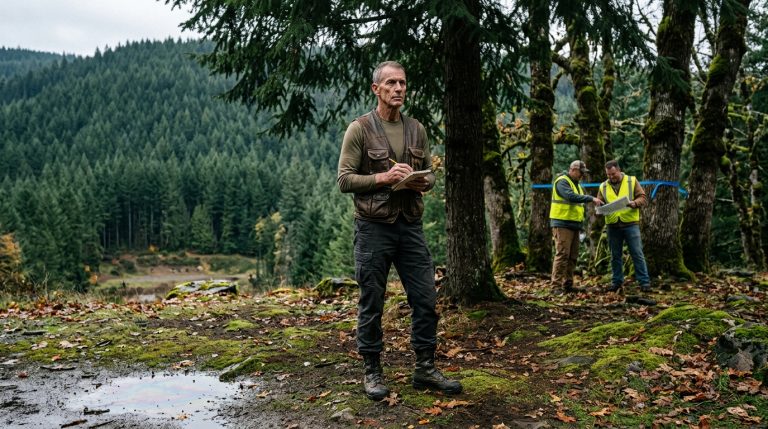
The vibration of the John Deere 8R died down like a heavy animal letting out its last breath, leaving behind a silence so absolute it made the skin at the back of my neck prick.
The birds were chirping—indifferent, small-minded things—framing the ridiculous geometry of the three granite boulders parked across my gravel road like jagged teeth biting into my livelihood. I didn’t look at the boulders first. I looked at her. Karen Bishop stood planted over the wheel track, her arms locked across a floral blouse that strained against her chest as if trying to escape her. Her face was pinched into that permanent, righteous squint, small hard eyes glittering with the ugly, intoxicating thrill of a petty victory.
“That’s far enough, Mr. Thompson,” she said, her voice grating like a rusted hinge dragged over concrete. “This is HOA property, and your filthy machine is not welcome here.”
My hands stayed glued to the leather of the steering wheel. Twenty years in the Army Corps of Engineers taught you one fundamental truth about hostile terrain: never react to the noise; calculate the logistics. I could feel the heat radiating off the tractor’s hood, baking into the midday glare, but my internal temperature dropped into a flat, Arctic freeze. Forty acres of prime alfalfa. Fifty thousand dollars of harvested feed sitting on a countdown timer before Thursday’s deluge turned the bottomland into a rotting swamp.
She wasn’t just blocking a path. She was running a tactical containment drill.
“Karen,” I said, keeping my voice level, the tone sanded down by decades of briefing colonels who wanted miracles out of mud. “You know this is my only access for farm equipment. That easement predates your entire subdivision by sixty years. Those boulders move right now, or you’re looking at a federal-grade property interference claim.”
She twitched her lips into a micro-smirk—fast, sharp, and entirely devoid of warmth. It was a movement designed to provoke, to pull me out of the cab and down into the mud where her bylaws held jurisdiction.
“According to HOA Bylaw 7.14,” she recited, her voice sliding up an octave into that practiced, bureaucratic singsong, “all common areas must be kept free of commercial grade vehicles. Your tractor is a commercial vehicle. This access path is a common area. Therefore, you are in violation.”
The sunlight caught the edge of her charm bracelet, sending a bright, blinding flash of silver slicing across my windshield. I didn’t blink. Beneath my boots, the floorboards hummed with the residual tremor of the diesel engine, cooling down click by metallic click. To the north lay the state highway’s deep, unyielding drainage ditch; to the south and west, miles of dense state-owned timberland. This quarter-mile strip of gray gravel was the sole artery in and out of my life, and she had plugged it with decorative landscaping stones bought with stolen authority.
“This isn’t a common area, Karen,” I murmured, my eyes tracking the subtle twitch in her left eyelid—a crack in her armor, the microscopic tell of someone performing a script they were terrified would fall apart if questioned off-book. “It’s a deeded agricultural easement. County law outweighs your clubhouse printouts.”
She waved a hand, dismissing the law with the casual flick of a queen clearing away a peasant, sending her silver charms jangling into the humid air. “We’ll see what the courts have to say about your easement. In the meantime, this road is closed. I’d suggest you find another way to your little field.”
She turned on her heel, her pink-soled walking shoes crunching with crisp arrogance against the gravel, heading back toward the sterile, identical symmetry of the Oak Meadows development. She expected me to shout. She expected me to climb down from the cab, red-faced and sputtering, to hand her the exact scalp of emotional leverage she needed to call the county sheriff and paint me as the volatile outsider.
Instead, I sat in the absolute stillness of the idling cab, my gaze locked on the center boulder—noting the fresh scrape of a forklift tine on its western face, a detail that didn’t belong to natural placement, a smear of bright yellow paint clinging to the gray granite like a fingerprint left at a crime scene.
CHAPTER 2: THE WAR ROOM
The John Deere’s diesel engine died with a final, shuddering cough, but the heat of the midday sun didn’t let up. It beat down on the sheet metal of the cab, baking the vinyl and the smell of stale coffee into a thick, suffocating cloud. I didn’t step out immediately. I sat there with my hands resting on the worn rubber of the steering wheel, my thumbs tracing the deep cracks in the grip.
In Iraq, when an improvised obstacle blocked a supply route, you didn’t curse the rubble; you mapped the perimeter, looked for the load-bearing stress points, and called logistics. Karen had picked her ground well—or so she thought. She had buried her logic in the bureaucratic quicksand of a three-hundred-page covenant booklet, betting that the sheer friction of legal ambiguity would stall me out until the storm rolled in and rotted the alfalfa in the windrows. She was treating this like a neighborhood dispute over a misplaced trash can.
She didn’t understand the geography of an engineer’s mind. Every system has a failure point, a place where weight meets structural fatigue.
I pushed the heavy door open, the latch clicking with a sharp, metallic snap that felt too loud in the manicured artificial quiet of Oak Meadows. The gravel crunched under my boots as I dropped down to the earth, the dry dust rising to coat the toes of my work boots. Fifty thousand dollars. That was the math. Four decades of my life had been built on precise numbers, and the calculation here was simple: if that hay didn’t move by Thursday, the crop was a write-off, and my operating capital for the next planting season evaporated into swamp water.
I walked the length of the access road, my eyes scanning the margins. To the left, Karen’s subdivision stretched out like a grid of beige stucco and trimmed boxwoods, every lawn a mirror image of the next, every mailbox painted the exact authorized shade of colonial gray. To the right, my land rose up toward the tree line, wild, untamed, and breathing the heavy, sweet scent of drying clover.
That quarter-mile strip of gravel was the only umbilical cord connecting my work to the world. And she had severed it with three hunks of decorative landscape stone.
I pulled out my phone, the screen glaring brightly under the harsh afternoon sun, and dialed a number I hadn’t had to use since the VFW post fish fry three winters back.
“Miller,” the voice on the other end rumbled—deep, slow, and carrying the unmistakable weight of a county sheriff who had seen every flavor of human stupidity and survived it on black coffee and grit.
“Dan, it’s Jack Thompson.”
A pause on the line, followed by the faint rustle of papers being shifted across a wooden desk. “Jack. Heard you’re having a landscape issue over on your access lane. Word travels fast when a John Deere blocks half a township.”
“It’s not a landscaping issue, Dan. It’s a blockade. Three three-ton granite boulders dropped right across my deeded easement. I’ve got two days before that storm hits, and my equipment is trapped behind her subdivision’s lawn decorations.”
Dan let out a low, gravelly sigh that whistled through the receiver. I could picture him leaning back in his squeaky swivel chair down at the precinct, rubbing the bridge of his nose where his aviator glasses usually sat. “I know, Jack. One of my deputies went out there after she called in a noise complaint about your tractor idling. Look, you saw the paperwork she waved around. She’s claiming it’s a common area under HOA Bylaw 7.14. Without a clear injunction from a judge stating that’s your exclusive right of way, my hands are tied. If we roll a tow truck out there and cut those stones loose, and a civil judge later rules for her, the county’s on the hook for property damage. My sergeants won’t sign off on it.”
“So she can hold my livelihood hostage with a photocopied pamphlet?” My voice stayed flat, iron-tempered, but the muscles in my jaw tightened until the bone ached.
“She’s playing the system, Jack. She knows how to wrap a civil dispute in enough red tape to choke a mule,” Dan said, his tone softening with genuine sympathy. “You want my advice? Don’t try to move them yourself. You’ll give her the trespass charge she’s fishing for. Get down to the courthouse, call a real lawyer, and get an emergency order signed by Judge Albright. She’s the only one who can cut through that HOA paper-shuffling.”
“Appreciate it, Dan,” I said, cutting the connection before he could offer any more institutional condolences.
I slipped the phone back into my pocket, my fingers brushing against the edge of a small notebook where I kept my fuel logs and equipment maintenance schedules. The yellow paint smear on the center boulder flashed in my peripheral vision—a bright, artificial streak against the natural gray of the stone.
That paint didn’t come from a natural quarry. It came from a heavy-duty industrial sling or a forklift clamp used during transit. Which meant those stones hadn’t arrived by magic; they had been trucked in, unloaded, and positioned with premeditated intent, funded by someone’s ledger, tracked on someone’s invoice.
I turned my back on the subdivision, the sterile smell of watered lawns fading as the rich, earthy scent of my own acreage pulled me forward. Karen thought she had built a fortress out of bylaws and decorative rocks. She didn’t realize she had just handed me the blueprints to her own foundation.
CHAPTER 3: THE GROUND GAME
The heavy iron gate of my property swung shut with a dull clang that echoed off the weathered timber of the barn, but I didn’t head inside. Instead, I turned my truck down the county road, letting the tires hum against the asphalt until I reached the southern apron of the subdivision. Dan Miller was right about the legal architecture, but wars aren’t won from behind a mahogany desk. You have to walk the trench lines.
The heat of the afternoon was thick, trapping the scent of chemically treated lawns and hot asphalt in the air. I parked the Ford near the entrance of Oak Meadows, cut the engine, and stepped out onto the sidewalk. The contrast was immediate. Behind me lay forty acres of working soil, grease-stained tools, and the honest, heavy labor of survival. Before me stretched rows of identical colonial and ranch-style houses, their lawns clipped to a manicured two inches, their mailboxes painted in standardized charcoal gray.
It was a fortress built on compliance.
My boots crunched softly against the paved path as I walked toward the Harrison house—the neat little colonial sitting directly opposite my access road. The deputy’s cruiser had parked right in front of their driveway yesterday, and I wanted to know what ripples that interaction had left behind.
I reached the front porch and pressed the brass doorbell. A sharp, melodic chime echoed inside. A moment later, the lock clicked. David Harrison opened the door six inches, his fingers gripping the edge of the wood with white-knuckled tension. He looked tired, his eyes shadowed by the kind of chronic fatigue that comes from balancing a mortgage, two toddlers, and a local HOA dictator who treated minor infractions like capital crimes.
“Mr. Thompson,” David said, his voice dropping to a cautious whisper. He glanced nervously over his shoulder down the empty hallway before looking back at me. “I saw your tractor sitting out there yesterday. And I saw the sheriff’s deputy talking to Karen. Look… I’d really rather not get dragged into whatever this is. My family’s lived here two years, and the board can make life very difficult.”
“I’m not here to pull you into a crossfire, David,” I said, keeping my hands empty and visible at my sides, adopting the calm, measured tone I used when briefing civilian contractors on a hazardous build site. “I’m just looking at the logistics of what’s happening to my property. Have you had many run-ins with her board over minor things?”
David let out a harsh, dry breath that sounded half like a laugh and half like a groan. He pulled the door open another couple of inches, the defensive barrier softening just a fraction under the weight of his own suppressed exhaustion.
“Minor things?” He muttered, shaking his head. “Last month, my daughter left a plastic tricycle on our side apron near the garage overnight. By seven o’clock the next morning, I had a formal violation notice taped to my front door. Two hundred dollars. The citation called it an ‘unauthorized wheeled vehicle stored in public view.’ It’s a tricycle, Mr. Thompson. A pink plastic toy with streamers on the handlebars.”
“Did you contest it?”
“With whom?” David’s shoulders slumped, the fight draining right out of him. “The appeals committee consists of Karen and two of her closest neighbors. You either pay the fine or they file a lien against your deed. It’s easier to just write the check and bite your tongue. That’s how she keeps everyone in line. She doesn’t govern; she taxes fear.”
I pulled a small, weather-worn leather notebook from my shirt pocket and a metal pen, clicking it once. The faint metallic click seemed to anchor the reality of his words. “You got a copy of that notice?”
“In the kitchen filing cabinet. Why?”
“Because paperwork leaves trails, David. And right now, patterns matter.”
Before he could answer, a soft shuffle sounded behind him, and his wife appeared in the doorway, holding a toddler on her hip. Her eyes met mine—not with the jittery panic of her husband, but with a cold, steady flash of long-simmering resentment. She had watched the same power trips, paid the same unjust fines, and swallowed the same daily indignities.
She gave her husband a slow, deliberate nod.
“Get the file, David,” she said quietly. “If someone’s finally going to stand up to her, we shouldn’t be hiding behind our screen door.”
The shift was subtle, but it was the exact opening wedge an engineer looks for when tearing down a load-bearing wall. One crack in the mortar brings down the whole facade. By the time I left the Harrison porch twenty minutes later, I didn’t just have a copy of the tricycle citation; I had a list of three other families on the same street who had been hit with arbitrary fines for misplaced garden hoses, unapproved flower species, and patio furniture that didn’t match the seasonal palette.
I walked back down the sidewalk, the afternoon sun casting long, sharp shadows across the identical driveways. Karen had spent five years turning this subdivision into her personal fiefdom, writing rules to squeeze compliance out of everyone within her orbit. But tyranny leaves footprints. And as I turned the corner toward the older section of the development to find George Bennett, I knew the foundation was already starting to crack under its own weight.
CHAPTER 4: THE ARCHITECT OF PAPER
The gravel driveway of George Bennett’s house crunched under my soles with a rhythmic, dry chatter. Unlike the hyper-manicured lawns closer to the entrance, George’s yard bore the honest scars of a homeowner who understood that nature cannot be beaten into submission with a weed-whacker. A collection of native shrubs lined the foundation, and a heavy-duty pickup sat in the open double bay of the garage, its fenders lightly dusted with dry earth.
I found him standing over a stainless-steel workbench, his fingers methodically sorting silver sockets into a slotted metal tray. At seventy-something, George possessed the lean, wire-drawn posture of a man who had spent decades reading blueprints and calculating structural loads under hostile field conditions. He didn’t look up as I approached, but the rhythmic clack-clack of the sockets stopped the moment my shadow fell across the concrete threshold.
“You’re making quite a bit of noise in the subdivision today, Mr. Thompson,” George said, his voice dry as old parchment. He didn’t sound accusatory; he sounded like an engineer evaluating a stress fracture in a retaining wall. “Word gets around fast when a tractor sits dead against a line of three-ton granite boulders.”
“Karen wanted a wall,” I said, stepping inside the cool, shadowed sanctuary of the garage and resting a hand on the edge of the workbench. “I’m just looking for the weak mortar.”
George finally turned, wiping his grease-stained hands on a red shop rag. His eyes were sharp, pale blue, and entirely devoid of the jittery hesitation I had seen down the street at the Harrison house. He had served on the Oak Meadows board for a single term before walking away in quiet disgust, leaving behind a paper trail that most people were too intimidated to look at.
“Karen doesn’t understand mortar,” George muttered, tossing the rag onto the metal tray. “She thinks rules are like wet concrete—you stamp your name into them while they’re soft, and expect everyone else to walk around your initials forever.” He walked over to a dark corner of the garage where a stack of heavy cardboard banker’s boxes sat sealed with reinforced packing tape, their labels marked in precise black marker: HOA GENERAL – 2022.
He rested a palm flat against the top box.
“You’re fighting an easement battle, Jack. At least, that’s what she told the neighbors at the last executive coffee morning,” George continued, his gaze locking onto mine. “She’s framing it as a community boundary dispute. She thinks if she keeps the argument focused on lawn codes and commercial vehicle bans, the county courts will treat it like a minor zoning nuisance.”
“She hasn’t seen the motion my lawyer is drafting,” I replied, my voice dropping into that flat, tactical cadence. “Mark Cole is pulling every thread of the paper trail.”
A thin, dry smile touched the corners of George’s mouth. “Mark is a sharp bulldog, but a bulldog needs meat in his teeth. You can’t fight a bureaucratic extortionist with just a deed and a plat map. You have to prove intent. You have to prove she wasn’t just enforcing rules—she was weaponizing them.”
He unlatched the top box, the metal clasps snapping open with a twin ping, and lifted the cardboard flap. Inside sat reams of meeting minutes, budget printouts, and multi-copy vendor invoices, all filed with the obsessive, bureaucratic precision of a man who knew that truth only survives if you keep the receipts.
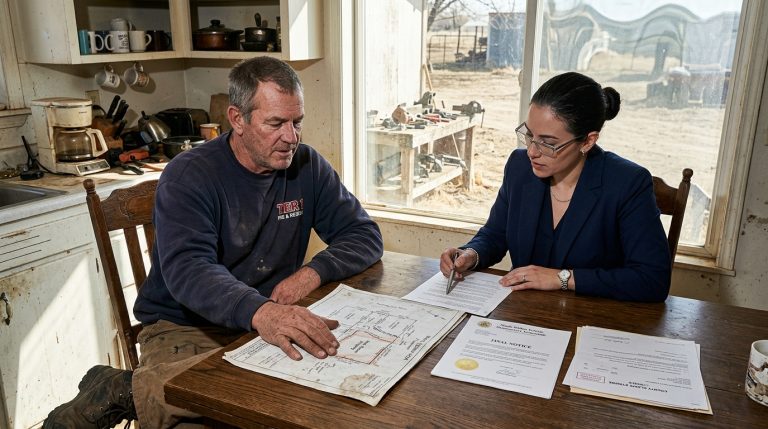
“Six months ago,” George said, pulling a yellowed packet of stapled papers from the file and sliding it across the workbench toward me, “Karen brought a proposal to the board. A ‘beautification initiative’ for the common right-of-way bordering your property line. She claimed the entrance needed visual anchoring. The proposal included a line item for three decorative landscape boulders.”
I picked up the document. My eyes scanned the text down to the official voting record stamped at the bottom.
“The board voted it down,” I read aloud, noting the red ink slash across the motion. Motion Defeated: 3-1.
“Unanimously,” George added, his finger tapping against the paper. “We told her the association had no budget for decorative stone when the paving fund was already running a deficit. It was a dead issue. The project was legally scrapped.” He reached back into the box and pulled out a second, glossier document—a carbon-copy invoice bearing a commercial supplier’s letterhead dated four days after the vote. “Except she didn’t stop. She took funds from the general maintenance reserve—money earmarked for routine drainage repairs—and reallocated them through an emergency executive override.”
The numbers stared back at me in cold, unambiguous black ink. The exact cost of three three-ton granite boulders, paid out of association reserves, authorized solely by the presidential signature of Karen Bishop.
It wasn’t just a neighborhood spat. It was an unauthorized disbursement of funds to execute a personal vendetta. She had used other people’s money to trap my tractor.
“She committed a breach of fiduciary duty,” I said, the weight of the realization settling into my chest with the heavy, satisfying snap of a lock clicking home.
“She committed fraud,” George corrected quietly, looking me dead in the eye. “And if you bring that invoice into Judge Albright’s courtroom tomorrow afternoon, Karen’s little paper kingdom won’t just lose an easement dispute. It’ll collapse from the inside out.”
I rolled the papers up, sliding them securely into the inner pocket of my work jacket, feeling the crisp edge of the evidence against my ribs. The ground had shifted. The fog of ambiguity was gone, replaced by the hard, unyielding geometry of a paper trail.
CHAPTER 5: THE IRON AND THE GAVEL
The air inside Judge Marion Albright’s courtroom smelled of floor wax, old paper, and suppressed panic. It was 1:45 p.m., fifteen minutes before the emergency injunction hearing was docketed to begin, and the room was already humming with a quiet, tense energy.
I sat at the wooden plaintiff’s table beside Mark Cole, watching him methodically lay out a leather-bound folio, a silver-capped fountain pen, and the crisp, folded packets of neighborhood affidavits we had spent the last twenty-four hours gathering. Across the aisle, Karen Bishop occupied the respondent’s table with an absolute, unyielding posture. She wore a sharp, tailored navy power suit, her hair sprayed into a rigid helmet that caught the hard courtroom light. Beside her sat Davies, a slick corporate lawyer whose expensive silk tie and bored expression radiated the lazy confidence of someone who assumed he was walking into a routine neighborhood boundary dispute.
Karen didn’t look back at the gallery, but I could see the rigid tension in her shoulders—the micro-shudder of a predator realizing too late that the terrain had shifted under her feet.
“Mr. Davies,” Judge Albright’s voice cut through the murmurs like a scalpel. She entered from the side chambers, her black robes sweeping over the dais with crisp authority. She didn’t waste time on pleasantries. She sat down, adjusted her steel-framed glasses, and fixed a cool, unimpressed gaze on the defense table. “You requested an expedited review for your client regarding an access blockage in Oak Meadows. Let’s hear your argument.”
Davies stood up smoothly, buttoning his jacket with practiced theatricality. He stepped out into the well of the court, pitching his voice to a smooth, condescending register.
“Thank you, Your Honor,” Davies began, gesturing vaguely toward Karen with an open palm. “What we have here is a straightforward civil disagreement over municipal definitions and common area parameters. My client, Ms. Karen Bishop, acting in her official capacity as president of the Oak Meadows Homeowners Association, has simply sought to preserve the safety, aesthetic standard, and quiet enjoyment of a residential community against an aggressive commercial intrusion.”
He turned slightly, painting me with a dismissive glance. “The plaintiff operates heavy, industrial farming equipment—tractors, hay balers, commercial haulers—directly adjacent to a family neighborhood. The association bylaws explicitly protect common areas from such wear and tear. The placement of landscape stones was a defensive community measure, entirely lawful under the association’s governance charter. We ask that the plaintiff’s emergency petition be dismissed, and that he be directed to pursue alternative access through commercial channels.”
He bowed slightly and retreated to his chair, looking smugly satisfied with his performance.
Judge Albright did not nod. She did not blink. She simply rested her chin on her steepled fingers, her eyes shifting slowly from Davies to the quiet, empty space beside me.
“Mr. Cole?” she said.
Mark stood up without theatricality. He didn’t button his jacket. He simply picked up a single sheet of paper from the table—the county plat map and the original 60-year-old deed—and walked out into the center of the room.
“With respect, Your Honor, my learned colleague is misrepresenting both the geography and the law,” Mark’s voice was calm, conversational, but it carried to every corner of the room. “This is not a matter of neighborhood aesthetics. This is a matter of a legally enshrined, deeded agricultural easement that predates the Oak Meadows subdivision by half a century. County property law supersedes private association bylaws by statute.”
Davies stirred at the defense table, opening his mouth to object, but Judge Albright silenced him with a single, icy flick of her hand.
“Let him finish, Mr. Davies.”
“Thank you, Your Honor,” Mark continued, turning to the stack of affidavits. “Furthermore, what we are dealing with here is not a defensive measure. It is a documented pattern of systemic harassment and abuse of authority.”
Mark began placing the affidavits onto the clerk’s desk one by one, naming names, dates, and petty citations with the methodical coldness of a master logistician. David Harrison’s two-hundred-dollar fine for a plastic tricycle. Mrs. Gable’s three-hundred-dollar penalty for a backyard bird feeder. The veteran forced to dismantle his American flag under threat of a property lien.
With each name, the temperature in the courtroom dropped. Karen’s smug posture stiffened. She leaned over, whispering frantically into Davies’ ear, but her lawyer was no longer looking bored; his eyes were darting rapidly across the stack of papers piling up before the judge. He hadn’t seen those affidavits in discovery. They had prepped for a zoning argument, not a character indictment.
“And finally, Your Honor,” Mark said, his voice dropping an octave as he reached into his folio and withdrew the yellowed packet George Bennett had given me the night before, “we present Exhibit G.”
Mark walked right up to the edge of the judge’s bench and laid down two distinct sheets of paper.
“This is the official meeting minutes from the Oak Meadows Board of Directors, dated six months ago, wherein the board explicitly voted down a proposed beautification project involving landscape boulders. The motion failed unanimously. And this,” Mark tapped the second sheet, “is the commercial invoice showing that four days after that vote, Ms. Bishop unilaterally bypassed her own board, dipped into general maintenance reserves, and purchased those exact boulders using misappropriated association funds—solely to construct an illegal roadblock against my client.”
The courtroom went completely dead. You could hear the faint, mechanical hum of the overhead air conditioning unit grinding against the silence.
Karen went white as chalk. Her lips parted, but no sound came out. Davies stared down at the invoice copy on his table, his professional composure fracturing into open panic as he realized his client had lied to him about the origin of the dispute.
Judge Albright picked up the invoice. She read it once. She read it twice. Then she slowly raised her head, locking her gaze directly onto Karen Bishop. The look in the judge’s eyes was no longer professional detachment; it was the cold, unyielding wrath of an officer inspecting a critical breach in the line.
CHAPTER 6: THE GOLDEN RIG
The diesel engine of the hundred-ton Grove crane rumbled with a deep, chest-vibrating resonance that shook the windshield of my Ford F-250 parked right behind it. It was precisely 9:00 a.m., and the pristine, sterile air of Oak Meadows was about to experience a calculated disruption.
Beside me in the cab, Mark Cole glanced at his watch, his expression as disciplined as an operations officer checking a synchronization matrix. “Judge’s order is stamped and certified,” Mark said, tapping a fresh copy against the console. “Sheriff Miller is standing by at the perimeter to enforce compliance. Let’s go collect our rent.”
I pushed open the door and stepped down onto the asphalt. The morning sun hit the yellow steel boom of the crane as it towered over the manicured suburban rooftops like an industrial monument. Gus, the grizzled owner of the heavy equipment service with a flowing white beard and hands the size of spade heads, hopped down from the crane’s cab, spitting a stream of tobacco juice onto the gutter apron.
“Got the court mandate right here, Jack,” Gus rumbled, his voice like gravel grinding in a cement mixer. “And your lawyer says we got full legal clearance to handle these yard ornaments. You tell me where you want ’em dropped, and my boys will swing ’em.”
“Follow the county easement to the primary block,” I said, my voice flat and carrying the steady rhythm of a briefing. “Then execute the relocation parameters specified in Section Four of Judge Albright’s decree.”
Gus grinned, a wide, wolfish split of yellowed teeth. “Consider it engineered.”
The convoy rolled forward at a deliberate, agonizingly slow pace. At the head sat a county patrol cruiser, its light bar flashing silent amber warnings against the morning sky. Behind it came the massive Grove crane, its massive tires crushing the illusion of untouchable suburban perfection with every rotation, followed by the flatbed truck and my pickup.
Doors across the neighborhood began to click open. Faces peered through vertical blinds. Homeowners stepped out onto their chemically treated lawns, coffee mugs frozen halfway to their lips, staring in absolute disbelief at the heavy machinery invading their quiet grid. They were used to lawn mowers and leaf blowers, not an industrial recovery unit deployed to settle a score.
When the convoy halted directly before the three granite boulders blocking my access road, Gus’s crew moved with practiced, military efficiency. They laid thick wooden outrigger pads down on the soft turf with neighborly permission already secured, extending the hydraulic stabilizing legs with a high-pitched hiss of compressed air.
Just as the crane’s steel cable began to unspool, the front door of the corner colonial flew open with a violent slam.
Karen Bishop stormed down her walkway. She was dressed in a bright pink velour tracksuit, her face flushed a mottled crimson, her eyes wide and wild with the frantic panic of a monarch watching her palace walls crumble.
“What is the meaning of this?!” she shrieked, her voice cutting shrilly through the diesel thrum. She waved a crumpled copy of her bylaw handbook like a shield against an oncoming train. “This is private association territory! You are violating federal subdivision covenants! Sheriff Miller! Arrest these men!”
Sheriff Dan Miller stepped out from behind the cruiser’s open door, his hand resting casually on his utility belt. He didn’t rush. He simply pulled a folded document from his breast pocket and met her halfway across the asphalt apron.
“Ma’am, step back,” Miller said, his tone carrying the flat, immovable authority of the county badge. “This isn’t an HOA debate anymore. This is a court-sanctioned execution of an emergency injunction signed by Judge Albright. Any interference on your part will result in an immediate cuffs-and-booking for obstruction of justice.”
Karen froze, her mouth opening and closing like a landed fish. She looked from the sheriff’s unblinking eyes to the looming yellow boom of the crane, then out toward the sidewalk where a growing crowd of her own neighbors—David Harrison, Mrs. Gable, and half a dozen others—had gathered in lawn chairs to watch the dismantling of her reign.
There were no gasps of support. No murmurs of agreement. Just a heavy, suffocating silence filled with the collective weight of five years of petty tyranny finally meeting its mathematical limit.
Gus didn’t wait for her to recover. “Rigging is secure,” he shouted over the engine.
The heavy steel cables tightened around the center boulder with a sharp metallic clinking sound. The crane’s engine whined under the load, the massive hydraulic boom straining against the three tons of dead weight. With a slow, groaning pop that sounded like a dry branch snapping underfoot, the stone lifted clear of the gravel road.
It swung gracefully through the morning air, tracking an arc over the pristine lawns, and lowered down onto the bed of the waiting flatbed truck with a heavy, satisfying thud that made the chassis dip on its leaf springs.
The first obstacle was gone. The path was open. But the operation wasn’t finished until the equation was fully balanced.
CHAPTER 7: THE ROSE BED MONUMENT
The flatbed truck rolled forward, its heavy tires crunching against the asphalt of Oak Meadows with the slow, deliberate pace of an advancing battalion. Behind it, the yellow boom of the Grove crane swung wide, carrying its massive gray cargo down the immaculate length of Blossom Lane.
Doors clicked shut across the street. Neighbors who had spent years hiding behind double-paned windows and drawn blinds were now standing openly on their manicured lawns, watching the procession with silent, rapt attention. The air smelled of hot diesel exhaust and crushed clover, a sharp contrast to the artificial pine scent that usually drifted from Karen’s immaculate front porch.
We pulled up directly in front of number 121 Blossom Lane—the undisputed crown jewel of the subdivision. The house featured a lawn that looked like a freshly vacuumed green velvet carpet, flanked by symmetrical rows of prize-winning pink roses bursting from dark, freshly mulched beds. It was a landscape designed to project absolute control, untouchable perfection, and unassailable authority.
Karen was already standing at the edge of her driveway, trembling in her bright pink velour tracksuit. Her face was a mottled mask of sheer horror and disbelief as she watched the crane’s outriggers extend once more, settling onto the asphalt with a sharp hiss of compressed air.
“You can’t do this!” she shrieked, her voice cracking into a ragged, desperate plea as she took a half-step toward the equipment. “That’s private residential property! My roses! You’re destroying private landscaping!”
Gus didn’t even look down from the crane’s upper cab. He gave a sharp hand signal to his lead rigger, who smoothly unspooled the heavy steel cables.
I stood beside Mark Cole near the edge of the curb, my hands shoved deep into my jacket pockets, my gaze locked on the geometric precision of the front lawn. We weren’t just clearing a road; we were enforcing the physical architecture of consequence.
The crane operator engaged the winch. The first three-ton block of granite lifted off the flatbed trailer, swinging out in a wide, sweeping arc over the sidewalk. For a split second, it hovered against the bright blue afternoon sky like an iron-gray cloud, casting a long, skeletal shadow directly across Karen’s pristine white front door.
Then, with agonizing, deliberate slowness, the boom lowered.
The stone touched down right in the center of the largest, prize-winning rose bed with a soft, muffled thud that rippled through the damp earth. The sound of snapping stems and crushed petals was audible over the idling diesel engine. A single, flawless pink rose flattened instantly beneath the crushing weight of the granite, its stem bleeding sap into the dark mulch.
Karen let out a ragged, strangled sound—half gasp, half sob—stumbling forward as if she might try to catch the stone with her bare hands.
“No,” she whispered, her voice dropping into a hollow, broken register. “No, no…”
The second boulder followed immediately, dropping with a heavy, sodden thud onto the exact center of the velvety front lawn, tearing open a massive gouge of turf and subsoil that looked like an open wound in the green carpet. The third was placed near the walkway, blocking her primary path with an immovable, brutalist sculpture of raw rock.
They weren’t just dumped; they were positioned with mathematical precision. A permanent, unmovable monument to her own hubris, staring back at her every time she opened her front door.
The crane crew worked in silence, unhooking the cables and rewinding the winch with calm, professional efficiency. Gus climbed down from the cab, wiped his palms on a rag, and handed me a clipboard with the final service receipt marked PAID IN FULL by the association’s emergency escrow account.
“Pleasure doing business with you, Mr. Thompson,” Gus said, offering a curt, respectful nod. “The road is open, and the yard work is done.”
As the heavy yellow trucks rumbled away down the subdivision’s main artery, the street fell quiet once more. The crowd of neighbors remained, watching in stunned, absolute silence as Karen dropped to her knees on the edge of her crushed rose bed, staring blankly at the three gray monoliths resting upon her ruined turf. Her empire of paper and intimidation had been dismantled piece by piece, not with weapons or rage, but with the cold, unyielding weight of the law.
I turned my back on the scene, climbed back into the driver’s seat of my truck, and pointed the nose toward the gravel road leading home. The alfalfa fields were waiting, and for the first time in five years, the road belonged entirely to the earth.
CHAPTER 8: THE QUIET ROAD HOME
The truck engine idled with a deep, even hum as I pulled the Ford to a stop beside the weathered timber of the machine shed. I didn’t cut the ignition right away. I sat there for a long moment, letting the dashboard cool down, my fingers resting lightly against the worn grain of the steering wheel. Through the windshield, the forty acres of harvested alfalfa rolled out toward the dark, protective line of state timberland under a sky that had finally broken clear of its slate-gray threat. The storm had passed safely to the north, leaving behind wet earth and the sharp, clean scent of damp clover.
The battle was over, but the landscape had changed.
Down the road, hidden just beyond the screen of old-growth oaks, the Oak Meadows subdivision was undergoing its own quiet structural collapse. By the time the final court rulings came down, the forensic audit George Bennett’s interim board initiated had laid bare the full extent of Karen’s financial wreckage. The unauthorized boulder purchase wasn’t an isolated eccentric outburst; it was the visible tip of an iceberg built on systematic cronyism, inflated landscaping contracts awarded to family members, and years of extorted fines used to plug holes in a mismanaged operating budget.
Karen’s house—the former showcase home with its pristine green carpet—was already sitting on the market with a stark orange foreclosure notice tucked near the front door. The three granite boulders had remained on her ruined lawn for two agonizing weeks until she was legally compelled to pay a private contractor out of her own pocket to haul them away. She had packed her things into the back of a rented sedan and driven out of the subdivision before the first community barbecue could even begin.
She had tried to build a kingdom out of bylaws and intimidation, forgetting a fundamental law of engineering: when you build a wall entirely out of rigid, unyielding force without accounting for structural load, the whole foundation shatters the moment pressure is applied from the outside.
I turned the key, killing the diesel, and stepped out into the crisp afternoon air. My work boots crunched against the packed earth of the yard.
Across the property, the wooden fence gate leading into the lower pasture hung slightly askew, its hinges having taken a beating from the heavy winds earlier in the week. In past years, I might have let it slide until the weekend, letting the slack wood groan every time the breeze caught it. But today, clarity required maintenance.
I walked over to the open tool shed, sliding my fingers across the metal rack until I found my heavy framing hammer and a box of galvanized three-inch fasteners. I carried them back to the gate, kneeling in the damp grass to examine the rusted pin of the lower hinge.
The iron was worn, bitten deep by years of weather and friction, but the structure itself was sound. It just needed alignment. I set the hammer against the steel pin, tapping it with measured, deliberate force until the latch clicked squarely back into its receiver. The gate swung shut with a solid, balanced thud—no squeak, no resistance, just the smooth motion of a system operating exactly as it was designed to.
From down the gravel access road, past the edge of the now-peaceful subdivision, a faint glint of sunlight caught the hood of David Harrison’s car as he pulled out of his driveway, his daughter’s pink tricycle visible on the side apron, left out in the open without fear. Farther down, Mrs. Gable’s new bird feeders swung gently in the breeze, surrounded by unbothered sparrows. The neighborhood had taken back its own name.
I stood up, brushing a speck of red rust from the knee of my work trousers, and looked out over the unbroken expanse of my own land. The road was clear. The crops were safe. And the silence that settled over the evening was no longer the tense, waiting stillness of a siege, but the deep, abiding quiet of a home restored to its rightful balance.