The Iron Strain: A Weathered Father’s Gritty Fight for His Son’s Tomorrow
CHAPTER 1: THE BROKEN AXLE
The rusty frame of the 1988 Ford pickup groaned under the weight of its collapsed suspension, resting six inches deep in the red Georgia clay.
I knelt in the dirt, rolling the brass-handled socket wrench across my palm until the chipped steel drive bit into my calluses.
“Fixing trash on the roadside won’t stop the county inspector from condemning that porch, Carter,” Dobs called out from the paved shoulder, his loafers crunching loudly on the loose gravel. “Your own roof looks like a sieve, but here you are playing Samaritan for a stranger who won’t even give you a ten-dollar bill.”
I didn’t look up from the wheel well.
“Pass me the three-eighths extension, Logan,” I said quietly, keeping my voice steady for the five-year-old sitting on the tailgate.
Logan reached into the open canvas bag, his small fingers wrapping around the cold iron, and handed it over without a word.
The stranger stood by the open hood, a tall man in a mud-splattered canvas coat, watching my hands move with a silence that felt heavier than the humidity.
I set the wrench against the rusted mounting bolt, leaned my shoulder into the wheel well, and shoved with everything left in my spine.
The bolt popped with a sharp, metallic crack that echoed down the empty tree line.
Dobs snorted, adjusting his synthetic leather jacket as he took two steps closer. “You’re wasting sweat, Ben. People around here pay their bills first and do charity second, but I guess that’s why your wife’s garden is nothing but weeds now.”
The brass handle in my hand stopped moving.
I let out a slow breath through my nose, feeling the cold air hit the back of my throat, before tightening my grip until the knurling pressed impressions into my skin.
“The alternator wire was corroded, and your timing belt is loose,” I told the stranger, standing up and wiping the black grease onto a rag tucked in my back pocket. “She’ll turn over, but don’t take her over forty until you swap that belt.”
The man in the canvas coat reached into his pocket, but I turned toward my truck before his hand came back out.
“I don’t take money for roadside pulls,” I said, sliding into the driver’s seat beside Logan. “Get home safe.”
When we pulled into our driveway ten minutes later, the front door of our weathered house had a bright yellow municipal notice stapled directly into the peeling paint.
I stepped onto the groaning porch boards, pulled the paper free, and read the bold black print citing four structural violations that carried a seven-day deadline for repair.
At the bottom, typed in crisp administrative ink, was the signature of the township zoning board—represented by head officer Arthur Dobs.
CHAPTER 2: THE PRESSURE JOINT
I folded the municipal notice into a neat square, sliding it deep into my back pocket alongside the brass-handled socket wrench.
“Is that a drawing for me, Daddy?” Logan asked, his eyes wide as he looked up from the groaning porch steps.
“Just some paperwork, buddy,” I said, keeping my voice as flat as a dry pine board. “Go inside and wash the dust off your hands.”
He scrambled up the steps, the screen door slamming shut behind him with a dull, wooden thud.
I turned back toward the driveway just as a dusty gray sedan pulled off the gravel shoulder, its tires crunching to a stop right behind my beat-up Ford.
Arthur Dobs leaned out the driver’s side window, resting an elbow clad in his cheap polyester jacket against the door frame. “You read the notice yet, Carter? The township doesn’t appreciate eye-sores, and neither do the folks looking to invest in this county.”
“Seven days is standard for a hearing,” I said, walking down the steps until my boots hit the dirt. “You stapled a final citation without a preliminary warning.”
Dobs let out a dry, rattling laugh, tapping his fingers against the steering wheel. “When a roof’s sagging, the county doesn’t waste time on polite letters. Tell you what—I’ve got a private buyer interested in taking this place off your hands, back taxes and all. You sign over the deed by Friday, and those code violations vanish overnight.”
I reached into my pocket, my fingers finding the cold, chipped steel drive of the 1/2-inch wrench, rolling it slowly across my palm.
“I’m not selling my boy’s home, Arthur.”
“You don’t have a choice,” Dobs sneered, shifting his car into reverse. “A broke mechanic can’t afford three thousand dollars in municipal fines by Monday morning. Think on it before the inspectors bring the paper truck.”
He kicked up a cloud of red dust as he backed onto the road, leaving me standing in the driveway with the smell of exhaust and dry pine needles.
I didn’t watch him leave; my eyes caught something unusual near the treeline bordering his property—a flash of unnatural white sticking out from under a pile of rotting pine straw behind his tool shed.
Before I could walk over to take a closer look, the heavy rumble of a diesel engine filled the air, and the stranger’s mud-splattered truck from the highway pulled into my yard.
The tall man in the canvas coat stepped down, carrying a heavy, cast-iron hydraulic pump assembly under one arm like it was a bag of groceries.
“You fixed my timing on the road,” the man said, his voice low and steady as he set the eighty-pound iron casing down onto my wooden worktable with a dull thud. “Now I need to know if you can rebuild a cracked pressure housing before the sun goes down.”
I looked at the hairline fracture running along the cast iron, then up at his calm, grey eyes. “This isn’t farm equipment. This belongs to an industrial rig.”
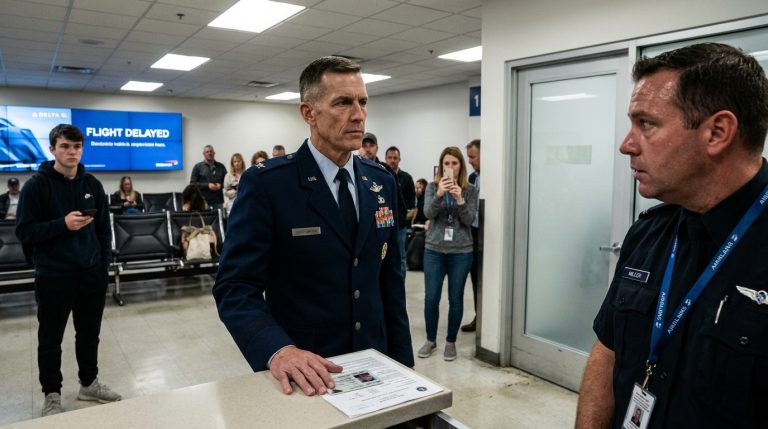
“It belongs to a contract that starts tomorrow,” he replied, pulling a worn leather notebook from his coat. “My name’s Miller. I audit mechanical operations for the regional freight corridor. If you can weld this housing without warping the valve seat, I’ve got two weeks of paid shop work with your name on it.”
I looked back toward the house, hearing Logan humming quietly inside the screen door, then looked at the cracked iron on my bench.
“I’ll need my torch, two pounds of nickel rod, and four hours,” I said, pulling the brass wrench from my pocket and setting it beside the cracked pump. “And you stay right here to turn the crank when I set the seal.”
CHAPTER 3: THE CHECKMATE TRAP
“Steady,” Miller muttered, his fingers lock-jawed around the steel pin as sweat trickled past his temple into his grey collar. “If the housing expands unevenly, the whole valve body locks up.”
I didn’t answer, dragging the nickel welding rod along the seam with a slow, deliberate rhythm that left a thick, silver bead over the fracture.
The heat coming off the bench made my eyes sting, but I kept my focus locked on the molten metal until the final drop fused the seam shut.
I killed the torch valve with a quick flick of my thumb, letting the hiss die down into the cool evening air.
“Let it cool naturally,” I said, setting the torch on the firebrick and wiping my dripping forehead with my forearm. “Touch it with water and it’s trash.”
Miller let out a ragged breath, releasing the alignment pin and flexing his cramped hand. “You’ve got steady hands for a guy whose property is about to get seized by the county.”
I picked up my brass socket wrench from the bench, tapping it twice against the iron casing. “County doesn’t move this fast without a push.”
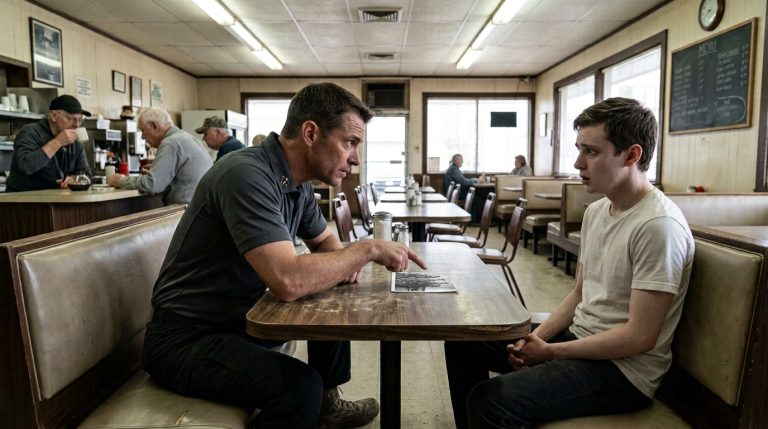
“Dobs isn’t working for the zoning board on this one,” Miller said quietly, reaching into his canvas coat and pulling out a folded blueprint marked with red surveyor lines. “He’s working for the freight development group I audit for. They need six contiguous parcels along this shoulder for a spur line, and your three acres sit right in the throat of it.”
I looked at the blueprint, then turned my eyes toward the treeline bordering Dobs’ shed.
Without a word, I stepped off the porch and walked across the damp grass until my boots hit the brush piles at the property line.
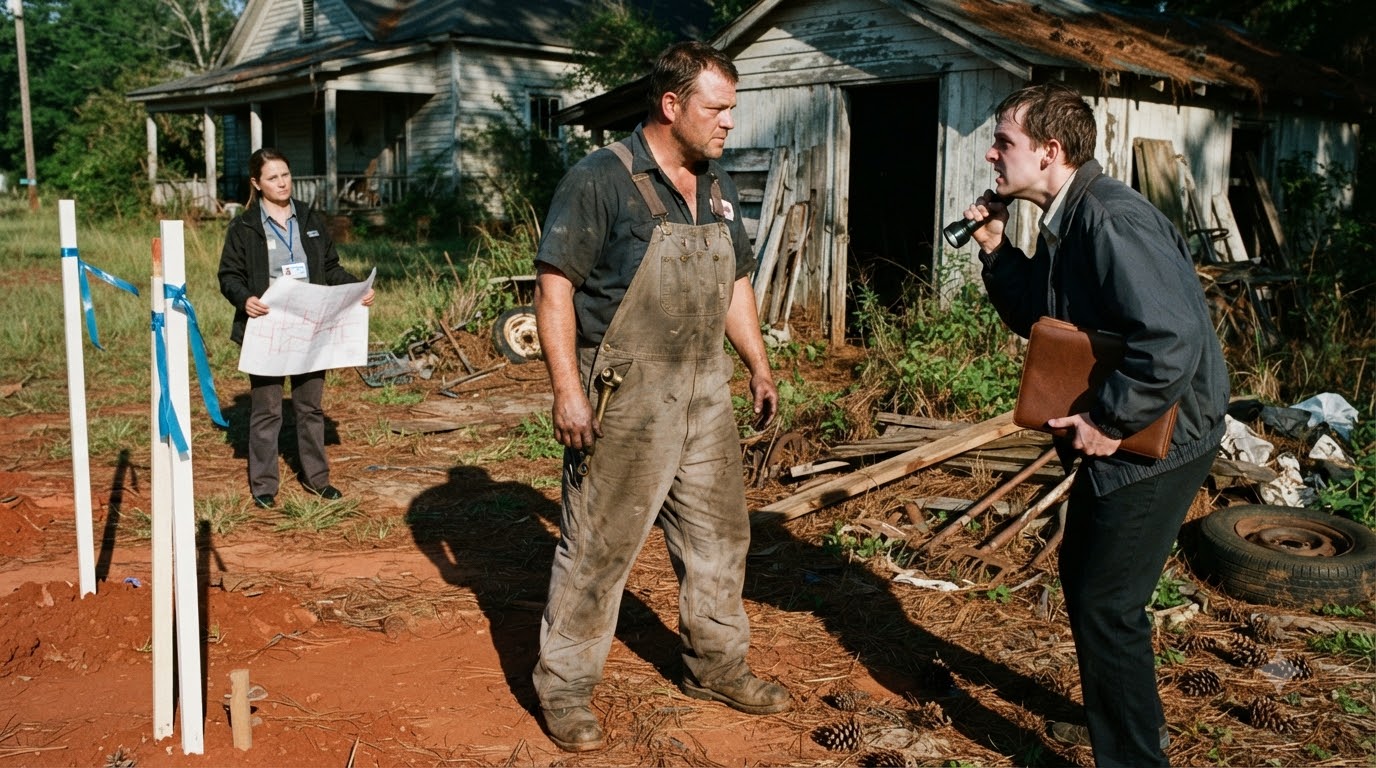
I kicked aside the layer of rotting pine straw, revealing three pristine, painted surveyor stakes driven deep into the red clay, marked with blue plastic ribbon and fresh township GPS coordinates.
“He surveyed my land four days ago,” I said as Miller walked up behind me. “Before he even wrote the citation.”
A flashlight beam suddenly sliced through the darkness from the neighboring yard, blinding us as Arthur Dobs marched through the tall weeds, holding a thick leather folder.
“Trespassing on municipal survey zones carries an extra fine, Carter,” Dobs barked, his voice tight with arrogance as he stopped two feet from the property line. “And don’t bother taking those stakes out. The county board meets at eight tomorrow morning to approve the emergency acquisition.”
I stood my ground, my thumb resting over the worn drive of the brass wrench in my pocket.
“You didn’t put those stakes in for the county, Arthur,” I said, my voice cutting through the hum of the crickets. “You put them in for the industrial corridor company—the same ones paying you a five percent finder’s fee under the table.”
Dobs’ face paled under the flashlight beam, his jaw snapping shut as he took a stiff step back.
“That’s slander,” he spat, his hands trembling slightly as he clutched his folder tighter. “You’ve got no proof of anything, you broke mechanic. Tomorrow morning, this land belongs to the township, and you’ll be packing your boy’s toys in cardboard boxes.”
“I don’t need a confession, Arthur,” Miller spoke up from the shadows, pulling a laminated auditor badge from his jacket and shining his own light directly onto Dobs’ face. “I hold the state approval for the corridor’s infrastructure contracts, and my report on illegal parcel collusion goes to the state ethics board at seven AM.”
Dobs glared at Miller, his throat working as he tried to swallow, his arrogance collapsing into a snarl of pure panic.
“You think some travelling inspector can stop a town ordinance?” Dobs shouted, backing toward his shed with his flashlight shaking wildly. “I’ll have the sheriff on this porch by dawn!”
CHAPTER 4: THE FINAL SETTLEMENT
A white county truck slammed to a halt in the gravel driveway alongside Arthur Dobs’ sedan, kicking up a thick spray of red clay.
Dobs leaped out before the engine even cut, waving his yellow municipal file like a flag while a quiet officer in a tan uniform stepped down behind him.
“That’s him, Officer!” Dobs shouted, his voice cracking as he pointed a trembling finger toward my bench. “He’s harboring an unauthorized commercial operation on condemned residential property and refusing to clear the right-of-way!”
I didn’t rise from the step. I set my brass socket wrench on the porch floor, letting the metallic clink ring out clearly in the cool morning air.
“Morning, Deputy,” I said, looking past Dobs. “He brought you out here pretty early.”
The deputy adjusted his belt, looking between the yellow citation in Dobs’ hand and the cast-iron pump resting on my knees. “Arthur says you’re operating an illegal repair facility without a township permit, Ben.”
Miller stepped out from the screen door, holding a signed state audit manifest and a carbon copy of his official filing.
“This iron housing is state-certified industrial equipment under my direct oversight, Deputy,” Miller said, handing the top sheet directly to the officer. “And Mr. Dobs here spent the last three weeks falsifying code violations to drive down property values for an unregistered private kickback.”
Dobs’ face went red, a bead of sweat breaking through his hairline despite the crisp morning air. “He’s lying! That’s a private auditor with no jurisdiction over township zoning!”
“I don’t need jurisdiction over zoning to freeze your state development permits, Arthur,” Miller replied smoothly. “The ethics board pulled the parcel filings at six thirty this morning. Every citation you stapled to this porch is void.”
The deputy scanned the audit sheet, his jaw tightening as he turned his eyes toward Dobs. “You signed off on private survey stakes on private land without a board vote, Arthur?”
“It was for the economic growth of this town!” Dobs yelled, taking a desperate step toward my porch, his hands clenching into fists. “He’s a broke mechanic holding up a multi-million-dollar corridor over three acres of weeds!”
I stood up slowly, picking up the brass socket wrench and tucking it into my back pocket.
“This isn’t three acres of weeds, Arthur,” I said, stepping down until I stood face-to-face with him in the dirt. “It’s my son’s home. And as long as I can turn a wrench, nobody’s taking it out from under him.”
The deputy folded Dobs’ file, sliding it into his vest pocket before taking Arthur gently by the elbow. “Let’s take a walk back to the cruiser, Arthur. The township attorney is going to want to see these survey dates.”
Dobs pulled his arm back, spitting a muttered curse into the dirt, but his shoulders sagged as the officer guided him toward the car.
Miller set a heavy paper envelope on the workbench beside my tools—a two-year maintenance contract for the regional freight fleet, stamped with an official state seal.
“First shipment of valves arrives Monday, Ben,” Miller said, offering his hand with a firm, steady grip. “Rate’s forty-five an hour, guaranteed forty hours a week.”
“I’ll be ready,” I said, shaking his hand once before watching his truck pull away down the quiet country road.
Inside the kitchen, the toaster clicked, and the gentle hum of the ceiling fan filled the quiet room.
Logan sat at the small wooden table, sipping his juice box and tracing a plastic dinosaur across his placemat.
I sat down beside him, pulled my brass wrench from my pocket, and laid it softly on the table between us.
Logan looked at the worn tool, then up at me with a wide, easy smile. “Did you fix it, Daddy?”
I reached over, ruffling his hair as the morning sun flooded through the clean glass window. “Yeah, buddy. Everything’s fixed.”