The Ledger of Dust: A Retired Soldier Navigates the Fractured Foundation of a Forgotten Covenant
CHAPTER 1: The Withdrawal of Shadows
The ink on the receipt was still damp, a dark, chemical smell that clung to the air between Bobby and the exit. He felt the weight of it—not the money, but the transaction itself. It felt like a stone dropped into a still pond, the ripples silent but inevitable.
He stepped out of the Summit Ridge National Bank and into the blinding, flat light of an afternoon that didn’t know his history. His boots crunched on the pavement, a rhythmic, steady sound that had carried him across three continents and through decades of silence. His mind, however, was already back at the counter, dissecting Kaden’s reaction. The manager hadn’t just been arrogant; he had been afraid. Bobby had seen that specific dilation of pupils, the way the man’s pulse had hammered against his throat when the General’s aid set the classified folder down.
Fear wasn’t a reaction to an insult; it was a reaction to a threat.
Bobby kept his head low, the brim of his cap shielding his eyes. He didn’t look back at the bank, even though he could feel the phantom pressure of eyes on his spine. He reached into his pocket, his calloused thumb tracing the worn edge of the brass Thunderbird coin. It felt different now—colder, vibrating with the static of the digital handshake he’d inadvertently forced when the teller processed his request.
“Sir?”
The voice was tentative, feminine. Bobby didn’t flinch. He simply stopped, his center of gravity shifting slightly, turning his body so he could see behind him without compromising his profile. Maya Rodriguez stood a few paces back, her posture professional, a lingering echo of the Air Force logistics life she’d left behind.
“You’re being watched,” she said, skipping the pleasantries. “And I don’t mean by the security guard.”
Bobby watched a pigeon take flight from a nearby ledge, the sound of its wings sharp against the city hum. “I’m a ghost, Miss Rodriguez,” he murmured, his voice like gravel grinding on concrete. “Ghosts don’t have much to fear from the living.”
“Then why did you put the coin on the counter?” she asked, stepping closer, her eyes scanning the street. “You wanted them to see it. You wanted the General to come.”
Bobby pulled a small, folded piece of paper from his coat—the printout of the transaction. He didn’t look at it, but he knew what it contained: an authorization code that shouldn’t have existed for a bank of this size. It was a digital fingerprint that tied him directly to the infrastructure of the old Command Base.
He looked at Maya, his gaze heavy with a lifetime of decisions that had cost him more than he could ever repay. “I didn’t call the General for help,” he whispered, the words barely audible over the traffic. “I called him to show him the door was open. Now, someone has to walk through it.”
He didn’t wait for her response. He turned and started toward the parking lot, his pace measured, but his heart was accelerating. The moment he stepped away, his phone—a device he hadn’t used for anything but emergencies in years—buzzed twice in his pocket. A series of numbers. Coordinates.
He didn’t need to check them. He knew exactly what the frequency meant: the system he had buried was waking up.
CHAPTER 2: The Paper Trail
Bobby didn’t climb into his truck immediately. He stood beside the driver’s side door, his hand resting on the weathered metal, feeling the fine, gritty layer of road dust that seemed to settle on everything in this town. The buzzing in his pocket had stopped, leaving behind a silence that felt heavier, more expectant. His phone screen sat dark, but he could still see the numbers burned into his retinas: a sequence of military routing coordinates he hadn’t thought about in thirty years.
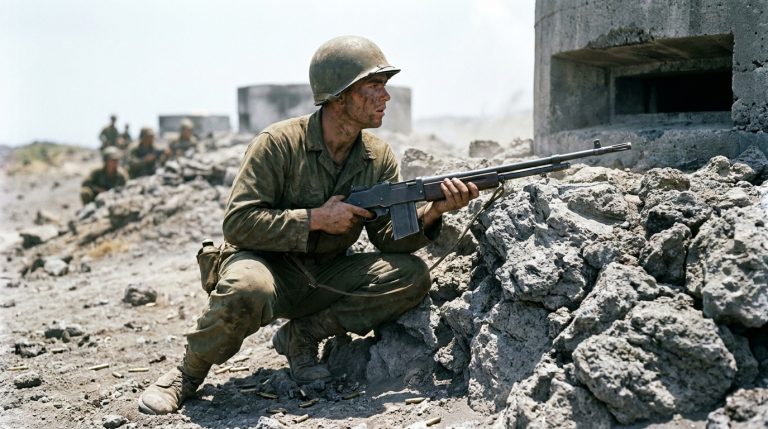
His mind flashed back to a monsoon in ’72, the air so thick with moisture it felt like trying to breathe underwater, the mud of a Da Nang perimeter soaking through his boots. He shook his head, the movement sharp and painful in his stiff neck. The phantom humidity of that memory evaporated, replaced by the dry, sterile heat of the current afternoon. He wasn’t in a war zone, but the rhythm of his pulse told a different story. He was being tracked.
He slid into the driver’s seat. The engine turned over with a familiar, rattling groan. He didn’t head for home. Instead, he pulled into the slow, agonizing crawl of local traffic, his eyes constantly moving to the side-view mirror. Every black SUV that passed felt like a potential interceptor, every red-light stop a tactical vulnerability. He wasn’t just a man driving a truck; he was a liability moving through a system designed to categorize and eliminate him.
He reached his small, two-bedroom house on the outskirts of the district—a place where the lawns were overgrown and the fences were rusted through. It was a sanctuary of sorts, hidden by neglect. Inside, the house smelled of old paper and stale coffee. He went straight to the kitchen table, clearing aside a stack of grocery store circulars to reveal a loose floorboard in the pantry. Beneath it, wrapped in oilcloth, sat a heavy, lead-lined document case.
His fingers worked the latches with a dexterity that belied his age. Inside were the physical counterparts to his digital ghost: discharge papers that smelled of damp attics, hand-drawn schematics of the Summit Ridge infrastructure, and a ledger of account numbers that had been obsolete before the internet was a household name. He spread them out, the paper yellowed and fragile.
He didn’t need to read the numbers; he knew the sequence by heart. The bank had flagged his account because he had finally touched the master key. The “dormant capital” Kaden and his superiors were trying to claw back wasn’t just money; it was the maintenance fund for the entire cryptographic grid of the old command base. By accessing it, he had effectively tripped a silent alarm that was pinging in servers all over the region.
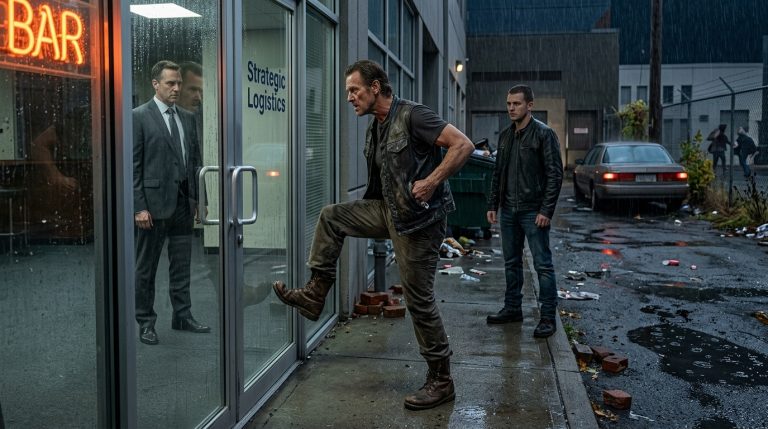
He heard the gravel of his driveway crunch. Not the rhythmic sound of a neighbor, but the heavy, deliberate tread of someone who knew how to approach a property without being seen.
Bobby didn’t panic. He didn’t reach for a weapon—he didn’t own one. He reached for his glasses. He sat back in the wooden kitchen chair, his hands folding neatly over the ledger, and waited. He watched the shadow of a figure move across the frosted glass of his front door. The silhouette was tall, motionless for a long moment, assessing.
He wasn’t surprised when the knock came. It was precise, two sharp raps that demanded acknowledgment.
“I know you’re in there, Colonel,” a voice called out through the wood. It was Maya Rodriguez.
Bobby rose, his joints protesting the movement. He walked to the door and unlocked it, pulling it open just enough to see her standing on his porch. She looked different now—not the corporate contractor from the bank, but someone with dirt on her heels and a look in her eyes that told him she had seen the same shadows he had.
“You’re not a ghost, Bobby,” she said, her voice low. “And you’re not just a veteran. You’re a security breach.”
Bobby stepped aside, allowing her to see the kitchen table covered in documents. “I’m a man who just wanted to buy his grandson a book, Maya. The world chose to make me a breach.”
She stepped inside, her gaze immediately landing on the schematics. She didn’t look like a threat; she looked like someone who had been searching for a reason to wake up, and now that she had, she was terrified of what she was going to find. “The bank isn’t just going to let this go,” she said, closing the door firmly behind her. “They’ve already locked your digital footprint. If you try to move another cent, they won’t just call security. They’ll call in the people who build these systems.”
“Let them,” Bobby said, his voice flat. He looked at the ledger, then up at her. “They think they’re reclaiming money. They have no idea what they’re actually holding.”
He slid a single sheet of paper toward her—a document marked with a symbol she recognized instantly: the Thunderbird. “You want to know what I’m protecting? Start there.”
Maya looked down, her face paling as the gravity of the situation settled into the room, heavy as iron.
CHAPTER 3: The Digital Pulse
Maya didn’t reach for the document immediately. She stood motionless, the air in the small kitchen feeling suddenly thin, scrubbed clean of the comfortable dustiness that had defined Bobby’s home. She looked from the Thunderbird symbol on the paper to the man standing across from her. Bobby hadn’t changed his stance; he was still, weighted, like a piece of architecture meant to weather a storm that hadn’t even begun to break.
“This isn’t a ledger,” she said, her voice barely rising above the hum of the refrigerator. “This is an authorization packet for a regional node. Bobby, these protocols were decommissioned twenty years ago. They shouldn’t exist, let alone be active.”
“They aren’t active in the way the bank thinks,” Bobby replied. He walked over to the stove, the floorboards groaning under his weight, and turned on the kettle. He moved with a slow, deliberate economy of motion, the kind of movement that suggested he was conserving energy for a fight that would be fought in inches, not miles. “The bank is scrubbing dormant capital. They’re running a batch job to clear out accounts that haven’t pinged their servers since the integration. They think it’s efficiency. They don’t realize they’re triggering a recursive diagnostic.”
Maya walked to the table and finally picked up the paper. She didn’t need to be a systems engineer to understand the implication; the symbols were archaic, a blend of military cryptography and early-stage civilian network design. “If they run that batch job, they’re not just closing an account. They’re going to ping the node.”
“And the node doesn’t know the difference between a routine maintenance check and an intrusion,” Bobby finished. He placed two mugs on the table, the ceramic chipped and stained. He didn’t offer her tea; he simply set the stage. “When it triggers, the system will assume an unauthorized breach. It will lock down the regional architecture. Every ATM, every digital transfer, every automated ledger in this county will freeze.”
Maya felt a cold, familiar prickle of alarm. “You’re talking about a regional blackout of the financial sector. The bank is going to notice that before the first cycle finishes. They’ll trace it back to the source.”
“They’ll trace it to me,” Bobby said, meeting her eyes. There was no vanity in his gaze, only a grim, professional assessment of the landscape. “That’s why I came to the bank today. I wanted to see if the terminal was still listening. It is.”
Maya sat down, her fingers tracing the edge of the paper. She was thinking, her mind rapidly deconstructing the logistics of a localized digital collapse. She had spent the last five years in defense contracting, watching the world transition from physical paper trails to volatile, invisible ledgers. She knew the vulnerability here wasn’t the code; it was the arrogance of the people managing it. Kaden and his ilk believed the world was an open book they could edit whenever it suited their quarterly projections.
“We need to move this,” she said, nodding toward the documents. “If they’re looking for a fraud, they’ll have forensic teams scouring every digital entry point. If they find this—if they find the link between the bank’s hardware and your personal protocols—it won’t just be an account closure. They’ll bury you.”
Bobby watched her, evaluating her resolve. He saw the shift in her posture, the way she had stopped looking at him as an old man and started looking at him as a partner in a maneuver. He saw the way she didn’t ask how he had the key or why he had kept it; she was focused entirely on the mechanics of the crisis.
“I have a location,” Bobby said, pointing toward the mountains visible through the window. They were silhouettes against the fading orange of the sky, jagged and indifferent. “A secondary relay. It’s off-grid, but the uplink is still viable. If we can reroute the ping there, we can stall the lock-down.”
“That relay hasn’t been serviced since the base was converted,” Maya countered, her brow furrowing as she calculated the distance. “It’s a climb, even for a vehicle. And if we’re being watched, you’re just leading them right to the backup.”
Bobby picked up his mug, the steam curling into the stale air. “I’m not leading them. I’m forcing them to show their hand. The bank thinks they’re cleaning house. I’m going to show them that the house is built on a foundation they can’t afford to disturb.”
He stood up and walked to the closet, pulling out a heavy, canvas-bound bag. He didn’t look back as he began to pack the ledger and the schematics. The atmosphere in the room had shifted. It was no longer a conversation; it was the beginning of an operation.
Maya stood up, her jaw set. She knew she shouldn’t be here. She knew that by staying, she was crossing a line from observer to participant. But the memory of the General’s salute at the bank lingered, a ghost in the room that made the idea of walking away feel like an act of betrayal. She watched him work, the silence between them heavy, meaningful, and entirely devoid of the small talk that had filled the rest of her day.
“I have a vehicle,” she said finally, her voice steady. “It’s not marked, and it doesn’t have a corporate uplink. We take the service road to the ridge.”
Bobby paused, the bag in his hands, and looked at her. For the first time, a flicker of something like respect crossed his tired features. “The road is washed out at the halfway point.”
“I know,” Maya replied. “I grew up in these mountains. We walk the rest of the way.”
Bobby nodded once. It was a tactical agreement. He closed the bag, the click of the latch sounding like the bolt of a rifle in the quiet kitchen. He walked to the door, checking the street one last time before stepping out into the encroaching twilight. The air had cooled, the scent of ozone—the smell of a pending storm—mixing with the dry, dusty scent of the earth.
He didn’t look back as he followed her toward the dark shape of her vehicle parked down the lane. The pulse in his pocket was steady, a rhythmic reminder of the clock they were now racing against.
CHAPTER 4: The First Warning
The transition from the paved suburban street to the gravel service road was violent. The tires scrabbled for purchase, sending a spray of stone against the wheel wells that sounded like small-arms fire. Maya kept her hands steady on the wheel, her face illuminated only by the faint, greenish glow of the dashboard. Beside her, Bobby sat with his hands resting on his knees, his posture as rigid as the dash-cam mounting. He wasn’t watching the road; he was watching the periphery, his eyes darting toward the dense, black treeline that hemmed them in.
“This road isn’t on the public registry,” Maya said, her voice strained by the vibration of the steering column. “I haven’t taken it since the local government tried to privatize the upper ridge three years ago. If the bank’s diagnostic is pulling from standard GPS data, we might be ghosting them for a few miles.”
“It doesn’t matter if we’re ghosting the grid,” Bobby replied, his eyes fixed on the darkness. “If the bank is running a batch job, they aren’t looking at GPS. They’re looking at the voltage drop at the relay. Every time we cross a junction, we’re drawing power. We’re leaving a breadcrumb trail of conductivity.”
Maya didn’t answer. She accelerated, the engine screaming as the incline sharpened. The car hit a deep rut, the chassis shuddering with a metallic groan that echoed off the canyon walls. They were climbing into the “Dusty Gray”—that liminal space between the town’s artificial prosperity and the raw, uncaring wilderness of the high ridge.
As they rounded a sharp bend, a flicker of light pulsed from a streetlamp ahead—a lone, archaic fixture that had no business being this far up the mountain. It buzzed, a low-frequency hum that seemed to sync with the static Bobby had heard earlier. Maya slowed down, her foot hovering over the brake.
“That shouldn’t be here,” she whispered, squinting through the windshield. The light didn’t glow steadily; it strobed, a rhythmic, uneven flash that looked like a signal.
Bobby didn’t say a word, but he leaned forward, his focus sharpening. “It’s not a malfunction. It’s a probe.”
“A probe?”
“The system is reaching out,” Bobby said, his tone devoid of fear, filled only with the cold, hard pragmatism of a man who had spent his life dealing with machines that could think. “It’s sensing the key I’m carrying. It’s trying to verify the handshake.”
Maya slammed the car into reverse, the tires kicking up a cloud of dust that hung in the headlights like a shroud. She spun the wheel, aiming for a narrow gap in the foliage that led to a secondary maintenance path. “If it’s probing, it means they know exactly how close we are to the relay.”
“They know we’re moving,” Bobby corrected. He watched the strobing light vanish behind them as they slipped into the darker, tighter confines of the brush. “But they don’t know why. Not yet.”
They drove in silence for ten minutes, the car crawling over roots and shale, the suspension taking a beating that would have totaled a lesser machine. The air grew colder, the metallic tang of ozone sharpening. Bobby reached into the canvas bag and pulled out a small, handheld diagnostic tool—an antique piece of gear with a needle gauge and a series of copper leads. He hooked it to the car’s auxiliary power port.
The needle swung wildly, then settled into a frantic, rhythmic tapping.
“They’ve initiated the hard-lock,” Bobby said, his eyes scanning the gauge. “The ATMs in the valley are down. The credit clearinghouses are next.”
Maya felt the sweat turn cold on her neck. “If they shut down the regional financial network, they’re going to declare a state of emergency. We won’t just be running from a bank manager anymore, Bobby. We’ll be running from everyone who loses access to their assets.”
“We were already running from everyone,” Bobby muttered. He looked at her, his expression unreadable in the gloom. “The question is, what are you going to do when you realize that helping me makes you an accomplice to the biggest system failure in this country’s history?”
Maya gripped the wheel, her knuckles white. She looked at the dashboard, at the small, flickering diagnostic tool, and then back at the dark, winding road ahead. “I stopped caring about the system the day I realized it only works if you’re willing to pay the price in blood and silence. I’m already here, Bobby. Don’t ask me again.”
Bobby nodded, a subtle gesture of acknowledgement. He reached out and adjusted the diagnostic leads, his fingers steady. “Then keep driving. We have three miles to the relay, and the system is about to start trying to rewrite our path.”
As if in response, the car’s internal display blinked off. The radio, which had been silent, let out a sharp, piercing whine that climbed in pitch until it was nearly ultrasonic. They were entering the heart of the network’s influence, a place where the lines between the physical world and the digital ghost were starting to dissolve.
Ahead, the trees thinned, revealing a flat, concrete clearing nestled against the side of the mountain. In the center stood the relay station—a rusted, windowless bunker overgrown with vines and shielded by a chain-link fence that had long ago surrendered to the elements. It looked like a tombstone for a dead era, but to Bobby, it was the only thing standing between the world and a total, irrevocable collapse.
Maya pulled the car to a halt, the engine cutting out with a reluctant shudder. The silence that followed was absolute, heavy with the weight of the mountain and the unseen, pulsing heartbeat of the machine buried beneath them.
CHAPTER 5: The Ghost in the Machine
Bobby didn’t hesitate. He pulled a heavy set of brass keys—keys that hadn’t seen a lock in decades—from his coat pocket. They were cold, biting into his palm with the weight of unforgotten responsibility. He inserted the primary key into the bunker’s main locking mechanism, which was choked with layers of oxidation and grit. He twisted, and the lock yielded with a sound like grinding teeth.
“Stay behind me,” Bobby murmured, his voice low and devoid of unnecessary urgency. “If the sensor grid is live, the entry sequence is the most vulnerable point.”
Maya moved to his shoulder, her flashlight beam cutting a sharp, clinical path through the gloom of the bunker’s threshold. The air inside was stagnant, tasting of ozone and dead circuitry. As they stepped onto the metal grate floor, the hum intensified, vibrating through the soles of their boots. The relay wasn’t just a repeater; it was a heart. Even after all these years, the massive, floor-to-ceiling cabinets lining the walls pulsed with faint, rhythmic orange LEDs—the amber ghost of a system that refused to be forgotten.
Bobby crossed to the central terminal, his movements precise. He cleared a layer of dust from the console with his sleeve, revealing a keyboard that felt more like a piano than a computer. He began to input a sequence, his fingers flying with a muscle memory that defied the tremor in his hands.
“I’m initiating a bypass,” he said, the blue light of the terminal washing out the lines of his face. “If I can spoof the diagnostic ping, we can trick the bank’s batch job into thinking this node is already fully integrated. It’ll stop the system-wide lockdown.”
Maya kept her light trained on the bunker door. “How long?”
“The handshake takes as long as the system wants it to take.”
Suddenly, the console let out a shrill, digital scream. The orange LEDs flared to a harsh, blinding crimson. The entire bunker shuddered, and a low, guttural grinding noise echoed from the depths of the facility’s cooling shafts.
“It’s not buying the spoof,” Bobby said, his voice sharpening. “Someone is manually overriding the handshake from the bank’s end. They know we’re here.”
“Can you trace it?”
“I don’t have to,” Bobby said. He pointed to a secondary monitor that flickered to life. On the screen, a series of scrolling red lines began to map the incoming request. It wasn’t a batch job anymore. It was a direct, targeted interrogation of the node’s cryptographic root. The screen displayed a single, flashing prompt: AUTHENTICATION REQUIRED: BISHOP LEVEL CLEARANCE.
The realization hit Maya like a physical blow. “Bobby, they aren’t just trying to reclaim capital. They’re trying to unlock the base infrastructure. They don’t want the money; they want the access codes.”
Bobby’s jaw tightened. He realized then that his decoy—the bank’s greed for “dormant capital”—had been a smoke screen. The bank, or whoever was pulling the strings within their security architecture, had been waiting for the exact moment the node was accessed to force a total system disclosure.
“I can’t let them through,” Bobby said, his hand hovering over a manual emergency shutdown lever near the terminal. “If they get the clearance, the base’s entire defensive perimeter goes live. And I don’t mean just the financial locks. I mean the surveillance, the automated logs, the entire history of every operation that was ever run through this site. If they get that, my grandson’s safety—everything I’ve spent the last twenty years burying—will be exposed.”
“If you pull that lever, you destroy the node,” Maya cautioned, her hand reaching toward his arm. “You’ll cut yourself off from the system forever. You’ll be a target, and you won’t have any leverage to defend yourself.”
“I was never the target,” Bobby said, a strange, grim calm settling over him. “I was just the lock. And a lock that’s no longer useful is a liability.”
He looked at the red text pulsing on the screen. The interrogation was accelerating, the system’s logic tearing through his firewalls like paper. He had seconds. He could see the progress bar climbing, a digital countdown to the total loss of his legacy.
He didn’t pull the lever. Instead, he ripped a handful of copper leads from the terminal board, his fingers raw as the sharp metal sliced his skin. The console surged, sparks showering the room in a jagged, violent display of dying power. The screen flickered, turned to static, and then went dead. The bunker plunged into a suffocating, heavy darkness, save for Maya’s flashlight beam, which frantically swung to catch Bobby’s face.
“You didn’t shut it down,” Maya said, her voice breathless.
“No,” Bobby whispered, leaning back against the cold, dead terminal. “I just moved the key. And now, the hunt truly begins.”
Outside, the wind picked up, a high, lonely whistle that sounded like the mourning of the machine. The relay station was silent, but they could both hear it—the crunch of tires on the gravel road outside. They weren’t alone.
CHAPTER 6: The Asset Exposure
Bobby didn’t move. He kept his eyes locked on the faint, ambient light bleeding in through the narrow gap between the bunker’s rusted steel doors. The vehicle outside had killed its engine, leaving behind a silence that pressed against his eardrums like deep-sea pressure. He could hear the distinct sound of car doors opening, the heavy, metallic swing followed by the soft, almost rhythmic thud of boots hitting the loose gravel.
He looked at Maya. In the low light, her face was a mask of cold, hard focus, her hand resting on a heavy metal wrench she’d pulled from the relay’s maintenance kit. She didn’t look scared; she looked like a woman who had finally run out of room to maneuver and was ready to hold her ground.
“Two of them,” Bobby whispered, his voice barely a breath. “Military cadence. They aren’t bank security.”
Maya leaned closer to his ear. “If they aren’t security, who are they? The General wouldn’t send men to hunt us—he knows what this relay is.”
“They aren’t sent by the General,” Bobby said, his mind racing through the tactical possibilities. “They’re sent by the audit branch—the ones who initiated the remote override. They’re here for the physical hardware, because they know the digital key is useless without the master drive that’s buried in the sub-floor.”
The boots outside stopped right in front of the bunker entrance. There was the sound of a mechanical click—a high-end electronic pick—and then the rasp of the door being tested. The hinges shrieked in protest, a long, drawn-out sound that tore through the quiet of the ridge.
Bobby shoved the canvas bag into Maya’s hands. “If they come in, I’m the distraction. You find the maintenance shaft behind the main cabinet. It leads to the drainage culvert. It’ll take you to the tree line.”
“I’m not leaving you to face them alone,” Maya hissed.
“You aren’t leaving me,” Bobby said, his voice hard as iron. “You’re taking the leverage. If they get the codes, this entire region’s digital integrity is toast. You need to get that ledger to someone who understands what it is—not the General, not the bank. Someone who actually has the clearance to bury it.”
The bunker door groaned as a crowbar was wedged into the gap. A beam of white, tactical-grade light cut through the room, sweeping across the rusted cabinets and finally settling on them.
Bobby didn’t flinch. He stood up, turning toward the light, his silhouette framed by the dead, dark terminal.
“Step away from the console, Colonel,” a voice called out—neutral, clipped, and terrifyingly efficient. “You’re in possession of assets that don’t belong to you.”
Bobby didn’t move. He kept his hands raised just enough to be visible, his posture unyielding. “These assets have been mine for thirty years. And they aren’t assets, they’re liabilities. Maybe you should tell your employers exactly what happens when you try to force an open-handshake on a dead-man’s switch.”
The light flickered, the man holding it hesitating for a fraction of a second. That was the opening Bobby needed. He kicked the heavy metal crate of spare circuit boards across the floor, the sound of crashing metal filling the bunker. In the confusion, he dived behind the secondary terminal rack.
“Go!” he roared at Maya.
He heard the heavy, rapid footfalls of the two men as they stormed the bunker. Gunfire erupted, but it wasn’t the roar of automatic weapons—it was the controlled, sharp pop of compressed-air tasers, the bolts embedding themselves into the concrete wall where he had been standing a second before.
Bobby scrambled, his joints aching, moving through the labyrinth of rusted cabinets. He knew the layout of this bunker better than he knew the rooms of his own house. He pulled a loose, heavy steel rod from the wall, the rusted metal flaking off in his hand. He wasn’t a soldier anymore, but he was a man protecting his own ground.
He saw the first man’s silhouette against the beam of the flashlight. He swung the rod—not with rage, but with the measured, terrifyingly efficient precision of a man who had spent his life fighting for things that couldn’t be quantified on a ledger. The rod connected with the man’s tactical vest with a sickening thud, the impact sending the intruder stumbling back into the door frame.
The second man pivoted, his flashlight beam swinging wildly. Bobby didn’t give him the chance. He lunged, not for the man, but for the flashlight itself, grabbing the wrist and twisting. The man shouted, his grip loosening, and the light fell to the concrete floor, bathing the room in a strobe-like effect of shadow and movement.
Bobby’s heart was hammering against his ribs, a frantic, irregular rhythm that threatened to buckle his knees. He was exhausted—not just from the fight, but from the realization that he was failing. He could hear Maya’s boots hitting the metal grate as she sprinted toward the maintenance shaft.
He grabbed the edge of a heavy cabinet and heaved, pulling it over. It hit the floor with a bone-jarring crash, blocking the entrance to the maintenance shaft just as the two intruders began to regroup.
“You think you’re holding on to something, Colonel?” the first man called out, his voice now strained. “You’re just delaying the inevitable. The system is already rewriting your records. By morning, you won’t even exist.”
Bobby stood in the darkness, his breath coming in ragged, shallow gasps. He looked at the dead terminal one last time. He wasn’t a liability, he realized. He was the only thing standing between the history of the base and the people who wanted to weaponize it.
He felt the cold, hard reality of the situation. He couldn’t win this fight—not physically. But he could change the terms of the defeat.
He pulled the brass key from his pocket, the one he hadn’t used yet. He didn’t turn it in the door. He turned it in the lock of the dead terminal’s base cabinet. It clicked open, revealing not a drive, but a manual trigger.
“I don’t need to exist,” Bobby said, his voice barely a whisper in the gloom. “I just need to make sure you can’t reach what’s buried.”
He gripped the trigger, the cold metal biting into his palm, and pulled.
The bunker didn’t explode. It didn’t burn. Instead, the floor beneath the cabinets shivered, and the entire room tilted as the deep-earth vibration of a long-dormant mechanism began to groan to life. The system wasn’t dying—it was resetting.
And they were standing right in the center of the blast.
CHAPTER 7: The Converging Paths
The bunker’s structural groan was followed by a sudden, violent drop in pressure. The air grew thin, tasting sharply of ozone and ancient hydraulic fluid. Bobby gripped the edge of the terminal rack, his knuckles white, as the room pitched to the side. The two men who had stormed the room were thrown off balance, their tactical gear clattering against the concrete floor as they scrambled to find footing. One of them fumbled for his weapon, but the floor shifted again, a mechanical heave that sent a shower of debris falling from the ceiling.
“It’s opening,” Bobby shouted, his voice barely audible over the screeching of steel against stone. “The sub-floor—the base is purging its cache!”
Maya had already reached the maintenance shaft, but she was trapped, the heavy cabinet Bobby had overturned wedged tight against the opening by the room’s shifting geometry. She struggled, her hands raw and bleeding from the effort to pry it back. She looked at Bobby, her eyes wide, realizing the danger wasn’t just the men—it was the facility itself.
Bobby saw the lead intruder recover, leveling his device—a sonic disruptor—directly at the terminal rack. The man wasn’t aiming for Bobby; he was aiming for the power coupling, intending to force a hard crash that would override the purge.
Bobby didn’t think. He didn’t weigh the consequences or calculate the tactical advantage. He simply threw his body into the path of the sonic beam. The discharge hit him in the shoulder, a physical punch of concentrated sound that sent him sprawling across the floor. The world blurred—a kaleidoscope of ringing static and blinding, white-hot pain. He hit the concrete, his arm useless, his hearing replaced by a high-pitched, agonizing drone.
But the beam had missed the coupling. It had struck the terminal’s main circuit board instead, the resulting overload turning the equipment into a glowing, sparking carcass of failed logic.
The room fell into a sudden, eerie stillness. The mechanical groaning slowed, the gears locking into place with a series of final, resonant thuds that shook the mountain. The air stopped venting. The orange LEDs flickered one last time and died.
The two men stood up, their confidence shattered by the facility’s sudden, total silence. They looked at the destroyed console, then at Bobby, who lay crumpled and gasping for breath on the floor.
“You fool,” the lead intruder muttered, stepping forward with his boots crunching on broken glass. “You just triggered a total system-wide wipe. You’ve erased the codes, the history, the access—you’ve deleted everything.”
Bobby lifted his head, his vision swimming, his chest burning with every ragged breath. He laughed, a thin, broken sound. “That was the point,” he choked out. “You wanted the access. You wanted the power to rewrite the records. Now, there’s nothing left to rewrite.”
The man reached down, grabbing Bobby by the collar of his coat and hauling him up. The man’s face was inches from his, his eyes cold and devoid of anything resembling empathy. “You think erasing the data stops us? We don’t need the codes now. We have you. You’re the only physical record of the infrastructure left.”
“Then you’re going to be very disappointed,” Bobby said, his voice gaining a sudden, terrifying clarity. “Because I didn’t come here to protect the data. I came to be the last one to know where it’s buried.”
Maya, having finally managed to shift the cabinet just enough to create a gap, lunged forward. She grabbed the metal rod Bobby had dropped and swung it with all the strength left in her body. The heavy, rusted bar caught the man in the temple. He collapsed, his grip on Bobby’s coat slackening as he dropped to the floor like a sack of grain.
The second man turned, but he was too late. Maya was already upon him, her movements frantic, primal, fueled by the sheer desperation of their situation. She used the rod to pin him against the door frame, the steel digging into the soft tissue of his shoulder until he let out a choked, desperate shout and dropped his weapon.
“Go!” Maya screamed, grabbing Bobby’s good arm and heaving him to his feet. “Bobby, move!”
They scrambled toward the maintenance shaft, Bobby moving in a daze, his shoulder a fire of agony. They squeezed through the gap behind the cabinet, slipping into the cold, damp darkness of the culvert. As they crawled, the bunker behind them began to vent—a series of deafening, explosive pops as the facility’s internal power cells surged and died, one by one.
They didn’t look back. They kept moving, through the mud, through the dark, through the suffocating weight of the mountain pressing down on them. Bobby’s mind was a blur of fragmented memories: the monsoon in Da Nang, the feeling of the Thunderbird coin in his pocket, the face of his grandson, and the absolute, crushing realization that he had just dismantled the only world he had ever known.
They emerged into the freezing night air, the forest around them thick with the scent of wet pine and the cold, indifferent stars above. They were alive, but they were empty. The ledger, the codes, the history—all gone.
Bobby collapsed against the base of an old, gnarled oak, his breath hitching in his chest. He looked up at the sky, his eyes wet. He had kept his promise. He had protected the only thing that mattered. And for the first time in thirty years, the silence didn’t feel like a weight. It felt like an ending.
He reached into his pocket and pulled out the brass coin. It felt different now—heavy, but neutral. The static was gone. He held it for a moment, then, with a trembling hand, dropped it into the mud at his feet.
“It’s over,” he whispered.
Maya stood beside him, her chest heaving, her hands covered in grease and dried blood. She looked at the mountain, at the black, looming bulk of the ridge, and then at the old man who had finally, truly, come home.
“Is it?” she asked, her voice soft.
Bobby didn’t answer. He simply closed his eyes, listening to the wind, letting the silence settle into his bones, letting the truth of what he had destroyed become the foundation of his peace.
CHAPTER 8: The Final Key
The cold wind biting into Bobby’s exposed skin acted like a wake-up call, sharp and unforgiving. He remained slumped against the oak tree, his breath coming in shallow, ragged clouds of vapor. Maya knelt beside him, her hands trembling as she pulled a small, first-aid kit from her bag. She didn’t speak, the sound of her frantic, efficient movements—the tearing of gauze, the snap of medical tape—filling the void left by the destroyed bunker.
“You don’t have to fix this,” Bobby murmured, his voice sounding thin against the vast, empty mountain. “The damage is already done, Maya. The switch was the only way.”
“The switch didn’t just kill the relay,” Maya said, her eyes fixed on the ragged wound in his shoulder. “It triggered a cascade. I saw the monitor before it went dark. It wasn’t just a wipe—it was an archival dump.”
Bobby watched her, his brow furrowing as the reality of her words began to crystallize. “A dump? To where?”
“To the public registry,” Maya replied, her voice filled with a mix of shock and grim satisfaction. “The moment you triggered the dead-man’s switch, the system broadcast the entire history of the Summit Ridge infrastructure to every open-source repository, every government archive, and every independent auditor in the state. They didn’t just want the access, Bobby. They wanted the secrets. And now, those secrets aren’t buried—they’re public domain.”
Bobby looked back toward the bunker, his mind reeling. He hadn’t just destroyed the facility; he had unmasked the entity that had been using it as a shadow server for three decades. The bank, the General, the audit branches—they would be staring at a massive, transparent record of their own corruption by sunrise.
The weight that had defined his life for thirty years suddenly vanished. It hadn’t been about hiding the truth; it had been about waiting for the moment when the truth could do the most damage. He had acted as the anchor, keeping the secrets submerged until the pressure became unsustainable, and then, he had simply let go.
“They’ll come for us,” Maya whispered, her eyes turning toward the distant, flickering lights of the valley below. “They’ll know who initiated the transfer.”
“Let them come,” Bobby said, a faint, weary smile touching his lips. He reached out and picked up the brass coin from the mud, rubbing the grit from its surface. It was just a piece of metal now—a memento, not a key. “They can’t take back what’s already in the air. The truth is the one thing they can’t audit out of existence.”
He stood up, his body protesting the movement, but his movements were fluid, unburdened. He looked at Maya, seeing not just a colleague, but someone who had also been freed by the destruction of the system they had served.
“What now?” she asked.
“Now?” Bobby looked at the sunrise beginning to bleed over the jagged peaks of the ridge, painting the sky in soft, hopeful hues of gold and amber. “Now, I think I’ll go see my grandson. I owe him a book.”
He took a step, his gait steady, the limp in his leg a permanent, grounding reminder of the journey he had taken. He reached into his coat and produced a small, leather-bound journal—the real record, not the digital ghost he had just erased. It was a simple, handwritten account of the work, the people, and the cost. He handed it to Maya.
“You should hold on to this,” he said. “It’s not classified. It’s just… the truth.”
Maya took the journal, her fingers tracing the worn leather. She understood then that Bobby hadn’t just destroyed the facility; he had passed the torch, shifting the responsibility from the machine to the human.
As they walked down the mountain, the dawn light grew, transforming the harsh, rusted landscape of the ridge into a world that felt, for the first time in his memory, like it was capable of peace. The distant hum of the valley—the hum of the system waking up to a world it no longer controlled—was a distant, fading roar.
The Payoff was clear in the distance: down in the valley, the first of the news reports began to break, a digital ripple that would soon become a tidal wave of transparency. Poetic Justice was already in motion; the tools the bank used to maintain their shadow control had become the very weapons that ensured their downfall.
Bobby reached into his pocket and touched the brass coin one last time. He felt the weight of it, the history of it, and then he let it go, dropping it into a patch of tall, wild grass. The coin disappeared, a small, inconsequential piece of metal in the vastness of the mountain. He didn’t need it anymore. The symbolic closure was complete.
The cool down was a slow, rhythmic descent. They reached the tree line, where the forest gave way to the valley floor. The air was crisp, scented with the promise of a new day. They walked in silence, a quiet, deep emotional connection binding them—the shared burden of the secret now lifted, replaced by the simple, profound act of walking into a morning they had once feared they would never see.
Bobby felt the strength in his step, the clarity in his mind. He was no longer a ghost, a security breach, or a liability. He was just a man. And as the sun hit the valley, he felt the deep, resonant hum of his own heartbeat, steady and true. He had kept his promise to the world, and in doing so, he had finally, truly, kept his promise to himself.