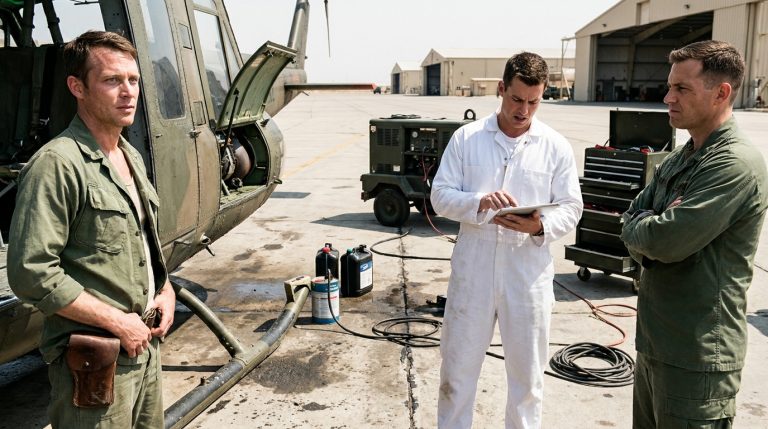
The Steel Blue Line: A Rusted Narrative of Whispering Iron, Fractured Ranks, and the Flight Line Ghosts
CHAPTER 1: THE IGNITION VERDICT
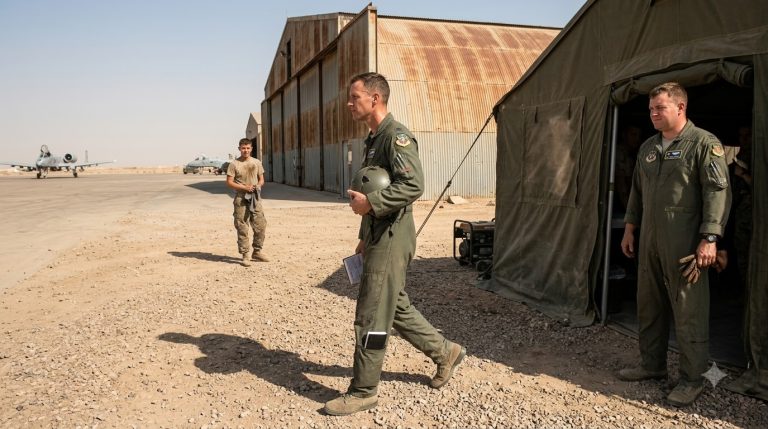
The heavy scent of low-grade aviation fuel and dry industrial degreaser clung to the corrugated walls of Hangar 7, thick enough to taste. Diana Harper didn’t adjust her grip on the wooden handle of the industrial mop. She let the wet cotton head rest against the gray, grease-darkened concrete of Davis Mountain Air Force Base, her boots rooted exactly two inches from the yellow safety line.
“Yes, sir,” she said.
Her voice had no weight. It was the flat, level tone of a person who had spent twelve weeks observing the oil-bleed patterns beneath tail number 87463.
Captain Stone stepped forward, the crisp fabric of his flight suit whistling against his thighs. He was twenty-eight, his aviator sunglasses dangling from a high-tensile nylon cord, the gold wings on his chest catching the harsh glare of the overhead sodium lights. Behind him, the three junior pilots from his entourage shifted their weight, their phones held at chest height, lenses focused on the faded janitorial logo pinned to Diana’s left pocket.
“Come on, Stone,” Lieutenant Blake muttered, his Boston accent cutting through the low, ambient drone of the hangar’s ventilation shafts. “Leave the floor crew alone. She’s just clearing the sump leaks.”
“This is an educational check, Blake,” Stone said, his eyes never leaving Diana’s face. He gestured toward the dormant, twelve-ton predatory bulk of the Thunderbolt II behind him. The massive GAU-8 Avenger cannon protruded from the nose like a split iron pipe, dull and smelling of old solvent. “Our facility support specialists should understand the investment. Go ahead, sweetheart. Take the seat. Let’s see if you can find the battery switches before security sweeps the bay.”
Diana looked past his shoulder. Technical Sergeant Foster was sixty feet away at the maintenance bench, his calloused hands pausing over a hydraulic seal schematic. His eyes met hers—a sudden, sharp contraction of his brow. He knew the live system tags were still hanging from the port side fuselage.
Diana stepped around the mop bucket. Her worn sneakers made no sound on the polished floor. She didn’t climb the maintenance ladder with the hesitant, wide-eyed caution of a civilian; her fingers found the cold recessed handles of the fuselage step-points with an automatic, muscle-deep familiarity that felt like old iron clicking into a groove.
“Hey,” Foster called out from the bench, his voice rising above the hum of the generator carts. “Captain, that bird’s got live lines. She shouldn’t be past the rail.”
“Relax, Foster,” Stone laughed, throwing his head back. “She’s not going to turn a nut.”
Diana swung her leg into the cockpit. The smell of old leather, sweat, and oxygen masks hit her—the precise sensory signature of her previous life. Her civilian coveralls bunched at her knees as she dropped into the ACES II ejection seat. She didn’t look at the main heads-up display. Her left hand moved instantly to the lower console, her fingers sweeping across the toggle array by touch alone.
[V-1] Her thumb caught on a small, sharp piece of metal left in the seam of the auxiliary power unit guard. A broken lock-wire. Not standard issue. Someone had forced the cover plates during the night shift.
She reached out, her index finger hitting the auxiliary power unit start switch.
The low, distant whine of the small turbine in the tail section began to spool, a high-frequency vibration that traveled up through the aluminum ribs of the seat and straight into her spine.
Down on the concrete, the smirk on Stone’s face froze. The phones in the junior pilots’ hands tipped downward by three degrees.
“APU online,” Diana muttered to the empty glass of the canopy, her eyes fixed on the turning fuel-flow needle. “Electrical power stable.”
She didn’t wait for Stone to look up. Her right hand moved to the port engine fuel flow control, clicking it past the detent into the live ignition gate. The hangar walls began to hum.
CHAPTER 2: THE DATA TRACE IN THE SHACK
The cockpit floor plates hummed with a low, metal-on-metal thrum as the port TF34 turbofan engine found its idle gate. The vibration was a direct, unfiltered frequency that traveled through Diana’s heavy janitorial boots, up the iron frame of the ACES II seat, and locked into the center of her jaw. Outside the scratched plexiglass canopy, the desert heat of Davis Mountain Air Force Base seemed to warp, distorted by the sudden, shimmering wave of jet exhaust that washed over the yellow safety lines of the tarmac.
Captain Stone didn’t move. His right hand remained frozen midway toward his chest, his fingers still hooked around the nylon cord of his aviator sunglasses. The smug, performative grin that had been calculated for his pilots’ phone screens didn’t drop so much as it dissolved, leaving his mouth slightly open, a small muscle beneath his left eye twitching against the harsh glare of the overhead sodium lamps.
Diana didn’t look down at him. Her gaze remained fixed on the round-dial engine instruments on the right console. Her left hand, grease-stained from the utility cart she had parked near the maintenance bay forty minutes prior, rested over the twin throttle grips. The cold aluminum of the levers felt exactly as it had three years ago over the ridges of the Hindu Kush—pitted, industrial, and indifferent.
“Thirty seconds,” she murmured into the dead cockpit intercom. Her thumb came down on the starboard engine ignition toggle, her touch precise enough to avoid the small, jagged piece of broken lock-wire she had noted on the auxiliary plate panel during her initial circle check.
The starboard engine answered with a low, hollow whistle that rapidly built into a high-pitched scream. The dual resonance of the twin turbines rattled the corrugated metal panels along the eastern wall of Hangar 7, a sound that brought three additional mechanics out from the tire shop, their faces pale under their grease-smeared ballcaps.
Down on the concrete floor, Technical Sergeant Foster dropped his clipboard. The aluminum edge clattered against the greasy floorboards of his workstation, but he didn’t stoop to retrieve it. His boots were already moving, eating up the distance between his desk and the base maintenance database terminal housed in the plywood shack at the corner of the bay. He didn’t look at Captain Stone or the junior pilots who were now lowering their devices with a slow, defensive hesitation. Foster’s eyes were locked on the tail number—87463—and the way the woman in the faded cleaning coveralls sat inside the glass bubble, her shoulders squared with the unyielding, geometric alignment of a pilot who had logged five hundred hours under load.
The door to the maintenance shack banged shut behind Foster, cutting off the worst of the acoustic roar but leaving the low-frequency rumble to rattle the windowpanes. The air inside the shack was stale, smelling of cold coffee grounds and the ozone heat of an old desktop tower that had been running since the morning shift change.
Foster dropped into the squeaking vinyl chair, his calloused thumbs punching the key array on the ruggedized military terminal. The system lag was a three-second anchor, the green progress bar crawling across the CRT monitor with agonizing deliberation.
“Come on,” he muttered, his fingers hovering over the dirty plastic frame of the keyboard.
He cleared the standard squadron inventory log and pulled up the active cross-reference files from the Air Force Personnel Center database. He didn’t search for “Diana Harper”—there were three dozen Harpers within the western regional command alone. Instead, he opened the historical tail records for the very airframe sitting outside his window, tracking the specific maintenance authorizations from the 2023 deployment cycle.
The screen flickered. A single restricted file line illuminated in amber text: OPR: IRON THUNDER / FLT-LOG / CALLSIGN: GHOST 7.
Foster reached out, his thumb tracing the pixelated digital photograph that loaded into the sidebar. The hair in the image was blonde, cropped strictly to regulation length above a crisp service dress collar, but the steel-blue eyes were identical to the ones that had just spent three months looking through him while she wiped oil pans under the wing roots.
The service record below the photo began to populate in dense blocks of unclassified summary data: Major Diana Harper. 837 Combat Hours. Distinguished Flying Cross (2). Purple Heart.
The terminal room door clicked open behind him. The sound was distinct despite the muffled roar of the twin engines outside. Lieutenant Blake stood in the entry, his bulk blocking the light from the hangar floor. His Boston accent was gone, replaced by a thin, reedy tone that smelled faintly of sour adrenaline.
“Foster,” Blake said, his hand tightening on the zinc-plated doorknob until his knuckles turned the color of lard. “Stone wants her out of the seat. He’s talking about calling the gate guards for a physical extraction. What’s the database say about her cart registration? Is she local or a contractor hire?”
Foster didn’t rotate the chair. He kept his eyes fixed on the green phosphor text of the Major’s final deployment clearance, his finger pointing directly at the amber warning tag flashing at the top of the screen.
“Tell the Captain to keep his hands off the canopy rail,” Foster said, his voice flat, drained of the standard administrative deference he usually maintained for junior officers. “Look at the line, Lieutenant. Look at the operational recall tag.”
Blake stepped into the small room, his boots dragging through the dry dust on the floorboards. He bent over Foster’s shoulder, his breath hot against the back of the sergeant’s neck. As his eyes scanned the active security clearance index, the color drained from his jowls, leaving the freckles across his nose looking like rust spots on clean steel.
“Ghost Seven,” Blake whispered. He reached out as if to touch the monitor, then pulled his hand back as if the plastic frame were hot. “The Afghanistan casualty from the transition log. That’s… that’s three years old, Foster. She’s dead. There was a plaque placed at the academy wing.”
“She isn’t dead,” Foster said, his finger striking the return key to pull up the active assignment log. The system didn’t show a squadron assignment; it showed a direct administrative routing code that bypassed base command entirely, linking straight to the Office of the Inspector General in Washington. “And she hasn’t been cleaning our floors because she needs the pension credits, Lieutenant. She’s been sitting here for ninety days watching how we sign off on the bleed valves.”
Outside, the acoustic note of the A-10 shifted again, the deep, rhythmic thrumming of the auxiliary power unit cutting out as the main generators took the full internal load of the aircraft. Diana was stepping through the post-start check, her movements visible through the small glass pane of the shack door—a slow, methodical rotation of the flight control surfaces that set the hydraulic actuators to whistling in the damp heat.
Foster stood up, his knee catching the edge of the desk and causing an old tin of lock-wire to rattle against the keyboard.
“Where are you going?” Blake asked, his hand still frozen on the door frame.
“I’m going out there to hand her the gear pin she found in the nose housing,” Foster said, his face hardening as he looked past the lieutenant toward the hangar floor where Stone was currently waving his arms at the cockpit canopy. “Before the Captain makes a mistake that terminates his commission before the noon brief.”
CHAPTER 3: THE TARMAC SHADOWS
The aluminum door frame of the maintenance shack rattled against Technical Sergeant Foster’s shoulder as he thrust himself out into the acoustic wash of the hangar floor. His boots hit the grease-darkened concrete with a heavy, rhythmic striking, his hand closed tightly around the cold, red-flagged landing gear safety pin he had retrieved from his desk. Sixty feet away, the twin TF34 turbines of tail number 87463 maintained their deep, window-flexing roar, their heat distortion transforming the far wall of the bay into a shifting, liquid mirage.
Captain Stone was already at the foot of the cockpit’s boarding ladder. His right hand had dropped the sunglasses cord and was hooked around the second aluminum rung, his face flushed to a dark, congested purple as he screamed over the engine noise toward the canopy. Behind him, the two junior pilots remained stationary, their bodies locked in an awkward, defensive hunch, their phones half-lowered like weapons they no longer knew how to aim.
“Get out of the seat!” Stone’s voice was a ragged tear through the exhaust rumble, barely carrying across the nose of the fuselage. “Get down off my rail before I have the base police drag you into a cell!”
Diana didn’t adjust her posture within the glass bubble. Through the green-tinted transparency of the canopy, her profile remained perfectly silhouetted against the internal glare of the multi-function displays. Her right hand remained resting over the twin throttle grips, her fingers adjusting the micro-clicks of the fuel flow parameters with a deliberate, cold economy.
“Captain!” Foster called out, his voice catching the edge of the acoustic wall as he reached the yellow perimeter line. He didn’t slow his stride. His boots slid slightly through a patch of dry speedi-dri compound, the grit crunching under his soles as he intercepted Stone before the officer could lift his second boot to the ladder rung. “Step back from the ladder, sir. Look at the database readout before you touch that frame.”
Stone spun around, his left hand tearing away from the aluminum rail with a sharp metallic snap. His lip peeled back from his teeth, his aviator lenses swinging violently against his chest zipper. “Get your hands off my section, Sergeant. This civilian just crossed a live safety line. She’s touching classified instrumentation.”
“She’s not a civilian, sir,” Foster said. He held up the red-flagged gear pin, the steel shaft catching the cold light from the open hangar doors. He leaned in closer, forcing his face into the space between Stone’s flight suit collar and the noise of the port intake. “The trace came back through the Iron Thunder archives. It’s Major Harper, Captain. Ghost Seven. She’s been cleared through the Inspector General’s office since March.”
Stone’s hand stayed suspended in the air, his fingers still curved into a hook shape for the ladder rung. The wind coming through the enormous hangar doors caught the silk flag of the gear pin, making the faded nylon snap against Foster’s knuckles.
[V-1] Diana’s left glove flipped the external lighting array toggle. The nose wheel taxi light clicked on, its high-intensity white beam cutting through the low shadows of the hangar and illuminating the lower cylinder of the main gear assembly. In the sudden glare, a dark, non-regulation fluid smear was visible across the chrome plate of the hydraulic actuator cylinder—not the clean amber of synthetic fluid, but the thick, black-green residue of agricultural gear lubricant used to temporarily mask a pitted seal.
Stone looked at the fluid smear, then down at the red pin in Foster’s hand. The skin along his jawline went loose, the deep crimson of his temper draining into a flat, sallow gray that matched the zinc-chromate primer inside the access panels.
“The casualty list,” Stone muttered, his voice dropping below the turbine whine, his eyes shifting up to the cockpit where Diana was now looking down at him through the glass. Her blue eyes were unblinking, fixed on the position of his hands with the systematic calculation of a flight lead monitoring a tracking error. “The name was removed from the active roster three years ago. The squadron ledger was locked.”
“It wasn’t locked for the Inspector General,” Foster said, his voice dropping into the flat, level register of the technical manual. He pointed the steel tip of the pin toward the southern edge of the tarmac. “And we’ve got three command sedans coming through the secondary gate right now.”
Through the wide, sun-bleached frame of the hangar opening, three black government vehicles rounded the edge of the fuel bladders. Their tires didn’t screech; they moved with a slow, heavy precision across the cracked asphalt, their low roofs catching the high desert light until they resembled a line of iron wedges cutting through the heat haze. The lead vehicle bore the silver star plate of the base commander on its front bumper, the metal disk vibrating against the grill work as the car pulled into the shadow of the overhang.
Diana didn’t shut down the engines. She kept the turbines at their stable idle gate, the steady, rhythmic roar serving as a mechanical barrier that kept every man on the floor rooted to his piece of concrete. She watched through the plexiglass as the rear door of the lead sedan swung open, and the polished low-quarters of Colonel Catherine Brennan touched the grease-pitted concrete.
The base commander didn’t hurry. She adjusted her utility cap with a single, sharp motion of her left forearm, her steel-gray hair catching the industrial glare of the sodium lights as she stepped into the acoustic zone of the turbines. Behind her, two security forces airmen in full tactical armor stepped out from the secondary vehicles, their hands resting over the snaps of their duty holsters, their eyes scanning the pilots with a neutral, institutional indifference.
Stone took two steps back from the ladder, his boot heel striking the corner of Diana’s gray janitorial cart. A plastic bottle of ammonia tipped over against the steel frame, its clear liquid bubbling out onto the dry concrete, its sharp, alkaline stench rising to mingle with the burnt paraffin smell of the jet exhaust. He didn’t reach down to fix it. He stood with his arms pinned flat against the seams of his flight suit, his eyes fixed on the silver insignia on Colonel Brennan’s collar as she crossed the yellow safety line.
“Captain Stone,” Brennan said, her voice small but distinct under the engine roar. She didn’t look at the junior pilots or the phones that had now vanished into their thigh pockets. Her eyes went directly to the cockpit canopy, where Diana was already pulling the yellow emergency release pins to open the seal. “Tell me why your flight readiness log shows tail number 87463 cleared for departure three hours ago, while your maintenance sergeant is standing on my tarmac with the main landing pin in his hand.”
Stone didn’t answer. His mouth moved twice, his throat clicking against his flight suit zipper as the canopy began its slow, pneumatic rise, letting the raw, unfiltered scream of the turbines drop down onto the floor like a sheet of iron.
CHAPTER 4: THE BRIEFING EXTRACTION
The pneumatic seal of the canopy broke with a heavy, wet hiss, dropping the raw, unfiltered thunder of the twin TF34 engines onto the concrete floor of Hangar 7 like a sheet of iron. The localized vibrations rattled the zinc-coated buckles of Captain Stone’s flight suit, his chest tightening as Colonel Brennan stepped across the yellow perimeter marker. The sharp, alkaline stench of spilled ammonia from Diana’s tipped janitorial cart began to rise into the exhaust current, biting at the back of Foster’s throat as he kept his hand clenched around the red-flagged safety pin.
Diana Harper didn’t dismount the ladder with tactical haste. She waited for the cockpit rails to settle into their mechanical locks, her hand reaching into her gray utility coveralls with a slow, deliberate motion that drew a sharp shift from the two armored security forces airmen near the sedan.
[V-2] Her fingers bypassed her hip pocket and pulled a small, black plastic casing from the inner lining—a voice-activated recording log. The low, dull click of the selector switch activating was a sound she had practiced in dark cockpits across three deployments, a mechanical response that brought the cold weight of the Kabul ridges flashing through her mind before the reality of the hangar grease asserted itself.
“The engines are stable at seventy percent, Colonel,” Diana said. Her voice wasn’t loud, but it possessed a hard, structural flatness that cut straight through the turbine resonance. She stepped off the bottom rung, her worn civilian sneakers resting on the oil-stained concrete exactly three inches from the toe of Stone’s polished flight boots. “External checks are logged. We have an unauthorized readiness clearance on this airframe.”
Colonel Brennan didn’t look up at the cockpit. She kept her eyes on Captain Stone’s face, her gray brows contracting into a rigid line. “I am aware, Major Harper. Sergeant Foster’s terminal trace reached my office four minutes before my driver cleared the secondary gate.” She rotated her shoulders toward the security detail, her fingers snapping twice against her leather utility belt. “Shut down those packs. I want this floor cleared of non-essential personnel before the maintenance logs are unsealed.”
“Ma’am,” Captain Stone began, his throat clicking against his zipper as he attempted to force his shoulders back into a standard military posture. “The training schedule required a rapid turnaround on tail forty-six-three. We were operating under the verbal directives issued by Captain Grant at squadron ops.”
“Captain Grant is currently sitting in a holding office with two administrative investigators from wing command,” Brennan said, her voice dropping into an ice-cold register that made the junior pilots shift their weight backward into the shadow of the wing assembly. “And his signature isn’t the one on the digital dispatch log, Stone. Yours is.”
Diana turned toward the plywood maintenance shack, her hand gesturing for Foster to follow. “The recording logs from the past twelve weeks are organized by date matrix, Colonel. We need to unseal the manual bench entries from March fifteenth before the hangar security system rolls over its primary drive.”
Foster stepped into line behind Diana, his heavy boots crunching through the residual grit of the cleaning compound. As he passed Captain Stone, he noted the tiny drops of sweat forming along the edge of the officer’s regulation haircut—not from the radiant heat of the cooling engines, but from the slow, heavy realization that every casual directive he had barked into the hangar bay had been captured on the black casing currently resting in Diana’s palm.
The small conference room inside the squadron maintenance office smelled of old floor wax and damp drywall. A single rectangular table of imitation oak occupied the center of the space, its surface scarred by decades of dropped wrenches and zinc-plated binders. Colonel Brennan took the head of the table, her cap placed precisely parallel to the edge of the wood, while the security airmen took positions outside the frosted glass door.
Diana dropped the black recorder onto the center of the oak table. The plastic housing slid three inches before stopping against a scratch in the laminate.
“We start with the March fifteenth log,” Diana said, her fingers hitting the side interface of her ruggedized laptop as she linked the internal drive to the room’s main display link. “Captain Stone, you noted an exceptional turnaround efficiency for the entire third flight during the spring exercise. You logged twelve separate airframes as fully mission capable within a six-hour block.”
Stone stood by the door frame, his arms crossed over his chest zipper, his eyes darting toward the window where the shadow of tail 87463 still blocked the afternoon sun. “The flight line crew worked a double shift, Major. That efficiency was recognized by the regional wing commander.”
“The flight line crew didn’t work a double shift,” Foster said from the lower end of the table, his hand throwing the manual logbook down onto the wood. The thick canvas binder split open, revealing three columns of red-inked maintenance exceptions that had been blocked out with a heavy black marker. “Look at the seal tags on the bleed valves for those twelve birds, sir. Every single one of them was marked for deep depot repair on the morning shift. Someone ran a master override through the terminal to wipe the red crosses.”
The room went completely silent except for the low, rhythmic hum of the desktop fan in the corner. Diana leaned forward, her steel-blue eyes catching the reflection of the green data columns loading onto the screen.
“The efficiency wasn’t a schedule correction, Captain,” Diana said, her voice striking the wood like a blunt tool. “You were clearing birds that couldn’t hold pressure in their primary lines. And you were doing it while the support staff was being told that any delay would result in immediate disciplinary reassignment.”
Stone’s jaw worked, the muscle along his cheek tightening until the skin turned a chalky white. “That’s an administrative interpretation, Major. In the field, we face operational friction. We make calls based on structural tolerance.”
“You made calls based on a defense contractor evaluation log,” Diana said, her finger tapping a single line of encrypted metadata at the bottom of the March entry. “And we are going to look at exactly who authorized those parts overrides before the morning shift change.”
CHAPTER 5: THE INTERROGATION SEEDS
The green luminescent glow of the data matrix reflected directly off the scratched surface of the imitation oak table, cast from the screen of Diana’s ruggedized laptop. Her index finger remained firmly pressed against the bottom line of the glowing interface, right over the twelve-digit hexadecimal metadata signature that pinned the March fifteenth logistics override to an off-site server. Across the table, the small desktop fan rotated with a dry, rhythmic click, its plastic blades slicing through air that felt increasingly heavy with the sharp scent of spilled floor chemicals creeping under the door frame.
Captain Stone didn’t shift his position by the jamb, but his knuckles went yellow where his arms crossed tightly over his flight jacket. Outside the frosted glass pane, the massive, dark silhouette of tail number 87463 remained parked under the gantry, its cooling turbofan housings ticking like grandfather clocks as the metal contracted in the dry afternoon air.
“That metadata string belongs to a defense contractor maintenance node in Fort Worth, Captain,” Diana said, her voice dropping down into the small room like a heavy piece of gauge wire. She didn’t look up at his face; she watched the way his boots ground into the gray linoleum floor. “It’s an authorized logistics terminal bypass code. One that requires a localized cryptographic key to execute from inside Hangar 7. Technical Sergeant Foster didn’t have that key. Captain Grant didn’t have it on his operations terminal. Who provided the external access?”
Colonel Brennan didn’t wait for Stone to answer. Her gray hand came down flat against her utility cap on the laminate, the wood beneath her palms giving a slight, dry creak. “Captain Stone, you have exactly forty seconds to define the command chain that placed an unverified maintenance contractor profile on my localized server before I turn this desk over to the terminal audit crew.”
“Ma’am,” Stone’s chest rose against his front zipper, his teeth clicking together before he managed to level his jaw. “The Fort Worth terminal code is standard for logistics optimization during major readiness evaluations. It’s part of the streamlined supply chain protocol. We don’t verify every single metadata string when we’re resetting systemic pressure crosses under a six-hour launch constraint.”
“It isn’t standard supply chain protocol when the parts logged for replacement are still sitting in the crated storage bays down at the rail spur,” Foster said. He reached down to his right boot, his hand sliding behind the rusted steel base of the office desk to steady his weight.
[V-1] His fingers brushed against a cold, loose metallic circle wedged between the floor trim and the industrial desk leg—a pristine, high-grade titanium self-locking nut with a specialized aerospace part code etched into its shoulder. It wasn’t standard maintenance shop refuse; it was a primary hydraulic line connector meant exclusively for the internal wing assembly of an A-10 model, completely unmarred by any installation tools. He didn’t pick it up. He let his thumb map its clean, sharp edges in the darkness of the floor trim, his eyes remaining locked on Stone’s left cheek.
“The inventory sheets show twelve titanium actuator lines cleared as ‘installed’ on the morning shift of March fifteenth,” Foster continued, his voice rough with thirty years of flight-line gravel. “But my crews never pulled the crates from the central depot. The seals on the warehouse doors were intact until Major Harper ran the inspection line yesterday. Captain, you signed off on parts that were never on the floor.”
Stone’s chin rose by an inch, his eyes darting toward the frosted glass where the security airmen stood motionless. “The parts were cleared through the system, Sergeant. If the warehouse staff failed to manifest the physical distribution to your bench, that’s an administrative discrepancy for logistics, not a flight line violation. The birds flew their sorties without structural failure.”
“They flew their sorties because my mechanics bled the old lines by hand and prayed the seals would hold through the landing arc,” Foster shot back, his hand leaving the floor trim and striking the wood table with a dull thud. “And you knew it. That’s why you told Palmer to keep her mouth shut when she logged the hydraulic drop on tail sixty-three.”
Diana hit a key on her laptop. The room’s display terminal flickered, swapping the green data columns for a raw audio waveform that filled the center of the display with dense, blue-inked bars.
“March fifteenth, twenty-three-hundred hours,” Diana stated. She didn’t adjust the volume; she let the flat, digital recording play at its native, low-frequency level.
The speaker in the wall casing crackled. Captain Grant’s recorded voice came through first, thin and distorted by the proximity of the microphone to the desk frame: ‘Palmer’s raising hell about the pressure drops on the third flight line. She wants to red-cross three airframes before the morning inspectors drop in from command.’
Then came Stone’s voice, clear, sharp, and dripping with the casual arrogance of a pilot who believed his rank was an absolute shield: ‘Palmer’s an inventory specialist who doesn’t understand the launch envelope. Tell her if she flags those lines, she’ll be reviewing part numbers on the graveyard shift at the fuel bladders until her commission runs out. We need those readiness squares green on the general’s dashboard by midnight.’
The recording cut off with a clean, electronic pop.
Stone didn’t drop his arms, but his breathing went shallow, his chest barely moving beneath the green nylon of his flight suit. The desktop fan finished another rotation, blowing a dry, hot current of air across the oak laminate that smelled faintly of old paper and oxidized wire.
“That’s systemic intimidation of a subordinate to mask an unverified maintenance entry, Captain,” Colonel Brennan said, her voice rising just enough to reach the airmen outside the glass. She stood up, her hand closing around her utility cap, her shadow cutting across the display terminal until the blue waveform lines were buried in darkness. “And we are going to trace exactly who in Fort Worth was paying for those green squares on my dashboard before the noon brief tomorrow.”
CHAPTER 6: THE HYDRAULIC RECKONING
Colonel Brennan’s shadow remained cast across the blue lines of the audio display, her jaw set into a hard, linear angle that pulled the crisp fabric of her utility uniform taut over her shoulders. Captain Stone did not break his stance by the door frame, but the fingers of his left hand crept slowly toward the lower tab of his tactical knee pocket, checking the brass zipper pull by feel alone.
Diana did not look up from the keyboard console. She let the blue lines of the waveform slide off the interface, her thumbs striking the entry pads to bring up the localized hydraulic logs from tail number 87463. The numeric column filled the right edge of the glass panel in an amber glow, showing an uncharacteristic flatline in the pressure drop sequences between the three training sorties flown on the morning of March fourteenth.
“The baseline utility loop on a block-thirty airframe doesn’t maintain an exact three-thousand PSI across a three-hour low-altitude run, Captain,” Diana said, her voice dropping into the narrow space between the laminate table and the low ceiling panels. “Friction parameters alone force a cyclic variation of forty pounds per square inch at the elevator actuators. This data wasn’t pulled from a live flight recorder. It was generated by a diagnostic loop emulator.”
Stone’s chest rose against his flight jacket, his shoulders shifting until his back scraped the green-painted drywall behind him. “The loop recorders on the third flight line are older variants, Major. They drop minor cyclic fluctuations when the internal storage cache reaches ninety percent capacity. If the log shows a flat line, it’s a processing lag within the squadron terminal architecture, not a programmatic manipulation.”
“The squadron terminal architecture doesn’t inject a localized Fort Worth contractor verification token into the end of a telemetry block,” Foster said, his hand rising from the oak table to point directly at the hexadecimal signature flashing beneath the amber pressure column. He adjusted his weight in the squeaking vinyl chair, his heavy janitorial coveralls bunching at his waist as he leaned toward the screen. “Look at the time index, sir. That emulator run was stamped at midnight on March fifteenth. That’s the exact block where Airman Palmer was ordered to step away from the hydraulic bench and surrender her access key.”
Stone’s gaze drifted toward the small office window. Out on the concrete gantry, the afternoon sun was beginning to drop below the rim of the fuel bladders, throwing long, skeletal shadows across the canopy glass of the parked Thunderbolt II. The twin turbofan housings had gone cold, the metallic smell of cooling iron casing drifting through the vent seals to mix with the stale grease of the desk frame.
“I don’t track system tokens during a tactical evaluation block, Sergeant,” Stone said, his voice tightening at the edges as he turned back to face Colonel Brennan. “My responsibility is to guarantee the launch schedule dictated by the wing commander’s strategic dashboard. If the contractor nodes were testing an optimization protocol during our turnaround cycle, that’s a regional logistics initiative. We fly the hulls the depot clears.”
“The depot didn’t clear this hull,” Colonel Brennan said, her voice cutting through the dry hum of the corner fan with the level precision of an execution order. She pulled her silver star plate closer to the center of the oak laminate, her fingers resting over its metal rim. “The depot flagged the port wing seal for immediate teardown three days before you signed the mission-capable certificate. Major Harper, pull the master inventory routing code for the titanium locking assemblies.”
Diana hit the return key. The display shifted instantly, loading a third data tier that listed forty-eight localized parts transfers signed out under Captain Stone’s security credentials. Every item carried a clean, black-inked status block marked ‘Destination: Flight Line Active Storage.’ But beneath each row, a secondary terminal address from an off-base logistical facility at the rail spur was nested inside the verification code, a hidden routing layer that showed the components had never left the transit crates.
“This is the decoy line, Colonel,” Diana said, her finger tracing the hidden routing layer until the green text turned white under the display light. She didn’t drop her tone; she kept her voice perfectly level, letting the physical reality of the numbers do the structural work in the room. “The readiness squares on the dashboard were kept green to satisfy the wing evaluation criteria, but the physical hardware was being diverted to the secondary storage track at the spur before the maintenance bay could tag the boxes. Captain Stone wasn’t just hiding shortcuts to patch a broken schedule. He was clearing empty slots in the base inventory logs to mask a localized parts drain.”
Stone’s arms finally dropped to his sides, his flight gloves striking his thighs with a soft, dry slap. He took one step forward, his boots leaving a dark scuff mark on the clean linoleum near the door jamb. Her steel-blue eyes met his—flat, unblinking, and entirely devoid of the deference he had expected from a cleaning uniform three hours ago.
“Colonel,” Stone said, his teeth clicking together as his jaw tightened until the skin around his collar turned a mottled gray. “This is an unverified audit of an active training ledger. If there are routing discrepancies at the rail spur, that’s an external logistics failure. You can’t ground an entire squadron’s readiness rating based on an undercover support worker’s digital parsing trace.”
“Major Harper isn’t an undercover support worker, Captain,” Colonel Brennan said, her hand leaving the oak table as she stood up to her full height, her gray eyes locking onto his flight insignia with absolute finality. “And you aren’t a flight leader anymore. Give Sergeant Foster your gate pass and your terminal token. Right now.”
CHAPTER 7: THE EXPANDED INVENTORY
Captain Stone’s gloved hands dropped completely to his sides, the dull nylon of his flight suit rubbing against his thighs with a dry, static hiss. His posture didn’t fracture into immediate submission, but his shoulders pinned themselves harder against the green-painted drywall as Master Sergeant Robert Williams entered the briefing room. Williams didn’t announce his entry with administrative flair; his heavy, steel-toed maintenance boots ground a line of desert sand into the linoleum floor as he dragged two thick, grease-darkened canvas ledger binders onto the imitation oak table.
The room’s fluorescent ballast flickered twice, casting a brief, rhythmic stutter over the display terminal where Diana’s parsing program was still running its terminal traces. The smell of cooling iron from the hangar bay was fading, replaced entirely by the sour, chemical musk of old paper and the sharp, hot copper tang of a workstation tower pushed to its rendering limit.
“These are the off-line warehouse sheets from the rail spur storage bays, Colonel,” Williams said, his voice carrying the rough, unpolished rasp of thirty years on the flight line. His rough knuckles tapped the weathered binding of the lower ledger. “They don’t match the digital tracking network down at squadron logistics. Not by a wide mile. Every time Captain Stone cleared an airframe as ‘fully mission capable’ on the strategic dashboard, our localized physical bin counts for the central actuator lines dropped by two units, but the gate manifests at the spur show no trucks ever cleared the secondary perimeter with that freight.”
Colonel Brennan didn’t reach for the binders immediately. She kept her gray eyes locked on the scuff mark Stone’s boot had left near the door frame. “Major Harper, link the serial numbers from Williams’ manual ledgers to the cryptographic Fort Worth tokens we pulled from the midnight telemetry logs.”
Diana’s fingers hit the cold keys of her ruggedized laptop with an even, mechanical cadence. On the left side of the display pane, the digital verification entries began to cross-reference with the manual bin counts, the white lines of text turning a stark, flashing red as the system identified the physical gaps.
[V-1] As the ledger pages settled under the room’s fan current, Diana’s eye caught a thin sliver of blue carbon paper wedged deep inside the binding teeth of the second manifest—a non-regulation transit ticket stamped by a regional commercial rail service, completely separate from standard military freight distribution routes. The destination marker on the paper didn’t list an Air Force logistics command node; it listed a private freight forwarding warehouse located three miles north of the base perimeter. Her thumb touched the edge of the paper, mapping its thin, waxy texture against her palm while she kept her eyes fixed on the display terminal.
“The decoy layer is wider than the squadron turnaround schedule, Colonel,” Diana said, her voice striking the wood table like a cold chisel. “The falsified readiness logs were a mechanism to hide an empty inventory loop. Captain Stone wasn’t just patching broken aircraft with old parts to keep his launch numbers green; he was using his command credentials to declare active military hardware as ‘depot-scrapped’ on the main base system while the parts were being re-routed into the commercial rail spurs before our technicians could uncrate the boxes.”
Stone’s teeth clicked together, the muscle along his jawline jumping beneath his sweat-streaked collar. He took one short step away from the door frame, his hand twitching toward the zipper tab of his knee pocket before the cold gaze of the two security forces airmen outside the glass forced his arm flat against his side.
“That’s an unverified logistical extraction, Major,” Stone muttered, his tone dropping into a sharp, transactional register. “The commercial rail spurs are managed by private distribution contractors under the regional command umbrella. If their manual manifests show accounting discrepancies, that’s a structural failure in civilian transport oversight, not an internal pilot violation. My flight line cleared its tactical evaluation targets.”
“Your flight line flew on falsified safety tolerances, Captain,” Foster said from the far corner of the desk, his calloused thumb pointing out the window toward the silent shape of tail eighty-seven-forty-six-three. “My mechanics were signing off on pitted seals because you told them the parts replacements were back-ordered at the regional depot. You locked my terminal access so we couldn’t track the warehouse delivery status.”
Colonel Brennan leaned forward, her hands closing over the edges of the manual ledgers until the old canvas creaked under her palms. Her shadow completely extinguished the red flashing lines on the display terminal, turning the green data columns into dark, unreadable blocks.
“This is no longer a localized squadron safety audit, Gentlemen,” Brennan said, her voice dropping into an institutional flatness that left no room for administrative appeal. “Master Sergeant Williams, place an immediate structural freeze on every A-10 airframe currently parked in the eastern quadrant. Major Harper, we are expanding the terminal parsing trace to the second and fourth flights before the morning shift hits the tarmac.”
CHAPTER 8: THE RUNTIME LOCKDOWN
Colonel Brennan’s command to freeze the eastern quadrant hit the narrow briefing room with the physical finality of a hydraulic brake dropping into an iron track. Master Sergeant Williams didn’t hesitate; his heavy hand reached across the imitation oak laminate and slammed the canvas binders shut, a small plume of dry ledger dust rising into the fluorescent glare. Outside the glass door, the primary maintenance sirens began their low, cyclic growl, indicating an immediate tactical stand-down across all active lines.
Diana didn’t pull her hands from her ruggedized console. Her fingers hovered an inch above the row of function keys, her eyes monitoring the green data streams processing from the second flight line’s terminal terminal link. The numeric entries for the structural integrity tests were cascading at double speed, the system attempting an automatic archive rollover before the base security protocols could quarantine the primary node.
“The server architecture is executing a remote purge sequence, Colonel,” Diana said, her voice remaining perfectly flat despite the mounting vibration of the room’s cooling fans. “The Fort Worth contractor profile isn’t just decoupling; it’s wiping the sub-directory transit paths for the entire regional supply route. If that drive completes its cycle, the cryptographic footprint connecting Captain Stone’s credentials to the off-base private warehouse vanishes from our tracking stack.”
[V-3] Without warning, the overhead fluorescent tubes gave a loud, metallic pop and went dark, leaving the room illuminated only by the dull amber backlight of the laptop display. The ventilation fans died with a long, wheezing rattle, the immediate absence of airflow causing the sharp scent of old grease and floor degreaser to thicken in the heat. A split-second later, the emergency backup batteries inside the wall terminal kicked in with a high-pitched hum, the screen refreshing with a raw, red system alert text: SYS_WARN: MAIN GRID DISCONNECT / EX-COMM SHUTDOWN IN PROGRESS.
“They’ve cut the main node feed from the substation,” Foster said, his boots striking the floor as he stood up from the lower end of the table. He leaned his weight against the zinc-plated terminal panel on the wall, his thick thumb forcing the manual override breakers into the reset slots. “That isn’t a baseline maintenance trip, sir. Someone just shorted the line junction at the fuel bladders to drop our active trace.”
Stone stood motionless against the back wall, the dark amber glare of the terminal screen giving his sweat-streaked jaw the color of wet iron. He didn’t check his flight pockets this time; his eyes remained fixed on the white emergency text scrolling across Diana’s monitor, his lip curling back from his teeth in a slow, silent grin.
“The automated isolation protocol is standard for tactical security during an unexplained network compromise, Major,” Stone muttered, his tone dropping into a dry, defensive murmur that barely carried over the mechanical hum of the wall batteries. “The base infrastructure protects its active flight logs by disconnecting from external links when an unverified terminal trace is detected. If the footprint is gone, it’s an institutional security response, not a personal target manipulation.”
“The isolation protocol doesn’t send a manual hardware override to the warehouse transit locks at the spur, Captain,” Diana said. Her fingers flew across the emergency terminal interface, using a local diagnostic bypass code she had memorized during her first week monitoring the gantry lines from her janitorial cart. She didn’t drop her tempo; she kept her movements perfectly synchronized with the system’s countdown bar. “Look at the gate monitor loop, Colonel. The power drop didn’t freeze the commercial rail bay doors. It opened them.”
Through the low-resolution video interface at the corner of her screen, the three security lines for the off-base private warehouse showed a dark, unlit landscape three miles north of the perimeter. The heavy iron roller gates of the commercial track had dropped their manual lock bars, a single white commercial transport truck visible in the shadow of the gantry, its headlights unlit as it moved slowly toward the secondary road line.
Colonel Brennan stepped around the table, her leather low-quarters grinding through the sub-floor concrete dust that had shaken loose from the wall vents during the power trip. Her hand went straight to the tactical radio pinned to her utility harness, her thumb clearing the command channel to the gate house with a sharp, metallic click.
“All guard stations, this is Command One,” Brennan said, her voice cutting through the dark room with an absolute structural weight that left no space for administrative delay. “Execute full perimeter gridlock. Stop every transport vehicle within two miles of the rail spur, commercial or military. Security detail, take custody of Captain Stone and clear this floor. Major Harper, we are moving the terminal stack directly to the base command center before the backup power expires.”