Building An Empire From Cold Silence And Broken Promises Across Four Unforgiving Years
CHAPTER 1: THE LIVING ROOM VERDICT
The leather of my father’s armchair creaked under his weight.
He leaned forward, resting his elbows on his knees like a corporate executive delivering bad quarterly earnings to shareholders.
Across the living room, Victoria was already glowing with an easy, unearned anticipation.
I kept my fingers locked tightly around the crisp acceptance letter resting in my lap.
Victoria will cover your full tuition at Whitmore, Dad said, his voice entirely devoid of hesitation. Room, board, everything.
Victoria squealed, clapping her hands together as Mom offered a gentle, approving smile.
Then my father turned his gaze toward me, his eyes cold and flat.
Francis, we’ve decided not to fund your education.
The words hung in the air, refusing to register against the sudden ringing in my ears.
I’m sorry, I muttered, my voice barely cutting through the silence.
Victoria has leadership potential, Dad continued, settling back into the leather. She networks well. It is an investment that makes sense.
He paused, letting the cold calculation sink deep into the room.
You’re smart, Francis, but you’re not special. There’s no return on investment with you.
I turned my head toward Mom, silently begging her to intervene, but her eyes remained firmly fixed on the patterned rug.
You’re resourceful, Dad added with a careless shrug of his shoulders. You’ll manage.
The air in the room felt heavy, smelling faintly of expensive floor wax and lingering fireplace ash.
I did not cry, because tears required a level of hope I no longer possessed.
Instead, I looked at the cracked screen of my old laptop sitting on the nearby side table and made my silent choice.
If they wanted a bad investment, I would give them a completely independent enterprise.
CHAPTER 2: MIDNIGHT CALCULATIONS AT DESK
The air in the tiny bedroom smelled of old dust and cold radiator iron.
I leaned closer to the desk lamp, the single bulb casting a harsh yellow glare across my handwritten budget.
Eastbrook State required twenty-five thousand dollars a year, and my savings from the summer cafe job sat at a dismal two thousand three hundred.
The gap stared back at me, sharp and absolute.
Victoria’s tuition at Whitmore was already fully covered, while my own future depended entirely on the friction of lead against cheap paper.
If I took on student loans, I would spend the next decade paying for a degree my own father claimed I lacked the intelligence to earn.
My fingers traced the columns of numbers, calculating the exact hourly rate of pouring coffee at dawn and cleaning dorm hallways on weekends.
There was no room for error, no safety net, and no financial backup from anyone who shared my last name.
The cracked screen of my old laptop caught the glow of the desk lamp, showing a notification light blinking in the corner.
Instead of clicking it, I picked up a scarred metal coin from the desk surface and rolled it slowly between my knuckles, feeling its heavy, cold weight against my skin.
I did not need their money, and I certainly did not need their permission to survive.
The silence of the house pressed in from the hallway, broken only by the distant hum of the refrigerator downstairs.
I crossed out another impossible row of figures and wrote down a new column labeled merit scholarships.
The competition was brutal, and the deadlines were approaching faster than the rent.
CHAPTER 3: EMPTY CHAIR AT THANKSGIVING
The blue light of the display washed over my fingers as I stared at the three place settings captured in the holiday feed.
Mom, Dad, and Victoria sat smiling around a roasted turkey while the chat feed buzzed with cheerful holiday wishes from relatives who had long forgotten my name.
There was no chair for me at that table, just a deliberate vacuum carved out by four years of quiet exclusions.
My thumb hovered over the glass surface, feeling the faint warmth of the battery before I pressed the power button and dropped the device onto the mattress.
Outside the thin windowpane, the wind rattled the loose wooden frame of the rented house, bringing the sharp scent of damp earth and decaying leaves.
I unwrapped a block of instant noodles on the edge of the wooden desk, pouring boiling water from a thrift-store kettle into the plastic cup.
This was the price of independence, measured not in grand gestures but in cheap broth and solitary hours spent under a flickering bulb.
The sound of muffled laughter drifted through the shared hallway as the other tenants celebrated with friends they had brought home for the break.
I pulled a heavy library textbook toward me, resting my palm against the cold cardboard cover to anchor my focus away from the distant holiday noise.
They could keep their festive dinners and their carefully curated family photos.
I had a semester to conquer, a GPA to maintain, and a future to build without a single dime of their conditional approval.
CHAPTER 4: ECONOMIC BREAKTHROUGH IN OFFICE
Dr. Margaret Smith sat behind her heavy mahogany desk, her silver hair pulled back into a severe, unyielding bun.
She tapped a silver fountain pen against the corner of her assessment sheet, the sharp metallic click echoing in the quiet faculty office.
This essay is exceptional, she said, her voice dry and devoid of standard academic flattery. Where did you learn to write like this?
I kept my posture rigid, folding my hands over my backpack strap.
Public high school, ma’am. Nothing advanced.
She adjusted her wire-rimmed glasses, her sharp gaze pinning me against the back of the wooden chair.
And your family? What department are they in?
My throat tightened for a fraction of a second before I forced the words past my teeth.
They don’t support my education. Financially or otherwise.
Dr. Smith stopped tapping her pen, the silence in the room expanding until it filled the space between us.
She leaned forward, resting her forearms on the scattered manuscripts across her desk.
Have you looked into the Whitfield Scholarship?
I shook my head slowly, knowing the impossible odds of a twenty-student national pool.
It requires financial backing and institutional pedigree that I don’t possess.
You possess the only asset that matters, Dr. Smith said, sliding a printed application form across the wood toward me. Pure, unyielding endurance.
CHAPTER 5: MIDNIGHT BUS TO MANHATTAN
The engine shuddered beneath the floorboards, vibrating through the thin soles of my thrift-store shoes.
I clutched the strap of my canvas bag, inside of which rested a single borrowed blazer and three months of sleepless essay drafts.
There was no safety net of friendly loans or parental plane tickets to soften the blow of this eighty-hundred-mile journey.
Every mile traveled was paid for out of my own pocket, earned through dawn cafe shifts and weekend hallway scrubbing.
The bus lurched as it took an exit ramp, the headlights sweeping across rows of polished office buildings waking up for the Friday interviews.
When the vehicle finally hissed to a halt at the terminal, I stepped out into the freezing pre-dawn air with a stiff neck and burning eyes.
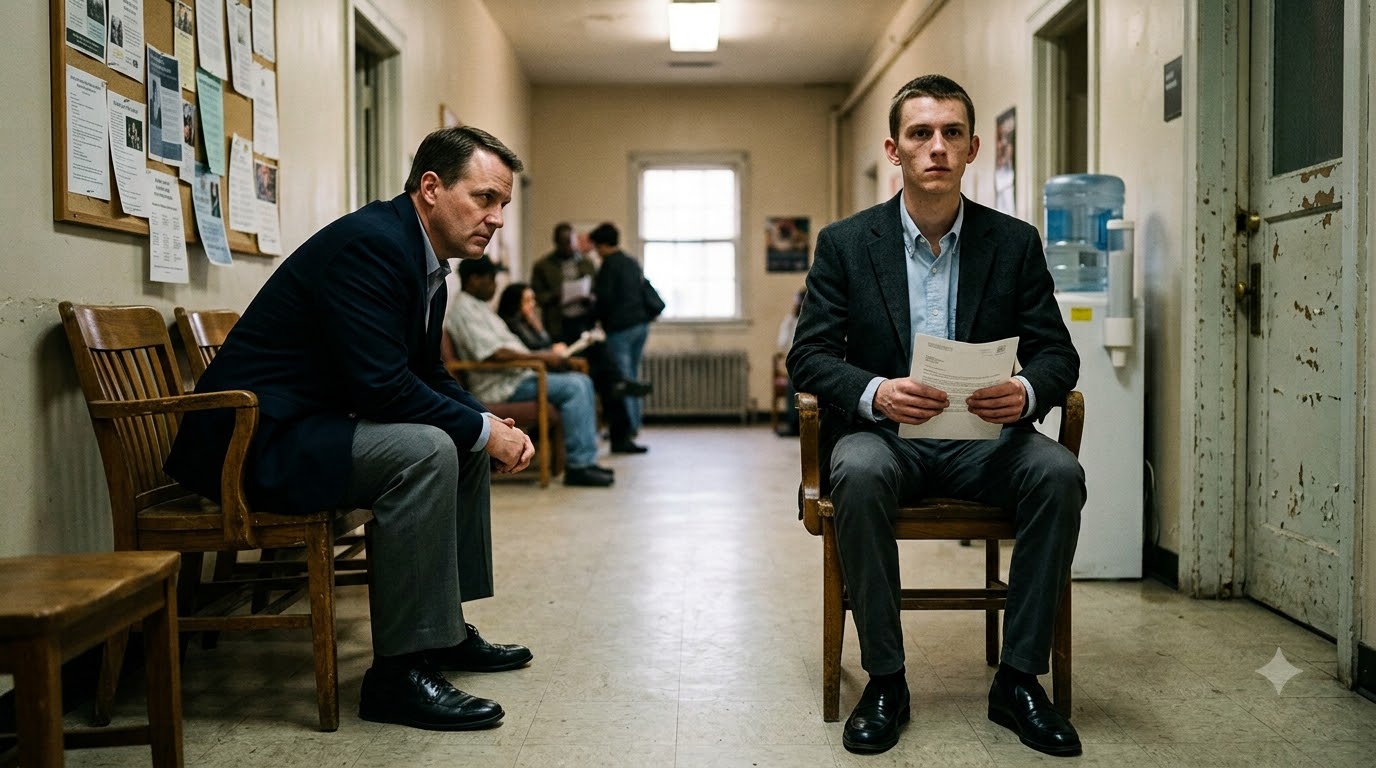
The interview waiting room at the Whitfield Foundation smelled of expensive floor wax and old paper, populated by candidates holding designer portfolios.
I smoothed the lapels of my secondhand jacket, feeling the rough threads against my fingers as my name was called over the intercom.
They wanted pedigree, financial backing, and inherited privilege, but I walked through those heavy double doors with something far heavier.
I walked in with the absolute, unyielding certainty of someone who had built her entire existence out of nothing.
CHAPTER 6: COMMENCEMENT STAGE SILENCE
My heels clicked sharply against the polished wooden flooring of the stage as I approached the central microphone.
Down in the front row, my father’s hand froze completely on his camera lens while my mother’s bouquet of roses slipped sideways in her lap.
They had come to celebrate an investment that made corporate sense, entirely unaware that the person standing at the podium was the one they had written off as worthless.
I adjusted the metal stem of the microphone, letting the heavy bronze Whitfield medallion rest firmly against my chest.
Four years of midnight shifts, instant ramen, and absolute solitude condensed into a single, unyielding breath.
Good morning, everyone, my voice carried steady and clear across the packed stadium seats.
Four years ago, I was told I was not worth the investment.
In the front row, my mother’s hand flew straight to her mouth as the shock rippled through their perfect family facade.
I did not point fingers or name names, because the truth of their judgment was already echoing loudly enough in the silence of their pale faces.
When the final applause washed over the amphitheater, I stepped back from the microphone and looked down at them one last time.
They rushed toward the reception area afterward, offering broken apologies and desperate invitations to come home for the summer.
I took a sip of sparkling water and kept my distance, refusing to trade my hard-earned peace for hollow words.
Later that month, standing in the compact kitchen of my new Manhattan apartment overlooking a simple brick wall, I unpacked my boxes alone.
There was no grand family reunion, no sudden fairy-tale forgiveness, and no need for their validation ever again.
I had built every single inch of this life out of raw endurance, proving that my worth belonged entirely to me.