The Iron Gate Protocol: A Veteran’s Calculated Descent into Suburban Warfare and Legal Retribution
CHAPTER 1: THE COLD IRON BARRIER
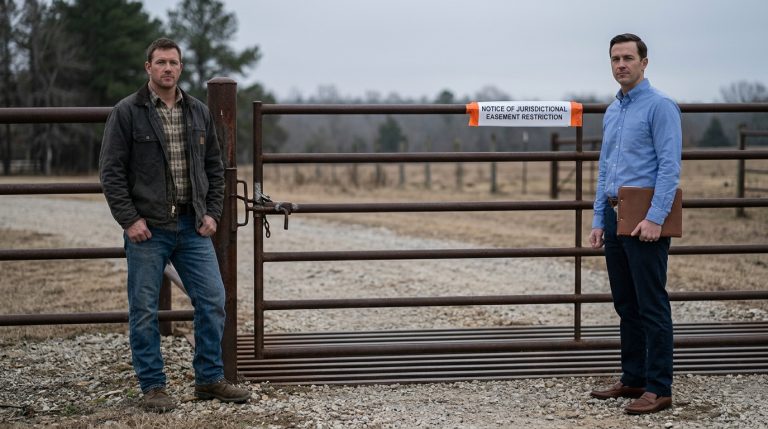
The lock looked industrial, a brutalist chunk of hardened steel clamped over a rusted chain that had no business binding a road built sixty years ago.
Mark didn’t reach for the horn. Twenty years in the Army Corps of Engineers had conditioned him away from wasted motion; you didn’t shout at a bridge that had already collapsed beneath your boots, you calculated the load capacity of what remained. In the passenger seat, Sarah’s fingers tightened around her phone, her knuckles stark white against the grey plastic case.
“Another way?” she echoed, her voice thin, pulling the words straight from the vacuum left by the woman standing on the asphalt.
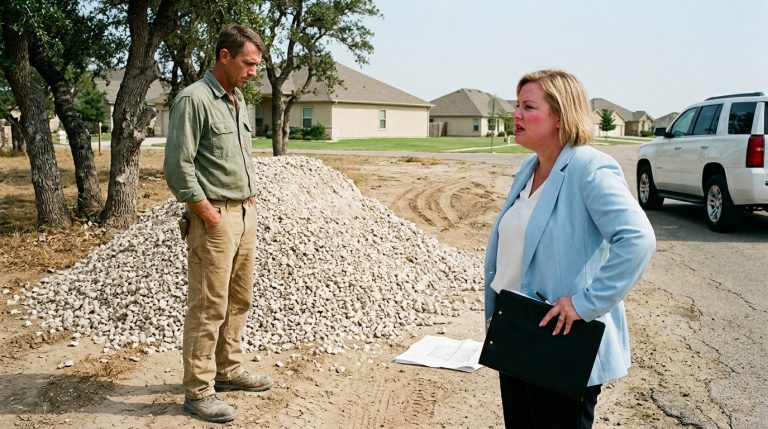
Karen didn’t step aside. The newly elected president of the Harmony Creek Homeowners Association filled her pastel pink tracksuit with the solid, immovable mass of someone who had never once faced a consequence she couldn’t delegate away. Her smile was syrupy, stretched thin over teeth that looked too small for her mouth. Behind her, the subdivision’s manicured lawns stretched out like an emerald graveyard, silent and sterile.
“That’s a personal problem, Mark,” Karen said, her voice dropping into a register designed to patronize. “The board voted. Unaffiliated properties represent a security liability. You’ll have to find another route to your workshop.”
Mark kept his hands flat on the steering wheel, his thumbs resting against the worn leather of the rim. He could smell the faint scent of hot oil from the F250’s exhaust mixing with the dry dust of the gravel road. His mind clicked through the variables with clinical detachment: ten acres of timber and workshop behind him, a forty-thousand-dollar black walnut shipment arriving at dawn, and two miles of impassable timber separating his property line from the nearest public county lane.
There was no other route. There never had been.
“You changed the locks on a shared access easement without a thirty-day notice, Karen,” Mark said. His voice was dangerously level, stripped of heat. “That easement is recorded in the county courthouse under book four hundred, page twelve. It predates your subdivision by three decades.”
Karen let out a light, dismissive puff of air, her gaze drifting toward the manicured hydrangeas lining her driveway fifty yards back. “Old paper doesn’t run a modern community, Mark. We have rules now. You can take it up with the board at our next quarterly meeting in three months.”
She turned her back before the sentence finished, walking away with the slow, rhythmic sway of someone secure in the absolute tyranny of petty bureaucracy.
Mark killed the engine. The abrupt silence swallowed the truck’s low grumble, leaving only the dry rasp of cicadas in the high canopy and the hard, irregular thumping of his own pulse against his ribs. He pulled his phone from his shirt pocket, his thumb hovering over the screen, but his eyes stayed fixed on the heavy steel lock glinting in the sinking sun. Something in the geometry of the chain didn’t add up—the wear marks on the secondary link were fresh, but the mounting bolt on the hinge plate showed subtle, microscopic signs of recent tampering that went beyond a simple padlock swap.
CHAPTER 2: THE FIRST GRIND OF RESISTANCE
The shadows lengthened across the gravel road, stretching into long, charcoal fingers that swallowed the ditch lines and the bases of the cedar trees. Mark didn’t start the truck. He left the ignition turned to auxiliary, the dashboard gauges casting a faint amber glow over his knuckles as they gripped the steering wheel. Through the side mirror, the pastel pink facade of Karen’s house sat fifty yards down the lane—quiet, shuttered against the failing light, smugly indifferent.
Beside him, Sarah let out a long, slow breath, her hand resting briefly against the fabric of her coat. “She’s not going to budge, Mark. You saw her eyes. That wasn’t just a neighbor being difficult. That was personal.”
“It’s not personal,” Mark said quietly, his gaze locked on the fresh tool marks where the padlock shackle met the chain link. “Personal implies emotion. Emotion burns out. This is structural. Someone who spends twenty years in bureaucratic committees doesn’t lock a gate on a whim without calculating who’s going to absorb the liability. She thinks she’s protected by the corporation.”
He shifted the F250 back into park, pulled the handbrake with a sharp, metallic click, and reached for the door handle.
“Where are you going?” Sarah asked, her voice tightening.
“Nowhere yet. Just getting a closer look at the anchor bolts.”
The evening air carried the thick, metallic tang of dust and crushed shale. Mark stepped down onto the gravel, the loose stones crunching beneath his heavy boots. He walked slowly toward the gate, keeping his movements deliberate and measured, the way he used to move when clearing a suspicious perimeter where speed was secondary to pattern recognition.
The chain was thick—grade seventy steel, heavy enough to resist bolt cutters, requiring a thermal blade or a high-torque grinder. But it was the hinge plate bolted directly into the concrete pillar that caught his eye. The concrete was old, poured by his father’s crew in nineteen-ninety-four using high-psi aggregate. Yet one of the anchor nuts had been freshly turned. The paint on the threads was cracked, exposing bright, unoxidized silver beneath.
They hadn’t just chained the gate shut; they had reinforced the mounting assembly to prevent anyone from lifting the hinge pins out of their sockets. They were expecting resistance, and they had engineered the hardware to withstand a brute-force extraction.
A screen door slammed down the lane.
Mark didn’t jerk his head around. He kept his eyes fixed on the bolt, letting his peripheral vision track the movement. Karen stepped out onto her front porch, framed by the amber glow of an exterior carriage light. She wasn’t wearing her pastel tracksuit now; she had changed into a dark navy blazer, her silhouette rigid against the screen door. For a long moment, she just stood there, watching him inspect her handiwork like a landlord surveying a tenant’s late rent.
Neither of them spoke. The distance between them was fifty yards of quiet asphalt and dead silence, but the weight of the standoff hung in the humid air, thick as grease.
Mark slowly stood up straight, rolling his shoulders back. He didn’t raise his voice, and he didn’t make a threatening gesture. Instead, he reached into his pocket, pulled out a small pocketknife, flipped the brass toothpick out, and deliberately used it to clear a speck of dried mud from his thumbnail while maintaining direct eye contact with her porch.
Karen’s shadow shifted. She crossed her arms, the fabric of her blazer tightening across her chest, before turning abruptly on her heel and snapping the screen door shut behind her. The sharp clack of the latch echoed off the stucco walls like a dry twig snapping underfoot.
Mark slipped the knife back into his pocket, his expression flat. She thought the gate was her perimeter. She thought she owned the threshold. But as he turned back toward the truck, his fingers brushed the digital recorder app on his phone in his pocket, hitting the save toggle to log the exact time of the physical tampering.
The first rule of engineering a counter-strategy was simple: never attack a fortification where it is strongest. You find the supply line, you trace the permits, and you wait for the concrete to crack at the seams.
He climbed back into the F250, the diesel engine rummaging to life with a deep, authoritative shudder that rattled the chassis.
“Well?” Sarah asked as he shifted into drive, turning the heavy nose of the truck around in a wide, three-point sweep that churned the gravel.
“She reinforced the hinges,” Mark said, his voice cold as he steered the vehicle back toward the privacy of his timber-lined driveway. “Which means she’s expecting a fight. And if she’s expecting a fight, she’s already spent HOA funds to pay for the hardware. Let’s see how her budget committee likes explaining an unauthorized structural modification to an insurance auditor.”
CHAPTER 3: THE DISMISSAL AT THE DOORSTEP
The dashboard clock ticked past six-thirty as Mark cut the headlights, plunging the driveway into the dim amber wash of the porch light. The cabin of the truck smelled faintly of machine oil and dry tobacco, a scent that felt entirely removed from the pastel-tinted suburbia lying just a quarter-mile down the timber line.
Sarah sat quietly beside him, her hands folded in her lap. She didn’t reach for her door handle right away. “You’re going down there tomorrow morning with the deed?”
“Not tomorrow. In an hour,” Mark said, his voice level as he pulled the keys from the ignition. “If you let a roadblock sit overnight, asphalt lawyers treat it as an established precedent. We clear the paper trail before she has a chance to file an administrative counter-claim with her board.”
He climbed out of the cab, his boots striking the packed shale of the drive with a sharp crunch. He didn’t head straight for the house; instead, he walked around to the back of the F250, lowered the tailgate with a muted metallic thud, and pulled a weathered brown leather briefcase from beneath a tarp. Inside lay the original county-sealed parchment from nineteen-fifty-four—thick, yellowed, and smelling faintly of dry basement air. Beside it rested the shared maintenance addendum signed by his father thirty years later.
The walk down the gravel road was taken at a measured, deliberate pace. The humidity had broken, leaving behind a sharp evening chill that bit at the edges of his collar. The houses of Harmony Creek grew larger and more uniform the closer he got to the perimeter—stucco boxes with obsessively manicured lawns, all glowing with identical warm interior lights like rows of harvested pumpkins on a shelf.
When he reached Karen’s porch, he didn’t bother looking at the decorative brass knocker shaped like a pineapple. He pressed his thumb firmly against the illuminated doorbell button.
Inside, a chime rang out—two crisp, electronic notes followed by a muffled rustle of fabric. The porch light flickered before snapping on with a harsh glare, blinding him for a fraction of a second. The deadbolt turned with a heavy, oiled snap, and the door swung open six inches, held fast by a brass security chain.
Karen’s face appeared in the gap, framed by the dark interior hallway. She had changed out of her navy blazer into a loose grey sweater, but her expression had hardened into something brittle and defensive.
“I told you yesterday, Mark. The board doesn’t negotiate with non-residents after hours,” she said, her voice dropping into an officious drone. “If you have a grievance, submit it through the proper administrative portal.”
Mark didn’t move. He didn’t raise the briefcase. He simply kept his posture straight, his shoulders square against the cold frame of the doorway.
“This isn’t an administrative grievance, Karen,” Mark said, his tone flat and unyielding. “This is a legal notification. You’ve altered a shared access structure without a quorum vote recorded in county filings. Under state property code section twelve, subsection four, that constitutes a direct obstruction of a deeded right-of-way.”
Karen’s eyes narrowed, shifting momentarily to the corner of the porch where the shadow hid his hands. “You think you can intimidate me with legal jargon? This is a private community. We regulate our own boundaries.”
“You regulate association paint colors and trash can placement,” Mark replied, his voice dropping an octave, carrying the smooth, chilling cadence he used when briefing structural defects to a field commander. “You don’t regulate county deeds. I brought you a courtesy copy of the original easement agreement. Read page three, specifically the clause regarding perpetual ingress. If that chain isn’t off the hinges by eight o’clock tomorrow morning, my attorney files an emergency injunction with the county magistrate, and every single member of your board gets named personally in a tort liability suit for corporate overreach.”
For a split second, the smug certainty flickered behind Karen’s eyes, replaced by a sudden, sharp twitch at the corner of her left eyelid. It was a micro-expression of pure, unadulterated panic—the look of a bureaucrat who had just realized she stepped off the edge of a cliff without checking if the bridge existed.
Then she clamped down hard, her jaw squaring off. “That’s a fake. A fabricated document from an old man who didn’t understand modern community standards. Get off my porch before I call the sheriff for trespassing.”
“Call him,” Mark said softly, holding her gaze without blinking. “Tell him you’re withholding access to a registered parcel. Let’s see how fast his dispatcher transfers the call to the county prosecutor.”
He lifted the manila envelope containing the copied easement and slid it neatly into the narrow gap between the door frame and the security chain, letting it drop flat onto her welcome mat.
“Read it, Karen,” he said, turning his back on the door before she could slam it. “The clock’s already running.”
He walked back down the pavement into the cool dark, his boots striking the asphalt with an even, rhythmic cadence. He didn’t look back to hear the door slam. He didn’t need to. The structural integrity of her defense had just cracked, and the weight of the friction was about to pull the entire facade down around her.
CHAPTER 4: THE ESCALATION OF THE CHAIN
The gravel crunched beneath Mark’s boots with a steady, metronomic rhythm as he retraced his steps back toward the truck idling at the edge of the property line. The night air had grown sharper, carrying the scent of damp pine needles and the faint metallic tang of exhaust. Behind him, the warm, uniform windows of Harmony Creek receded into the dark, their amber light looking less like a welcoming neighborhood and more like the perimeter floodlights of an installation under observation.
He climbed into the F250, pulling the door shut with a solid, weighted thud that cut off the outside world. Sarah didn’t speak immediately. She watched him slide the keys back into the ignition, her profile illuminated by the amber glow of the dash.
“She left it there,” Sarah said quietly, her eyes fixed on the windshield as the headlights swept across the brush.
“She won’t read it tonight,” Mark replied, shifting into gear with a smooth click of the linkage. “Bureaucrats like Karen don’t process legal warnings in the dark. They wait until morning, consult a friendly ear over coffee, and convince themselves that procedure can rewrite a county deed.”
The truck rolled backward, tires spitting loose shale before turning up the long, dark grade toward the workshop. For a brief moment, the psychological phantom of an old forward operating base in Diyala flickered through the back of his mind—the sterile rigidity of command staff who believed a stamped form could override incoming mortar fire. Karen shared that exact structural flaw: an absolute, terrifying faith in administrative paperwork over physical reality.
The next morning broke grey and humid, the sky heavy with the promise of rain. By seven o’clock, Mark was standing at the edge of his property line with a heavy-duty tripod and a digital camera, logging the precise condition of the gate. The chain was still there, looped twice through the wrought-iron bars, locked with a fresh, brass-bodied padlock that caught the weak morning light.
At eight-fifteen, the sound of an engine broke the stillness of the lane. A pristine white sedan bearing local real estate markings crept down the asphalt, slowed to a crawl near the gate, and stopped. A man in a sharp charcoal suit stepped out, holding a clipboard, looking bewildered as he stared at the rusted chain and then up toward Mark’s timber line.
Mark didn’t hide. He stepped out from behind the trunk of an oak tree, the camera hanging securely from its neck strap, and walked down toward the road with measured, deliberate strides.
The realtor turned sharply, clutching his clipboard like a shield. “Morning,” the man said, his tone overly professional and defensive. “I’m looking for the property listing boundaries. Is this access currently restricted?”
“It shouldn’t be,” Mark said, his voice flat, cutting through the damp morning air with surgical precision. “The gate is bound by a county-recorded perpetual easement. The person who locked it is currently facing a personal tort injunction.”
The realtor’s eyes flicked from Mark’s worn work shirt to the heavy steel chain, then down to the clipboard where a map of Harmony Creek expansion parcels was clipped. The man’s throat bobbed as he swallowed, a subtle twitch of hesitation that spoke volumes. “Expansion… parcels?” Mark asked, stepping closer.
“Nothing,” the realtor muttered, hastily retreating toward his sedan. “Just looking for a client survey. Good luck with the gate.”
The car reversed in a wide arc and sped back down the road, leaving behind a swirl of dust and a very specific piece of data. They weren’t just locking out a neighbor; they were mapping the perimeter for something larger. Mark pulled out his phone, dialed Alan’s office directly, and laid out the coordinates of the encounter, his mind locking onto the shape of the trap they were slowly constructing around the board’s fragile financial foundation.
CHAPTER 5: UNEARTHING THE HISTORICAL LEDGER
The phone in Mark’s hand went dead with a soft electronic beep, cutting off Alan’s gravelly voice just as the lawyer finalized the parameters of the injunction motion. Mark slid the device back into his pocket, his gaze fixed on the white sedan tracks fading into the damp asphalt of the lane.
The physical pieces were locking into place. The realtor’s hurried retreat, the survey clipboard, the unauthorized anchor bolts on the gate—they weren’t random acts of neighborhood friction. They pointed directly toward a calculated push to devalue the ten-acre parcel, triggering a forced municipal acquisition under the guise of an expanded green belt. But to crush the maneuver before it reached the magistrate’s desk, he needed more than a modern survey; he needed the original signatures of nineteen-ninety-four, preserved in ink and sealed by the county clerk.
Mark turned away from the road, his boots crunching over the gravel driveway as he walked back toward the house. The workshop stood silent, its large double doors bolted shut against the damp afternoon air, the expensive black walnut shipment scheduled for dawn waiting on a logistics delay that would test every clause of his commercial contracts.
Inside the main house, the hallway smelled of old paper and boiled coffee. Mark walked straight past the kitchen into his private office—a room stripped of unnecessary ornamentation, lined with grey metal filing cabinets and tactical maps of old engineering deployments.
He didn’t turn on the overhead light. Instead, he pulled the heavy oak desk chair out, sat down, and reached for the bottom drawer, pulling out a battered steel lockbox. Inside lay the archive his father had meticulously maintained: hand-drawn topographical layouts, receipts from county surveyors, and a thick ledger bound in dark blue buckram.
He opened the ledger to the summer of nineteen-ninety-four. The handwriting was his father’s—firm, legible, drafted with the exactitude of a man who spent his life building infrastructure that had to withstand explosions and weight alike. There, taped to the inside cover with yellowed cellophane tape, was the secondary addendum the realtor had looked for on the clipboard: the specific maintenance cost-sharing agreement signed not just by the original developer, but countersigned by the initial board of directors, explicitly binding every subsequent parcel owner to perpetual, unrestricted access.
As Mark traced the faded blue ink with his thumb, a sudden muffled rap sounded at the front door.
He didn’t rush. In situations where an opposing force attempted to alter the terms of engagement, sudden movements only telegraphed anxiety. He closed the ledger, stood up with measured deliberation, and walked down the short hallway.
When he pulled the heavy wooden door open, Sarah stood on the threshold, her expression tight, holding a crisp white envelope that had just been shoved into the side mailbox slot.
“They didn’t mail it,” Sarah said, her voice dropping as she handed him the paper. “It was hand-delivered.”
Mark unfolded the heavy cardstock. It wasn’t a letter from an attorney or a formal notice from the county. It was an official-looking architectural notice bearing the Harmony Creek letterhead, signed with Karen’s sharp, aggressive signature. The subject line read: Notice of Emergency Environmental Review and Assessment of Independent Access Road.
They weren’t waiting for the quarterly meeting. They were bypassing the legal stay entirely by fabricating an environmental hazard claim over his gravel driveway, attempting to force a municipal shutdown before Alan’s injunction could be filed in the morning.
Mark looked down at the paper, then out past the porch toward the dark timber line separating his land from the subdivision. A cold, flat smile touched the corners of his mouth. Karen thought she was executing a brilliant flanking maneuver. She didn’t realize she had just handed him the exact instrument of her own undoing.
CHAPTER 6: THE DEPOSITION TRAP AND THE PERJURY
The conference room at the downtown legal firm smelled of stale instant coffee and neutral commercial carpet cleaner. Fluorescent panels buzzed overhead with a low, clinical hum that grated against the nerves.
Mark sat stiffly in the ergonomic mesh chair, his briefcase resting upright against his knee like an old operational pack. Across the polished laminate table, Karen adjusted the lapel of her navy blazer with fingers that gave away a faint, involuntary twitch. Her defense attorney—a younger man with slicked hair and a nervous habit of clicking a silver ballpoint pen—kept leaning over to whisper hasty instructions, but Karen brushed him away with a sharp flick of her hand.
Alan Shoreline sat beside Mark, his expression impassive, a thick manila folder opened before him containing the unredacted audio transcripts and the county-sealed easement addendums.
“Let the record show,” Alan began, his voice a gravelly, resonant bass that filled the small room, “that the witness is testifying under oath, and that any material misrepresentation of corporate authority or property governance constitutes perjury under state statute.”
Karen’s chin jutted upward. “I know my rights. The Harmony Creek Board operates under complete legal immunity regarding community safety.”
Alan didn’t blink. He didn’t raise his voice. He simply slid a single sheet of paper across the table—a certified copy of the nineteen-ninety-four shared maintenance agreement bearing her own association’s initial registration stamps.
“Ms. Wysmith, during the board session on August first, did you or did you not verify the property encumbrances on the access road before installing the industrial chain?”
Karen leaned forward, her eyes narrowing into hard, defensive slits. “We verified everything necessary. The association voted unanimously to secure our perimeter against unauthorized traffic. Mr. Rivera’s documents are obsolete relics.”
Beside her, the young defense attorney winced visibly, his pen freezing halfway through a click. He had spent the morning trying to convince her to settle quietly, but Karen’s psychological need for absolute dominance had overridden her survival instinct. She was walking straight into the propeller, convinced that her title as president shielded her from the physics of contract law.
Alan turned a page, his blue eyes locking onto hers with cold precision. “And did you submit an emergency environmental violation notice targeting the gravel composition of Mr. Rivera’s access road as a retaliatory administrative measure?”
“It was a legitimate aesthetic violation,” Karen snapped, her voice rising an octave, bouncing harshly off the drop-ceiling tiles. “His road detracts from our property values! We have every right to fine him into compliance until he hands over that land!”
The room dropped into absolute, suffocating silence.
The court reporter’s fingers stopped moving across the stenograph machine. Alan didn’t smile, but the corners of his mouth tightened into a grim, hard line. He slowly picked up a small digital recorder from his briefcase, thumbed the playback switch, and set it squarely in the center of the laminate table.
Karen’s own voice spilled from the tiny speaker, loud and unmistakable, echoing off the walls as she bragged to her board cronies about burying her neighbor in legal fees and acquiring the ten-acre parcel for a song.
The color drained from Karen’s face in a slow, brutal wave, leaving her skin the greyish hue of wet concrete. Her mouth opened, closed, and then stayed slightly agape, the trap finally snapping shut with the heavy, unyielding weight of absolute proof.
CHAPTER 7: THE RECKONING AT THE CLUBHOUSE
The air inside the Harmony Creek community clubhouse was thick, stale, and charged with the quiet static of a room waiting for a circuit breaker to blow. Fluorescent panels hummed overhead, casting a harsh, flat light across rows of folding chairs packed shoulder-to-shoulder with residents.
Mark stepped through the double doors with a slow, deliberate stride, his boots clicking sharply against the polished vinyl floor. Beside him, Sarah walked with steady composure, while Carol and George slipped in quietly from the rear, forming an unspoken perimeter of accountability.
At the front of the room, behind a folding laminate table flanked by Frank and Brenda, Karen sat rigid. Her navy blazer was buttoned tight to the throat, her fingers locked together on the tabletop in a white-knuckled grip. She had not expected them to be here. Her eyes flared with a sudden, venomous heat as she spotted Mark walking down the center aisle, but the underlying panic—raw and unmasked—refused to stay hidden behind her tight, pinched smile.
“This is a private meeting for association members only,” Karen boomed, her voice pitching slightly higher than normal as she banged a plastic gavel against the wood. “Mr. Rivera, you are not a resident of Harmony Creek. You have two minutes to vacate the premises before I instruct the association’s counsel to call the sheriff.”
Before Mark could speak, a tall, distinguished man in the third row stood up. It was Arthur, a retired municipal magistrate who had spent thirty years reviewing municipal briefs. He didn’t shout; he simply let his presence command the oxygen in the room.
“Sit down, Karen,” Arthur said, his voice a low, resonant gravel that cut through the room like a scalpel. “Mr. Rivera is an invited guest under the bylaws of property easement governance. And given the contents of the document delivered to every homeowner’s mailbox this afternoon, we are no longer discussing association landscaping.”
A low murmur rippled through the rows of folding chairs. Neighbors began shifting uncomfortably, exchanging sidelong glances.
Mark stopped five paces from the front table. He didn’t raise his voice or lean into anger. He simply pulled a single manila folder from his side pocket, laid it flat on the corner of the table, and opened it to the certified deposition transcript.
“Mrs. Wysmith stated under oath last Tuesday that her board acted on formal legal counsel when locking the shared access gate,” Mark said, his voice flat, carrying the cold authority of an engineer reading a structural stress test. “She stated that the environmental violation notices issued against my property were standard administrative protocols.”
He paused, letting the silence stretch until the hum of the fluorescent lights felt deafening.
“Both statements are deliberate, verifiable falsehoods.”
Karen bolted upright, her chair scraping violently against the linoleum. “That is a lie! He’s trying to hijack our community! He’s a litigious outsider trying to devalue your homes!”
“Quiet, Karen,” Arthur commanded, stepping forward into the aisle. He turned his gaze toward the terrified faces of Frank and Brenda, then out at the crowded room. “I’ve reviewed the transcripts and the audio recordings delivered by counsel. Your president didn’t lock that gate for community safety. She committed perjury under oath to cover up an unauthorized scheme designed to bankrupt a neighboring property owner and force a municipal land seizure.”
The room erupted into a wave of overlapping gasps and sharp objections. Frank looked like he was about to collapse into his lap, his pale face slick with sweat. Brenda stared straight down at her folder, refusing to look at Karen as the foundation of her loyalty evaporated into thin air.
Arthur raised a hand, restoring order with a single gesture. “We have seventy-two hours before an eighty-eight-thousand-dollar summary judgment—complete with personal liability for fraud—strikes this association’s accounts. There is only one motion on the floor.”
He turned back to the table, looking directly at the silent majority of homeowners.
“All in favor of an immediate vote of no confidence in Karen Wysmith, and her permanent removal from the board effective immediately?”
Nearly every hand in the room shot into the air simultaneously, a forest of fingers rising without hesitation. Even Frank’s hand twitched upward after a second of paralyzed terror. Only Brenda kept her hands folded in her lap, staring at the grain of the table.
Karen stood frozen for three long seconds, looking out at the sea of hands that had just stripped her of her title, her authority, and her armor. Her mouth moved once, soundless, before she snatched her leather purse off the table, turned on her heel, and bolted toward the side exit, the heavy metal door swinging shut behind her with a dull, echoing slam.
CHAPTER 8: THE WEIGHT OF THE FINAL JUDGMENT
The courtroom air was dry, smelling faintly of old varnish and floor wax. Sunlight cut through the high windows in pale, dusty shafts, illuminating the quiet dust motes dancing above the mahogany railing.
Mark sat at the plaintiff’s table beside Alan Shoreline, his hands resting flat against the wood. Across the aisle, Karen sat entirely alone. The polished naval blazer she had worn during the depositions was gone, replaced by a plain, dark cardigan that hung loosely over her shoulders. She looked smaller now, stripped of the institutional padding that the association’s presidency had once afforded her.
Judge Arthur—now acting as the judicial arbiter for the settlement enforcement—adjusted his glasses, looking down from the bench with an expression of cold, unyielding scrutiny.
“The court has reviewed the final accounting,” Judge Arthur said, his voice echoing evenly off the high ceiling. “The documentation provided by the plaintiff confirms not only the obstruction of a valid county easement, but a systematic campaign of corporate bad faith engineered to mask prior financial liabilities originating from similar administrative overreaches in neighboring counties five years ago.”
The final truth settled over the room like lead. The park conspiracy and the gate lockouts had never been about neighborhood security or uniform aesthetics; they had been a desperate, smoke-and-mirrors maneuver by an embattled treasurer trying to engineer a manufactured real estate shortfall to cover up an old, unpunished budget collapse from her past.
The judge’s gaze shifted directly to Karen. “Ms. Wysmith, the court finds you personally and individually liable for the sixty-thousand-dollar punitive assessment, alongside the master association’s baseline damages. Your actions exceeded all legal protections of office.”
Karen did not look up. Her eyes remained fixed on the scarred grain of the defense table, her fingers trembling slightly as she clutched a cheap plastic ballpoint pen. There would be no appeal that could override the unrecorded county deeds and the sworn perjury transcripts. Her house had already been listed for a rapid, below-market liquidation to satisfy the primary debt, her name turning into a cautionary footnote whispered in local real estate offices.
When the gavel struck its final, flat blow, signaling the end of the proceedings, Mark stood up slowly. He didn’t gloat. Victory in a structural conflict was not a matter for celebration; it was simply the restoration of proper load-bearing weight.
Two weeks later, the physical manifestation of that restoration arrived on a crisp Saturday morning.
Dave pulled his construction flatbed right up to the property line, parking where the old iron gate had once stood. With a crew of four men and a heavy-duty hydraulic winch, they lifted the rusted posts clear of the cracked concrete. In their place, they anchored a sleek, commercial-grade automated barrier system—quiet, precise, and fully compliant with the nineteen-ninety-four county easement.
Mark stood by the edge of the fresh gravel drive, watching the hydraulic arm glide smoothly open on its first test cycle. The motor gave a low, reassuring hum, entirely devoid of friction.
Sarah walked up beside him, holding two cups of black coffee, her shoulders relaxed in the warm morning sun. She handed him a cup, her fingers brushing his calloused palm. “It’s quiet,” she said softly, looking down the lane toward the subdivision where the houses stood peaceful and undisturbed.
“That’s because the load is balanced,” Mark replied.
He took a slow sip of the coffee, looking out over the ten acres of timber and workshop that stretched endlessly toward the horizon. The legal documents from Alan’s office had already been filed away in the steel lockbox, their final zero-balance invoice framed neatly in his workshop beside a pair of twisted, severed iron links.
The system was secure. The road was open. And the weight had finally settled where it belonged.