The Weight of Stone and Silence: How One Ordinary Soldier Uncovered the Hidden Truth in Baghdad’s Dust
CHAPTER 1: THE COLD KITCHEN
The tea was cold at the bottom of the tin mug.
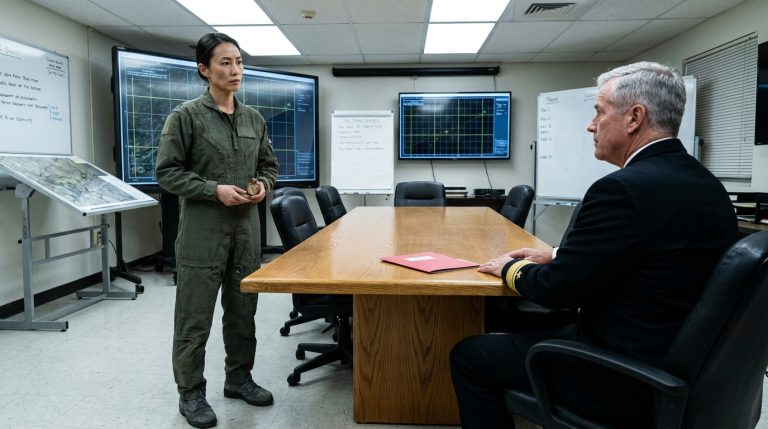
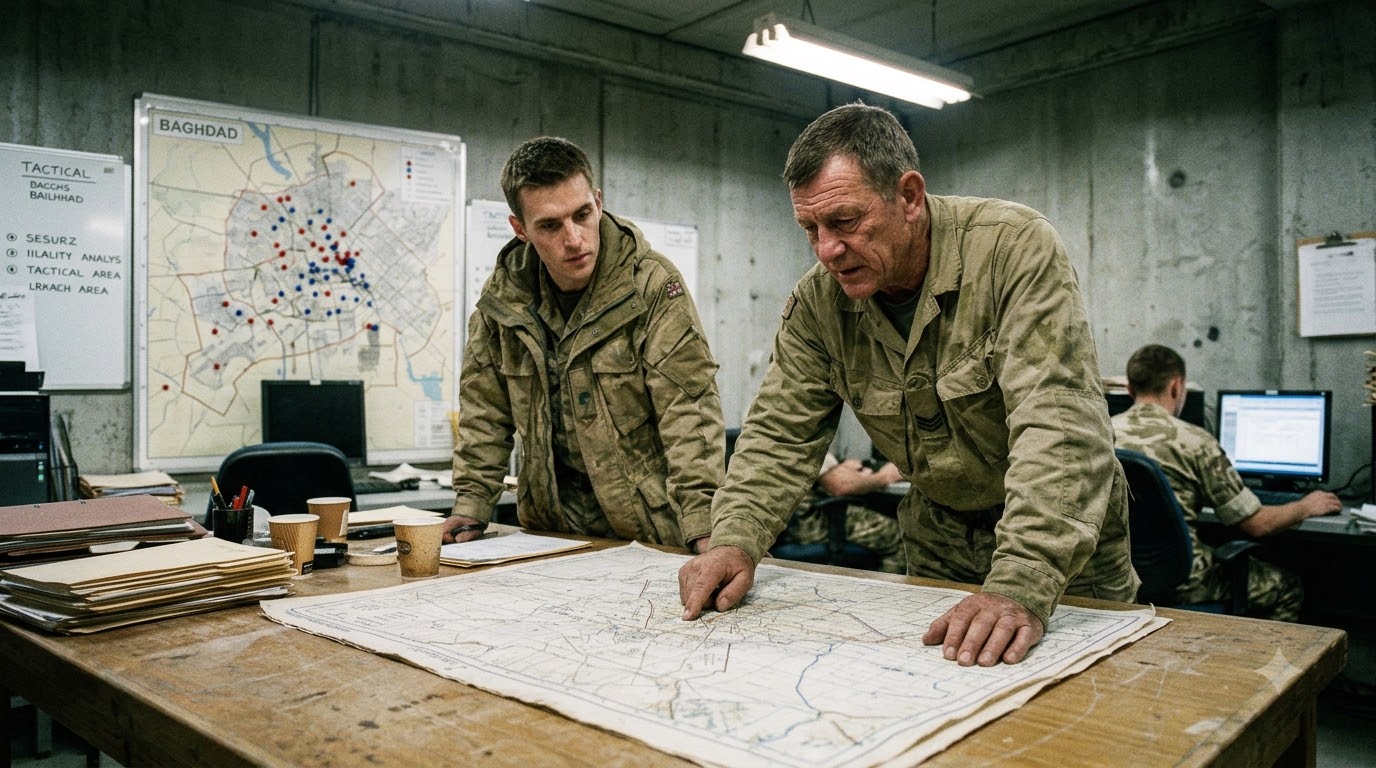
Gareth Price stared at the grid lines of western Baghdad until the ink blurred under the harsh fluorescent glare of the operations room.
The report from the latest raid sat on the corner of the table, heavy with the bureaucratic weight of a failed operation.
Another empty room. Another address bought with high-priced informant cash that yielded nothing but dust and shattered glass.
Across the room, RSM Colin Heywood adjusted his bad knee, wincing slightly as the morning chill worked its way through the concrete floor.
“The machine says they are everywhere,” Heywood said, his voice raspy from twenty years of tobacco and cold air. “And the machine cannot find a single door.”
Price picked up a scarred metal pen, turning it between calloused fingers.
The satellites overhead were costing millions. The electronic intercepts were pulling thousands of useless fragments out of the air every hour.
Yet four men were still missing in a city of seven million people, swallowed by a silent neighborhood that gave up no secrets to machines.
Price set the pen down with a sharp click against the wood.
The map on the table was just paper. It had nothing to do with the wet clay and narrow alleys outside.
“We are looking through the wrong end of the glass,” Price said quietly.
Heywood looked up, his eyes narrowing as he weighed the weariness in the younger man’s voice.
“Explain it,” Heywood muttered, leaning his weight against the edge of the desk.
“We stop buying coordinates,” Price said, his thumb running over the worn edges of his compass. “We start looking at who buys the flour, who sweeps the street, and who walks past the empty buildings when nobody else is watching.”
CHAPTER 2: MAPS AND DUST
The operations room hummed with the steady, expensive drone of computer banks pulling data from three continents.
Price did not look at the glowing screens.
The screens showed what the analysts wanted to see—neat vectors, satellite passes, and financial trails that led straight into empty rooms and wired traps.
RSM Colin Heywood leaned over the table, his fingers tapping a slow, rhythmic tattoo against the old paper map of western Baghdad.
“The Americans dropped eleven billion dollars on collection last year,” Heywood muttered, his voice dropping into a gravelly register. “And every dollar bought an address with a bomb behind the door.”
Price picked up a handful of damp soil scraped from the tires of a seized transport vehicle during the previous patrol.
It was heavy with clay and fine desert dust, smelling faintly of stagnant water from the river valley.
“They are paying top dollar for information in a city where every informant works for the men holding the keys,” Price said, rubbing the grit between his thumb and forefinger. “You buy a lead, you get a target. You hit the target, the captors move before the smoke clears.”
The silence in the room grew heavy, broken only by the hum of the air conditioning fighting the desert heat outside.
Price dropped the soil back onto the table, watching the dark grains scatter across the grid lines of the Mansour district.
“We throw out the electronic intercepts,” Price said, his voice flat and absolute. “We stop waiting for a satellite to tell us where a door is.”
Heywood stopped his rhythmic tapping, his weathered eyes locking onto the younger man’s face.
“And what do we look at instead, lad?”
Price pointed a blunt finger at a cluster of side streets far away from the main avenues, where no signals intelligence ever reached.
“The grocery orders,” Price said. “People in a basement still need flour. They still need water delivered when the taps run dry.”
CHAPTER 3: THE BROKEN METHOD
The tactical display screen flickered with a playback of the previous week’s botched raid, showing heavily armored vehicles kicking up dust outside an empty concrete warehouse.
Gareth Price watched the loop without sound, his hand resting flat against the scarred wooden desk.
The operation had moved with terrifying speed, driven by an informant’s tip that cost five thousand dollars and three days of bureaucratic authorization.
The door had been kicked off its hinges. The rooms had been empty except for rusted steel drums and discarded plastic packaging.
“The machinery of war is built for speed,” Price said, his voice cutting through the hum of the cooling fans. “It assumes that if you throw enough money at a wall, the bricks will talk.”
RSM Colin Heywood rubbed his bad knee, his face set in deep, weary lines carved by decades of barracks and border posts.
“They take the cash, they give us a coordinate, and the target moves before the gear hits the ground,” Heywood muttered. “We are chasing ghosts with a stopwatch.”
Price closed the laptop lid, cutting off the glowing green vectors of the satellite feed.
The high-priced intelligence network was broken at its root because it relied on transactions instead of patience.
Every time they bought a lead, they tipped off the very networks holding the captives.
“Throw out the payment ledgers,” Price said, his gaze fixed on the blank wall opposite the desk. “If we keep playing their game, we stay blind.”
Heywood leaned forward, resting his heavy forearms on the wood.
“And how do we map a city that swallows people whole without a trace?”
“We stop looking for a grand military conspiracy,” Price replied quietly. “We look at the ordinary rhythm of a street that refuses to change.”
CHAPTER 4: EDGES OF THE HAYSTACK
The morning air in the compound carried the faint, bitter smell of burned diesel from the generators outside.
Gareth Price did not look at the glowing monitors across the room, keeping his attention fixed on the quiet neighborhoods bordering the main avenues.
RSM Colin Heywood tapped a pencil against the margin of a handwritten ledger detailing regional supply deliveries.
“The insurgent commanders aren’t buying bulk flour themselves,” Heywood said, his voice dropping into a raspy monotone. “They send runners, local shopkeepers who don’t look twice on a crowded street.”
Price nodded once, his thumb tracing the boundary lines of the Mansour district where the paved roads turned into packed dirt and narrow alleyways.
“We stop chasing the shadows in the center,” Price said, lifting his hand from the desk. “We watch the edges where the delivery trucks turn around.”
The strategy required stepping away from high-priced informant networks and listening to the people who moved through the city without weapons.
Mechanics, food couriers, and street vendors saw every shift in local routine because they lived inside the physical reality of the neighborhood.
“It’s slow work, lad,” Heywood muttered, shifting his weight off his injured knee with a quiet wince. “No satellites are going to hand us a neat coordinate by noon.”
“Good,” Price replied, grabbing a heavy wool jacket from the back of his chair. “Because the satellites haven’t found a single door yet.”
CHAPTER 5: THE PASSAGE IN THE GRAY
The vehicle engine coughed twice before catching in the predawn chill.
Gareth Price kept his hands steady on the steering wheel while Corporal Ian Fletcher slid into the passenger seat beside him, slamming the door shut with a dull thud.
They had no satellite feeds, no encrypted radios, and no high-priced informant network to guide them through the western districts.
“Colonel Ashworth gave us the nod,” Price said, his voice dropping low as he shifted the truck into gear. “Just two men on foot. No backup if the street goes sideways.”
Fletcher pulled the brim of his local cap down lower over his forehead, checking the weight of his compass in his pocket.
“Better than walking into a wired trap based on a paid liar’s tip,” Fletcher muttered, staring through the cracked windshield at the gray horizon.
The Toyota pickup rolled past the perimeter gate without lights, blending seamlessly into the early morning traffic of tradesmen and delivery vans.
Price kept his eyes fixed on the cracked asphalt, knowing that every block brought them deeper into an unmapped danger zone.
“We don’t raid anything today,” Price said, turning the steering wheel into a narrow side street choked with dust. “We just find a doorway, sit down, and watch who walks through it.”
CHAPTER 6: SHIFT IN THE WIND
The alleyway between the two concrete buildings smelled of stale dust and damp masonry as Gareth Price settled into the shadow of a rusted water tank.
He did not move a muscle, letting the morning chill seep through his clothes until his joints ached with a dull, heavy persistence.
Hours bled together into a silent test of endurance, broken only by the occasional clatter of a distant shutter or the sharp bark of a stray dog.
At midday, a blue-gray minivan pulled up to the curb in front of the two-story yellow building across the street.
Two men climbed out, carrying heavy cardboard boxes that suggested bulk rations rather than standard household supplies.
Price noted the exact timestamp in his mind without reaching for a notebook, keeping his gaze locked on the green metal front door.
The driver unlocked the heavy iron padlock, stepped inside for forty minutes, and left without the boxes before driving away into the midday haze.
As the sun began to sink toward the horizon, a sudden gust of wind swept down from the river valley, carrying a faint murmur of voices through the upper-story window fabric.
It was not Arabic. It was English, flat and exhausted, speaking in tired fragments that carried across the narrow street.
Price tapped his communications unit twice against the cold brickwork—confirming the target without a single word.
CHAPTER 7: THE BREACHED DOOR
The green metal door of the two-story building looked ordinary enough in the pale light before sunrise.
Gareth Price checked the weight of his rifle, feeling the familiar cold steel under his gloved fingers.
There were no satellites overhead guiding their steps and no high-priced informant networks to clear the path.
“Four meters to the staircase,” Price muttered, his voice flat and steady against the hum of the waiting transport vehicles. “Six steps up, then turn left into the northeast room.”
Corporal Ian Fletcher adjusted his tactical vest, his breathing even and controlled in the narrow alleyway behind him.
The assault element moved forward with the heavy, unyielding silence of men who trusted their own eyes over a computer screen.
Price swung his shoulder hard against the green metal panel, the old iron padlock snapping off its hasp with a sharp, metallic crack that echoed down the empty concrete stairs.
They surged into the lower hallway, boots pounding against the bare floorboards as they cleared the ground level in seconds.
The upper staircase was steep and dark, smelling of stale dust and unwashed plaster.
Price took the turns without hesitation, his boots finding the exact rhythm he had memorized during nineteen hours of hidden surveillance.
The guards were nowhere in sight, their scheduled rotation broken by the shifting chaos of the city outside.
Price reached the landing, raised his hand to signal the team, and drove his boot straight into the wooden latch of the northeast door.
CHAPTER 8: THE WEIGHT OF SILENCE
The chains connecting the three captives clinked softly against the concrete floor as Arthur Whitmore looked up from the far wall.
His eyes were hollowed out by months of deprivation, carrying the heavy, unblinking stare of a man who had already measured out the end of his own life.
Corporal Ian Fletcher knelt beside them instantly, pulling out the heavy wire cutters with a sharp metallic clack that broke the dead silence of the room.
“You are safe now, mate,” Fletcher said, his Yorkshire voice cutting through the stale air with absolute, grounding calm. “We have got you.”
Whitmore did not cheer or shout, his frail shoulders trembling under the sudden removal of the iron links as the chain dropped away to the floor.
Daniel Mercer exhaled a long, shuddering breath, his hands shaking as he gripped the edge of his tattered jacket to prove to himself that the door was finally open.
Rajan Dhillon remained motionless against the right-hand wall, his eyes fixed on the open doorway where the harsh morning light was cutting through the dust.
Price didn’t offer empty promises or cinematic speeches, stepping forward to lift Whitmore’s arm over his shoulder to bear the heavy physical toll of a man whose legs had stopped working months ago.
They moved down the narrow concrete stairs and out into the waiting armored vehicles without a single shot fired, leaving the empty, silent building behind them in the desert dust.
Back at the compound medical facility, the steady hum of monitors replaced the claustrophobic dread of the dark room as the survivors ate warm food and drank water they didn’t have to ration.
Whitmore looked out the small window toward the eastern horizon where the sun was finally lifting over the river valley, his eyes wet with quiet tears of absolute, earned release.
No medals were announced and no public press conferences were called, leaving Price back out on the compound gravel within forty-eight hours to face the next quiet problem without a map or a safety net.
In a house thousands of miles away in Virginia, a Gibson J-45 hung silently on a wall above a kitchen table where a brown Pyrex pot sat cold on the burner.
The morning routine continued without drama or fanfare, stripped of tension and noise, leaving only the quiet reality of a home that had finally weathered the storm.