The Weight of Silence: A Journey to Honor the Names Etched in Memory and Time
CHAPTER 1: THE PERIMETER
The sun was a physical weight on the patio, pressing down against the humid July air. Raymond Kowalski sat in the plastic lawn chair, his right knee throbbing with the subtle, familiar ache that always preceded a weather change. He hadn’t touched his hot dog in ten minutes. His attention was elsewhere, tethered to the man standing by the grill—a man whose voice was too large for the space, a man whose story about a sector in Khe San was spilling over the edge like an overfilled glass.
Gary Polkau was gesturing wildly, his Semper Fi t-shirt stretched tight across a belly that had known comfort long after the muscle had faded. He talked about 63 days of holding a sector, about 40,000 NVA troops, about the smell of the siege. It was a practiced performance, polished by years of retelling, designed to elicit the exact type of reverence that made Raymond’s stomach turn.
Raymond didn’t look for a fight; he wasn’t interested in the theatre of it. He was a man of quiet calculations, noting the exits, reading the cadence of the crowd. But when Gary reached the part about “losing three good men,” the rhythm of the story tripped. It was a minor hitch, a wrong note in an otherwise fluid composition, but for Raymond, it was deafening.
He stood up, his cane tapping against the concrete, and crossed the yard at the steady, measured pace of a man who had walked through triple-canopy jungles where a single misstep meant erasure. The circle of people near the grill parted, their instinctive deference giving way to a sudden, sharp curiosity.
“5,800 Marines,” Raymond said.
The silence that followed was instantaneous. Gary Polkau turned, his practiced smile faltering. He looked at the old man—at the khaki trousers, the plain button-down, the deep lines etched into a face that mapped the last fifty-six years without a word of complaint.
“I’m Raymond,” he said, his voice flat, polite, devoid of malice. “Carol’s father. You were talking about Khe San. I served there, ’68. Force Recon.”
Gary’s jaw tightened, but he recovered with the practiced ease of an insurance salesman who knew how to deflect a difficult inquiry. “This many years later, you want me to remember sectors?”
Raymond held his gaze. He wasn’t looking at Gary the way a man looks at a liar; he was looking at him the way a surgeon looks at a patient. He was searching for the detail that would either confirm the story or reveal the hollow shell of a borrowed history.
“North perimeter,” Raymond said, his voice dropping an octave, becoming soft, probing. “How was the red clay, after the monsoon, before it dried out? The smell—did it hit you the same way it hit me?”
Gary blinked, the confidence in his posture wavering as he struggled to invent a truth he hadn’t lived. “It was mud,” he stammered. “It was red mud. You know how mud smells.”
“I do,” Raymond replied, the weight of his memory pressing into the space between them. “Yes, I do.”
He felt the atmosphere shift, the way a forest goes quiet before a storm. He hadn’t expected to say any of this, but the names were burning in his throat. David McKinney. Thomas Garrett. James Whitehead. Harold Ewen. They were not just names; they were the anchors of his existence. And as he stood there, watching Gary fumble for a memory that didn’t belong to him, Raymond realized that the silence he had held for over half a century was finally, inevitably, reaching its end. He looked past Gary, toward the fence, and saw the flicker of a shadow—a man he didn’t recognize, stepping through the gate, his hand holding a bowl of potato salad, his eyes scanning the yard with the exact, practiced caution of someone who knew exactly what the silence meant.
CHAPTER 2: THE ANATOMY OF SILENCE
The air on the patio had become something distinct—a dense, unmoving thing that tasted of charcoal ash and stale expectations. Raymond stood with his cane, the brass ferrule biting into the concrete, waiting for the ripple effect of Arthur Delaney’s entrance to settle. He hadn’t intended for the neighborhood to become a stage, and yet, here it was. The heat was relentless, a dry, mid-July blanket that made the frayed edges of the red-checked tablecloths look brittle.
Gary Polkau had not moved. He was still fixed in the center of the circle, his large hands looking suddenly heavy, his shoulders slumped in a way that suggested the internal architecture of his ego had suffered a structural failure. Beside him, Arthur Delaney stood with the calm, terrifying precision of a man who had seen men die and had spent fifty-six years processing the inventory of that loss. He didn’t look at Gary with hatred; he looked at him with a weary, clinical detachment that was far more devastating than any shout.
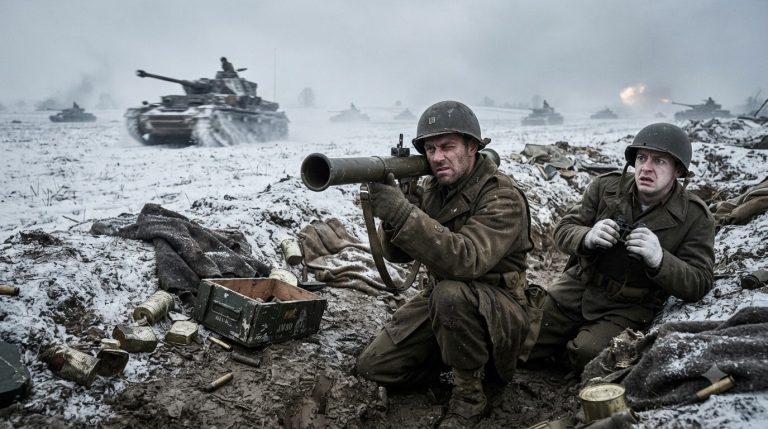
Raymond shifted his weight, his knee twingeing in the heat. A flash of memory sparked, unbidden and sharp—not of the party, but of a ridgeline in Quang Tri, the mist clinging to his eyelashes, cold as a shroud, and the way the air had felt right before the mortar fire started. It was a phantom sensation, the smell of cordite mixing with the rot of wet jungle, so vivid he almost reached out to steady himself against the patio railing. He suppressed it, pulling his focus back to the present. The present was a backyard in Milwaukee. The present was a man standing in a faded Semper Fi shirt who had tried to steal a history that belonged to the dead.
“He’s not a Marine,” Arthur said. The voice was quiet, rhythmic. He wasn’t addressing the crowd anymore; he was stating an observation for the record.
Gary’s face worked, his mouth opening and closing. “I was in the service,” he muttered. It was a plea, not a defense. “I just… I wanted to…”
“You wanted the weight of it,” Raymond said, his voice level. He wasn’t gloating. There was a hollow ache in his chest, a realization that the sanctity of the names he had recited—McKinney, Garrett, Whitehead, Ewen—was being dragged through the dust of a social misunderstanding. He didn’t want the crowd’s judgment of Gary. He wanted the truth to simply exist, unmolested by the noise of the party. “But you don’t take the weight, Gary. You only take the story. And the story without the weight is just a lie that eventually runs out of air.”
Dave Henderson stepped forward from the grill, his face pale, his hands still gripping the tongs as if they were a lifeline. He looked at his father-in-law, his gaze darting from the old man with the cane to the man he had been introduced to as a fellow veteran. “Raymond, maybe we should…”
“We shouldn’t,” Arthur interjected, his eyes never leaving the space where Gary stood. “We should let the truth stay here for a moment. It doesn’t get to leave just because it’s uncomfortable.”
A young woman in the back of the circle turned away, her hand covering her mouth. The beagle, Winston, trotted between the legs of the onlookers, sniffing at the fallen red-checked napkins, oblivious to the gravity of the shift. The atmosphere was a fragile, frayed texture—a tapestry pulling apart at the seams. Raymond noticed the way the sunlight caught the gray in Arthur’s hair, the way the man’s posture held an unwavering, military stillness that had outlasted the war, the years, and the long, slow erosion of civilian life.
Raymond didn’t feel like a hero. He felt like a man who had finally opened a door he’d been holding shut for decades. The regret wasn’t in the act; it was in the necessity. He didn’t want this for Carol, who was standing a few feet away, her expression frozen in a mix of confusion and something that looked dangerously like pride. He looked at her and saw the reflection of his own life—years of quiet Sunday dinners, of watching her grow, of hiding the man he had been in the shadows of the man he was.
He knew that after this, the Henderson backyard would never be just a backyard again. It would be the place where the silence broke.
“I’m leaving,” Gary whispered. He didn’t wait for a response. He turned, his movements jerky and uncoordinated, and began the long, awkward retreat toward the side gate. The crowd didn’t part for him this time; they simply watched, their eyes wide and judgmental, the spell of his performance shattered by the reality of the two men who had actually stood on the ridgeline.
As Gary disappeared behind the garage, the tension in the air didn’t dissipate. It only shifted. It became the heavy, expectant silence of people waiting for someone to tell them how to feel.
Raymond turned to Arthur. The Corpsman was staring at the space where Gary had been, his jaw tight. “I haven’t heard those names in a long time,” Arthur said, his voice barely audible over the hum of a distant lawnmower. “Not like that. Not in the right order.”
“They don’t change,” Raymond replied. “The order doesn’t change.”
“No,” Arthur agreed. He looked at Raymond, and for a second, the years between them evaporated. There was no party, no grill, no suburban afternoon. There was only the shared acknowledgement of the red clay, the fog, and the weight of the names that had been carried into the living room, into the backyard, and finally, into the light.
“You’re coming to the house,” Arthur said, a statement, not a question. “We have the potato salad to finish.”
Raymond looked at the plate still held in his hand, the hot dog now cold and unappetizing. He thought of the photograph in his wallet—the eight men, the sandbags, the morning light. He thought of the archive, the history, and the way the world was about to tilt on its axis. He didn’t answer immediately. He was busy cataloging the shift in the yard, noting that Dave had turned off the Bluetooth speaker, noting that the neighbors were slowly drifting toward their own homes, their faces pale and reflective.
He had walked across the yard to correct a record. He hadn’t expected to find a witness. And as he stood there in the fading gold light of the afternoon, he felt the heavy, terrifying relief of no longer being the only one who remembered the geometry of the hill.
“I’ll be there, Arthur,” Raymond said softly. “But first, I think I need to finish this.”
He gestured to the plate. It was a small, mundane, and entirely human gesture, but it felt like the most significant thing he had done all day. He began to walk back toward his chair, his cane tapping a steady, rhythmic cadence on the concrete, the sound echoing in the stillness like the beat of a drum that had finally found its tempo.
CHAPTER 3: THE THRESHOLD OF MEMORY
The path between the Henderson yard and Arthur’s house was a short, paved stretch of suburbia, but to Raymond, it felt like a passage across a different kind of territory. The afternoon sun had dipped behind the neighboring maple trees, casting long, splintered shadows across the driveways. Raymond walked with the steady, practiced gait that ignored the ache in his knee, his cane providing a consistent, metallic ‘tink-tink’ against the pavement—a sound that seemed too loud in the cooling, expectant air.
Arthur walked two paces ahead, his hands relaxed at his sides, his shoulders carrying the same military set they had fifty years ago. He didn’t look back to see if Raymond was following, and he didn’t offer any conversation. There was a profound, unspoken agreement in their movement; they were two men who had spent lifetimes navigating terrain where talking was often a liability, and moving in tandem was a matter of survival.
“The air is changing,” Arthur said quietly as they reached the edge of his property. He stopped and looked toward the horizon, where the sky was bruising into a deep, evening violet. “Feels like rain before morning.”
“Likely,” Raymond replied. He stopped beside him, his breath slowing. “The humidity is heavy.”
Arthur nodded, his expression unreadable. He walked up the concrete steps to his front door, the wood weathered and clean, and paused with his hand on the knob. He didn’t turn back, but his voice, when it came, was stripped of the social veneer he’d used at the barbecue. “I saw your team, Raymond. Not up close, not that day, but I remember the radio traffic. The way you called in fire support—clear, precise, cold. I remember thinking, ‘Whoever is on that end of the line, they’re holding the map together.'”
Raymond felt a chill that had nothing to do with the setting sun. He looked at the white-painted door, the brass house numbers, the perfectly trimmed bushes—the absolute, crushing normalcy of a world that had no idea what it took to keep it that way. “We were just doing the work that was assigned, Arthur.”
“Is that what you call it?” Arthur turned, his eyes searching Raymond’s face with a fierce, lingering intensity. “Fifty-six years later, and you still call it ‘work’?”
Raymond didn’t answer. He adjusted his grip on his cane, the polished wood smooth beneath his palm. He thought of the photograph in his wallet—the faces of the eight men, the way their youth looked like a different species compared to the old man he saw in the mirror every morning. “I don’t have another word for it,” he said finally.
Arthur opened the door. The interior was cool, smelling faintly of lemon oil and old books—a domestic sanctuary that felt, in that moment, like a fortress. They stepped inside, and the transition from the bustling, chaotic reality of the Henderson barbecue to the quiet, muted atmosphere of the house felt like dropping into deep water.
Arthur led him to the kitchen, a space defined by white tile and a sense of absolute order. The bowl of potato salad sat on the center of the table, still covered by a tight plastic wrap, looking like an artifact from another life. Arthur went to the counter, pulled out two glasses, and filled them with tap water. He handed one to Raymond and then sat at the small, round table.
“Shirley is at her sister’s,” Arthur said, taking a sip. “We won’t be disturbed.”
Raymond sat opposite him, careful with his knee. He set his cane against the edge of the table and took a drink of the water. It was crisp, cold, and grounding. “Why now, Arthur?”
“Why now what?”
“Why did you speak up today? You could have let him keep the lie. It was a small thing, in the grand scheme of a 4th of July party.”
Arthur looked down at his glass, tracing the rim with a calloused finger. “Because of the names,” he said, his voice dropping. “When you said those names, it wasn’t just a list. It was a reclamation. I’ve spent half a century hearing men talk about ‘their war’—people who saw a fraction of it, or who didn’t see it at all but wanted to wear it like a costume. I’ve been quiet because it didn’t seem to matter. But you… you made them real again. You brought them out of the fog.”
“I didn’t do it for them,” Raymond said, his voice flat. “They’re gone. I did it for the record. The record is the only thing that doesn’t rot.”
“The record is a start,” Arthur countered. He reached into his pocket, pulled out a small, worn handkerchief, and wiped his brow. “There’s a documentarian—a kid from the university. I saw him at the party, talking to that Webb boy. They’re looking for people who were in the hill country. People who saw the supply routes.”
Raymond felt the internal walls of his routine tighten. He had built his life in Menomonee Falls on the bedrock of discretion. He liked his chess games, his Sunday calls, the anonymity of his days. “I’m not a public man, Arthur.”
“You’re a man who walked across a yard and told the truth because it was the right thing to do,” Arthur said, his tone sharpening. “You don’t get to choose when that courage ends.”
Raymond looked at the older man, at the set of his jaw and the weariness in his eyes. He realized then that Arthur wasn’t asking him to be a hero; he was asking him to be a witness. He was asking for the burden to be shared, for the weight of the names to be spread across more than one man’s memory.
“I’ll think about it,” Raymond said.
“That’s all I’m asking,” Arthur replied. He stood up, walked to the refrigerator, and pulled out a container of deli meat and a loaf of bread. He worked with the practiced economy of a man who lived alone for long stretches—simple, necessary, unhurried. He set the food on the table, a plate, and two napkins. “Eat. You didn’t finish your hot dog.”
Raymond looked at the food. He felt a sudden, profound exhaustion, a deep-seated fatigue that had been waiting for the adrenaline of the last few hours to ebb. He took a slice of bread and began to make a sandwich, his movements deliberate. For the first time in years, he didn’t feel the need to scan the room for exits. He didn’t feel the need to catalogue the threats.
He was in a kitchen in Milwaukee, eating a sandwich with a man who had been a Corpsman at Khe Sanh, and for the first time, the silence didn’t feel like a barrier. It felt like a foundation.
“The boy with the phone,” Raymond asked, breaking the quiet. “Marcus. Did he really find it all?”
“Everything that’s on the books,” Arthur said. “He’s going to keep looking. People are starting to listen, Raymond. People who aren’t looking for a story, but for the truth.”
Raymond took a bite of the sandwich, the taste of simple bread and meat grounding him. He realized that the decoy secret of his ‘disgruntlement’ had already been stripped away. What was left was the truth, stark and unadorned, and he would have to find a way to carry it without letting it consume the life he had built for himself. He watched the light fade from the window, the world outside becoming a silhouette of trees and houses, and for the first time, he didn’t mind that the shadows were getting longer. He was not alone in them anymore.
CHAPTER 4: THE DIGITAL RIPPLE
The kitchen in Menomonee Falls was silent, save for the rhythmic tick of the wall clock—a sound that felt unusually heavy tonight. Raymond sat at his table, the remains of his meal pushed to the side. In front of him, the laptop Marcus Webb had insisted he keep for a few days sat open, its screen casting a sharp, sterile blue light across the worn oak of the tabletop.
He didn’t consider himself a man of the digital age. He preferred paper, maps you could fold, and records that lived in filing cabinets rather than invisible clouds. But as he looked at the open browser window, he felt a strange, jarring sensation of displacement. On the screen, a forum titled ‘Vietnam Veterans: The Long-Range Reconnaissance Archive’ was open.
There it was. A post by Marcus Webb, dated only hours after the Henderson barbecue. It was titled A Truth Witnessed on Milbrook Avenue.
Raymond didn’t read it all at once. He scrolled through, his eyes catching the names he had recited in the yard—David McKinney, Thomas Garrett, James Whitehead, Harold Ewen. Seeing them typed out in the clean, uniform font of a computer screen felt like seeing them etched in marble. It was a formalization he had never expected. The post described the scene in the Henderson backyard with a journalistic precision that made Raymond’s own memories feel like faded photographs in a shoebox.
He moved the cursor, reading the comments that were cascading underneath. They weren’t just the usual online static. These were from men who had been in the hills, men who used terms like ‘call signs,’ ‘insert,’ and ‘extraction points’ as naturally as breathing.
‘Kowalski? If it’s the same man I’m thinking of, he was the ghost on the northern ridgeline.’
‘We lost two good men near Hill 881. If this is the truth, it’s forty years late, but it’s the truth.’
Raymond pushed his chair back slightly, the legs scraping against the floorboards. He felt a sudden urge to close the laptop, to return to the quiet, unexamined comfort of his routines. But he didn’t. He stared at the blue light, feeling the weight of the names pulling at him from the screen. He realized then that he had underestimated the ripple effect of his decision in the Henderson yard. He had thought he was settling a score for the sake of the past, but he had actually initiated a reactivation of a living history.
The house felt smaller, the walls pressing in with the sudden intrusion of dozens of voices he didn’t know but who knew his call sign. He reached for his cane, tapping it against the table to center himself. The mechanical, familiar click was a tether to the present. He needed to step outside.
He walked to the sliding glass door and stepped out onto his back deck. The night air was cool, the sky above Menomonee Falls lacking the heavy, suffocating moisture of the Milwaukee afternoon. The stars were clear—or as clear as they ever got in the suburbs. He stood there for a long time, looking out toward the dark line of trees at the edge of his property.
The digital record was just the surface. What Marcus Webb had done was to open a conduit, and now, the voices of the living were merging with the memory of the dead. He wondered if this was what Arthur Delaney had intended—not just an explanation, but a reunion of sorts, a gathering of the ghosts.
A movement in the grass caught his eye—a small, dark shape—maybe a stray cat or a raccoon. It moved with the quick, unthinking grace of a wild thing that had no concept of history or memory. Raymond watched it until it disappeared into the brush.
He thought about Gary Polkau. By now, the man was likely back in Waukesha, perhaps telling a different story, or perhaps sitting in silence. Raymond didn’t feel triumph. He felt a strange, lingering pity. To live a life constructed of borrowed valor was to live a life with no foundation; when the wind blew, the whole structure had to collapse. Gary had no names to hold him up. He had only the air of the party, and when the air was sucked out of the room, he had simply evaporated.
Raymond turned back to the kitchen. The laptop screen was still glowing, a pale, artificial eye in the darkness. He knew he would have to answer the requests for interviews, that the historian from the university would eventually find him, and that the story he had guarded for over half a century would become public property.
He wasn’t ready. He didn’t know if he would ever be ready. But as he walked back inside and reached for the laptop to close it, his hand hovered over the keyboard. He looked at the names once more—McKinney, Garrett, Whitehead, Ewen. They weren’t just on his heart anymore. They were in the digital wind, being carried to people who had never known they existed.
He closed the laptop, the sudden darkness in the kitchen feeling almost like an exhale. He stood for a moment in the quiet, letting his eyes adjust, listening to the house settle around him. Tomorrow was a Monday. He had chess at the senior center. Frank Szymanski would be waiting to try a new opening he’d read about. He would go. He would play. He would be Raymond Kowalski, the man who lived in Menomonee Falls and went to the senior center.
But as he made his way to his bedroom, he knew the man who would walk into that senior center would be different. He was no longer just the man who kept the silence. He was the man who had let the names go free. And for the first time since 1968, he didn’t feel like he was waiting for something to happen. He felt like he was finally participating in the life he had been granted. He lay down in the dark, the rhythm of his own breathing slow and steady, and for the first time in as long as he could remember, the dream of the ridgeline didn’t come.
CHAPTER 5: THE ARCHIVISTS FOOTPRINT
The knock was not the hesitant tap of a neighbor or the frantic rhythm of a delivery driver. It was steady, deliberate, and carried the unearned authority of someone who had traveled a long way to find exactly what they were looking for. Raymond sat on the edge of his bed, his eyes fixed on the bedroom door. The house, which had felt like a fortress of solitude only hours before, suddenly felt porous, vulnerable to the outside world’s sudden, insistent interest.
He stood, his knee giving a familiar, sharp protest, and moved to the living room. He didn’t rush. He didn’t check the mirror. He simply walked to the front door and pulled it open.
Standing on his porch was a man in his late thirties, wearing a corduroy jacket that looked too heavy for the season and carrying a leather satchel that seemed to weigh down his entire frame. Behind him, parked at the curb, was a sedan with a university parking sticker on the rear window.
“Mr. Kowalski?” The man spoke with the clipped, hurried precision of someone whose life was measured in archival deadlines. “I’m Dr. Aris Thorne. I know it’s early, but the Marcus Webb post—the names—I had to drive out before the office opened. I’m from the University of Wisconsin History Department. I’ve been researching MACV-SOG operations for fifteen years.”
Raymond stood in the doorway, blocking the view into his house. He looked at the man—at the smudge of ink on his thumb, the way his glasses kept sliding down the bridge of his nose, and the desperate, hungry intensity in his eyes. He recognized that look. It was the look of a man who saw history not as a human experience, but as a puzzle to be solved, a set of dates and call signs to be filed away.
“I’m having coffee, Dr. Thorne,” Raymond said, his voice flat. “I’m not holding interviews.”
“I understand,” Thorne said, his voice dropping into a register of practiced empathy. “I’m not asking for an interview. Not yet. I just… I saw the names. McKinney, Garrett, Whitehead. I have files, Mr. Kowalski. I have official after-action reports from the 26th Marines that were declassified only recently. I have details that were never in the public domain. I’m not here to take from you. I’m here to help you finish the record.”
Raymond felt a spike of cold irritation. Finish the record. As if it were a project, a thesis, a clean, tidy box to be tied with a ribbon. He leaned against the doorframe, his cane held loosely in his hand. He noticed the way Thorne’s eyes drifted past him, scanning the living room, searching for the tangible evidence of the man who had been the ‘ghost on the ridgeline.’
“The record is finished,” Raymond said. “It happened. The men are gone. What else is there to finish?”
Thorne took a half-step forward, his satchel thumping against his hip. “The perspective. The gaps. There are things in the reports that don’t match the standard narrative. There are discrepancies about the Hill 881 operations that suggest, if the reports are accurate, that your team wasn’t just observing. You were providing tactical guidance for the final assault. If that’s true, it changes the entire understanding of the siege’s timeline.”
Raymond watched the man, feeling the familiar, grinding pressure of the past trying to push its way into the present. He saw the way the wind caught the edges of a folder sticking out of Thorne’s satchel—faded paper, handwritten notes, the debris of a war that had been reduced to ink and filing systems.
“You want to change a timeline,” Raymond said, his voice quiet. “I just wanted to make sure four names weren’t forgotten.”
“And they won’t be,” Thorne promised, his urgency deepening. “But don’t you see? By keeping the silence, you’re letting the wrong people define the story. The official archives are riddled with errors, half-truths, and bureaucratic omissions. If you don’t speak, those errors become the history. Is that what you want for the men you remembered in that yard?”
It was a low blow, surgically aimed. Raymond felt his jaw tighten. He thought of the photograph in his wallet, the way the sandbags looked, the way the light hit the faces of the four men who hadn’t come home. He realized then that the silence wasn’t a choice anymore. It was a position he was being forced to defend.
“Come in,” Raymond said, stepping back and pulling the door wide.
He led Thorne into the kitchen—the same space where he’d sat with Arthur, where the laptop had glowed like a beacon the night before. Thorne moved with an frantic energy, pulling a notebook from his satchel, laying it on the table, and immediately pulling out a digital recorder.
“Mr. Kowalski, thank you. Truly. I know this is difficult. I’ve interviewed men from the 101st, the 1st Cavalry, but SOG… there’s almost nothing. The silence is the biggest obstacle to the truth.”
Raymond sat down, his movements slow and deliberate. He watched Thorne set up his equipment, the man’s hands trembling slightly. It wasn’t malice, he realized. It was an overwhelming, almost suffocating zeal. Thorne believed he was doing a service. He believed that by cataloging the details, he was granting a form of immortality.
“Before we start,” Raymond said, his voice cutting through the clicking of the digital device. “You have reports. You have files. But you don’t have the smell of the clay. You don’t have the sound of the 122 mm rockets hitting the mud. You have the ink. I have the weight.”
Thorne stopped, looking up, his expression suddenly vulnerable. “I know,” he said. “That’s why I’m here. To learn the weight.”
Raymond leaned back, the kitchen suddenly feeling very quiet, very small. He knew that by the time Thorne left, the story would no longer be his own. It would belong to the archives, to the students, to the historians who would dissect his memories for their own purposes. He looked at his hands, the skin papery and mapped with veins, and felt the immense, terrifying responsibility of the living. He was the vessel. And the vessel was beginning to crack.
“Start,” Raymond said. “But ask the right questions. If you ask about the tactics, we’re finished. If you ask about the men… then we’ll talk.”
CHAPTER 6: THE WEIGHT OF THE RECORD
Dr. Thorne sat motionless, his pen poised over a notebook, but the ink was dry. He was watching Raymond with a look of predatory concentration, as if he were catching drops of water in a desert. Raymond stared at the digital recorder. The blinking red light felt like a heartbeat, a synthetic pulse that insisted on the continuity of time, even as Raymond’s own perception began to fray at the seams.
“The ridgeline,” Raymond said, his voice sounding thin to his own ears. “It wasn’t just dirt. It was a texture. You’re asking about the movement, about the supply chain, but you’re missing the friction.”
Thorne leaned in. “Explain. What kind of friction?”
Raymond closed his eyes, and the kitchen in Menomonee Falls vanished. In its place was the suffocating, heavy dark of a night in Quang Tri. He could feel the weight of the reconnaissance gear—the straps biting into his shoulders, the smell of damp canvas and ozone. “It was the sound of the jungle trying to reclaim the ground. If you moved too fast, you made noise. If you moved too slow, the dampness leached the heat out of your bones. We moved in the middle. We moved at the speed of the environment.”
He opened his eyes. Thorne’s expression hadn’t shifted, but the historian’s fingers were twitching against the edge of the table. The man wanted data. He wanted a map. He didn’t understand that the map was a fiction created after the fact to cover the chaos of the experience.
“I need dates, Raymond,” Thorne said, his voice insistent, bordering on frantic. “The records show a gap in reporting from February 4th to the 7th. That’s when the 881 operations were most critical. What were you doing in that gap?”
Raymond felt a spike of sharp, defensive heat. The gap. The four days. The days where McKinney had fallen, where Garrett had vanished into the red clay. He looked at Thorne and saw not a seeker of truth, but a harvester of facts.
“We were busy,” Raymond said, his voice dropping. “We were doing the work. You want the date? February 5th. 0400 hours. The fog was so thick you could feel it against your skin like a wet palm. We were at the perimeter of the supply route, waiting for a movement that never came. And then, the ground opened up.”
“Wait,” Thorne interrupted, his hand moving to the recorder. “0400? The reports state the primary contact occurred at 0600. Are you saying the records are wrong?”
“The records are ghosts,” Raymond snapped, his frustration boiling over. The table felt too small, the kitchen too bright. “The records are what someone wrote down after they had a cup of coffee and a shower. They aren’t what happened on the hill. My team was there two hours before the support was called. We were holding the line while the people who wrote those reports were still sleeping in the bunkers.”
Thorne went still. The air in the room seemed to vibrate with the intensity of the revelation. This was the shift—the moment where the historian realized he wasn’t just recording a narrative; he was dismantling a legacy.
“If you were there at 0400,” Thorne whispered, “then the entire defensive posture of the 26th Marines was based on an assumption that you were already clear of the sector. You were effectively behind enemy lines while your own artillery was prepping the zone.”
“We knew the risks,” Raymond said. He felt an odd, detached sensation, as if he were watching himself from a great distance. He was no longer the old man in the kitchen; he was the twenty-four-year-old on the ridge, his hand resting on the stock of his weapon, listening to the impossible silence of the jungle. “But the records… they like it clean, don’t they? They like the contact to happen on schedule. They don’t like the truth that we were in the middle of it, caught between the NVA and our own fire.”
Thorne was scribbling furiously now, his face flushed. The interview was moving into a territory that went beyond historical nuance; it was becoming a document of incompetence. “This changes everything, Raymond. If this gets out—if I can verify this—”
“If you verify it,” Raymond cut him off, “what then? You’ll print it in a journal? You’ll put a footnote in an archive? Will that bring McKinney back? Will that explain to his mother why the report says he died in a ‘scheduled engagement’ when he died in the dark because the lines of communication failed?”
Thorne stopped writing. He looked at Raymond, and for a moment, the predatory zeal was replaced by something more complex, more human. “I’m not a soldier, Raymond. I’m a historian. My job is to make sure the truth is part of the record, even if it’s an ugly one. Doesn’t that matter to you?”
“It matters,” Raymond said, the word feeling heavy, like stone. “But the record has a way of turning truth into an artifact. It becomes an object you can look at, not an experience you can feel. You’re asking for the weight of the war, Thorne, but you’re only looking for the scale.”
A sudden, sharp sound broke the quiet—the ring of the telephone, piercing the sterile atmosphere of the room. Raymond looked at the wall, then at Thorne. It was an intrusion, a jarring reminder of the suburban world he had been trying to navigate. He stood up, his cane tapping once on the linoleum, a harsh, grounding sound.
“Wait here,” he said.
He walked into the hallway, the phone continuing to ring—a frantic, insistent sound. He picked up the receiver. “Kowalski.”
“Raymond,” a woman’s voice said. It was Carol. She sounded different—tense, her words clipped. “Turn on the news. They’re talking about a veteran’s forum, about a ‘new revelation’ regarding the 26th Marines. They’re using your name, Dad. They’re using your name everywhere.”
Raymond didn’t look back at the kitchen. He could see the back of Dr. Thorne’s head through the doorway, the man already on his own phone, already disseminating the fragments of the story Raymond had only just begun to offer. He felt a sudden, terrifying sense of vertigo, as if the floor had dissolved beneath him. The truth was out of the bottle, and it was moving faster than he could control.
“I’m here, Carol,” he said, but his voice was empty, a thin thread of sound in a house that suddenly felt cold, the walls closing in, the past bleeding into the present in a way that left him with nowhere to hide.
CHAPTER 7: THE UNRAVELING
Raymond did not speak. The receiver was a dead weight in his hand, the dial tone pulsing against his ear like the rhythm of a failing heart. He stared down the hallway toward the kitchen where Dr. Thorne remained, still recording, still harvesting, still oblivious to the fact that he had just lit a fuse that reached all the way to Menomonee Falls.
“Dad?” Carol’s voice crackled, distant and tight with an emotion he couldn’t quite name. “Are you there? Everyone is talking about it. They’re saying you’re a ghost. They’re saying you were the one who held the ridge.”
“I’m here,” Raymond said. His voice sounded like it belonged to someone else, someone far away and very tired. “I’m here, Carol.”
“Why didn’t you ever say anything?” Her voice wavered. “All those years. You were just Dad. You were just the man who helped Dave move the couch, who played chess at the senior center. How can you be that man and also be… this?”
He looked at the framed photograph hanging on the wall of the hallway—a blurry image of Carol at her high school graduation, the sunlight catching the edges of her cap. He had kept that photo for years. It was part of his anchor, his hold on the reality he had built out of the wreckage of 1968. He felt a sudden, sharp ache in his chest—a phantom sensation, like a wound that had never truly closed, merely been covered by a thick, calloused layer of habit.
“I didn’t say anything because I wanted you to be Carol,” he whispered. “I didn’t want you to be the daughter of a ghost. I wanted you to be a person who lived in a world where things like the ridgeline didn’t exist.”
He set the phone back on the receiver, the plastic clacking against the base with a finality that made his skin crawl. He turned back toward the kitchen, but he didn’t enter. He stayed in the shadows of the hallway, watching Thorne. The historian was standing now, his laptop open, his fingers dancing across the keys, his face illuminated by a frenetic, manic energy.
Thorne was already writing. He was drafting the conclusion, the thesis, the ‘truth’ that would define Raymond Kowalski for the rest of history.
A sudden, intrusive memory seized Raymond’s mind—a letter he had written in a bunker, years ago. He had sat on a crate, the red clay drying on his boots, and he had poured his grief for McKinney and Garrett onto a single piece of paper, believing that if he put it into words, he might be able to leave the names on the hill. He had never sent it. He had burned it before the next patrol.
And now, here was Thorne, doing the work for him, taking the names and the grief and the weight and turning them into a PDF file that would be shared, downloaded, and cited in papers written by students who would never know the smell of the clay or the sound of the fog.
Raymond stepped into the kitchen. The sudden movement startled Thorne, who spun around, his face a mask of guilty excitement.
“Raymond! I’ve been trying to get back to you! The university just called—the archive is already getting hits. The declassified reports confirm your timeline. It’s all here, in black and white. You’re going to be recognized, Mr. Kowalski. The Department of the Army is issuing a formal statement.”
Raymond looked at the screen. He saw the cold, digital formatting, the headers, the serial numbers, the sterile, bureaucratic language of an institution that was now attempting to claim him.
“I don’t want recognition,” Raymond said. His voice was steady now, cold as a winter wind. “I wanted the names to be known. I didn’t want my own name to be the price of the entry.”
Thorne paused, his hands freezing above the keyboard. “What are you talking about? This is history, Raymond! This is the objective truth!”
“Objective truth,” Raymond repeated, a hollow, humorless laugh escaping his lips. He walked over to the table and looked down at the recorder, its red light still blinking. With a deliberate, measured movement, he reached out and pressed the button. The light vanished. The room plunged into a sudden, jarring silence.
“You’re done, Thorne,” Raymond said.
“But—the interview! We’re only halfway through! We haven’t even touched the March action, the Silver Star report!”
“I told you,” Raymond said, his gaze fixed on the man. “If you ask about the men, we talk. But you’re not asking about the men anymore. You’re asking about the record. You’re asking about the archive. And that’s not a conversation I’m having.”
He walked to the sliding glass door and opened it, the cool evening air rushing into the kitchen, smelling of cut grass and impending rain.
“Get out,” he said.
Thorne began to pack his equipment, his movements hurried, his frustration clear. “You don’t understand, Raymond. This is going to be everywhere by tomorrow morning. You think you can just shut the door on it?”
“I’m not shutting the door on the history,” Raymond said, watching the historian scramble toward the hallway. “I’m shutting the door on you.”
He watched Thorne leave, the front door closing with a soft, final thud. He was alone again. The house felt vast, silent, and entirely too empty. He went to the kitchen sink, filled a glass with water, and drank it slowly, feeling the cold liquid slide down his throat.
He sat down at the table, his cane resting against his knee. He felt exhausted, a deep, bone-weary fatigue that had been accumulating since the 4th of July. He looked at the place where the laptop had been, at the lingering, ghostly blue light that seemed to burn into his retinas.
He had done what he set out to do. The names were in the wind. But he had not anticipated the price—the way the world would rush in, hungry and invasive, to claim a piece of the grief he had spent fifty-six years guarding. He thought of the photograph, the eight faces. They were still there, still waiting in his wallet.
He realized then that he couldn’t stop the record, and he couldn’t stop the archive. But he could control the silence. He closed his eyes, and for the first time in years, he felt a strange, quiet peace. He would be Raymond Kowalski, the man who lived in Menomonee Falls. He would be the man who kept the names. And whatever the world did with the record, it would never, ever touch the hill.
CHAPTER 8: THE MAP OF THE SOUL
The house in Menomonee Falls was quiet, the kind of stillness that settles in a room after a storm has passed. Raymond stood in the kitchen, the moonlight filtering through the sliding glass door, casting long, silver rectangles across the linoleum. The blue glare of the laptop was gone. The frenetic energy of the historian had evaporated, leaving behind only the scent of lemon oil and the dry, lingering dust of memory.
He walked to the counter, his cane a steady rhythm against the floor. He didn’t feel the need to rush. He didn’t feel the need to look over his shoulder. The house was his. The silence was his. He opened the drawer where he kept his wallet, pulled it out, and sat at the table.
He took out the photograph. Eight men in front of the sandbagged structure. He looked at the four who were gone and the four who weren’t. For fifty-six years, this piece of paper had been his entire archive. He had kept it tucked away, not because he was ashamed of it, but because it was too true for the world to understand. It had been his burden and his compass.
He felt a hand tremble—just a fraction. He looked at the photograph and realized that the faces were beginning to blur. It wasn’t just age. It was because he didn’t need to look at the photo to see them anymore. They were etched behind his eyes, a permanent part of his internal landscape.
A knock came at the front door. Not the insistent, demanding knock of a historian, but a soft, tentative sound.
Raymond stood, his knee steady, and walked to the door. He opened it to find Carol standing on the porch, a grocery bag in one hand and a look of deep, searching uncertainty on her face. She looked at him—not as the man who was on the news, not as the ‘ghost on the ridge,’ but as her father.
“I didn’t know if you wanted company,” she said.
“I’m glad you’re here,” Raymond replied.
They moved into the kitchen, the space that had been the site of so many quiet, unremarkable Sunday dinners. Carol set the groceries on the counter—milk, bread, a small box of tea—the mundane ingredients of a normal life. She looked at the laptop, then at the photograph lying on the table. She didn’t ask about the history. She didn’t ask about the reports or the declassified files.
She walked over to the table and picked up the photograph, studying the faces of the young men. “You never told me, Dad.”
“I didn’t know how,” Raymond said. “I didn’t want to make you carry it.”
“I think I’ve been carrying it anyway,” she said softly. “I think I’ve been carrying a version of you that I didn’t understand.”
She pulled out a chair and sat down. For a long time, there was only the sound of the house—the refrigerator humming, the wind stirring the leaves outside. It was the “Cool Down”—the Denouement of the long, ragged conflict. The world outside might be buzzing with the news, with the documentaries and the articles, but in this kitchen, there was only the quiet, atmospheric peace of a father and daughter.
Raymond reached out and placed his hand over hers. He felt the solidity of her presence, the living, breathing reality of his life. The photograph remained on the table, but it was no longer a secret. It was a bridge.
“There was a letter,” Raymond said, his voice a steady, low murmur. “I wrote it on the ridge. I never sent it. I burned it.”
“What did it say?”
“It said that the only thing that matters is the name.”
He looked at the empty space on the table where the laptop had been. He had repaired the damage of the secrecy, not by shouting the truth from the rooftops, but by sharing it with the one person who mattered. The symbolic closure was there, in the way he let go of the cane for a moment, letting it lean against the chair, his posture straighter than it had been in years.
The payoff wasn’t the recognition from the Army. The payoff was the way Carol looked at him—not with awe, not with confusion, but with an open, vulnerable connection that had been missing for decades.
They sat as the night deepened, the house wrapped in the gentle, cooling air of August. Raymond felt the weight of the names—McKinney, Garrett, Whitehead, Ewen—lift, not because they were forgotten, but because they were finally, truly home. They were no longer ghosts on a ridgeline. They were part of a story that belonged to a family, a daughter, and a father who had finally, after fifty-six years, put down his gear.
He leaned back, the kitchen light reflecting in his eyes, his breathing slow and synchronized with the quiet of the night. He was not waiting for anything. He was not calculating risks. He was just here. And for the first time in his life, ‘here’ was exactly where he wanted to be.