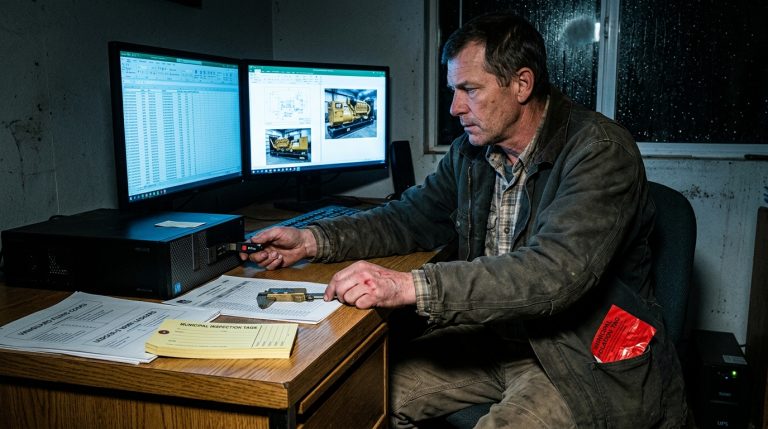
The Ghost of the Reaper: A Cold Reckoning for the Man Who Refused to Fade Away
CHAPTER 1: THE HUNTERS ECHO
The alleyway was a throat of brick and shadow, smelling of rot and trapped humidity. Mark didn’t run. He walked with the measured, rolling gait of a man who had spent his life navigating minefields, his eyes scanning the periphery for the slight distortion of light that signaled a hidden threat.
The footfalls behind him stopped.
Mark didn’t stop. He pivoted—not a turn, but a slight adjustment of his weight—and tucked himself into the deep recess of a dumpster enclosure. He pressed his back against the rusted corrugated metal. It was cold, biting through his jacket, but he didn’t shiver. He went still. He waited, his breathing slowed to a rhythmic, shallow cadence.
A shadow detached itself from the mouth of the alley. It moved with the same predatory grace Mark had used to stalk his own targets forty years ago. The figure wore a dark trench coat that caught the moonlight like wet ink. He stopped where Mark had been standing seconds before, head tilted, listening for the sound of departure.
Mark reached into the inner pocket of his canvas jacket. His fingers brushed against a small, hard lump stitched into the fabric—a lump that hadn’t been there when he left his house. He felt the subtle heat radiating from it. A tracker.
The realization didn’t shock him; it simplified the world. The bar hadn’t been a coincidence. The arrogance of the young lieutenant had been the bait, and the arrival of the Admiral had been the lock. They needed to see if he was still the same machine.
The figure in the alley pulled a suppressed pistol from their coat. The metallic snick-snick of the slide being racked echoed off the wet brick.
Mark didn’t look at the gun. He looked at the shadows. He noticed a frayed power line dangling above the intruder’s head, sparking sporadically where it kissed the damp wall.
“I know you’re here, Reaper,” the man called out, his voice smooth, professional, and entirely devoid of heat. “There’s no point in the hide-and-seek. The Admiral just wants to talk.”
Mark didn’t speak. He reached out and snagged the loose end of a rusted chain securing the dumpster. He didn’t pull it toward himself; he flicked it outward, creating a resonant, jarring sound against the metal wall that mimicked the noise of a man stumbling into an obstacle.
The figure snapped toward the sound, the pistol barrel tracking the noise instantly.
In that split second of distraction, Mark moved. He didn’t engage; he exhaled, pushing off the wall. He slipped into the narrow gap between the buildings, a shadow among shadows, leaving the man staring at a pile of discarded trash.
As Mark disappeared into the labyrinth of the city’s underbelly, he felt the heavy, vibrating weight of the tracker in his pocket. He realized with a hollow, crushing certainty that his retirement wasn’t just ending—it had been a controlled experiment, and the data was now being recalled.
He reached the next street corner and stopped. A black sedan sat idling under a flickering streetlamp. The back window rolled down, revealing the cold, star-spangled shoulder boards of Admiral Vance.
“Get in, Mark,” Vance said, his voice flat. “The experiment is over. We have work to do.”
Mark stood under the dying streetlamp, the cold rain beginning to fall, feeling the weight of the tracker burning a hole in his pocket.
CHAPTER 2: THE PASSENGERS PRICE
The interior of the sedan smelled of lemon-scented disinfectant and old, high-grade leather—a sterile, artificial scent that felt like an assault after the rain-drenched rot of the alleyway. Mark settled into the backseat, his canvas jacket still damp, his joints stiffening as the engine hummed to life. He didn’t look at Admiral Vance, who sat beside him like a statue carved from iron and disappointment. He looked at his own hands. They were resting on his knees, steady as ever, though the fabric of his jeans was stained with the grime of the alley.
The car pulled away from the curb with a smooth, frictionless glide. Outside, the city blurred into streaks of rain-slicked light, a world that seemed to be accelerating away from him.
“You haven’t changed much, Reaper,” Vance said. The Admiral didn’t turn his head. He stared straight ahead at the driver’s neck, his profile sharp against the passing neon. “Still prefer the dark, still prefer the silence.”
“Names are just labels, David,” Mark replied. His voice was a rasp, low and controlled. He felt the tracker in his pocket, a phantom limb that hummed with a low-frequency vibration that only he seemed to notice. “And ‘Reaper’ is a name that belongs in a grave.”
“We didn’t come for a ghost story,” Vance countered, his tone hardening. “We came because the world outside this bubble is changing. You think you’re invisible? You think you’re a myth? You’re a liability.”
Mark turned his head, his gray eyes scanning the interior of the car. It was a mobile fortress. He noticed the lack of door handles on the inside and the reinforced mesh behind the driver’s seat. It wasn’t a chauffeur service; it was a transport for a high-value asset. Or a prisoner. He leaned his head back against the leather, the sensation of moving through the city triggering a sudden, sharp memory: 1972, the back of a canvas-covered truck, the heat of a jungle morning, and the feeling of being traded like a commodity between handlers who didn’t care if he survived the night. The scent of the lemon polish suddenly smelled like the antiseptic of a field hospital.
He closed his eyes, forcing the phantom jungle to recede. He wasn’t in 1972. He was in a sedan in a city that had forgotten him, but his handlers hadn’t.
“The brand on my wrist,” Mark said, his eyes remaining closed. “It’s not just a mark of service, is it?”
Vance didn’t answer immediately. The car turned sharply, the G-force pulling Mark toward the door. Outside, the urban landscape began to give way to the reinforced gates of the naval base.
“You were never just an asset, Mark,” Vance said eventually. “You were the blueprint. When the project went dark in ’68, we didn’t just walk away. We monitored the progress. We watched you live your life. We watched you get old. And we waited for the day the world would need a weapon that didn’t leave a footprint.”
“And here I am,” Mark whispered. “Uncovered.”
“You were never covered,” Vance said, his voice cold. “We just gave you the illusion of freedom because it kept the asset stable. But the stability is gone. A group of contractors—people who don’t know the difference between a soldier and a mercenary—have been tracking your signal. Not from the outside, but from the inside. They think they can use you.”
Mark felt a cold knot form in his stomach. The tracker. It wasn’t just a beacon; it was a leash. And someone had found the other end of it.
“Why tell me now?” Mark asked.
“Because they’re closer than you think,” Vance said, gesturing toward the windshield. They were approaching the base entrance. “The people following you in the alley? They weren’t my men, Mark. They were scavengers. And they’re not the only ones.”
The car came to a slow, methodical stop at the guard kiosk. The guard peered into the window, his eyes widening as he recognized the Admiral. He snapped a salute and the heavy steel gate began to crawl open.
Mark looked out at the base—a sprawl of gray buildings, radar dishes, and the dark, silent hulks of ships sitting in the harbor. It was a graveyard of ambition. He reached into his pocket and touched the cold, hard lump of the tracker one last time. He realized that for all his years of silence and quiet, he had never actually left the war. He had simply changed theatres.
As the car drove onto the base, Mark saw a black SUV parked in the shadows of a warehouse, its headlights extinguished. It pulled out, falling into their wake with the discipline of a shadow.
“They’re still with us,” Mark said quietly.
Vance looked into the rearview mirror. His expression didn’t change, but his grip tightened on his briefcase. “I know.”
The car accelerated, the tires gripping the asphalt as they wound through the maze of the base toward a secure bunker built into the side of the hill. Mark watched the SUV grow closer in the reflection. The hunt hadn’t ended in the alley. It had just moved into the light.
CHAPTER 3: THE PERIMETER BREACH
The sedan shuddered, a violent, metallic vibration that rattled the fillings in Mark’s teeth. The streetlights overhead, which had been casting a uniform, sterile orange glow across the base’s perimeter road, suddenly blinked out in a cascade of darkness. The electronic lock on the sedan’s doors clicked—an audible, high-pitched whine—and the power steering whirred and died, turning the wheel into a dead weight in the driver’s hands.
The driver, a man whose face had remained a mask of professional apathy, wrestled the sedan to a halt just feet from the dark industrial sector of the shipyard.
“System failure,” the driver grunted, his fingers flying over the console. “Total blackout. Navigation, comms, engine management—all dead.”
Vance didn’t panic. He looked out the window, his eyes narrowing as he scanned the silhouette of the cranes and shipping containers that loomed over them like skeletal giants. The black SUV that had been tailing them stopped twenty yards back, its headlights also killed.
Mark didn’t wait for orders. He watched the rearview mirror. Three figures emerged from the SUV. They moved with the calculated, rhythmic steps of people who operated in the blind spots of the law. They weren’t soldiers. Their gear was mismatched—tactical, yet civilian in origin. Scavengers.
“They’ve disrupted the base grid,” Mark whispered, his voice as dry as shifting sand. “They aren’t just following us. They’re isolating us.”
“Can you move?” Vance asked, his voice sharp. He wasn’t asking if Mark was physically capable; he was asking if the “asset” was ready to function.
Mark reached into his pocket. The tracker was vibrating—a low, insistent buzz that felt like a pulse against his thigh. He felt the cold air outside as the driver cracked the door. He didn’t look at the Admiral. He looked at the shadows surrounding them, assessing the angles of fire, the distance to cover, and the inevitable flow of the coming violence.
“I can move,” Mark said, pushing his door open. The night air was biting, smelling of salt, grease, and the ionized ozone of the shorted grid.
He stepped out, his feet hitting the concrete with a sound he consciously kept minimal. He didn’t carry a weapon, yet as he stood there, the weight of the moment shifted. The three figures approaching them stopped. They knew who he was. They knew the name, the myth, the Reaper. They kept their distance, a crescent-shaped formation that was designed to prevent him from flanking them.
“We just want the package, Old Man,” one of them called out. His voice was too loud, too desperate—a tell. “Walk away, and we don’t put a hole in the Admiral.”
Mark stood still. He felt the familiar, cold detachment washing over him—the “Ghost Ratio” engaging. His pulse didn’t quicken. He didn’t feel fear. He felt the geometry of the fight. He saw the way the man on the left favored his right knee, a tell-tale sign of an old injury. He saw the man in the center gripping his suppressed pistol with knuckles white from strain.
“Package,” Mark repeated, the word sounding foreign, detached. He took a single step forward, not in aggression, but in a slow, deliberate expansion of his presence. “You have a lot to learn about what constitutes a package.”
The man on the left shifted, his weapon drifting slightly. “He’s just an old man! Take him!”
Mark didn’t look at the man who spoke. He looked at the shadows. He saw a forklift parked near a stack of crates, its battery likely still active—a potential ignition source. He saw a pile of loose metal piping near the shipyard fence. He was calculating the cost of this encounter, the noise it would make, and how he would clean it up.
He felt the tracker in his pocket burn against his skin. The government was watching him. He was performing for the cameras hidden in the dark corners of the base, proving that the machine still worked. The thought was a sharp edge of resentment, but he channeled it. He wasn’t just fighting these men; he was fighting the leash they had put on his wrist.
“Don’t,” Vance warned from behind him, his hand reaching for his sidearm.
Mark didn’t glance back. “Stay in the car, David. You’re an Admiral. Let the relics handle the grunt work.”
Mark moved. He didn’t rush. He flowed into the blind spot of the center assailant before the man could draw a clear bead. He didn’t strike with rage; he struck with the cold, mechanical efficiency of a piston. He caught the man’s wrist—the one holding the pistol—and twisted, using the attacker’s own momentum to drive the barrel into the man’s side.
The sound of the struggle was muffled, heavy—the grunts of men in physical discord, the scuff of boots on concrete. Mark felt the vibration of the tracker in his pocket synch with the rhythm of the conflict. He was a piece of software executing a sub-routine. He disarmed the first man, using his own weight to pin him against the shipping container.
He spun, his eyes locking onto the second attacker. The man froze, his weapon faltering. The legend was real. The eyes were exactly what the rumors said—dead, empty, and utterly unbothered by the violence they were orchestrating.
Mark didn’t finish the man. He stepped back, his posture shifting to a relaxed, predatory guard. He looked at the three men. They were breathing hard, their eyes wide with the realization that they had engaged something that didn’t play by the rules of their world.
“The grid will come back up in sixty seconds,” Mark said, his voice flat, devoid of emotion. “The base security will be here in two minutes. If you want to live to see another morning, I suggest you run. If you want to see if the stories are true, stay.”
The men didn’t hesitate. They abandoned their equipment and turned, vanishing into the darkness of the shipyard with a frantic, uncoordinated scramble. Mark stood in the center of the dark road, his hands hanging loosely at his sides. He watched them go, his chest barely heaving, his focus shifting back to the sedan.
Vance was standing by the door, his face unreadable. He looked at the abandoned weapons on the ground, then at Mark. The Admiral didn’t offer praise; he didn’t even look relieved. He looked at Mark with the clinical interest of a scientist watching a prototype perform under stress.
“They’re gone,” Mark said, stepping back toward the car.
“For now,” Vance replied, looking up at the sky as the distant, rhythmic strobing of approaching security lights began to illuminate the clouds. “But you’ve just confirmed their suspicions, Mark. You are the Reaper. And that means you have a price on your head that keeps going up by the hour.”
Mark sat back in the car, the silence returning. He felt the tracker in his pocket—the physical link to the government that wanted him, and the contractors that hunted him. He was the prize in a game he hadn’t agreed to play, and for the first time in forty years, he felt the heavy, suffocating weight of the truth. He was being used to draw them out. He was the bait.
CHAPTER 4: THE ARCHITECTS APPOINTMENT
The bunker was not what Mark expected. There were no flashing screens, no hum of high-end surveillance equipment, no bustling teams of analysts. It was a space of brutalist architecture—polished gray concrete, recessed lighting, and the absolute, oppressive quiet of a vault. As the sedan came to a stop on the slick floor, the engine’s ticking cooling metal sounded like rhythmic gunshots in the cavernous space.
Admiral Vance stepped out, his posture stiff, his cap tucked precisely under his arm. He didn’t look at Mark; he walked toward a single steel table placed in the center of the room, as if he were walking to an altar.
“Step out, Mark,” Vance commanded, his voice echoing off the high ceiling.
Mark complied, his boots making a dull thud against the concrete. He felt the tracker in his pocket—it had gone silent, the buzzing cessation more jarring than the vibration itself. He looked around the bunker. There were no exits visible, only the massive blast doors they had entered through. He felt a phantom sensation, a prickle at the base of his neck, as if the walls themselves were watching him.
“You brought me to a grave, David,” Mark said. He stood by the car, his hands resting naturally at his sides. He wasn’t looking at the Admiral; he was looking at the ventilation ducts, the spacing of the lighting, the lack of dust on the floor. It was a facility maintained for a single purpose: containment.
“I brought you to a sanctuary,” Vance corrected. He reached into his briefcase and withdrew a thin, leather-bound folder. He didn’t open it. He simply set it on the table. “You’ve spent forty years living as a civilian, Mark. You’ve played the part of the gardener, the regular, the relic. But the reality is that the program didn’t end in 1968. It just evolved.”
Mark moved toward the table, his gait slow and deliberate. He felt a sudden, inexplicable shift in his equilibrium—a momentary vertigo, as if the floor beneath him had tilted. He gripped the edge of the steel table to steady himself, the cold metal biting into his palms. The sensation was sharp, grounded, but for a fraction of a second, the image of Vance seemed to blur, a flicker of static playing across the Admiral’s face.
Is it the tracker? Mark thought. Or am I finally breaking?
“Evolved into what?” Mark asked, his voice steady despite the internal spinning. “A leash? A tether? I felt the signal, David. I’ve known for years that something was wrong, but I chose to ignore it because I wanted the peace. I wanted to be just Mark.”
“There is no ‘just Mark’,” Vance said. He opened the folder. Inside were photographs—grainy, long-distance shots of Mark at the grocery store, Mark sitting on his porch, Mark in the dive bar. “You think your life was your own. You think the peace you found was something you built. But you were the baseline. Every operation, every tactical advancement in the last four decades was measured against the data we pulled from your physiology.”
Mark looked at the photos. They were intimate, invasive, and undeniably real. He saw himself unaware, captured in the mundane moments of a life he had cherished for its simplicity. The revelation wasn’t a shock; it was a confirmation. The air in the bunker felt colder now, thin and artificial. He looked at the circular brand on his wrist. It wasn’t just a scar; it was a connection point.
“You didn’t just watch me,” Mark said, his tone low. “You fed on me.”
“We preserved you,” Vance replied, his tone clinical. “You were the only one who didn’t crack. You were the only one who could operate in the dark without losing your humanity. But the scavengers outside? They don’t want the data. They want the architecture. They want the method you used to break the enemy in the Delta.”
Vance moved to a wall, pressing a hidden switch. A panel slid aside, revealing a small, secure terminal. “They’re coming here, Mark. Not for me. For you. And I can’t hold them off forever with base security that’s already been compromised.”
Mark felt the vertigo return, stronger this time. He looked at the terminal—a simple, clean interface. It looked like a hospital monitor. He felt a sudden, irrational urge to smash it. The psychological pressure was mounting, a dull ache behind his eyes that felt like a migraine induced by a high-frequency sound.
Stay sharp, he told himself. Calculate the exit. Measure the threat.
“If they’re coming, why am I here?” Mark asked, pulling his hand away from the table. He stood back, his fingers tracing the edge of his jacket, feeling the seam where the tracker was hidden. “You’re an Admiral. You have a fleet. You have a goddamn army. Why do you need a relic?”
“Because,” Vance said, turning back to face him, his face illuminated by the harsh light of the terminal, “you’re the only one who knows the kill-switch. You’re the only one who can disable the network that’s currently being used to hunt you. If they get their hands on your neural map, the entire tactical network of the US military becomes vulnerable to a single, localized override.”
Mark went cold. The “kill-switch.” He remembered a mission in the dark, a cold, wet night where he had been instructed to plant a device, a device that had been surgically integrated into his own wrist before he had even known what it was. He had thought it was a failure, a dud. He hadn’t realized it was the key.
“You’re not protecting me,” Mark said, his voice dropping to a whisper. “You’re trying to keep the key from being stolen.”
“I’m trying to ensure the survival of the structure,” Vance said, his voice devoid of empathy. “The mission remains, Mark. Whether you choose to participate or not.”
Mark looked at the Admiral—a man who had once been a young, frightened boy in a jungle, now turned into a stone-cold architect of a system that had effectively cannibalized his savior. The moral weight of the betrayal was a tangible pressure, a weight that threatened to crush the air out of his lungs. He looked at the exit, then at the terminal. He realized that the choice wasn’t his to make; he was a component, and the component was being forced to recalibrate.
“Show me,” Mark said, his voice a ghost of its former self. He stepped toward the terminal, his hand trembling—not with fear, but with the sheer, crushing exhaustion of a man who had been fighting a war he didn’t know he was in.
CHAPTER 5: THE GHOST IN THE ARCHITECTURE
The terminal hummed with an low, sub-audible frequency that Mark felt in the marrow of his bones. As he engaged with the interface, the complexity of the security protocol revealed itself—not as a standard military fire-wall, but as something older, deeper, and layered with a syntax he hadn’t seen since the late sixties.
His eyes darted across the flickering lines of data. He was looking for the kill-switch, the override that would deactivate the beacon in his wrist. Instead, he found a string of anomalies. A specific function call, buried deep in the sub-routines, carried an unconventional indentation pattern—a rhythmic, almost poetic formatting that felt like a thumbprint. It was elegant, efficient, and hauntingly familiar.
It wasn’t military work. It was the work of a phantom.
“Is it responding?” Vance asked from behind him. The Admiral’s voice was a flat, clinical intrusion on the silence of the vault.
Mark didn’t answer. He watched the screen, his breathing shallow. He had been told he was the baseline, the architecture for a system built to preserve the state. But the code he was looking at suggested the system hadn’t been built to protect anything. It had been built to be controlled. And the signature he saw—the tiny, elegant deviation—pointed to an author he had once known, a man who had officially died in the jungle years before Mark even received his brand.
He felt the cold, familiar sensation of a trap closing around him. The “scavengers” outside, the Admiral’s cold detachment, the tracking beacon in his own flesh—it was all a shell game, designed to keep him focused on the threat in front of him while the true masters of the network shifted the pieces beneath his feet.
Mark’s finger tapped the screen, deleting the line of code. He didn’t want the Admiral to see it. He didn’t want the system to know he had spotted the ghost.
“The architecture is complex,” Mark said, his voice level. “It’s not a simple switch. It’s an integrated feedback loop. If I force an override, the beacon will broadcast a high-intensity signal. It will give our location away to anyone monitoring the spectrum.”
“Do it anyway,” Vance said, his voice dropping into the register of a command. “We have the perimeter secured. We can intercept whoever comes.”
Mark looked at the Admiral in the reflection of the glass. He saw a man who believed he was in control, a man who thought he was the conductor of this symphony. But the reality was far more jagged. The scavengers weren’t trying to steal the Reaper; they were trying to recover a lost asset of the very same clandestine program that had birthed them both.
Mark made his decision. He didn’t disable the beacon. Instead, he reconfigured the signal. He began to input a false command, a “looping” sub-routine that would project his signature to a coordinate three miles away, in the middle of the active naval harbor. It was a gamble—a move that would force the hunters into the path of the base’s high-security patrol boats.
“It’s done,” Mark said, stepping back.
He didn’t wait for the Admiral to verify the data. He felt the weight of the tracker on his wrist, a physical anchor to a lie. He walked toward the blast doors, his movements fluid, calculated. He had to get out. He had to find the man who had written the code, the man who was supposed to be dead, the man who was actually pulling the strings of the entire, sprawling infrastructure.
“Where are you going?” Vance asked, his hand dropping to his sidearm.
Mark stopped, not turning around. He listened to the quiet of the bunker, the absolute absence of life. “The architecture is flawed, David. And I think I know who designed it.”
He didn’t elaborate. He didn’t have to. He pushed the heavy button near the blast door. The mechanisms groaned, a massive, grinding sound that filled the vault, and the door began to slide open.
As the gap widened, he saw the flickering, chaotic light of the base’s emergency grid. The security teams were already moving toward the harbor, their tactical lights cutting through the dark like searchlights. He felt the cold wind of the industrial sector hit him—a sharp, stinging air that felt like a warning.
He stepped out, the concrete of the shipyard beneath his feet, and moved into the shadows. He didn’t look back at the bunker. He was no longer a pawn of the Admiral, or a target of the scavengers. He was a hunter, and he had finally caught the scent of the man who had been playing them all.
The tracker in his pocket pulsed—a warning, a signal, a countdown. Mark didn’t care. He walked into the maze of shipping containers, his silhouette blending perfectly with the dark, jagged edges of the industrial zone. He wasn’t running anymore. He was closing the distance.
CHAPTER 6: THE SCARS OF THE REAPER
The sound was a high-pitched, digital trill—a radio frequency common to the base’s security grid, but to Mark, it was the screech of a needle on bone. His hand flew to his wrist, clutching the circular brand. The world tilted violently. The rows of rusted shipping containers began to ripple like heat haze, and the smell of saltwater vanished, replaced instantly by the thick, choking musk of damp soil and burning cordite.
He wasn’t in the shipyard. He was on his knees in the mud, back in 1968. A man—a silhouette he had spent a lifetime trying to bury—stood over him, holding an iron glowing with a dull, cherry-red heat.
“This isn’t a mark of service, Reaper,” the shadow whispered, his voice the same frequency as the static on the radio. “It’s a tether. As long as you burn, you belong to us.”
Mark gasped, his lungs burning as if he had actually inhaled smoke. He collapsed against the side of a container, the cold steel digging into his shoulder, dragging him back to the present. The shipyard hummed with the distant, impatient blue lights of the security patrol. He was shaking, a fine, tremor-like fatigue radiating from his core. He hadn’t just seen a ghost; he had felt the iron.
He pulled himself up, his movements stiff. The man he was looking for—the man who had designed the kill-switch—was not just a technician. He was the architect of his bondage. And he was here, on the base. The frequency in the radio chatter hadn’t been a coincidence; it was a beacon, a siren song calling him deeper into the trap.
Mark adjusted his collar, hiding the brand from the ambient light. He needed to find the source of that frequency. He moved through the maze of the shipyard, his ears filtering out the ambient mechanical noise—the creak of rusted hinges, the distant thrum of ship engines, the steady drip of rainwater from a container roof. He was looking for a pattern, a divergence from the military standard.
He found it near the old dry-dock, where a small, nondescript utility van was parked under a floodlight. It was out of place—too clean, too modern for the decaying infrastructure of the yard.
He didn’t rush. He climbed the lattice of a nearby crane, his hands finding the cold, grease-slicked rungs with practiced ease. From the vantage point of the crane’s gantry, he peered down. The van was an electronic command post, its windows blacked out, its interior glowing with the same blue, sterile light as the bunker terminal.
He watched a man step out of the van. The figure was older than Mark, his hair thin and silver, his gait favoring his left side—the exact same way Mark had moved in his forties. He carried a tablet in one hand, his fingers tapping rhythmically against the screen.
Mark felt a surge of cold, jagged vindication. The man wasn’t just a technician; he was a mirror. The man had lived the same life, survived the same program, and had been left to rust in the same silence.
The man paused, looking up, not at the crane, but toward the bunker where Vance and the terminal were located. He spoke into a headset, his voice reaching Mark through the damp air—not as a whisper, but as a clear, precise transmission.
“The baseline is drifting,” the man said. “He found the anomaly in the code. He’s closing in.”
Mark didn’t wait. He moved down the crane’s gantry, the metal groaning under his weight, but the man below didn’t look up. Mark dropped from the gantry, landing in a crouch behind a stack of industrial pallets, only ten feet from the van.
He was close enough to see the man’s face. It was the face he saw in his own bathroom mirror every morning, if he had allowed himself to grow old. It was a face carved by the same traumas, eroded by the same secrets.
“You were supposed to be dead,” Mark said, his voice cutting through the hum of the shipyard like a blade.
The man turned, his expression not shocked, but weary. He didn’t reach for a weapon. He simply tucked the tablet under his arm. “We all died, Mark. The day they branded us, the part of us that mattered—the part that had a home, a name, a future—it was extinguished.”
“And this?” Mark gestured to the van, the terminal, the network. “This is what you built from the ashes?”
“This is the penance,” the man replied. He stepped toward Mark, his eyes filled with a hollow, profound sadness. “Vance thinks he’s using me to track you. You think you’re using me to find the truth. But we’re both just maintenance crews, keeping the gears of a dead machine turning.”
Mark felt the tracker in his pocket pulse. The man’s tablet began to chime—a rhythmic, insistent sound.
“They’re coming, Mark,” the man said. “Vance, the scavengers, the ones who own the code—they’re all converging here now that the beacon is active. You didn’t just find me. You led them right to the center of the labyrinth.”
The sound of engines roared in the distance—not the methodical approach of base security, but the rapid, disorganized rush of heavy vehicles. Mark didn’t retreat. He stood his ground, the cold, sharp wind biting into his face. He finally understood. There was no kill-switch. There was only the cycle, and it was about to reach its final, violent revolution.
CHAPTER 7: THE CRASH OF THE MACHINE
The shipyard flooded with a sudden, searing intensity of white light. Mark squinted against the glare, the silhouette of the man—his double, his predecessor, his ghost—caught in the center of the beam. The heavy vehicles skidded to a halt, tires screeching against the wet concrete, and the sound of doors swinging open was a discordant symphony of imminent violence.
“Drop the tablet!” a voice boomed from behind the lights, amplified by a loudspeaker. “Personnel at the van, hands in the air!”
Mark didn’t move. He kept his eyes on the older man. The man was staring into the darkness, his expression almost serene, as if he had been expecting this final reckoning for decades. He looked down at the tablet in his hand, then back at Mark. There was no fear in those eyes, only a hollow recognition.
“They aren’t here for me, Mark,” the man shouted over the roar of idling engines. “They’re here to scrub the drive. If they get their hands on this, the truth about the program disappears forever.”
Mark didn’t hesitate. He lunged.
He didn’t go for the man; he went for the van. He threw his weight against the vehicle’s side panel, pushing with every ounce of his remaining strength. The van, balanced precariously on the uneven concrete of the shipyard, tipped. It tilted, groaned, and then slammed onto its side with a violent crash of glass and metal that echoed like a thunderclap across the bay.
The security teams opened fire.
Bullets chewed through the air, sparking against the steel side of the van. Mark dove behind the chassis, the metal offering a sliver of cover. He looked over to find the older man had also sought shelter, scrambling behind a stack of industrial piping. The older man was holding the tablet, his thumb hovering over the screen.
“It’s not just code!” the man yelled, his voice strained. “It’s a list! Names, dates, locations—the entire web of the people who funded the program, the ones who are still in power! If I broadcast it, it’s suicide, but it’s the end of their machine!”
Mark felt the tracker in his pocket burn. The frequency was now so intense it was making his vision blur, a sharp, pulsing pain behind his left eye. He realized the beacon wasn’t just tracking him—it was signaling the security teams to prioritize the destruction of anything within a twenty-foot radius.
“Do it!” Mark roared, sliding a heavy wrench he’d grabbed from the ground toward the man. “Use the wrench to bridge the connection to the shipyard’s main comms array!”
The man grabbed the wrench. He didn’t ask questions. He understood the tactical necessity. He reached up, tearing a panel off the side of the van, exposing the delicate wiring harness. He jammed the wrench into the junction box, creating a short circuit that sent a shower of brilliant, white-hot sparks into the night air.
The shipyard’s PA system stuttered, squealed, and then began to broadcast—not the orders of the security teams, but the rapid-fire transmission of data. A cascade of names, dates, and locations began to blare from every speaker in the yard.
The security teams froze. The gunfire stopped. The confusion was absolute.
“You’ve killed us both, Reaper,” the older man whispered, though he was smiling.
Mark stood up, stepping out from behind the van. He held his hands up, not in surrender, but to draw the fire. He was the bait, and he was finally ready to stop running. The security teams leveled their weapons at him, their fingers tightening on their triggers. He saw Admiral Vance at the edge of the spotlight’s reach, his face a mask of cold, impotent fury as he realized the data was already hitting the public net.
The machine was falling, and Mark stood in the center of the ruin, the tracker on his wrist finally going silent—not because it was deactivated, but because the entire network it relied upon had been scorched from the earth. He felt the cold air hit his skin, a sensation of profound, terrifying liberation. The hunt was over, but the reckoning had only just begun.
CHAPTER 8: THE REAPERS SILENCE
The shipyard had been reduced to a graveyard of sirens and stuttering lights. The security forces, caught in the wake of the data dump, were scrambling to secure their own lines of communication. In the center of the chaos, the silence between Mark and Admiral Vance felt like the eye of a hurricane.
Vance looked at the data blaring across the base’s screens. His face was a map of collapsed ambition, the cold, rigid mask of the Admiral finally cracking to reveal the exhausted man beneath. He looked at Mark, his eyes searching for the weapon he had been promised—the machine that would resolve this mess—but he only found a man with gray eyes and a steady pulse.
“You’ve burned it all down,” Vance said, his voice quiet. He didn’t sound angry; he sounded defeated. “You have no idea what you’ve just done. That data… it wasn’t just a list. It was the stability of the entire region. You’ve stripped the shield away, and there’s nothing underneath but raw, chaotic friction.”
Mark stepped forward, his boots crunching on broken glass. “Stability built on a lie isn’t stability, David. It’s a cage. We were the bars, and we finally broke.”
The older man, the architect who had built the kill-switch, sat on the ground by the ruined van. He leaned against the metal, his breathing ragged. He pulled the tracking device—the internal unit linked to the network—from the port on his own wrist. It was a crude, surgical piece of hardware. He tossed it into the dirt. “The network is gone, Mark. The kill-switch worked. The feed is dark. We are officially ghosts now.”
Vance reached for his sidearm, but his hand hesitated. He looked at the wreckage, then at the two men who had been the foundation of his career. “What do you want now? A trial? A hero’s welcome? The world doesn’t want to hear the truth, Mark. They want the lie back. They’ll just build another machine.”
“Let them,” Mark said. He knelt, picking up a rusted piece of metal—a discarded lug nut from the van’s wheel. He turned it over in his fingers, the rough, oxidized surface a stark contrast to the sterile, high-tech horror he had just dismantled. “They can build whatever they want. But they won’t use me. And they won’t use him.”
He gestured to the architect.
Mark turned his back on the Admiral, on the base, and on the wreckage of his own past. He walked toward the perimeter fence, the metal wire cool under his hands. He didn’t look back to see if Vance followed; he didn’t care. He found the section of the fence he had noted earlier, a gate that wasn’t monitored, a blind spot in the grid.
He moved through the gap, stepping out of the shipyard and into the quiet, dark expanse of the coastline. The sea air here was clean, tasting of salt and impending winter.
The struggle to survive, the hunt, the tactical maneuvers—all of it faded, replaced by the profound, heavy weight of an ordinary life waiting to be reclaimed. He looked at his wrist, where the brand had been. It was just a scar now, a mark of a war that had been fought in the dark and concluded in the light.
He didn’t have a plan. For the first time in his life, he didn’t have a mission, an order, or a handler. He had the compass he carried in his pocket—the broken, demagnetized one—and he watched the needle spin, aimless and free, before finally settling toward the horizon.
He walked until the sounds of the base were nothing more than a faint, rhythmic pulse against the wind. He stopped at the edge of the water, the tide pulling at the sand beneath his boots. He took the tracker he had removed from his jacket—the one he had carried since the dive bar—and tossed it into the dark, churning waves. It vanished without a splash, swallowed by the deep.
He stood there for a long time, watching the first light of dawn begin to bleed over the ocean, painting the gray water in shades of soft, emerging amber. He was not the Reaper. He was not a baseline. He was a man, standing on a beach, feeling the cold, raw sting of the morning air.
He turned away from the water and began to walk, his stride steady, his heart quiet. He didn’t look back. The machine was gone, the architects were scattered, and the silence he left behind wasn’t the silence of death anymore. It was the silence of a life finally his own.