The Colonel’s Ledger: A Calculated Dismantling of Political Greed and the Restoration of Honor
CHAPTER 1: THE WEIGHT OF THE BLUE
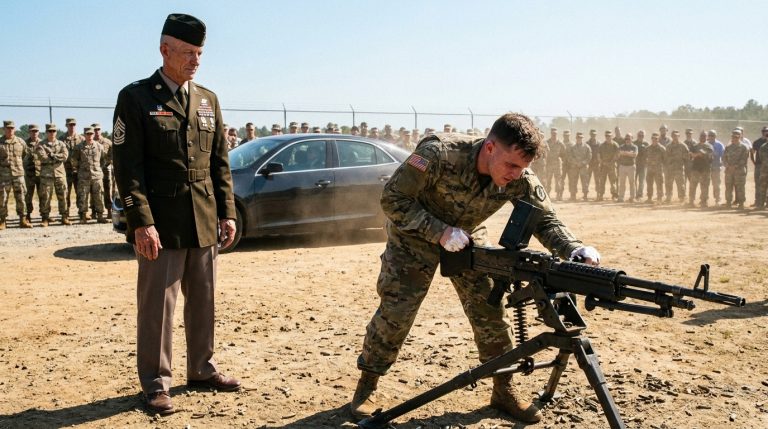
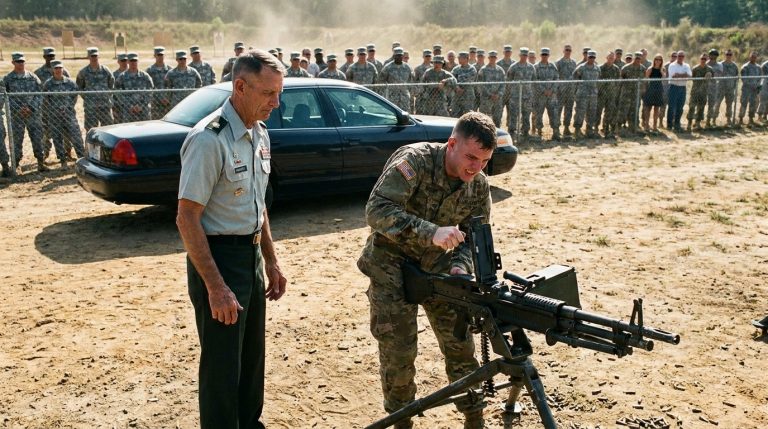
The dining room of the Charleston Country Club tasted like expensive gin and carefully curated contempt. I sat at the central table, my army dress blues stiff against my skin, the wool itching in the stifling, humid heat of the evening. Every ribbon on my chest felt heavy tonight, weighted by the specific gravity of thirty years of service. Around us, the elite of South Carolina leaned into their plates, their jewelry catching the amber glow of the lights like bait.
Senator William Ashford stood at the head of the table. He was a man composed of soft edges and hard assets, his hair a perfectly maintained silver. He held his wine glass with the delicate precision of a surgeon who hadn’t touched blood in decades.
“I’d like to thank my son-in-law, Daniel, for his generous contribution to our family,” Ashford announced, his voice projecting into the quieted dining room. His gaze flickered toward me—a calculated, predatory glance. “The Mercedes he purchased represents more than transportation. It represents respect.”
Polite laughter rippled through the room. It was the sound of a closing trap. Beside me, Daniel, my only son, stared intently at his plate, his face drained of color, his hands white-knuckled around his silverware. The realization hit me then, sharp and cold: this wasn’t just a birthday dinner. It was a deliberate, public execution of my credibility.
Ashford continued, his smile never quite reaching his eyes. “Some people think their service medals matter in the real world. They don’t understand that honor doesn’t pay country club dues.”
I shifted my weight, feeling the faint, familiar friction of the small address book in my inner pocket. The room went unnervingly quiet, the guests sensing the shifting pressure in the atmosphere. Ashford was playing to his audience, enjoying the spectacle of an old soldier being dismantled by a man who viewed people as either leverage or debris.
“I’ve seen old soldiers struggle with civilian life,” he pushed further, his tone turning condescending. “They think their little ribbons entitle them to respect they haven’t earned. But this is the real world. Money talks. Everything else is just noise.”
I set my water glass down. The sound of crystal hitting the table was slight, but it seemed to ring against the marble columns. My heart rate stayed slow, rhythmic, steady. I reached into my jacket and retrieved a plain white business card—no fancy insignia, no gold foil, just a phone number that connected to men who dealt in facts, not political theater.
I stood, the movement slow and deliberate, my posture ingrained from years of training. The room fell into an absolute, suffocating silence.
“You’re absolutely right, Senator,” I said, my voice steady, slicing through the tension. “Honor doesn’t pay country club dues. But it is a lesson some people learn too late.”
I placed the card on the white linen, right before him. Ashford’s smile faltered, a hairline fracture in his carefully constructed mask. Then, out of the corner of my eye, I saw Sarah—Daniel’s wife—reach into her purse to check her phone. She didn’t look at the screen to check the time; she looked at it with the frantic, wide-eyed tension of someone being watched. It wasn’t the phone she owned three days ago.
CHAPTER 2: THE ECHO OF A BROKEN VOW
Sarah’s fingers trembled as she tapped the screen of the sleek, unfamiliar device. It was a brand-new smartphone, the glass unmarred, the casing a shade of silver that didn’t match the personality of a woman who preferred understated, older elegance. It was the kind of hardware that didn’t just hold contacts; it held leashes.
“Is everything alright, Sarah?” I asked, my voice pitched low, intentionally calibrated to be calm.
She looked up, startled. The panic in her eyes was fleeting—a flash of light caught in a jagged piece of glass—before she masked it with a practiced, society-friendly smile. “Fine, Colonel. Just… a work email. My father, he likes to keep me connected.”
“Connected,” I repeated. The word felt hollow.
I glanced toward Senator Ashford. He was busy laughing at a remark made by a judge, his back turned to us, his posture radiating the lazy confidence of a man who owned the air in the room. But I didn’t watch his face; I watched his shoulders. They were tight, held with a tension that suggested he was waiting for the business card I’d left on the table to either ignite or vanish. He was a predator who had spent too much time eating from a silver platter and had forgotten how to smell the wind for threats.
“Daniel,” I said, catching my son’s eye. He was still staring at the tablecloth as if he could read his own ruin written in the fine weave of the fabric. “Step outside with me. The air in here is growing thin.”
Daniel hesitated, then stood. The Senator caught the movement out of the corner of his eye, his head snapping around. For a split second, the mask of the jovial patriarch slipped, and I saw the irritation—the pure, visceral annoyance of a man whose script was being altered.
We walked through the main dining room, the hush of the crowd following us like a wake. Every step I took in my dress blues felt like a rhythmic, measured beat of a drum. My mind was already calculating the logistics. I had the recording device in my jacket pocket—a vintage, high-fidelity piece of gear that had served me better than any digital toy in the last decade. It was currently dormant, but it had captured enough of the Senator’s condescension to satisfy a dozen investigators.
When we hit the terrace, the cool night air of Charleston hit us, smelling of the nearby Ashley River and impending rain. I stopped by the stone railing and turned to my son.
“Look at me, Daniel,” I commanded.
He looked up, his jaw set in a display of defiance that was entirely misplaced. “He’s a Senator, Dad. You don’t understand how this world works. You don’t just walk in here and drop a card on his table.”
“I understand exactly how this world works,” I said, the coldness in my voice surprising even me. It was the voice I used when a mission was compromised and the objective was the only thing left. “He thinks he’s playing a game of chess, but he’s playing with a deck of cards he doesn’t realize I’ve already marked.”
“You’re going to get yourself ruined,” Daniel whispered, looking back toward the glass doors. “He has people. Legal teams. He can delete you from this city.”
“He can’t delete a truth that’s already being recorded.” I patted the pocket containing my device. “But that’s not what I brought you out here for. That phone his daughter is carrying. Where did she get it?”
Daniel blinked, confused. “He gave it to her last week. Said it was a gift to keep in touch with the campaign office. Why does it matter?”
“Because,” I said, looking out at the dark silhouette of the palms against the moonlit river, “no one gives a gift that is also a leash without expecting to pull it.”
I felt a sudden, sharp spike of paranoia. Was I overthinking this? Was it just a phone, or was I seeing threats in shadows because I’d spent too many years looking for them? I shook the thought away. My perception was honed by three decades of intelligence work; I didn’t invent ghosts, I identified them.
“Daniel, you’re going to go back inside. You’re going to act exactly as you always do—meek, grateful, and terrified. Do not breathe a word of this to Sarah, and certainly not to him. I’m leaving now.”
“Leaving? Dad, the dinner—”
“The dinner is over, son. It ended the moment I stood up.”
I turned away from the railing and began to walk toward the parking lot, my gait steady. Behind me, I heard the faint clinking of silverware, the murmur of the elite, and the distant, low rumble of thunder. My phone buzzed in my pocket—a private, encrypted line that very few people knew to use.
I didn’t answer it until I reached the safety of my sedan. I looked at the caller ID: Unknown.
I pressed the button and held the phone to my ear, listening to the static-filled silence.
“Colonel Mitchell,” a voice said on the other end. It was calm, professional, and entirely devoid of warmth. “We’ve received your file on the Charleston defense contracts. The audit begins Monday at 0600. Keep him distracted. Don’t let him know we’re inside the house yet.”
“Understood,” I said.
The line went dead. I started the engine, watching the country club entrance through the rearview mirror. I hadn’t just fired a warning shot; I had rigged the entire foundation of their world to collapse, and they were still sitting inside, finishing their dessert, oblivious to the fact that the clock was already ticking.
CHAPTER 3: THE ARCHITECTURE OF A FALL
The drive from the country club to my home was a study in sensory deprivation and internal noise. Charleston’s streets were narrow, the historic homes standing like silent sentinels under the weeping moss of the oak trees. My hands remained steady on the wheel, but my mind was a high-speed processor, parsing the data. The Senator thought in terms of influence and favors; I thought in terms of vulnerabilities and leverage.
I reached my driveway and killed the lights. The house was dark, a structure of wood and history that had been my sanctuary for five years of retirement. Inside, the file cabinet awaited. It was a monolith of cold, grey steel, its drawers filled with the debris of a career spent in the shadows.
I walked into the office, the floorboards creaking under my boots—a sound I noted as a security deficiency I had ignored for too long. I sat at my desk and pulled the folder marked Classified Eyes Only from its hiding spot. The light from the single desk lamp cut a harsh, surgical line across the surface of the desk, illuminating the dust motes dancing in the air.
I began to work. First, the recording device from the dinner. I fed the data into my laptop, isolating the frequency, filtering out the ambient chatter of the dining room until only Ashford’s voice remained. It was crisp, arrogant, and incriminating.
“Money talks. Everything else is just noise.”
I played the loop twice. It wasn’t just a threat; it was a manifesto of his corruption. But it wasn’t enough. Not yet. I needed the bridge between the political bluster and the actual crime. I opened the digital ledger I had been curating for the past forty-eight hours, cross-referencing the names of defense contractors I’d seen on the Senator’s guest list with public records of state contract awards.
The discrepancy was there, buried in the footnotes of a procurement report from two years ago. A firm called Meridian Consulting, listed as a primary recipient for a local defense tender, had an address that didn’t exist. It was a vacant lot in a zip code known for industrial warehouses. I traced the routing number of the payment—the same $2.3 million the Senator had boasted about—and watched it wind through three shell companies before landing in a private account held by an entity registered in the Cayman Islands.
It was a classic architecture of theft, elegant in its complexity but brittle in its design. If you pulled one thread, the whole suit fell apart.
My phone vibrated. It was a text message from an unknown number: The audit begins Monday at 0600. Keep him distracted.
I deleted the message immediately. Distraction was the easy part. A man like Ashford lived to be the center of attention; he was addicted to the sound of his own voice and the fear of his subordinates. I just needed to ensure he kept speaking.
I leaned back, the leather of my chair groaning. The why was clear, but the how remained the pivot point. I needed to know exactly how deep the rot went. I opened a separate window, a secure terminal that connected to the Department of Defense archive through a series of nodes that would make the Senator’s private investigators look like schoolchildren with magnifying glasses.
I didn’t need to hack the system; I only needed to look at the patterns. I searched for “Meridian Consulting” again, but this time I filtered for international export licenses.
The screen shimmered with rows of technical specifications—guidance systems for low-altitude drones, encrypted communication protocols, titanium heat-shielding schematics. All of them had been approved for export to regional partners, but the routing had been flagged for “additional oversight” three times in the last eighteen months. Each time, the flag had been removed by a direct administrative override from the office of the Senator of South Carolina.
The air in the room suddenly felt thin. This wasn’t just bribery; this was the systematic bleeding of national security assets to whoever was willing to pay the premium.
I stood up and walked to the window. The Ashley River was a black ribbon of ink in the distance. I saw a pair of headlights turn onto my street, slowing down as they passed my driveway. A black sedan, heavy and domestic. It idled for a long moment, the engine note deepening, before it accelerated and disappeared into the night.
It wasn’t a neighbor. And it certainly wasn’t a friend.
The Senator had moved from posturing to surveillance. He was watching me. He was trying to gauge the temperature of the threat, looking for the soft spots in my defense. He wanted to know if I was a nuisance or a terminal problem.
I turned back to the desk. I wasn’t going to hide. I was going to turn the lights on. If he wanted to watch, I would make sure he saw exactly what he was about to lose. I began drafting a document, a comprehensive summary of the Meridian connection, formatted with the cold, bureaucratic precision that the Inspector General’s office demanded.
Every name, every date, every illicit dollar.
I worked until the sky began to bruise with the purple of dawn. My eyes were burning, but my pulse was steady. When the first bird began to sing in the oak tree outside, I hit the ‘send’ command. The digital packet flew across the network, an invisible projectile destined for the desk of General Patricia Walsh.
I stood up and poured the last of the coffee from the pot. It was cold, acidic, and bitter. I took a sip and watched the sun crest over the horizon, painting the river in shades of gold and iron.
The Senator wanted to protect his status? He wanted to ensure his daughter had the right schools and the right social circle? Fine. I would give him the only status he deserved: an inmate’s jumpsuit and the silence of a cell.
The front door chimed—a soft, polite electronic ping. I didn’t reach for a weapon. I reached for my jacket, pulled it on, and walked toward the entrance. My spine was perfectly aligned, my movements economical. I opened the door.
Daniel stood on the porch, his eyes wide, his clothes rumpled as if he hadn’t slept at all. He looked at me, then at the house behind me, his expression a mixture of fear and growing realization.
“Dad,” he said, his voice barely audible. “He knows. He knows you’re talking to people in D.C.”
“I know he knows,” I said, stepping aside to let him in. “And now, it’s time to see what he’s going to do about it.”
CHAPTER 4: THE SONS CHOICE
“Sit,” I said, pointing to the kitchen chair. I didn’t wait for him to comply, but walked toward the sink to wash the bitter taste of the cold coffee from my mouth. The water ran, a thin, metallic hiss that seemed to amplify the silence of the house. Daniel pulled the chair out, the wood scraping harshly against the floor.
I turned around, drying my hands on a towel. He was staring at the file cabinet in the office, his eyes darting to the stack of documents I’d been working on. He wasn’t looking at them as a son looks at a father’s desk; he was looking at them as a civilian looks at a weapon they’ve never seen fired.
“You don’t understand,” Daniel said, his voice straining. “I saw his security detail at the club, Dad. Three men in suits, standing near the exits. They weren’t just for him. They were watching the room. He’s not just a politician; he’s a man who manages consequences.”
“I know,” I said, leaning against the counter. I watched him closely, noting the subtle tremor in his fingers. “He manages consequences by removing obstacles. You were an obstacle, but you were malleable. You were his leverage. But that changed the moment I laid that card on the table.”
I reached into my jacket, the material pulling tight across my chest, and retrieved my own phone. It was an older model, stripped of GPS and unnecessary data packets, the kind of tool that didn’t broadcast its location to every tower it passed.
“The phone he gave Sarah,” I continued, “is the key. It isn’t just a phone. It’s a beacon.”
As I said the word, a flash of memory hit me, sharp and unwanted. Kandahar, 2011. A local translator we’d trusted, a man who swore he was clean. We gave him a secured radio, convinced it was his lifeline. It turned out to be a tether, and the signal didn’t lead back to us; it led to an IED waiting on the supply route. I remembered the sound of the static that cut out just before the blast. The device hadn’t been a tool; it had been an anchor.
The sensation of that phantom static buzzed in my ears, a reminder of what happens when you underestimate the opposition’s ability to turn a convenience into a catastrophe.
“Daniel, look at me,” I said, cutting through his anxiety. “Did Sarah ever complain about the battery life? Did the phone get warm when it was sitting on the nightstand? Did she ever notice the reception dropping in places where it shouldn’t, like inside a concrete-reinforced building?”
He frowned, thinking. “She mentioned it got hot once. Said it was charging slow. Why?”
“Because it’s broadcasting. It’s not just recording conversations; it’s transmitting metadata back to his private server. He’s not just watching us, Daniel. He’s tracking the movement of every person you know. Every call you make is being logged by a firm he controls.”
Daniel went pale. “Then we’re already burned. If he knows I’m here…”
“If he knows you’re here, he’s already calculating how to use that against you,” I finished. “He wants to see how you react. He wants to see if you’ll come to me to complain, to beg for an exit strategy. He’s testing the structural integrity of your loyalty.”
I walked over to the desk, pulled a heavy, lead-lined pouch from the bottom drawer—a remnant of my time in intelligence—and held it out. “Put your phone in here. And when you leave, tell Sarah the phone broke. A splash of water, a drop on the pavement, something believable. She needs to lose that device today.”
“He’ll know,” Daniel said, standing up. “He’ll know it was disabled.”
“He will,” I agreed. “And that’s the point. We need to see how he reacts when he loses the signal. We need to force him to make a mistake. He’s been operating in the comfort of total visibility for years. He’s never had to fight in the dark.”
Daniel looked at the pouch, his hesitation plain. He was still the boy I’d taught to ride a bike, the man who wanted to believe that the world could be navigated through good intentions and honest labor. But the world he’d walked into—the one Ashford owned—didn’t respect intent. It only respected the exertion of force.
“Why me, Dad?” he asked. “You could have done all of this alone. You have the files. You have the contacts.”
“Because I didn’t want you to be the victim,” I said, my voice dropping to a low, hard edge. “But you’ve already been compromised. You accepted the gift. You accepted the prestige. Now you have to earn your way back out of it. If you go back to that house, you go back as a ghost. You don’t ask questions. You don’t look at his files. You listen, you watch, and you report back to me.”
“You want me to be a spy in my own home,” he said, the reality landing with the weight of a stone.
“I want you to be a survivor,” I corrected. “He is an equal intellect, Daniel. He isn’t going to make a simple mistake. He’s going to wait for us to overextend. When he comes for us, he won’t be using the law. He’ll be using his leverage. We need to know what that leverage is before he deploys it.”
He took the pouch, his hand closing over it. The fabric was cold, lead-lined, and heavy—an object designed to silence the digital noise of the world. He nodded, the fear in his eyes slowly being replaced by a hard, brittle determination. It was a look I recognized—not the look of a soldier, but the look of a man who had finally realized the house was on fire.
“I’ll tell her it fell in the sink,” he said. “She’ll believe me. She’s already scared, Dad. She’s seen the changes in him.”
“Good.” I opened the door for him. The night air was thick, heavy with the scent of pine and damp earth. “Go home. If you notice a vehicle, if you get a call that doesn’t sound right, you don’t answer it. You come here.”
He stepped out onto the porch, then stopped, turning back to look at me. The porch light cast a long, distorted shadow across the driveway, making him look older, more rigid. “What if he figures it out before we’re ready?”
“Then we adapt,” I said, my voice calm, the assurance of a man who had built his life on the ability to survive the impossible. “He’s been planning this coup for years. He’s arrogant. He’s distracted by his own power. And those are the two things that will lead him straight into the trap.”
I watched him walk to his car. The engine turned over, the sound echoing in the stillness of the neighborhood. I didn’t turn back inside until his taillights had vanished around the bend of the street.
The house felt larger, colder, and more exposed. I walked back into the office and looked at the wall where the shadow of the window frame cut a cross shape into the floor. The Senator was watching, I was sure of it. He was probably watching from a distance, measuring the time it took for his son to leave, analyzing the pattern of our movements.
He was waiting for me to panic. He was waiting for me to run, to hide, to reach out to the authorities with a desperation that would expose my hand.
I sat back down at the desk and turned on the monitor. I didn’t look at the files. I looked at the dark reflection of the room in the glass, a ghostly, transparent image of a man sitting alone, surrounded by the ghosts of his own career.
I picked up the secure handset. It was time to reach out to General Walsh again. If we were going to force his hand, I needed a theater for the performance. I needed a way to make him believe that the threat was coming from a different direction, a false front that would pull his attention away from the real evidence gathering.
The phone rang, the sound sharp and piercing in the silence of the office.
“General Walsh,” the voice on the other end was clipped, efficient.
“Patricia,” I said. “He’s watching. He knows I’m moving. I need a distraction.”
“What kind?”
“The kind that makes him think I’m only interested in the money. Let him think I’m a disgruntled former employee seeking a payout. If he thinks I’m greedy, he’ll think he can buy me. And if he thinks he can buy me, he’ll show me exactly how much he’s hiding.”
There was a long silence on the line, the sound of the deep, subterranean hum of a secure connection. “That’s dangerous, Jimmy. If you sell the act too well, you might not be able to pull back.”
“I’ve been playing this role for thirty years,” I said, staring at the empty screen. “I think I can manage it for another week.”
I hung up, the finality of the decision vibrating in the air. I had just invited the wolf into the house, and I was counting on the fact that I was the one holding the trap.
CHAPTER 5: THE PROXYS PROBE
I didn’t rush to the door. Rushing is a confession of weakness, an admission that the rhythm of the situation has shifted into a chaotic state where the opponent dictates the tempo. I moved with a practiced, heavy-footed deliberateness, smoothing the front of my jacket, ensuring the recording device clipped to my inner lapel was active and positioned for maximum sensitivity.
When I pulled the door open, the morning light was harsh, unfiltered, and unforgiving. Standing on the porch was a man in a suit that cost more than my first car, his posture a masterclass in synthetic confidence. He held a leather-bound folio under one arm, his expression a bland, rehearsed mask of professional concern.
“Colonel Mitchell?” he asked, his voice an practiced baritone. “My name is Marcus Thorne. I’m with Senator Ashford’s office. He asked me to drop by and see if we could resolve the… misunderstandings from the other evening.”
“Misunderstandings,” I repeated, the word tasting like lead. I didn’t step back to invite him in. “That’s a generous word for a public attempt at character assassination.”
Thorne smiled, but it was a tight, shallow movement of the lips that never touched his eyes. “The Senator is a busy man, Colonel. Sometimes, communications become strained. He values your service. He asked me to offer a platform—a formal apology during his next town hall, if that would help smooth the waters.”
He was testing the perimeter. He wasn’t here to offer an apology; he was here to see if I was rattled enough to take the bait, to walk into a public forum where the Senator could control the narrative and paint me as a senile, disgruntled veteran.
“Come in,” I said, stepping aside.
I led him into the kitchen rather than the office. I wanted him to see the ordinary, domestic nature of my life, the better to contrast it with the weaponized intelligence I was currently deploying against his employer. I gestured to the table, the very same spot where I had sat with Daniel just hours before.
Thorne sat, placing his folio on the table. He took in the room with a quick, predatory glance—the lack of clutter, the worn furniture, the tactical absence of anything that might signal a man who was deeply embedded in a national security investigation.
“Senator Ashford is deeply concerned, Colonel,” Thorne started, his voice dropping into a register of faux intimacy. “He’s heard rumors—unfounded, I’m sure—about you reaching out to federal agencies. He worries that you might be damaging your own reputation by associating with people who have… agendas.”
“Agendas,” I said, leaning back against the counter, crossing my arms. “You mean like the agenda of ensuring that our defense contracts go to qualified veteran-owned businesses rather than shell companies run by political donors?”
Thorne’s mask didn’t slip, but his hand tightened almost imperceptibly on the handle of his folio. “That’s a very specific, and quite dangerous, accusation, Colonel.”
“Is it an accusation if it’s supported by documentation?” I asked, my voice calm, flat, and devoid of emotion.
He looked at me, a long, assessing silence stretching between us. He was calculating the risk—trying to decide if I was a bluffing retiree or a man with a loaded gun. The room felt suddenly cramped, the air thick with the friction of two opposing forces. I could feel the weight of the recording device, the tiny, invisible presence that was currently capturing his every word, every hesitation, every shift in his breathing.
“The Senator is prepared to be very generous,” Thorne continued, shifting his tactic. He opened the folio. There was no paperwork inside, only a heavy, cream-colored envelope. He pushed it across the table. “He knows the situation with your retirement accounts. He knows that mistakes were made—perhaps by your son—that have put you in a difficult position. A generous gesture from a private trust could rectify those losses instantly.”
It was a blatant, amateurish attempt at bribery. It was offensive in its simplicity. He believed that everything, from honor to blood, had a market price.
“You’re offering me hush money,” I said, not moving to touch the envelope.
“I’m offering you a solution,” Thorne countered, his voice losing its professional sheen, replaced by a cold, transactional urgency. “You walk away, you cease these inquiries, and you and your son have a future that is secure. You keep pushing, and you’re going to find that the system is not designed to support people like you.”
The butterfly effect of his arrival was clear now: he had forced me to acknowledge the threat in a way that left a trail. If I accepted, I was compromised; if I refused, he would report back that I was terminal.
I reached out, my fingers brushing the edge of the envelope. I didn’t open it. I simply slid it back across the table, my expression impassive.
“Tell the Senator something for me,” I said, my voice barely above a whisper, yet carrying the weight of a final order. “Tell him that when you spend your life serving something bigger than yourself, you learn that power isn’t about what you can buy. It’s about what you can destroy to protect what’s right.”
Thorne stared at me for a heartbeat, his professional veneer finally cracking to reveal a flicker of genuine confusion. He didn’t understand the language of integrity. He couldn’t compute the value system I was operating from. He snapped the folio shut, his movements sharp and jerky, his frustration finally breaking through.
“You’re making a mistake, Colonel. A permanent one.”
“I’ll take my chances,” I replied.
I walked him to the door, my posture rigid, my eyes fixed on the back of his head. As he stepped out onto the porch, he didn’t look back. He walked to his sedan, his gait hurried, his head snapping toward a hidden spot in the hedges—a signal, perhaps, to the driver waiting to confirm his status.
I watched him pull away, the tires kicking up a spray of gravel that rattled against the siding of my home. The air felt colder now. I stood on the threshold, looking out at the morning, feeling the weight of the conflict shifting, sharpening.
He was gone, but the probe had left a wound. By sending Thorne, Ashford had confirmed the level of his anxiety. He wasn’t just observing me anymore; he was actively attempting to neutralize the threat.
I turned back inside and locked the door, the sound of the deadbolt sliding home a singular, final punctuation to the meeting. I walked back to the kitchen table, picked up the envelope, and slid it into the evidence bag. It was another piece of the puzzle—a documented attempt at bribery to be added to the growing mountain of proof.
I checked my watch. 08:30.
I picked up the secure phone and dialed.
“Patricia,” I said when she answered. “He sent an aide. He offered a payout. The move is made.”
“He’s panicking,” she confirmed, the sound of her own voice sounding thin through the receiver. “We’ve seen the transaction logs. The shell companies are being liquidated as we speak. He knows the audit is coming.”
“Then we accelerate,” I said, my voice steady as I looked at the files spread out across the office desk. “If he’s liquidating, he’s preparing to burn the evidence. We need to strike before the records vanish.”
“I’ll talk to the US Attorney,” she replied. “But Jimmy—be careful. He’s going to stop sending aides soon. Next time, he’ll send something else.”
I hung up the phone and looked out the window at the empty street. The sun was rising, the light now full and bright, exposing every crack and imperfection in the world outside. I knew what was coming. The tactical environment had changed, and the next phase of the war would be fought in the shadows, where the truth was not a matter of files, but of survival.
I sat down at the terminal and opened the encrypted channel to Rebecca Torres. It was time to lock down the courthouse records. If Ashford wanted a war, he was going to get one, and I intended to make sure that when the smoke cleared, there would be nothing left of his legacy but the evidence of his own destruction.
CHAPTER 6: THE MEDIA WAR
The front yard had transformed into a theater of the absurd. Three news vans were parked haphazardly on the manicured lawn, their satellite dishes extended like predatory antennas. Reporters were pacing the pavement, their microphones held out toward my house as if they were divining rods, waiting for the slightest movement behind the curtains. It was a calculated orchestration of chaos, designed to turn my life into a spectacle and, in doing so, strip away the privacy I needed to operate.
I didn’t draw the blinds. To retreat was to signal surrender. I walked to the kitchen, my movements measured, and kept my face impassive. Every action was being recorded by at least six different lenses; I was a performer in a play I hadn’t written, forced to improvise a script that would satisfy the cameras while concealing the truth from the audience.
My phone rang again. It wasn’t the secure line; it was my personal number, the one I used for the utility companies and my bank. I let it ring. Then it stopped, only to begin immediately again. The persistence was intentional. They weren’t just calling; they were signaling.
I walked to the front door and opened it wide. The sudden roar of the crowd—the collective hum of microphones, the shouts of names, the shutter-clicks—was like a physical blow. I stepped out onto the porch, my posture ramrod-straight, my dress blues acting as a shield. I didn’t look at the cameras. I looked past them, toward the horizon, my expression a mask of granite.
“Colonel Mitchell! Is it true you’re conducting a vendetta against Senator Ashford?”
“Colonel, are you confirming that your own son has turned against his family?”
“Sir, are you aware of the allegations of mental instability being reported by the Senator’s press office?”
The questions were not questions; they were projectiles. Each one was aimed at a specific vulnerability, designed to provoke a reaction, a stumble, a flash of anger that they could loop for the evening news. I stood there, letting the silence stretch, forcing them to fill it with their own noise.
I took a slow, deliberate breath. The phantom whine from my earlier exhaustion returned, a high-pitched distortion that made the voices of the reporters sound like they were coming from underwater. I gripped the railing, the cold iron biting into my palm, grounding myself. Focus. This was the distraction I had asked for, the false front that would allow the real work to proceed. I had to sell the image of the disgruntled veteran—angry, isolated, and losing control.
“I have no comment,” I said, my voice projecting, sharp and steady.
“Is it true you’ve been blacklisted from the VFW?”
“Colonel, have you been in contact with federal investigators today?”
I turned back toward the door, my movements clipped, artificial. I made sure to let my jaw tighten, to let a flash of what appeared to be genuine, raw frustration cross my face. I needed them to believe I was the victim of my own rage.
As I stepped back inside and closed the door, the muffled roar of the mob intensified. I leaned my back against the wood, exhaling a breath I didn’t realize I’d been holding. My hands were shaking, just enough to be noticeable. I looked at them, then closed my eyes. The act is the weapon.
The phone in my pocket buzzed—a short, frantic vibration. It was Daniel.
“Dad, they’re here, too,” his voice was tight, barely audible over the sound of a television playing in the background. “They’re swarming the estate. Sarah is hysterical. Thorne is here; he’s trying to convince her that you’re a danger to us. He’s showing her doctored records—claims you’ve been under psychiatric care for years.”
“Stay quiet, Daniel,” I said, my voice a low, steady command. “Don’t confirm anything. Don’t let Thorne see you rattled. If he’s showing her documents, it means he’s desperate. He’s trying to isolate her from me before the audit results go public.”
“He’s winning, Dad. She’s starting to doubt. She’s asking if it’s possible you’ve been… different since Mom died.”
The words were like a knife in the gut. They were using the most intimate, painful memories of my life as ammunition. I felt the surge of anger, hot and volatile, but I forced it down. That anger was the fuel for the trap.
“Listen to me,” I said. “Tell Sarah the truth is coming out on Monday. You don’t have to defend me. You just have to endure the next seventy-two hours. Once the audit records are released, the Senator’s narrative won’t matter.”
“And if they bury the audit? If they fix the findings?”
“They can’t,” I said. “General Walsh is oversight. She isn’t part of the political machine. The evidence is already in the system. They can’t delete it without leaving a footprint that will lead straight to the White House. Trust the process, Daniel.”
I hung up, the phone feeling heavy, like a lead weight in my hand. The media circus outside was growing, the sound of a megaphone now blaring across the street. “Colonel Mitchell, come out and talk to the people!”
I moved to the office, my steps avoiding the squeaky floorboards. I needed to see what the digital landscape looked like. I turned on the terminal. The stream of information was a river of vitriol—headlines, tweets, leaked documents, anonymous sources. Ashford was burning his own reputation to the ground just to ensure I was consumed by the fire.
I looked at the screen and felt the distortion again. The letters seemed to swim, the data points blurring into a chaotic pattern. I shook my head, closing my eyes, pressing my thumbs into my sockets. I am in control. I am the architect.
The decoy secret was working. They were focused entirely on the vendetta, on the psychological breakdown, on the family dispute. They were so busy looking at the dust I was kicking up that they hadn’t even realized I was already holding the match to their actual business interests.
The sound of a heavy vehicle pulling into the driveway—not a news van, but a black SUV—made me freeze. I moved to the window, peering through the gap in the curtains. Two men in dark suits stepped out, not with cameras, but with official-looking document cases.
The escalation had begun. It was no longer just the media; it was the start of the legal suppression. I watched them approach the front door, their faces devoid of expression. They were here to serve something—a cease-and-desist, a court order, perhaps something worse.
I checked the recording device one last time. It was still running. I walked toward the front door, my heart beating in a slow, rhythmic cadence.
I was ready.
CHAPTER 7: THE COURTHOUSE ARRAIGNMENT
The drive to the Charleston Federal Courthouse was a masterclass in tactical patience. Every turn was calculated, every stop at the red lights used to scan the side-view mirrors for the black sedan that had been shadowing me since the media circus began. I didn’t lose them; I led them. I wanted them to follow me to the courthouse, to bear witness to the moment their client’s influence finally collided with the immovable reality of federal law.
The courthouse plaza was a stark contrast to the opulence of the country club. It was a brutalist structure of concrete and glass, its architecture designed to dwarf the individual and elevate the institution. And it was packed.
Five hundred veterans stood in silent, ordered rows, a formation I recognized from a lifetime of service. There were no shouts, no placards, no chaotic fervor. They were standing at ease, a wall of faded green and tan fatigues, unit patches from three different wars, and expressions of grim, unyielding resolve. When I exited my vehicle, the collective turn of their heads was perfectly synchronized, a ripple of movement that silenced the hysterical reporters swarming the perimeter.
I walked toward the steps, the paper—the useless, desperate restraining order—tucked firmly into my inner pocket. I didn’t acknowledge the cameras. I didn’t look at the lawyers maneuvering through the crowd. I walked through the cordon of my brothers-in-arms, and for the first time since this began, the phantom whine of stress in my ears faded, replaced by the profound, grounding silence of a unit in formation.
Inside, the courtroom was air-conditioned to the point of being clinical. The sharp, metallic scent of floor wax and old paper was a sensory anchor. I took my place in the gallery, my spine perfectly aligned, my hands resting on my knees.
Senator William Ashford was already there, flanked by a legal team that looked like it had been curated for the sole purpose of overwhelming the system. Hampton Morrison III, the lead counsel, was leaning over, whispering into Ashford’s ear. Ashford looked smaller, his posture rigid, the silver of his hair catching the cold, fluorescent light. He was a man who had spent his life operating in the gaps between rules, and he was currently realizing that in this room, there were no gaps.
The heavy oak doors at the front of the courtroom swung open. The bailiff’s voice rang out, the traditional call to order sounding like a hammer striking an anvil. “All rise.”
Judge Patricia Harrison entered. She walked with a slight, rhythmic hitch in her gait—the result of a life-altering injury that she wore as a testament to her own service. She took her seat, her gaze sweeping the room with a cold, analytical precision. When her eyes landed on Ashford, she didn’t blink. She was a Marine colonel who had traded her rifle for a gavel, and I knew, from years of shared history in intelligence circles, that she was the one variable Ashford couldn’t control.
“We are here for the arraignment of Senator William Ashford,” she stated, her voice devoid of any inflection. “Counsel, are we prepared to proceed?”
“Your Honor,” Morrison began, his voice practiced, smooth, and entirely hollow. “We move for an immediate dismissal. My client has been the subject of a targeted, malicious, and illegal campaign of harassment orchestrated by the plaintiff, Mr. Mitchell, who is using his past military connections to circumvent due process.”
He laid the restraining order I had been served that morning onto the judge’s desk. “Furthermore, the evidence presented by the prosecution—a series of recordings obtained through illegal wiretapping—violates the privacy protections afforded to a sitting United States senator.”
The courtroom held its breath. This was the moment Layer 1 was meant to hold—the decoy secret. If the judge accepted the argument that the surveillance was “illegal wiretapping,” the case would be crippled, the media would swarm the “privacy violation,” and Ashford would survive to fight another day.
I watched the judge’s face. She didn’t look at the paper. She looked at Morrison, and then she looked at me, her eyes lingering for a fraction of a second—a recognition, a tactical acknowledgment.
“Mr. Morrison,” she said, her voice dropping into a register that made the room seem to shrink. “You are presenting a motion based on the premise that the recordings were obtained illegally. I have reviewed the preliminary filings from the Department of Defense Inspector General’s office. The evidence was secured through an authorized audit, triggered by a formal complaint from the Defense Department regarding the misappropriation of classified assets.”
Morrison’s mouth opened, then closed. He looked at the paperwork in his hand as if he’d been handed a live grenade.
“The recordings,” the judge continued, “are not the primary evidence. They are supporting documentation for a federal racketeering investigation that has been running for three months, unknown to this court—and apparently unknown to you.”
The silence in the courtroom was absolute. The decoy secret hadn’t just been shattered; it had been rendered irrelevant. Ashford shifted, the color draining from his face, his eyes darting toward the gallery. He was looking for a way out, a loophole, a sign that the ground beneath him was still solid.
“The motion to dismiss is denied,” the judge said, the sound of her gavel hitting the mahogany a final, decisive note. “The defendant will be remanded to custody pending the discovery phase. This court does not tolerate the sale of national security assets under the guise of political consulting.”
“Your Honor,” Ashford stood up, his voice cracking. “This is a setup. This man—Mitchell—he’s been planning this for years!”
He pointed at me, his finger trembling. It was the movement of a cornered man, a visceral display of his own collapse. I didn’t stand. I didn’t speak. I simply met his gaze, the steady, unblinking focus of a soldier who had seen the end of the mission and was already preparing to go home.
“Sit down, Senator,” Judge Harrison commanded.
He didn’t move. For a moment, it seemed as if he might lunge, his face a mask of rage and terror. But then, the reality hit him—the federal marshals were already closing in, their hands resting on the butts of their sidearms, their faces impassive.
He slumped back into his chair, a man who had just realized that the game was over, that the power he had built was nothing but a fragile house of cards, and that the wind had finally arrived to take it away.
I stood up, but I didn’t look at Ashford. I looked at the judge. She gave a single, almost imperceptible nod. The first pillar of catharsis had been reached.
I walked out of the courtroom, the rhythmic click of my heels against the marble floor the only sound in the room. Outside, the crowd of veterans was waiting. I stepped into the blinding light of the plaza, and as the roar of the crowd rose to greet me, I knew the war was truly over.