The Echo of the Rotor: A Quiet Legacy Reclaimed Through the Weight of Shared History
CHAPTER 1: The Ghost in the Frame
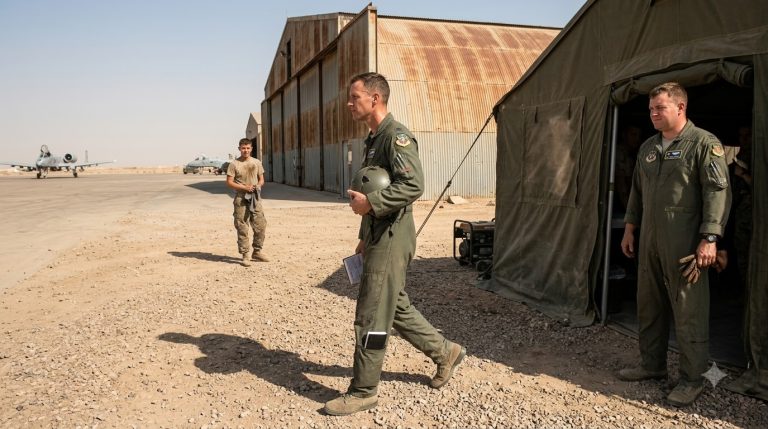
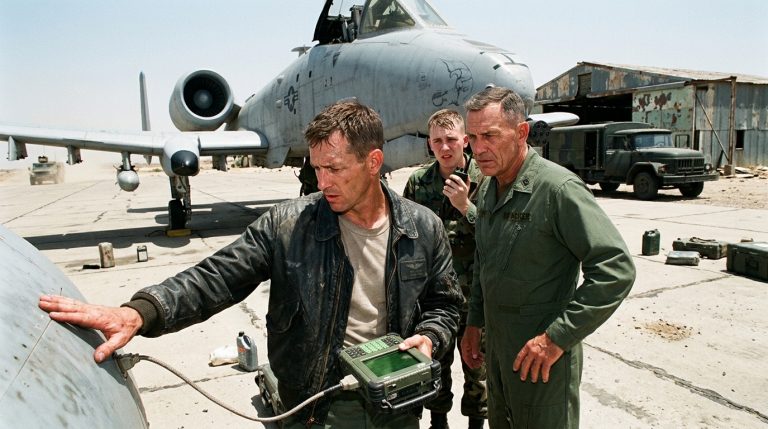
The heat off the Fort Holloway tarmac was a physical weight, pressing down on the shoulders of the maintenance crew like a humid blanket. Kyle Kramer, twenty-six and carrying the confidence of a man who had never seen a machine he couldn’t troubleshoot with a keystroke, kicked the landing skid of the dormant UH1 Huey. The sound was flat, hollow—the sound of an object that had checked out of reality.
Around him, the technicians stood in a loose semi-circle, their crisp coveralls a stark contrast to the machine’s faded, sun-bleached olive drab. Portable tables littered the tarmac, tangled with ethernet cables and glowing with the soft blue light of diagnostic screens. Every test, every system check, every continuity scan signaled the same lie: the Patriot Bell was perfectly healthy.
Yet, here it sat, a relic from a forgotten war, stubbornly dead.
A few yards away, the man who had been summoned stood in the periphery. Eli Vance looked like a piece of history that had wandered out of a museum. His jacket was a faded, oil-stained olive green, his hair a cloud of white that caught the harsh sun. He didn’t look at the laptops or the technicians. He looked at the helicopter with a steady, pale blue gaze, his hands buried deep in his pockets.
Kramer wiped his palms on a grease-stained rag, his patience fraying into sharp, condescending edges. He stepped toward the old man, his voice cutting through the sluggish afternoon air. Is this some kind of joke? We have a dozen certified specialists and three master mechanics staring at this thing. What exactly do you think you’re going to do?
Eli didn’t blink. He shifted his focus from the rotor mast to Kramer’s face, and for a second, the heat of the tarmac seemed to thin. They’re trained on glass cockpits and flybywire systems, Eli murmured, his voice a low, gravelly rasp. This bird is different. She has a soul. And right now, her soul is quiet.
Kramer let out a sharp, incredulous laugh that drew a few snickers from the crew. A soul? Okay, Pop. We don’t need a spectrum analyzer. We need an exorcist.
Eli didn’t respond to the jab. He began to move around the Huey, his gait deliberate and slow, like a man walking through a cathedral. He didn’t touch the fuselage, but his eyes traced lines that no one else could see. He stopped near the portside engine cowling, his head tilting to the side.
That access panel, Eli said, pointing a wrinkled finger at a small, unassuming plate beneath the exhaust. Is it flush?
Kramer rolled his eyes, signaling his frustration to the others before walking over. He ran a hand over the panel, his movements agitated. It’s flush. The torque specs are perfect. I checked them myself. The sensors behind it are green.
Did you open it?
There’s no reason to open it, Kramer retorted, his voice rising. The system tells us exactly where the problem is, and it’s not there. Opening that would mean breaking a factory seal and filing a mountain of paperwork for a non-existent fault.
Eli didn’t argue. Instead, his hand drifted to his side, his fingers brushing against a worn, leather pouch hanging from his belt. The leather was scarred, the snap polished smooth by decades of use. As his thumb rested on the cool metal of the snap, a sudden, inexplicable shiver went through him.
The tarmac beneath his feet seemed to shift, the concrete softening into the red, rain-soaked mud of a jungle LZ. The sound of the wind changed, replaced by the deafening, frantic wump-wump of rotor blades straining against gravity. He saw the face of a pilot, pale and screaming, and felt the familiar, heavy weight of a custom wrench in his palm.
In that moment of memory, Eli realized something that made his blood run cold. He looked back at the panel, then at the arrogant, youthful faces of the men surrounding him. He noticed the airman at the edge of the group, a kid named Peterson, watching him with a gaze that wasn’t mocking, but fearful.
Peterson saw something in Eli’s expression—a flicker of recognition that had nothing to do with modern diagnostics—and he instinctively reached for his phone, turning his back on the rest of the crew to make a call that would break every rule in the book.
CHAPTER 2: The Weight of Quiet Things
The air on the tarmac had developed a suffocating stillness. Peterson had moved away, his back turned to the group, his voice a low, urgent murmur that didn’t quite reach the rest of the crew, but the change in his posture was enough. He held the phone with a grip that turned his knuckles white.
Kramer, oblivious to the call, felt the sting of Eli’s earlier remark. He took another step toward the helicopter, his frustration manifesting as a need to dominate the space. He ran his hand over the olive drab paint, which felt rough, like sandpaper under his thumb—a texture of a different era. This machine was just metal and wires, he told himself. It didn’t have a soul; it had a manual.
Mr. Vance, Kramer said, his voice regaining its practiced, condescending smooth, if you’re looking for a loose connection, you’re looking at the wrong bird. We’ve been over this entire ignition system twice since dawn. He tapped his tablet aggressively, the blue light of the screen washing out the natural color of his skin. Every sensor is reporting nominal status. The problem isn’t mechanical. It’s operational. It’s an old machine in a modern environment. It’s reached its end of life.
Eli stood still, his gaze fixed on the small, unassuming access panel near the exhaust. He didn’t look at Kramer. He didn’t look at the tablet. He seemed to be listening to the machine, his ears tuned to a frequency that the high-tech sensors had completely filtered out.
The heat shimmered off the tarmac, blurring the edges of the horizon until the world seemed to ripple like water. Eli felt the weight of the years, the accumulation of countless hours spent in the belly of this exact bird, breathing in the smell of high-octane fuel and sweat. He remembered the way she handled in the air, the way she shuddered when the rotors caught the wind just right. She was never just a collection of parts. She was a partner that demanded a specific language of care.
You rely on the screen to tell you what the bird is feeling, Eli said softly, his voice barely audible over the distant drone of a supply plane. But the screen only sees what it’s programmed to see. If you never programmed it to understand an emergency bypass, it will never show you that the switch has been flipped.
Kramer scoffed, though the movement lacked the genuine amusement he had displayed earlier. A bypass? For what? If there were a manual override, it would be in the technical diagrams. We have the complete archival schematics for every model in the Patriot Bell series.
Eli’s pale blue eyes shifted to Kramer, and for a fleeting moment, the arrogance in the technician’s expression wavered. The diagrams were drawn by men in offices, Eli said. They weren’t drawn by men who had to keep a dying bird in the air while tracers were stitching holes in the floorboards.
He moved a step closer to the engine cowling, his hand brushing the cool metal of the landing gear. He could feel the latent heat trapped within the structure. He knew this machine as he knew his own hands—the way the bolts felt under a wrench, the specific vibration of the tail boom when the torque was balanced. He wasn’t just looking at a machine; he was observing an anatomy.
Lieutenant Wells approached, his boots heavy on the concrete. He saw Peterson finish his call and slip the phone into his pocket, his face pale and strained. Wells’s eyes narrowed, but he focused his irritation back on Eli. Mr. Vance, we are trying to remain professional, but your insistence on these… ghosts… is delaying a scheduled flight for dignitaries. We need a solution, not a history lesson.
Eli turned to face him, and the shift in his presence was immediate. He didn’t look like a man out of time anymore; he looked like a man who knew exactly where the ground was, even if everyone else was walking on thin air. I’m not here to talk about history, Lieutenant. I’m here to make her fly. But you have to give me the space to do it. You have to stop looking at the green lights and start looking at the steel.
The silence that followed was heavy, pressurized by the heat and the frustration of a dozen men who had run out of answers. Peterson walked back toward the group, his eyes darting between Eli and the Lieutenant. He had done his part; the call was made. Now, he felt the suffocating weight of the protocol he had just shattered. He waited for the reprimand, for the question of who he had been talking to, but the air was too thick with the standoff for anyone to notice his tremor.
Eli reached into his jacket, his fingers once again finding the leather pouch. He held it for a second, feeling the soft, worn texture of the surface, a tactile reminder of the survival that had been etched into his very being. The machines were all around them—modern, clean, digital—but here, in this small pocket of space, the past was asserting its presence.
Kramer reached for the cowling, his hand hovering over the panel Eli had indicated earlier. He hesitated, his finger twitching. He wanted to prove the old man wrong. He wanted to open it, show that the bolts were tight, that the wires were standard, and that the “fault” was just a ghost of a man’s memory. But beneath that need was a flickering, uncomfortable doubt—a tiny, gnawing fear that maybe, just maybe, the machine knew something his diagnostic software didn’t.
Go ahead, Eli said, his voice calm, encouraging. Open it. See what’s hidden behind the green lights.
Kramer took a breath, his hand steadying. He looked at Wells, who gave a sharp, impatient nod. The decision was made. The seal was about to be broken, and the air around them seemed to tighten, as if the helicopter itself were holding its breath, waiting for the truth to be exposed.
CHAPTER 3: The Fractured Protocol
Kyle Kramer’s fingers trembled, just barely, as he hovered over the four recessed bolts of the access panel. The silence from the rest of the crew was absolute. Even Lieutenant Wells had gone quiet, his previous bluster replaced by a rigid, uncomfortable focus. They were all waiting—not just for the panel to open, but for the confirmation that their world of green-lit monitors and perfect continuity wasn’t a total lie.
The metal of the fuselage was warm under the afternoon sun, a dry, radiated heat that bled into Kramer’s skin. He reached for his multi-tool, the weight of it familiar and grounding. He didn’t want to find anything. He wanted to unscrew the plate, expose the wiring, and point to the perfectly intact, factory-sealed components behind it. He wanted to tell Eli that he was wrong.
But as the wrench engaged the first bolt, a strange, phantom sensation washed over him. It was a lingering smell—not of jet fuel or sun-baked concrete, but of something sharp and metallic, like ozone after a lightning strike. It was fleeting, an intrusive ghost of a thought that felt as though it belonged to someone else’s memory, not his own. He paused, his heart hammering against his ribs in a syncopated rhythm.
Eli stood just a few feet away, his expression unreadable, his pale blue eyes reflecting the sky. He wasn’t watching the panel; he was watching the horizon, as if he could see the ghosts of a thousand flight hours circling above them.
Go on, Eli said, his voice quiet, lacking any malice. The metal won’t bite you.
Kramer forced his hand to move. The first bolt turned with a crisp, clean sound that cut through the silence. Then the second, the third, and the fourth. Each turn felt heavier than the last, as if he were unfastening a door that had been locked for a reason. He pulled the panel away, expecting to see the neat, organized loom of wires that he had studied in the maintenance diagrams.
He blinked. The wires were there, yes—but they were different. Tucked deep into the recess, beneath a layer of protective shielding that shouldn’t have been there, sat a secondary, manual lever. It was coated in a dull, oxidized grime, the kind that took decades to accumulate. It was connected to the fuel line in a way that bypassed the primary ECU—the very piece of hardware that was feeding the “nominal” data to their diagnostic software.
Kramer’s breath hitched. He reached in, his fingers hovering over the lever. The wiring was a work of art, a tangle of improvisation and necessity that defied the clean, modular logic of modern engineering.
What is that? Wells asked, stepping forward, his voice losing its authoritative edge. Kramer, what am I looking at?
It’s… it’s a bypass, Kramer whispered, his own voice sounding foreign to his ears. It’s a manual fuel interrupt. It shouldn’t be here. The diagrams don’t list any secondary routing.
Eli stepped closer, his boots crunching softly on the asphalt. It was never in the diagrams, he said, his tone conversational, as if he were discussing the weather. It was a modification I made in ’70. When the primary line would clog, or the sensors would get blinded by the dust and the heat of the jungle, this was the only way to keep her breathing. It keeps the fuel flowing directly, bypassing the electronics entirely. If the sensors are telling you everything is green, it’s because this lever is doing all the work, but it’s doing it quietly. It’s keeping the heart beating even when the brain is flatlined.
Kramer felt a wave of vertigo. He looked at his tablet, then at the lever, then at the old man. The logic of his entire profession was being dismantled by a single, dirty piece of steel. If this were engaged, the ECU would think the system was completely shut down. It wouldn’t show a fault, because to the computer, the engine wouldn’t exist as an active entity. It was the perfect, invisible lie.
Peterson, standing at the edge of the circle, watched the exchange with an expression of profound realization. He saw the way the technicians’ faces were changing—the condescension vanishing, replaced by a raw, naked confusion. He realized then that Eli hadn’t just come to fix a helicopter; he had come to expose the fragility of their entire modern reliance.
Lieutenant Wells looked at the lever, then at Eli, and finally at his own reflection in the dark, silent screen of his tablet. The absolute certainty he had held only moments ago was fraying at the edges. He felt a sudden, sharp kinship with the technicians—they were all standing on the same sinking ship, realizing for the first time that they didn’t know how to swim.
We need to reconnect the primary line, Kramer said, his hands moving toward the bypass, his voice regaining a thin, fragile layer of professional urgency. If I just reset the bridge, the system will recognize the sequence and—
No, Eli interrupted, and for the first time, his voice carried a sharp, commanding edge. Don’t touch it yet. You don’t know what it’s holding back. If you force the system to recognize a line that’s been bypassed for decades without first clearing the blockages the electronics were meant to manage, you’ll trigger a surge. You’ll fry every sensor on this bird.
Kramer stopped, his hand an inch from the lever. He looked at Eli, his eyes wide. A surge?
It’s an old machine, son, Eli said, his voice softening back into that calm, weathered rasp. She’s learned to survive by doing things her own way. If you try to force her back into your box, she’ll break. You have to earn her trust first.
The tension in the air was no longer just about the helicopter. It was about the realization that they were out of their depth, standing in the presence of a man who possessed a knowledge that existed outside of their reach. They were technicians in a high-tech world, but here, they were children playing in a storm.
Wells looked at Kramer, the order to continue caught in his throat. He looked at the base commander’s car, still idling in the distance. He realized that the call Peterson made wasn’t just a breach of protocol; it was a warning. And now, they were standing in the middle of a reckoning that none of them had the tools to finish.
Kramer slowly pulled his hand back, his heart racing. The lever remained, a small, dark secret nestled in the belly of the beast, waiting for someone who knew how to touch it without killing the machine. The sunlight beat down on them, relentless and indifferent, as they stood in the shadows of the Patriot Bell, waiting for the old man to tell them what came next.
CHAPTER 4: The Arrival of the Granite Face
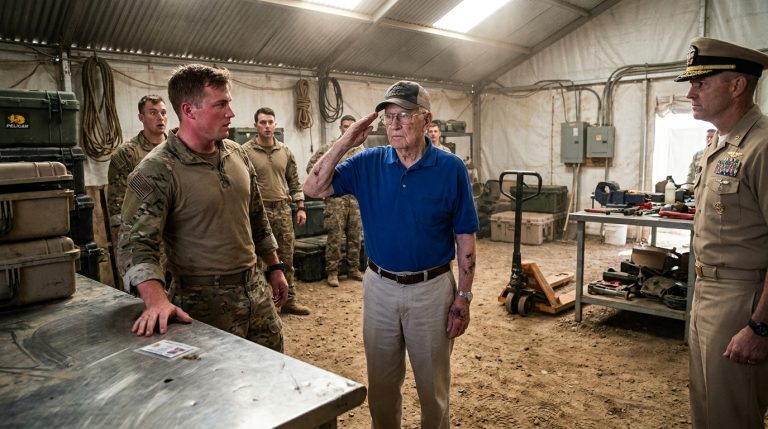
The sound of the command vehicles was not just noise; it was an impact. Three black SUVs skidded onto the tarmac, the tires screaming against the heat-softened concrete, their arrival cutting through the stagnant air like a blade. The doors flew open in a synchronized motion, and General Michaelelsson stepped out, his posture rigid, his face carved from the same cold, unyielding granite that he had carried with him for decades.
Kramer stumbled back, his hand falling away from the access panel. The proximity of the bypass lever, once a source of intellectual curiosity, now felt like a live grenade. He looked at Lieutenant Wells, whose face had drained of all color, leaving him looking sickly and small in the shadow of the incoming storm.
Behind the General, Colonel Hayes followed, his stride hurried and nervous. He didn’t look at the technicians; he didn’t look at the helicopter. His eyes were fixed on the General’s back, waiting for the explosion.
Eli didn’t move. He stood by the rotor mast, his hands still tucked into his pockets, his posture loose and unbothered. He didn’t look like a man about to be vindicated, and he certainly didn’t look like a man who feared the three-star rank approaching him. He looked, more than anything, like a man observing a tide coming in.
The General strode across the distance, his eyes sweeping over the scene with a predatory sharpness. He didn’t break stride until he was inches from the helicopter, ignoring the salute that Wells attempted to offer, his arm trembling slightly. He looked past the officer, past the shivering lead technician, and his gaze locked onto Eli.
The silence that followed was total. Even the distant drone of the base operations seemed to have faded away.
Mr. Vance, the General said. His voice was not loud, but it possessed a gravity that seemed to pull the air out of the surrounding space. It is an honor to have you on my base, sir.
The weight of the “sir” hit the technicians like a physical blow. Kramer, who had spent the last several hours dismissing the old man as a senile fossil, felt a cold, hollow dread spreading through his chest. He looked down at the tablet in his hands, its green lights now mocking him, glowing with a hollow, useless brilliance.
I apologize for the reception you’ve received, the General continued, his eyes finally shifting to the Lieutenant and Kramer. His focus was a laser, burning and precise. He didn’t raise his voice, but the lethality in his tone was undeniable. He spoke of valor, of the Distinguished Service Cross, of a history that the technicians hadn’t bothered to read because it wasn’t on a server somewhere.
Kramer felt his throat tighten. Every word the General spoke was a dismantling of the world he had built for himself—a world where the machine was the master and the human was just an operator. He looked at the access panel, at the dirty, manual lever that Eli had revealed, and realized that his failure wasn’t just technical. It was a complete, systemic collapse of understanding.
General Michaelelsson turned his full attention back to the Huey, his hand coming to rest on the fuselage. He didn’t look at it like a piece of equipment; he looked at it like a comrade. In 1970, he said, his voice dropping to a register that was meant only for those standing in the immediate circle, you redesigned the fuel flow regulators on this specific bird. A modification that is not in any manual. You kept my entire platoon in the air, Mr. Vance, when every other bird on that hilltop had been grounded by the same conditions we’re facing today.
Eli nodded once, a brief, sad movement. She’s a good bird, General. She just needed someone to listen to her.
The General turned back to Wells and Kramer, his expression now a mask of cold, controlled fury. Your arrogance, he whispered, and the quietness of it was infinitely more terrifying than a shout, has disgraced your uniforms. You had the one man on this planet who knows this aircraft’s every secret standing right here, and you treated him like an intruder.
Kramer couldn’t look up. He felt the heat of the tarmac, the weight of the air, and the crushing shame of his own incompetence. He saw Peterson in the corner of his eye—the airman who had made the call, the kid who had been the only one to see the truth. Peterson was standing at attention, his face masked by a rigid, disciplined exterior, but Kramer saw the faint, tell-tale flicker of a smile.
The General didn’t order them arrested. He didn’t order them off the base. He simply stood there, an immovable wall, and allowed the weight of their own ignorance to suffocate them.
She’s all yours, ghost, the General said, his voice finally shifting to something softer, more respectful.
Eli stepped forward, his movements again rhythmic, ceremonial. He didn’t need to check the manuals. He didn’t need a tablet. He reached into his leather pouch, his fingers finding that strangely shaped wrench, and the world seemed to hold its breath. Kramer, watching him, realized that he was witnessing something that couldn’t be quantified, couldn’t be digitized, and couldn’t be replaced.
The bypass lever was right there, waiting for the touch that understood the machine’s language. The technicians watched, mesmerized and terrified, as Eli’s hand moved toward the heart of the Huey, preparing to wake a giant that they had spent the day trying to silence.
CHAPTER 5: The Turning of the Wrench
The air in the immediate vicinity of the Patriot Bell had turned viscous, heavy with the electricity of the General’s presence and the collective, suffocating breath of the maintenance team. Eli stood with his hand extended toward the open access panel, his posture still, his eyes focused not on the machinery, but on the precise, geometric center of the bypass lever.
Kramer leaned in, his face inches from the opening. He could see the grime on the lever, a dark, baked-in residue that spoke of decades of neglect and forgotten purpose. He watched Eli’s hand, noting the steady, unerring rhythm of his grip as he withdrew that custom-forged, hooked wrench from his pouch.
The metal of the tool was matte, almost obsidian-black against the pale, weathered skin of Eli’s hand. It looked like something forged in a different time, designed to solve problems that hadn’t even been identified yet. When Eli inserted the hook of the wrench into the mechanism, a sharp, metallic click reverberated through the fuselage—a sound so distinct that it felt like a gunshot in the vacuum of their collective anticipation.
Eli paused. He didn’t turn it immediately. He closed his eyes, his fingers feeling the internal resistance of the lever, a physical dialogue between the man and the machine that Kramer could only watch with a sense of growing, agonizing inadequacy.
Everything here is tired, Eli murmured, the words meant more for the Huey than for the audience. She’s been waiting a long time to be heard.
He applied pressure. Not the brute-force twitching that Kramer had been using earlier, but a slow, calculated torsion that took advantage of the mechanical leverage he had engineered fifty years ago. The lever didn’t move easily. It ground against a buildup of dust and hardened grease, a physical manifestation of the silence the machine had been forced to endure.
Kramer reached out, an instinctive urge to help, but Wells grabbed his shoulder, pulling him back. His grip was tight, his face stern.
Let him work, Wells hissed.
Eli’s jaw tightened. The veins in his hand stood out, clear and sharp against the thin, aged skin. He leaned his weight into the wrench, his shoulder rotating with the effort. A faint, screeching sound of metal against metal echoed from deep within the engine housing. It was a cry of protest, the sound of a dormant system being dragged back into existence by pure, stubborn will.
Suddenly, with a soft, decisive snap, the lever pivoted.
The sound was subtle, but its impact on the assembled crew was profound. They felt it in the vibration of the concrete beneath their feet—a shift in the atmospheric weight, a sudden tensioning of the air.
Eli pulled the wrench free, his breathing steady, his eyes opening as he looked at the lever now locked into the bypass position. He reached in, his fingers moving with a fluid grace that defied his age, and adjusted a secondary tension wire that had been hidden from view by the primary cooling vent.
There, he whispered. That should do it.
He stepped back, his hands returning to his pockets. He didn’t look at the General, or the technicians, or the helicopter. He looked at the horizon, where the heat haze was beginning to settle as the afternoon light started its long decline.
Someone want to try her now? Eli asked, his voice calm, as if he were asking for the time.
Kramer didn’t wait. He moved forward, his legs feeling heavy, as if he were wading through water. He climbed into the pilot’s seat, the leather of the interior smelling of old oil and sun-warmed vinyl. He checked the instruments, but he didn’t look at the screen. He reached for the ignition switch, his hand hovering over the plastic toggle.
He didn’t rely on the diagnostic sequence this time. He relied on the weight of the air, the feel of the controls, and the absolute, terrifying trust that he had been forced to place in the old man’s hands.
He flicked the switch.
For a heartbeat, there was nothing. A hollow, metallic sigh of the turbine trying to remember how to turn. Then, with a sudden, thunderous cough, the engine caught.
The vibration was immediate and absolute. It rattled the loose bolts on the nearby equipment tables and sent a shockwave through the technicians’ chests. The Huey didn’t just start; it roared to life, a deep, guttural sound that carried the echo of the jungle, the roar of a bygone era, and the undeniable force of a machine that had refused to stay dead.
The rotor blades began to turn, sluggish at first, then gaining momentum until they sliced the humid air into a rhythmic, terrifying wump-wump-wump. It was the sound of a heartbeat.
Kramer stared at the instrument panel. Everything was still dark, still technically “off” according to the systems, yet the machine was alive. It was singing.
He looked over at Eli, who stood near the edge of the tarmac, his white hair whipping in the artificial wind of the rotors, his face a portrait of quiet, understated triumph. The technicians around him were standing in stunned silence, their modern world of diagnostic perfection shattered by the sheer, unquantifiable truth of the engine’s roar.
The Patriot Bell was awake. And the silence she had kept for so long had been broken at a cost that none of them had expected to pay: the total, utter destruction of their own certainty.
CHAPTER 6: The Weight of the Pour
The diner was a sanctuary of beige plastic and flickering neon, a world away from the high-octane pressure of Fort Holloway. Outside, the sun had dipped below the horizon, painting the sky in bruises of deep purple and charcoal. Inside, the only sound was the low hum of an aging refrigerator and the occasional clink of ceramic against glass.
Kyle Kramer sat in the booth, his hands folded tightly in his lap. His coveralls, usually crisp and professional, felt heavy and wrinkled, like a costume that no longer fit. Beside him, Lieutenant Wells looked older. The sharp, rigid line of his jaw had softened, leaving him looking like a man who had spent the last several hours dismantling a fortress he had mistakenly believed was his own.
Across from them sat Eli Vance. He was stirring his coffee with a spoon that had seen better days, his movements slow and deliberate. He didn’t look like a hero. He didn’t look like a man who had just saved the General’s pride and redefined the base’s entire maintenance doctrine. He looked like an old man who was simply tired of the noise.
Mr. Vance, Wells said, his voice hesitant. He picked up his mug, but didn’t drink. We… we aren’t sure how to say this. We spent six hours looking at a screen, looking for a fault that wasn’t there. We looked at everything but the machine.
Eli looked up, his pale blue eyes clear and devoid of any lingering triumph. He didn’t offer a platitude. He didn’t offer comfort. He simply watched them, waiting for them to finish the thought.
We were looking for a logic that didn’t apply to her, Kramer added, his voice thick. We treated her like a piece of data. We thought if we could just get the software to agree, the machine would have to listen.
Eli took a sip of his coffee. The heat rose in a thin spiral from the cup, dissipating into the cool air of the diner. Software is just a set of instructions, Eli said softly. It doesn’t know the feel of a tail rotor in a crosswind. It doesn’t know the sound of a bolt that’s been stressed by heat and combat. It only knows what it’s been told. When I built that bypass, I wasn’t just fixing a fuel line. I was giving her an escape hatch. I was giving her a way to keep going when the rest of the world told her she was finished.
The silence that followed was different from the silence on the tarmac. It was less brittle, less pressurized. It was the silence of a lesson being absorbed.
Why didn’t you tell us? Wells asked. Why let us humiliate you?
Eli smiled, a small, sad expression that reached his eyes. Because you wouldn’t have listened. If I had walked up there and told you that you were wrong, you would have just turned your screens up louder. Sometimes, you have to let people realize they’re lost before they’re willing to ask for a map.
Kramer reached into his pocket and pulled out the small, black, custom-forged wrench that Eli had left on the passenger seat of the Huey before he’d walked away. He placed it on the table. It looked alien against the plastic countertop, a tool from a different dimension of reality.
I’m keeping it, Kramer said. Not to use it. Just to remind me.
Eli nodded. Keep it. But remember, the tool doesn’t make the mechanic. The patience does.
The waitress arrived, her pot of coffee steaming, and topped off their mugs. The sound of the pour was the only thing that filled the gap between them. For a few minutes, nobody spoke. They just drank the coffee, the bitter, dark heat grounding them.
The Patriot Bell was back in the hangar now, silent once more. But it wasn’t dead. It was resting. And for the first time, the men who were responsible for its care understood that they were not the masters of the machine; they were its stewards. They were the ones who carried the stories, the ones who kept the bypass levers and the custom modifications from being lost to the sterile, digital void.
Eli reached out and placed his hand on the table, his skin weathered and mapped with the marks of his service. You boys have a lot of good tech, he said. And you have a lot of good intentions. Just don’t forget that at the end of the day, it’s not the diagnostic that flies the bird. It’s the trust you put into the metal, and the respect you give to the hands that kept her flying before you ever picked up a wrench.
They talked for another hour. Not about circuits, or voltages, or error codes. They talked about the people—the pilots who had relied on the Huey, the crew who had spent nights in mud-soaked tents, the weight of the responsibility that came with every flight. They talked about the “ghosts” that had lived in the metal, and how, in their own way, they had become the new keepers of that flame.
When they finally left the diner, the night air was crisp and cool. The base in the distance was a soft glow of security lights, a world of technology that seemed, for the first time, to have a human pulse.
Kramer and Wells walked to their car, the weight of the evening sitting heavily on their shoulders. Eli stood by the roadside, watching the lights of the base, his hands in his pockets. He didn’t look like he had won a battle. He looked like he had finished a long, necessary shift.
He turned to the empty road and began the slow, deliberate walk toward his home. He didn’t look back. He didn’t need to. He knew that for the first time in a long time, the Patriot Bell would be looked after with the kind of care that didn’t require a screen to measure. The lesson had been hard, and the cost of their arrogance had been high, but the machine was alive. And in the end, that was the only truth that mattered.
The wind picked up, rustling the dry grass by the roadside, and as Eli disappeared into the shadows, the only sound left was the distant, rhythmic pulsing of the base’s hangar lights, beating like a quiet, steady heart.