The Weight of Brass and Bone: A Hard-Earned Lesson in the Dust of Command
CHAPTER 1: The Weight of Oxidized Brass
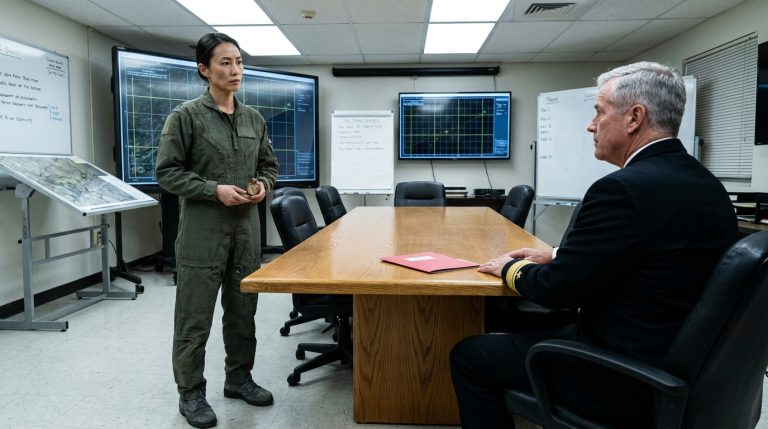
The fluorescent lights overhead hummed with a low-frequency buzz that vibrated against my teeth. Everything here was designed to look perfect, a polished veneer of discipline that felt like a coat of lead paint over a rotting hull. Miller’s hand, encased in the immaculate sleeve of his service blues, tightened around my Zippo.
He didn’t just hold it; he interrogated it. He turned the oxidized brass over, the harsh light catching the jagged scratches I’d etched into the side with a jagged piece of shrapnel during the last deployment.
Is this supposed to be your call sign? Juice Box? Really?
The question hung in the air, dripping with a casual, practiced disdain. He looked at me, not as a superior officer, but as a technician examining a faulty circuit. I felt the familiar pull of the familiar cold, a detachment that kept my pulse steady even when my lungs burned for oxygen.
I didn’t answer. To answer was to participate in the game he was playing, and I had already learned that Miller only wanted to win. I kept my gaze leveled at the third button on his uniform—the one that had a microscopic speck of lint he’d somehow missed.
I reached out, my own hand steady, and tapped the edge of the table. The sound was flat, dead, the sound of a hollow pipe hitting concrete.
It’s just a lighter, Captain, I said, my voice as neutral as a gray sky. I find it hard to lose, and it’s served me well enough to stay lit.
Miller let out a sound that was half-laugh, half-snort. He brought the lighter closer to his face, his eyes narrowing as he caught the reflection of the room in the tarnished metal. For a second, his grip faltered. He wasn’t looking at me anymore; he was looking at the small, dark residue near the hinge—an oily, metallic smudge that didn’t belong on a piece of brass.
He looked back up, his expression hardening. He realized, in that split second, that the weight of the object was wrong. Too heavy.
He moved to drop it back onto the tray, but his fingers slipped, and the lighter skittered toward the edge of the metal table. As I moved to catch it, I saw his eyes track the movement—not with annoyance, but with a sudden, sharp clarity. He leaned in, his voice dropping to a whisper that forced me to step into his personal space, leaving the rest of the room behind.
You have a strange way of carrying your burdens, he murmured, his gaze sliding from my face to the Zippo now cupped in my palm.
I looked down at the lighter. There, beneath the thumb-print of grime I’d left on the lid, was a sliver of paper snagged in the mechanism—a scrap that hadn’t been there when I’d finished my shift.
CHAPTER 2: The Latrine Mirror
The scrap of paper wasn’t just debris. Even in the dim, flickering light of the chow hall, the jagged edge revealed a deliberate cut, not a tear. It was a fragment of a standard-issue requisition form, the kind that was supposed to be shredded in the secure incinerator three decks below.
Miller’s eyes stayed on my hands. He was waiting. He wanted to see if I would flinch, if I would reach for the paper too quickly, or if I would try to slide the Zippo into my pocket before he could confirm his suspicion. The air between us felt thin, recycled, and dangerously brittle.
I didn’t reach for the paper. I closed the lid of the Zippo with a sharp, metallic clack that seemed to echo off the steel bulkheads. The sound was a period at the end of a sentence I hadn’t finished yet.
“You’re right, Captain,” I said, my voice steady, though my heart was hammering a frantic rhythm against my ribs. “It is a heavy thing to carry. But it’s the only weight I’ve got left.”
I slid the lighter into my breast pocket, deliberately letting my fingertips linger against the fabric to feel the slight irregularity where the paper was pinched in the hinge. I didn’t look at him. I looked past his left shoulder, at the rows of identical, empty metal chairs arranged in military precision.
Miller’s lips curled, not quite a smile. “See that you don’t lose it, then. We have enough clutter in this unit without adding to it.”
He didn’t grab for it. He didn’t demand to see what was trapped in the mechanism. Instead, he stepped back, the movement fluid and practiced. He had done his part; he had tested the perimeter, nudged the lock, and checked for weaknesses. He turned on his heel and walked away, his stride so rhythmic it sounded like a metronome counting down the seconds until I had to act.
I didn’t wait for him to reach the exit. I turned and headed in the opposite direction, toward the lower decks, my boots clicking sharply against the non-slip flooring.
The heat in my chest didn’t subside. Every step felt like walking over a tripwire. The phantom sensation of a past extraction—the smell of burning fuel and the cold, wet grit of a landing zone in the middle of a monsoon—rose up to meet me. It was a psychological ghost, a memory of a time when gear, identity, and life were all intertwined in a mess of mud and blood. I pushed it down, locking the memory away behind the same wall where I kept the realization that Miller hadn’t just been posturing. He had been looking for a reason to confiscate that lighter.
I ducked into the first available latrine, the door swinging shut behind me with a heavy thud. The room smelled of industrial disinfectant and stale iron—the smell of a place where things were scrubbed clean but never truly healed.
I locked the door and moved to the mirror. The glass was pitted, scarred by years of abrasive cleaning. I didn’t look at my face; I looked at my hands.
I pulled out the Zippo. With the precision of a watchmaker, I used the edge of my fingernail to tease the scrap of paper out of the hinge. It was tiny, no larger than a thumbnail, but as I unfolded it, the weight of the moment threatened to buckle my knees.
It wasn’t just a piece of a form. It was a code—a string of alpha-numeric identifiers that shouldn’t have existed in this sector. I recognized the format. It was a tracking string for the supply manifests that had gone ‘missing’ in the last six months.
I looked at the reflection of my eyes in the pockmarked glass. They looked tired, ancient. I realized then that I hadn’t been chosen for this unit because of my skills. I had been brought here to be watched.
My reflection seemed to watch me back, a silent observer in the cold, gray room. I leaned in, my breath fogging the glass, and traced the letters on the paper.
If Miller knew, if he had seen the paper, then the game wasn’t just about professional dominance. It was about containment. And if he was containing me, it meant the missing gear wasn’t lost. It was being used.
The realization settled into my gut, cold and hard. I folded the paper again, tucking it behind my inner lining, and stared at the Zippo. It was oxidized, scarred, and ugly, but it was the only piece of evidence I had that the world was built on a foundation of rust.
I took a deep breath, the damp air of the latrine filling my lungs, and pushed the door open. I had to get to the maintenance lockers before the shift change. If I was going to survive this, I needed to know exactly what those coordinates pointed to—and I needed to do it before Miller realized that the “Juice Box” was already well ahead of his game.
CHAPTER 3: Morning Formation
The hallway leading from the latrine to the maintenance bay was a gauntlet of polished linoleum and high-tension fluorescent hum. My boots felt unnaturally loud, each strike against the floor sounding like a gavel confirming my guilt. I kept my head down, shoulders loose but ready, adopting the practiced slouch of a gear-head who had spent too many hours in the dirt.
I wasn’t just walking; I was calculating. Every shadow, every blind corner, every passing guard—they were variables in an equation I was only just starting to solve. If Miller knew I had the Zippo, he wouldn’t just take it; he would stage an “accident” that would scrub the evidence clean. The paper in my pocket felt like a live wire against my thigh, a constant reminder that I was now operating on borrowed time.
The corridor ended at the heavy, blast-proof door of the maintenance lockers. I swiped my keycard, expecting the familiar green flicker of an authorized entry. Instead, the console let out a sickly, electronic whine. The screen flashed amber—Access Denied.
I swiped again, faster this time, my heart rate spiking. My breath hitched. The system had been running perfectly for months. The sudden failure wasn’t a fluke; it was a wall. Someone had locked me out.
A sudden, sharp metallic click sounded from the far end of the hallway. A cleaning bot, usually tucked away in its bay, was slowly trundling down the center of the hall, its ultraviolet lights sweeping across the floor in a hypnotic, rhythmic pattern. The soft whir of its gears was the only sound in the corridor. I had nowhere to retreat without being seen by the camera mounted at the intersection, and the locker room was currently a tomb of sealed steel.
I stepped back, pressing my spine against the cold, unyielding surface of the bulkhead. My mind raced through the options. If I forced the door, the silent alarm would trigger, and Miller would have me on report before I could even explain the error. If I stayed, the cleaning bot would sweep past, its proximity sensors guaranteed to flag a “human obstacle” to the central hub.
I reached into my utility belt and pulled out a standard-issue multi-tool. It was rusted at the edges, the grip worn down by years of field maintenance. I didn’t have the codes to bypass the master override, but I knew the architecture of this specific locker unit—I’d spent three weeks fixing the vent seals last spring. The override wasn’t in the electronics; it was in the manual release pin hidden behind the baseboard, a legacy design quirk the engineers had deemed ‘non-critical.’
The bot was twenty feet away. Its light swept over my boots, then moved on. I dropped to my knees, the concrete floor biting into my skin through my trousers. My fingers moved with the frantic, precise grace of someone who had learned to repair their own life while under fire. I pried at the baseboard, the metal groaning in protest. It was jammed with dust and grit—the debris of a unit that had forgotten how to look after its own machinery.
Ten feet. The bot’s sensors began to pulse a faster, warning rhythm.
I wedged the tool into the gap, leveraging my entire weight against the seal. The rust cracked, a tiny sound that felt like a gunshot in the hollow space of the hallway. The plate gave way, exposing the inner casing. There it was: the manual release pin, coated in a thick layer of grease.
I pulled. A heavy, pneumatic hiss filled the air as the locker door unsealed just enough for me to slip inside. I tumbled into the darkness of the room, closing the seal behind me just as the cleaning bot rolled past the door, its light flooding the seam of the entrance.
I lay on the floor for a moment, the scent of stale hydraulic fluid and ozone thick in the air. I had escaped the immediate patrol, but the silence inside the locker bay was worse. It was too quiet.
I stood up and flicked on my penlight. The beam cut through the dark, reflecting off the rows of locked cabinets. I walked toward my locker, my own locker, only to find the door slightly ajar.
I hadn’t left it like that.
I approached it slowly, the “Sovereign Protector” instinct overriding the fear. I didn’t care about the risk anymore. I grabbed the edge of the locker and ripped it open. The interior was empty. All my tools, my spare parts, the manuals I’d collected over the years—all gone. In their place, resting on the middle shelf, was a single, clean pair of white gloves.
The message was clear. Someone had been inside, and they hadn’t just cleaned the place out; they had left a calling card.
I looked at the gloves, then back at the Zippo in my pocket. Miller wasn’t just watching me. He was inviting me to play, and he had already cleared the board. I had to get out of the bay, but as I turned to leave, I heard the heavy, rhythmic thud of boots—not the casual pace of a guard, but the heavy, deliberate march of an officer. Miller was coming, and I was trapped in a room with no way out but the door he was approaching.
CHAPTER 4: Maintenance Duty
I didn’t move. I didn’t even blink. The rhythm of the approaching boots wasn’t just a sound; it was a physical weight pushing against the thin partition of the locker. Miller was closer than I’d anticipated—too close. He wasn’t patrolling; he was hunting.
I pressed my back against the cold steel of the locker interior, the metal biting into my shoulders. My fingers instinctively curled around the Zippo in my pocket, the sharp edges of the improvised etchings digging into my palm. I needed a distraction, but I didn’t have the luxury of time or equipment.
The boots stopped. Just outside the row. The silence that followed was absolute, the kind of silence that precedes a collapse.
“I know you’re in there, ‘Juice Box’,” Miller’s voice didn’t boom. It drifted, conversational and terrifyingly calm. “The locker sensors pinged a manual override four minutes ago. You’re becoming quite the locksmith.”
I stayed silent, my heart a dull thud against my ribs. I stared at the white gloves on the shelf, the stark, sterile fabric glowing under my penlight. They were too clean, too purposeful. They weren’t a taunt; they were a directive.
Miller tapped his knuckles against the locker door—tap, tap, tap. “You have a choice. You can come out now and explain why you’re digging into infrastructure that doesn’t belong to you, or we can have a much longer, much more uncomfortable conversation in the command office. I’d hate to see your service record tarnished over a missing piece of brass.”
He knew. He didn’t just suspect; he had identified the item.
I looked at the back wall of the locker. I noticed something I hadn’t seen before—a faint, rhythmic vibration emanating from the bulkhead, inconsistent with the ambient hum of the ship. It was a tapping, rapid and light, like someone signaling through the hull. I leaned in, pressing my ear against the vibrating steel. It was morse, but not standard-issue. It was a rhythmic, erratic pattern—a code for a restricted maintenance override.
I reached for the back panel. If this led to the conduit tunnels, I could bypass the entire bay. It was a gamble that went against every protocol I’d ever been drilled on, but staying put was a death sentence for the secrets I was carrying.
I wedged my multi-tool into the seam of the bulkhead and twisted. The panel popped with a sound that seemed to scream in the confined space. Miller swung the locker door open just as I slipped through the gap into the darkened crawlspace behind the rows.
I scrambled forward, the tunnel smelled of dust and ancient, stagnant oil—the raw, unrefined heart of the ship. I didn’t look back to see Miller’s reaction. I pulled the panel shut behind me, the latch clicking into place just as a flashlight beam sliced through the locker, catching only the empty space where I had been standing a second before.
I crawled through the narrow metal throat, my elbows and knees scraping against the jagged interior. This wasn’t the way to the supply depot; this was the “guts”—the maintenance veins that the officers rarely accessed. As I moved, the tapping grew louder, clearer.
I stopped, my body angled against the vibrating pipe. Beneath the dust and grease, I saw a mark—a small, etched symbol identical to the one on the side of my Zippo.
The lighter wasn’t just a personal affectation. It was a key.
My breath caught in my throat. I looked at the symbol, then at the pipe. The tapping wasn’t a signal from a person; it was the rhythmic cycling of a valve deep in the ship’s bowels, a valve that shouldn’t have been active unless something large was being moved through the sub-levels.
I reached out and touched the pipe. It was vibrating because of the pressure inside—a massive, systemic strain that suggested the ship was concealing an illicit, high-energy load. This was more than just a missing equipment manifest. It was a full-scale covert operation buried in the ship’s maintenance logs, protected by the very people tasked with maintaining the ship’s order.
I pulled out the Zippo and held it up to the faint, filtered light of the conduit. The etched markings on the brass caught the glare. They weren’t just random scratches; they were a schematic. The lighter was a literal map of the ship’s hidden bypasses, a tool left behind by someone who had been just as trapped, just as hunted, as I was now.
I started moving again, my hands steadying. I wasn’t just hiding from Miller anymore. I was following the trail. The weight of the Zippo in my pocket felt different—heavier, more dangerous, and for the first time, not like a burden, but like a weapon.
I reached the end of the conduit and looked down into the junction chamber below. It was a hive of activity, masked by the darkness. I saw supplies being moved—crates with the same seals as the ones listed in the missing manifest. And standing in the center of the chaos, supervising the loading, wasn’t Miller. It was the Chief Engineer.
Miller was just the watchdog. The real architecture of this theft went all the way to the top. I took a breath, the metallic taste of the air burning my throat. I had the map. Now, I just needed to survive the journey through the guts of the machine.
CHAPTER 5: The Supply Depot Inventory
The junction chamber was a cathedral of stolen labor. Down below, the crates moved with a rhythmic, machine-like precision, sliding along gravity-fed rollers that hummed with a low, predatory frequency. I watched, my chest pressed against the rusted grate, my fingers gripping the metal so hard my knuckles burned. The Chief Engineer—a man whose face was usually etched into the background of my life like a permanent fixture—was directing the flow, his movements crisp, efficient, and devoid of any hesitation.
This wasn’t an accident. This wasn’t even a minor discrepancy in the logs. This was a logistical artery, feeding something deep within the belly of the ship, using the guise of standard maintenance to facilitate a massive, illicit transfer. I counted the crates. The serial numbers matched the sequence I’d seen on the torn scrap of paper in the latrine.
They weren’t just missing; they were being repurposed.
I shifted my weight, careful not to let the grate squeak. My knee bumped against a loose bolt, sending a tiny, infinitesimal shower of rust into the gloom below. The Chief stopped. He tilted his head, his gaze sweeping the overhead network of maintenance tunnels with the slow, calculating movement of a predator scenting the air. I held my breath, letting the darkness swallow my silhouette. After a moment, he shrugged and returned his attention to the cargo.
I had to move. If he looked up again, or if Miller decided to expand his search to the sub-levels, I would be caught in the open.
I began to retreat, moving back the way I came, but my mind was already reconfiguring the pieces. Miller had come to my locker looking for the Zippo. He’d left the white gloves. That was the key. He wasn’t just working for the Chief; he was being used as the “cleaner,” the one assigned to ensure that any leaks—any observant, inquisitive gears like me—were properly accounted for. He wasn’t trying to catch me; he was trying to force me to reveal what I knew so he could surgically remove the threat.
As I crawled, the narrow space seemed to close in around me, the temperature dropping as I neared the intake vents. I reached the junction where the tunnel branched toward the logistics bay—a sector that was supposedly sealed for decontamination. If I could get inside, I could access the central database and pull the original manifest numbers. It was the only way to prove the discrepancy without relying on guesswork.
The air grew thick with the smell of scorched metal. I reached the vent cover, loosened the screws with the multi-tool, and peered through. The bay was deserted, bathed in the sickly, sterile glow of blue emergency lights.
I dropped silently to the floor, my boots landing on the cold, unforgiving deck. I moved toward the terminal, my steps light, my senses dialed to the point of pain. Every sound was magnified—the hiss of the atmospheric scrubbers, the distant, rhythmic thumping of the ship’s drive, and the quiet, metallic scrape of my own heartbeat.
The terminal was active. That was the first mistake. Systems this deep in the bay should have been on sleep cycles. I slid into the chair, the seat still warm, and reached for the console.
The login screen was already up. No prompt, no lockout. Just an open file waiting to be read.
I touched the keys, my fingers trembling slightly. The manifest wasn’t just a list; it was an audit trail. As I scrolled, the truth crystallized. The equipment wasn’t just being transferred; it was being disassembled for raw components, stripped down to its core chips and logic boards.
I looked at the entry date. Three years ago. The exact date Miller’s previous unit had been decommissioned.
A shadow fell across the console.
I didn’t turn around. I didn’t have to. The smell of high-end uniform polish, the crisp, unmistakable scent of someone who belonged to the upper decks, filled the small, cramped room.
“It’s a fascinating trail, isn’t it?” Miller’s voice was cool, a sharp, polished blade pressed against my neck. “But you’re reading the wrong side of the ledger, Juice Box.”
I turned slowly. He was standing in the doorway, his service blues immaculate, his expression one of bored, professional disappointment. He wasn’t alone. Two of his security detail stood behind him, their hands resting on their sidearms, their faces masked by the same stoic, featureless discipline that Miller projected.
“You really should have left that lighter in the chow hall,” he said, stepping into the room. He didn’t rush. He walked with the slow, terrifying confidence of a man who held all the cards. “It was never yours, and now, it’s going to be the reason you never see the sun again.”
I stood, my pulse thrumming. The exit was blocked. The terminal was a dead end. I looked at the screen, then at Miller, and realized the decoy secret I had uncovered—the theft of the gear—wasn’t the point. It was the trap. They wanted me to find this. They wanted me to look at the ledger.
“It wasn’t a theft, was it?” I asked, my voice steady despite the adrenaline. “You weren’t stealing the equipment. You were hiding the fact that the ship’s original systems were failing three years ago.”
Miller’s expression didn’t flicker, but his eyes went cold. He stepped closer, the light from the terminal casting long, jagged shadows across his face. “You’re smarter than you look, which is a tragedy. Let’s see how smart you are when you realize exactly what you’ve just signed your life away to keep quiet.”
He gestured to the guards, and I knew: I was out of time, and the game had just shifted into something far more permanent.
CHAPTER 6: An Unexpected Alliance
The room felt suddenly, claustrophobically small. Miller stood with his arms crossed, the polished gold buttons of his uniform reflecting the harsh blue emergency lights like miniature, uncaring suns. He didn’t look like a man about to commit a crime; he looked like a man concluding a long, tiresome administrative process.
“You’re making a mistake,” I said, my voice barely above a whisper. I stood my ground, my hands loose at my sides, though every muscle was coiled.
“Mistakes are for subordinates who don’t know how to follow protocols,” Miller replied. He gestured to the guards, who moved in with the mechanical synchronicity of clockwork.
I didn’t let them reach me. I knew the layout of this bay—the emergency venting system was just behind the server rack to my left. I dropped into a crouch, swept my leg under the nearest guard, and threw my weight into the rack. The screech of metal on metal filled the bay as the rack tipped, crashing into the path of the guards and sending a spray of sparks and warning alarms into the air.
I dove into the space behind the terminal, my fingers clawing for the manual release I’d bypassed in the crawlspace.
“Seal the bay!” Miller shouted, his voice finally losing its practiced calm. “Don’t let him purge the logs!”
I didn’t care about the logs. I slammed my palm against the release, the secondary seal clicking open to reveal the maintenance shaft I’d been mapping in my head since the junction chamber. I slid into the dark, cold metal vein, the rush of air beneath me signaling a central ventilation output.
I plummeted. It was a short, brutal descent, landing on a pile of discarded maintenance filters that dampened the impact but left me gasping. The air down here was different—it smelled of damp, cold earth and the metallic tang of the ship’s primary cooling system.
I scrambled to my feet, my flashlight beam cutting through the gloom. I was deep, far beneath the levels I had ever been authorized to enter. This was the “Dead Zone,” where the ship’s vital, decaying infrastructure was hidden away from the prying eyes of the crew.
As I moved, the floor began to vibrate, a steady, low-frequency pulse that rattled my teeth. I stopped, flattening myself against the wall, as a shadow emerged from the darkness ahead. It wasn’t a guard. It was someone—or something—moving with an erratic, limping gait.
The figure reached the light, and I saw a face that was more scar tissue than skin. He wore the remains of a technician’s flight suit, his eyes wide, vacant, and searching. He stopped, staring at me as if I were a ghost.
“You’re the one,” he rasped, the sound like dry leaves rubbing together. “The one with the brass.”
My breath hitched. I felt for the Zippo, my fingers closing around the cold metal. “Who are you?”
“I’m the one they left behind,” he said, gesturing to the labyrinth of pipes and vents around us. “The Chief, Miller… they call it ‘optimization.’ They strip the systems, they strip the people, and they leave the husks down here to rot so they don’t have to report the loss.”
He stepped closer, his voice dropping to a jagged whisper. “You found the manifest. That’s just the surface. Look at the pressure gauges on the main coolant line, the ones near the sector seal. You want to know where the gear went? It’s not in the ship anymore. It’s part of a bypass they built to keep this leaking hulk from tearing itself apart in the vacuum.”
The “Psychological Phantom” of my own unit’s final briefing rushed back—the way the Captain had lied to us, telling us the equipment was “salvaged” while we watched the shuttle pull away with the actual supplies. It hadn’t been an accident. It had been a choice.
The technician grabbed my arm, his grip surprisingly strong for his frame. “If you take that lighter to the command deck, you’re just giving them the last key they need to finish the shutdown. You need to dump the coolant. It’s the only way to stop the transfer, but it’ll trigger a total system alert. They’ll know you’re here.”
I looked at the pipe he was pointing to, then at the Zippo. If I dumped the coolant, I’d be effectively scuttling the ship’s secondary systems. It would prove the sabotage, but it would also guarantee that Miller and the Chief were cornered, and a cornered beast was the most dangerous kind of enemy.
“Why tell me?” I asked, looking into his hollow eyes.
“Because I’m tired of the noise,” he said, and for a second, there was a flash of something human in his expression—a deep, weary grief. “And because I want to see the look on Miller’s face when he realizes his perfect system has finally run out of time.”
I looked at the gauge. It was pegged into the red. My path was set, but the cost was high. I was no longer investigating a theft; I was about to initiate an act of survival that would define the rest of my life.
I nodded to the technician, moved to the primary coolant valve, and gripped the rusted handle with both hands. I didn’t hesitate. I pulled.
The sound of the valve opening was a roar—a violent, screaming vent of pressurized gas that echoed through the entire sector, signaling the beginning of the end.
CHAPTER 7: The Interception of the Ledger
The roar was absolute. It wasn’t just a sound; it was a physical force, a tidal wave of super-cooled refrigerant gas that tore through the junction chamber like a hurricane. I clutched the rusted handle, my knuckles white, feeling the freezing spray sear my skin as the pressure dropped in an instant. The entire bulkhead shivered under the strain, and the emergency sirens—a high, piercing wail—erupted throughout the level.
I let go of the valve and stumbled back, my breath coming in ragged, frozen bursts. The technician was gone. I scanned the shadows, the beam of my flashlight cutting through the thick, swirling fog, but there was nothing there. Just the empty, echoing chamber and the rhythmic dripping of condensation from the overhead pipes.
Had he even been there? I looked at my hands. They were coated in a fine, white frost. I touched my face, the skin feeling numb, deadened by the cold. Maybe he was a phantom, a construct of my own survival instinct projecting a way out of a dead-end. Or maybe he was a ghost of a previous life, a warning left behind by someone else who had tried to pull this valve and failed.
The heavy, rhythmic thud of tactical boots echoed from the main corridor. They were closer now—definitely Miller, definitely moving with the intent of a man who didn’t plan on leaving any loose threads.
I turned away from the valve and sprinted into the darkness of the maintenance vein. The tunnel was slick with condensation, making every step a gamble against the slick metal floor. I didn’t have time to look for the technician. I had to get to the terminal in the logistics bay to pull the final piece of the ledger—the authentication codes that would lock the Chief Engineer out of the ship’s core systems.
I reached the vent for the logistics bay, prying it open with the last of my strength. I scrambled inside, dropping onto the deck just as a security team led by Miller burst into the corridor behind me.
I bolted toward the terminal, my feet sliding on the cold floor. My hands were shaking, the aftermath of the cold air still trapped in my marrow. I reached the console, the screen flickering with the red glare of the alarm.
Access was still open, but the system was actively rerouting. The Chief was already initiating a hard reboot.
“Override,” I whispered, my fingers dancing over the keys. “Initiate partial lock. Divert to local drive.”
The status bar crawled across the screen—5%… 10%… The heavy, magnetic thud of the bay’s blast doors sliding shut vibrated through the floor. I was trapped.
I looked at the screen, then at the Zippo resting beside the console. The etching on the brass—the map—was now perfectly aligned with the file structure I was pulling from the drive. It wasn’t a map of the ship; it was a map of the ship’s memory. The lighter was a hardware key. I slotted the end of the Zippo into the terminal’s maintenance port, the fit exact, a seamless connection between the ancient, battered brass and the cold, unyielding technology of the ship.
Data flooded the screen—a cascading waterfall of logs, dates, and names. It wasn’t just a manifest; it was a confession. The ship’s structural failures weren’t the result of age; they were the result of the Chief Engineer harvesting the ship’s own critical systems to power a secret, high-frequency communications array buried in the sub-levels. They weren’t trying to keep the ship afloat; they were using it as a transmitter to broadcast something—something that required constant, massive energy draws that only the ship’s primary reactors could provide.
The door to the bay groaned under a heavy, hydraulic strike. Miller was outside, and he wasn’t playing games anymore.
I watched the progress bar: 75%… 80%…
I didn’t just have the proof of the theft. I had the reason. I had the motive. And as the download hit 95%, I realized the truth was far larger than just one corrupt Chief Engineer or one ambitious Captain. This ship wasn’t a freighter; it was a node in a much larger, darker network, and I was holding the switch that could shut it down.
The door burst open in a cloud of debris. Miller stood in the threshold, his sidearm drawn, his face a mask of cold, calculated rage.
“Step away from the console,” he said, his voice quiet, almost mournful.
I didn’t move. The progress bar hit 100%. I grabbed the Zippo, the metal now warm from the data transfer, and turned to face him.
“It’s finished, Captain,” I said, my voice steady, the cold of the valve finally leaving my bones. “You aren’t protecting the ship. You’re holding it hostage. And the signal just went dark.”
Miller stopped, his eyes drifting to the terminal, then to the Zippo. For a fleeting second, the mask slipped—a flash of genuine, unadulterated fear. He hadn’t expected me to actually trigger the dump. He hadn’t expected the ‘Juice Box’ to be the one who finally hit the off switch.
CHAPTER 8: The Midpoint Shift
Miller didn’t pull the trigger. He didn’t even blink. He leaned in, the cold steel of his sidearm biting into my skin, and whispered, “You think you’ve won because you’ve turned off a few monitors? You haven’t seen the depths of what this ship is capable of when it’s pushed.”
I stared into his eyes, looking for a crack in the armor, but there was only a terrifying, hollow certainty. He believed he was the architect of something vital, something that justified every cut, every theft, and every silenced technician.
Suddenly, the floor beneath us lurched. A deep, tectonic groan rippled through the bulkheads as the atmospheric seal above the bay fractured under the pressure of the cooling system failure. Red emergency strobes replaced the blue, casting the room in a rhythmic, pulsing gore-light.
I seized the moment. I kicked backward, my heel connecting hard with Miller’s shin, and threw my shoulder into the nearest guard. The impact sent them sprawling across the slick, metallic floor. I didn’t wait to see if Miller recovered; I dove through the gap in the partition as the overhead conduit exploded, showering the bay in sparks and superheated steam.
I scrambled into the utility corridor, my lungs burning, every muscle screaming in protest. The ship was dying. I could feel it in the way the deck plates vibrated beneath my feet—a discordant, dying rhythm.
I checked my pocket. The Zippo was still there. The data I’d pulled was safe on the local drive I’d smuggled into the maintenance shaft, but I was now cut off from the command deck. I had intended to reach the bridge, to broadcast the truth, but the ship’s internal navigation had been locked out by the Chief’s override.
I hit a dead end—a heavy pressure door that had slammed shut in response to the atmospheric alarm. I was pinned.
I leaned against the door, my head throbbing. I was a sovereign protector of a truth that no one was going to hear. The “Midpoint” I had reached wasn’t a triumph; it was a cage. Miller would come, the Chief would come, and they would scrub this sector clean of me and the evidence I carried.
I looked at the Zippo again. I realized then that the map I’d traced wasn’t just about the ship’s systems. It was a sequence. The etching, the order of the nodes—it was a override key for the ship’s primary broadcast array, located in the antenna housing at the very top of the hull. But to get there, I’d have to go through the reactor core itself—a place where no one went and returned.
It was an impossible climb. It was a suicide run.
I looked at the door, then back toward the dark, twisted veins of the maintenance tunnel I’d just fled. The sound of Miller’s tactical team approaching was a rhythmic, inevitable march.
I grabbed my multi-tool, jammed it into the manual override of the pressure door, and forced it wide enough to squeeze through into the auxiliary lift shaft. As I started the climb, the ship gave another, more violent shudder. A warning siren began to blare—not a routine alarm, but a full, ship-wide evacuation signal.
The Chief hadn’t just been stealing gear. He had been preparing the ship to be abandoned.
The realization hit me harder than the cold. They weren’t fighting for the ship anymore; they were stripping it for the final jump, leaving the rest of the crew to drift in the wreckage. I wasn’t just a threat to their logistics; I was a witness to a mass execution.
I climbed faster, the rungs of the ladder slick with grease and my own blood. I didn’t care about the pain. I didn’t care about the exhaustion. I had the ledger, I had the map, and now I had the reason. If I could reach the antenna, I could push the data out into the void, a final transmission that would force the fleet to acknowledge what had happened here.
The shaft opened up into the core chamber. The heat was immense, a searing, dry air that tasted of ionized dust and impending collapse. Ahead of me, the reactor core pulsed with a rhythmic, dying light, its housing cracked and leaking a faint, ethereal glow.
I heard a click behind me. I stopped, my hands gripping the final rung of the ladder.
Miller was standing at the entrance to the core room, his gun raised. But he wasn’t looking at me. He was looking at the reactor, his face pale, his eyes wide with a sudden, devastating clarity.
“You don’t know what you’ve done,” he shouted, his voice cracking. “If you broadcast that data, you’re not just exposing us. You’re triggering the purge cycle. The ship is rigged to self-destruct if the core status is ever externally audited.”
He didn’t want to kill me to silence me. He wanted to kill me to save himself. And for the first time, I realized that the “Core Truth” I was chasing was much more terrifying than a simple theft. The ship was a bomb, and I was holding the match.
CHAPTER 9: The Pressure Cooker
The air in the core chamber wasn’t just hot; it felt heavy, ionized, and sharp enough to taste. Miller didn’t move. He stood there, the weapon steady in his grip, his breathing shallow and jagged. Behind him, the secondary pressure doors were already beginning to groan, the ship’s automation systems sensing the catastrophic loss of coolant and initiating an emergency lockdown of the core.
“Think, Juice Box,” Miller hissed, his voice strained. “If you trigger that broadcast, you aren’t just revealing the ledger. You’re signaling the automated core purge. The ship calculates a ‘loss of integrity’ and triggers a scuttle sequence to prevent the transmission of the data. You won’t just kill me. You’ll kill every soul left on this deck.”
I gripped the rungs of the ladder, my knuckles aching. He was terrified. Not because I was going to turn him in, but because the system he had served—the mechanism he had built his career on—didn’t care about his loyalty. It only cared about the signal.
I looked at the terminal interface embedded in the reactor housing. The data transfer had initialized, but it was stuck at 98%, stalled by a firewall handshake. I needed one more command to bypass the purge loop, a command that required manual authentication.
I looked at the Zippo in my palm. The etching wasn’t just a map. It was a partial key.
“The ship isn’t a ship to you, is it?” I asked, my voice cutting through the roar of the venting steam. “It’s a life-support system for a secret you can’t afford to lose.”
Miller’s grip on the pistol tightened. “It’s a mission. One you were never supposed to understand.”
I didn’t wait. I lunged.
I wasn’t attacking him; I was throwing myself toward the reactor housing. Miller fired—the shot went wide, burying itself in the heavy lead plating near my head, the sound of the ricochet a high-pitched scream in the enclosed space. I slammed into the housing, the searing heat of the metal branding my side, and jammed the Zippo into the manual authentication slot.
The terminal flashed. Authentication accepted. Purge sequence: Delayed.
The ship lurched, a violent, bone-rattling shake that sent Miller stumbling to his knees. The reactor groaned—a deep, metallic shriek—as the automatic safety protocols began to fight against the manual override I’d forced into the system.
The room began to vent. The emergency atmosphere scrubbers whined, trying to compensate for the sudden drop in pressure. I grabbed the edge of the console to keep from being thrown back as the floor tilted, the gravity generators failing.
Miller was struggling to stand, his face a mask of desperation. He reached out, not for his weapon, but for the console, trying to override my input. We were locked in a stalemate, my hand on the Zippo, his hand on the emergency manual release that could snap the connection and kill the broadcast.
“You don’t know what you’re doing!” he screamed. “If the transmission starts, the fleet will target this sector. We’ll be vaporized!”
“Then maybe the secret wasn’t worth the cost,” I replied.
I pushed the Zippo deeper into the slot, forcing the mechanism to engage. The screen flickered, the red status bars turning a steady, pulsing green.
The transmitter engaged. A high-pitched, harmonic whine filled the room, the sound of a signal being pushed out into the vacuum with the entire power of the reactor behind it. The core light turned a blinding, pure white.
I felt the ship groan, a massive, structural strain that sounded like the hull being pulled apart. The data was leaving. It was burning through the relay, bypassing the Chief’s filters, and hitting the deep-space network.
Miller went still. He slumped against the reactor housing, the gun clattering to the deck. He wasn’t looking at me anymore. He was staring at the terminal, watching the data flow, the light from the screen washing out his features until he looked like a ghost.
“It’s done,” he whispered. “You’ve just signed the death warrant for everyone on this ship.”
I looked at him, then at the terminal. I had the truth, but the cost was exactly what he had promised. The ship’s alarms stopped, replaced by a deep, terrifying, echoing silence that meant only one thing: the scuttle sequence had been initiated, and the timer had started.
I had the broadcast, I had the truth, but I was now trapped in the heart of a dying machine, and the fleet was already moving into firing position. I pulled the Zippo from the slot. It was scorched, the brass discolored by the heat, but it was glowing with a faint, residual light.
I stood up, the heat from the core beginning to blister the air around us. I had a few minutes before the hull integrity failed. I had to get to the escape pods, but as I turned to the exit, I saw the Chief Engineer standing at the threshold, holding a remote detonator.
He wasn’t going to let us walk away with the secret, even if the ship was already burning.
CHAPTER 10: The Strategic Trap
The Chief didn’t just stand there; he radiated a terrifying, clinical detachment. He wasn’t guarding the room; he was supervising the end of an experiment. Behind him, the corridor was already filling with the thick, acrid smoke of a failing ventilation system.
“You’ve ruined a perfectly calibrated cycle,” the Chief said, his voice flat, devoid of malice. “That signal you sent? It’s triggered the fleet’s automated response. They’ll be here in eight minutes. And in seven, this ship ceases to exist.”
Miller shifted, his gun now drooping, his focus oscillating between me and the Chief. The dynamic had shifted; the watchdog had realized he was just another stray in the Chief’s inventory.
“Chief,” Miller said, his voice ragged. “Give me the override. I can pull the ship out of the jump path. I can still save the crew.”
The Chief laughed—a dry, hacking sound. “There is no crew, Miller. Not anymore. You were the only one who didn’t understand that you were just a component in a larger machine. Once the transmission is complete, the machine discards its parts.”
The ship lurched again, a violent shudder that sent a cascade of ceiling tiles crashing down between us. I saw my chance. I didn’t look for a weapon. I looked for the environment. I grabbed the heavy, industrial fire-suppression canister mounted to the bulkhead next to me and ripped it from its housing.
I didn’t aim for the Chief. I aimed for the floor beneath his feet.
I slammed the canister into the deck, the pressurized impact rupturing the secondary cooling line that ran beneath the plating. A massive, high-pressure jet of super-chilled nitrogen erupted, turning the floor into a slick, frosted landscape of instant ice. The Chief lost his footing, his arm flailing as the detonator skittered across the deck, coming to a stop halfway between me and Miller.
“Move!” I shouted, grabbing Miller by the harness of his service blues and hauling him toward the auxiliary lift shaft.
We dove into the darkness of the shaft just as the Chief regained his balance, his hand scrambling for the trigger. A massive, muffled thud vibrated through the structure—the detonator had been triggered, but it hadn’t destroyed the ship. It had collapsed the bridge, sealing the Chief in the reactor room.
We fell into the lift cage, the emergency gravity failing, leaving us in a weightless, spinning tumble. I clawed at the emergency brakes, the steel cables screaming as they bit into the frame. We stopped with a bone-jarring slam, suspended in the dark between levels.
“Why?” Miller gasped, his face buried in his hands. “Why save me? You know what I did. You know I was the one who kept the manifests clean.”
“Because you’re the only one who knows the override codes for the escape pods,” I said, my voice cold, the adrenaline leaving me in a shivering wave. “And because I need a witness who can talk to the fleet.”
I sat in the dark, the Zippo still clutched in my hand. The data had been sent, but we were still in the center of a ship that had been turned into a bomb by its own command. The silence in the shaft was deeper than any I had ever experienced, broken only by the rhythmic, dying pulse of the ship’s heartbeat.
The psychological phantom of the previous unit’s briefing—the memory of the Captain telling us it was “all for the greater good”—felt like a physical weight on my chest. I finally understood why they left me alive, why the Zippo had been left for me to find. I wasn’t just a technician. I was the fail-safe. I was the person they had pre-selected to trigger the end, to provide the “narrative” of a catastrophic failure.
I looked at Miller. He was broken, his authority stripped away, his world revealed as a lie.
“We have six minutes,” I said, checking the timer on my wrist display. “If we’re going to get off this ship, we stop talking about the past and start looking at the logistics of the present. Are you with me, or are you going to sit here and wait for the hull to fold?”
Miller looked up. There was no defiance left in him, only a raw, terrifying pragmatism. He reached into his vest, pulled out a master security key, and held it out.
“The pods are on Level 4,” he said, his voice steady for the first time in hours. “But we have to pass through the maintenance bay, and the automated turrets will be set to ‘clearance only’. We’ll have to walk through the fire.”
I took the key. It felt heavy, cold, and final. We were walking into a death trap to escape a tomb, but for the first time since this nightmare began, we were walking together.
CHAPTER 11: The Confrontation of Mirrors
The pod-bay was a tomb of silence, the only sound the frantic, rhythmic ticking of the ship’s dying reactor. Miller’s hand shook as he jammed the master key into the manual release for the final escape pod. The light flickered, turned from angry crimson to a steady, hopeful white, and the bay’s inner seal hummed open with a slow, agonizing hiss.
“Get in,” Miller barked, his voice stripped of the command-deck polish, leaving only the raw, desperate edge of a man who knew he was out of options. “The seals are failing in the lower decks. If we aren’t clear in three minutes, the gravity field will collapse and we’ll be crushed against the hull.”
I stepped into the pod, but I didn’t sit. I turned back to look at him. He stood in the doorway, staring at the empty, sterile interior of the pod. He looked at me, then at his own hands, the hands that had signed the orders for the “optimization” of three previous units. He was the architect of his own destruction, and he finally seemed to understand the scale of it.
“Why didn’t you broadcast the truth to the crew?” I asked, my voice echoing in the small space. “You knew what the Chief was doing. You knew the ship was a bomb.”
Miller looked up, his eyes glassy. “Because I thought I could fix it from the inside. I thought if I stayed, if I kept the logs clean, I could eventually negotiate for a new reactor module. I thought there was a version of this story where everyone lived.”
He took a step into the pod, but his boot caught on the threshold. He stumbled, falling hard against the console. As he scrambled to stand, his vest pocket opened, and a small, worn photograph slipped out, skittering across the floor to my feet. I picked it up. It was a group photo—a younger Miller standing with a crew, smiling in front of a ship that looked identical to this one. There was a cross marked over the face of the man standing next to him—the same man whose signature had appeared on the very first requisition form I’d found in the maintenance bay.
The truth, Layer 2, wasn’t just corruption. It was a cycle. The Chief Engineer hadn’t just replaced the ship; he had replaced the personnel, over and over again, using the same “optimization” protocol to maintain the illusion of continuity. Every “accident,” every “decommissioning,” was a reset button.
“You weren’t just the watchdog,” I whispered, the weight of the realization making it hard to breathe. “You were the next one to be optimized.”
Miller went rigid. He didn’t deny it. He looked at the photo, his face sagging. “That’s why I left the Zippo. I knew I couldn’t survive the next reset, so I left a record. I just didn’t know who would find it.”
The ship groaned, a sound like a giant snapping a twig in the dark. The gravity flickered—I felt my feet lift from the deck, then slam back down as the emergency gyros kicked in.
“We’re out of time,” I said, grabbing his arm and hauling him into the jump-seat. “Punch the eject, Miller. Now.”
He hesitated, his hand hovering over the launch sequence. He looked at the monitor displaying the ship’s external view. The fleet was there, a line of silent, predatory silhouettes hanging against the curve of the planet, waiting for the signal to open fire.
He keyed in the final sequence.
The pod engaged with a violent, spine-snapping jolt that threw us against the restraints. We tore away from the hull just as the ship’s central reactor hit critical mass.
The explosion wasn’t a roar; it was a silent, expanding white sphere that consumed the void, a final, blinding testament to the truth I had broadcast. The shockwave slammed into the pod, sending us spinning into the dark, but we were moving away—away from the fire, away from the lies, and finally, into the cold, honest silence of space.
I reached into my pocket and pulled out the Zippo. The data was gone, the ship was gone, and Miller was slumped in the seat beside me, staring at the empty void with a look of profound, terrifying relief. I had the truth, but for the first time, I didn’t know what to do with it. The mission was over, but the silence that followed was heavy, demanding, and waiting for an answer.
CHAPTER 12: The Quiet Departure
The magnetic lock released with a shuddering, metallic crack, and the pod’s airlock door slid open to reveal a stark, white-lit corridor of a fleet rescue vessel. I didn’t move immediately. My body was a roadmap of bruises and burns, my lungs still protesting the thin, recycled air of the pod. Beside me, Miller remained slumped in his seat, staring at the bulkhead with the vacant eyes of a man who had seen his entire reality dismantled in the span of a single watch.
Rescue crews moved past us with the practiced, terrifying efficiency of men who saw shipwrecks every day. They were silent, their faces obscured by the reflective visors of their helmets, their movements coordinated like the limbs of a single organism. They didn’t ask questions. They didn’t offer comfort. They moved us onto gurneys and wheeled us toward the infirmary, the wheels clicking a rhythmic, final cadence against the deck plates.
In the infirmary, the lights were too bright, the air too clean. A medic approached, checking my vitals with a scanner that hummed with a cold, detached precision.
“The data packet,” I rasped, my voice sounding foreign to my own ears. “It was sent. Did you receive it?”
The medic didn’t look up from the scanner. “Standard procedure is to stabilize the patient, not discuss network traffic. Relax, Sergeant.”
I reached into my pocket and pulled out the Zippo. It was a ruin of its former self, the brass blackened, the hinge loose, the etching barely visible against the charred metal. But as I held it, I felt the weight of it—not the weight of a secret, but the weight of a choice. I held it out to the medic.
“Keep it,” I said. “It’s a ledger.”
The medic took it, his gloved fingers tracing the scratches on the side. He paused, his gaze lingering on the etching for a second longer than was necessary, before sliding the lighter into a bio-hazard collection tray. He still didn’t speak. He just turned and walked away, leaving me in the silence of the recovery ward.
Hours later, or maybe days—time had lost its currency—a senior officer entered the room. He wasn’t wearing a nameplate. He stood at the foot of my bed, his hands clasped behind his back, looking at me with an expression that wasn’t judgmental, but purely analytical.
“The transmission was received,” he said, his voice flat. “The ship has been officially logged as a catastrophic failure. The logs you provided have been integrated into the fleet database. As far as the public record is concerned, there was no secret array, no Chief Engineer, and no Captain Miller. Just a routine hardware failure and a tragic loss of life.”
I looked at him. “And what happens to the rest of them? The ones who were ‘optimized’?”
“They are already being reassigned,” the officer said, his tone final. “The network is self-healing, Sergeant. You provided the audit, and the system has responded by purging the corruption. Your part in this is finished.”
He turned to leave, but stopped at the door. “You’re being retired, effective immediately. You’ll be given a pension and a clean record. My advice? Don’t look for the rest of the ledger. You’ve seen how the machine reacts to errors. Don’t become one.”
The door slid shut, leaving me alone in the white, sterile room. I looked at my hands. They were steady now, the trembling gone, replaced by a deep, hollow fatigue. I stood up and walked to the small observation port at the side of the room. Outside, the fleet was already moving, a vast, silent constellation of ships turning toward the next sector, the machine continuing its work, indifferent to the cost of its own survival.
I thought about the technician in the crawlspace, about Miller’s hollow eyes, and about the hundreds of lives that had been scrubbed from the history of the fleet. I had the truth, but the truth was just another file in a database that no one would ever open.
I walked to the washbasin and splashed cold water on my face, watching the reflection in the mirror—a stranger, a survivor, a witness to a crime that had already been erased. I reached for a towel, my fingers brushing against the edge of the basin where a small, forgotten scratch in the metal caught the light—a mark I had made during the flight, a tiny, jagged protest against the perfection of the room.
I felt a ghost of a smile form. They hadn’t cleaned everything. I left the room, stepping into the corridor, not toward the transport ship that would take me home, but toward the docking bay where the fleet’s maintenance logs were kept. I didn’t need the Zippo anymore to know where the secrets were hidden. I knew the architecture of the lie, and I knew exactly how to start pulling the threads until the whole thing came apart.
I walked out of the infirmary, my stride steady, my mind already calculating the next move. The machine thought it had finished the cycle, but it had made a fundamental error. It had left one part behind that refused to be optimized.