The Weight of the Mountain: Reclaiming Identity, Professional Validation, and the Architecture of Quiet Redemption
CHAPTER 1: THE FIRST TABLE
The mess hall at 07:00 was an echo chamber of clattering trays and the dull, rhythmic murmur of men who were still calculating the cost of the last forty-eight hours. Emily stood at the edge of the room, her thumb tracing the plastic edge of her tray, the old instinct to retreat to the wall-hugging periphery humming in her nerves like a static charge. For seven years, that position—the silent, unseen observer—had been her armor.
Then, the static broke.
Wade stood from the central table. He didn’t make a scene; he simply moved a chair, the screech of metal against the linoleum sharp enough to silence the immediate vicinity. He gestured to the empty seat beside him with a small, singular nod. It wasn’t an invitation to be patronized or a hollow gesture of inclusion; it was the quiet, transactional acknowledgement of a soldier who had seen the math on the mountain and finally understood the sum.
Emily walked toward the center of the room. Every step felt heavier, not because of the physical toll on her ribs, but because of the dismantling of her defensive posture. As she sat, the space between her and Kellerman felt narrow, almost claustrophobic, compared to the vast, safe emptiness of her usual wall-side perch.
“The coffee’s burnt,” Kellerman offered, not looking up from his bowl. “But it’s hot.”
“I’ve had worse,” Emily replied. The words were simple, but they landed in the quiet between them like a stone dropped in a deep, still pool.
Across the table, Mercer looked up. He was nursing a mug, his movements slow, the injury to his side clearly still a factor. He watched her, not with the clinical gaze of a superior, but with a lingering, puzzled curiosity—the look of a man trying to reverse-engineer a miracle. He didn’t look away when she caught his eye.
“The afteraction report cleared the review board,” Mercer said, his voice low, lacking its previous authoritative boom. “There’s a new directive coming down for the next cycle. They want a reassessment of long-range support roles.”
“Meaning?” Emily asked.
“Meaning,” Wade interrupted, “that from now on, you don’t climb alone, and you don’t sit in the back.”
The conversation around the table stuttered. The rangers and the other SEALs went quiet, their focus tightening on the interaction. This wasn’t just a reshuffling of logistics; it was a fundamental shift in the unit’s hierarchy. Emily felt the weight of their attention, not as a threat, but as a question. She looked down at the coffee, the surface rippling slightly with the vibration of a passing supply truck outside. The faded texture of the mess hall table, worn thin by decades of use, suddenly seemed like a landscape of everything she had endured to reach this seat.
As she reached for the cup, she noticed a single, sharp glint in the corner of her eye—a loose rivet on the table’s edge that looked almost like a piece of shrapnel. For a split second, the sensory memory of the rock collapse on the east face flooded her, the smell of dust and the crushing finality of the debris. She closed her eyes, forcing the image away, anchoring herself in the present, in the warmth of the cup and the steady breathing of the men around her.
When she opened her eyes, she saw that Mercer had placed a small, laminated card next to her tray. It was a new call-sign identifier—a placeholder that hadn’t been there a moment ago. He hadn’t asked if she wanted it. He had simply expected her to take it.
The Zeigarnik Bridge tightened in her chest. Everything had been restored, everyone was breathing, and the mission was a victory—yet, as she scanned the room, she noticed Baxter, the CIA liaison, standing by the far exit. She wasn’t eating. She was watching the table with an expression that suggested the mountain climb hadn’t been the end of the test, but the preamble to a much larger, more complex interrogation.
CHAPTER 2: THE CALIBRATION
The walk to the command center was a exercise in managed momentum. Every step on the cold, industrial tile floor of the base caused the cracked ribs in her left side to pulse with a low, insistent ache. It was a rhythmic reminder of the mountain—a souvenir of the shale that had tried to claim her. But the physical pain was a distant second to the mental fog that had begun to lift, replaced by a sharpened, almost surgical focus.
She entered the briefing room, the air inside smelling of ozone and floor wax. Mercer was already there. He sat at the head of the long, gray laminate table, his posture stiffer than the previous night, his hand still occasionally drifting toward his side. He didn’t look up immediately, his eyes tracking across a series of digital topographical overlays projected onto the wall.
“You’re early,” Mercer said, his voice flat, professional.
“I don’t sleep well on a concussion protocol,” Emily replied. She pulled out the chair across from him—the same one he had used at the hospital.
Mercer stopped his work, sliding the thick manila folder toward the center of the table. “I reviewed the raw data from the extraction, Emily. Not the polished report, the raw telemetry from the team’s comms and the drone feed.”
Emily felt the familiar, cold prickle of investigation in her spine. “And?”
“And there are gaps,” Mercer said, his gaze finally meeting hers. “The timing of the ambush on the north wall—it doesn’t align with the intelligence we received prior to deployment. The enemy wasn’t just waiting. They were positioned for a route that we were only supposed to take if we had encountered resistance at the canyon entrance.”
He pushed the folder toward her. Emily opened it, her fingers tracing the edges of the maps. The texture was wrong—the paper felt too crisp, too new. She flipped to the back, to the supplemental logistics manifest, and her eyes stopped. There, stamped in the corner, was a timestamp that predated their arrival by twenty-four hours. A date discrepancy.
“They had the route,” she whispered, the realization clicking into place with the cold finality of a bolt action. “They knew exactly where we were going because someone provided it to them. Or, someone set the route up to be compromised.”
Mercer’s face remained a mask, but his hand tightened around his pen until the knuckles turned white. “This wasn’t just a mission, Specialist. It was a test. A high-stakes, live-fire environment designed to measure response time and tactical deviation in the field.”
The room grew very quiet, save for the hum of the cooling fans in the server stack nearby. The “test” didn’t account for the fact that a human being—herself—had been in that kill zone, or that two men were currently being flown home in flag-draped transport. Emily looked at the red markers on the map. They weren’t just targets anymore; they were participants in a game she hadn’t been invited to play.
“You knew?” she asked, her voice steady.
“I suspected,” Mercer said, leaning back. “But I didn’t think they’d burn a full team to get the data points. I thought they were just watching us, not engineering the outcome.”
He stood up, walking toward the window that looked out over the desert. The sun was rising, casting long, bruised purple shadows over the base. “We have to re-calibrate, Emily. If the mission parameters were faked to test us, then the intel we’re getting for the next phase is equally suspect. We’re working in a system that doesn’t care about the integrity of the team.”
Emily looked down at the folder. She thought about the mountain, the wind, and the nine shots. She had fought to save them from an enemy she thought was real, and now, the ground beneath her feet felt like it was shifting. She realized that the “respect” she had earned at the mess hall table was fragile—a shared bond between victims of the same, cold, high-level mechanism.
She placed her hand over the dated manifest, the physical heat of her palm lingering on the cold paper. “Then we don’t play by the parameters,” she said.
Mercer turned back, and for the first time, he offered a look that wasn’t just acknowledgement. It was an alliance. “No. We play by what we know to be true.”
As she stood to leave, her gaze caught the edge of a document tucked deep in the folder, hidden beneath the maps. It was a casualty list. And there, near the bottom, were names she didn’t recognize—names that hadn’t been on the initial roster, implying that other “tests” had been conducted, with results that hadn’t been as clean as theirs. She closed the folder firmly, the sound snapping through the room. The test was over, but the investigation was just beginning.
CHAPTER 3: THE GHOST IN THE DATA
The hallway leading to the technical archives was a long, fluorescent-lit tunnel that seemed designed to strip away the color from everything it touched. Emily moved with a measured, limping gait, her ribs protesting with every shift in her center of gravity. She didn’t head for the mess hall, nor her quarters. She headed for the sub-level terminal—the place where the legacy hardware lived, the stuff that didn’t sync with the command center’s cloud-based command-and-control network.
If the folder Mercer gave her was the truth, then the digital breadcrumbs of the mission were the proof.
The archive was cold. The air here was filtered and thin, smelling faintly of ozone and old, heated plastic. She bypassed the modern security kiosks, her clearance level having been quietly bumped during the night—a change she hadn’t requested, but one that signaled Mercer’s influence reaching out ahead of her. She found the terminal and jacked into the local node, the screen flickering to life with a jaundiced, monochromatic glow.
She began by pulling the mission’s original GPS path-logs. She knew what she was looking for: the deviations. Every operator was tracked to within a centimeter, their movements creating a shimmering, interconnected web of data across the desert floor. She overlaid her team’s path with the satellite imagery of the north wall ambush sites.
At first, the data looked clean. But as she adjusted the layering, switching from the standard tactical view to the high-density diagnostic view, she saw the anomaly.
It was a heartbeat—a secondary, unauthorized ping originating from the lead truck’s chassis. It wasn’t standard military hardware; the signature was too clean, too precise. It was a beacon. She zoomed in, tracing the signal’s path. It had been active from the moment they left the FOB, transmitting on a frequency that was folded underneath the standard radio traffic, hidden like a whisper in a hurricane.
It hadn’t been pinging the enemy. It had been pinging an external relay located in the sector’s neutral zone—a relay that, according to the official logistics chart, shouldn’t have even been operational.
“You’re looking for the ghost,” a voice said from the shadows near the entrance.
Emily didn’t jump. She didn’t even reach for the sidearm she wasn’t currently wearing. She simply pulled the terminal drive, tucking it into her sleeve with a practiced, fluid motion. She turned.
It was Baxter. The CIA liaison stood against the wall, her hands buried in the pockets of her tactical fleece, her face devoid of the carefully measured neutrality she’d worn during the debrief. She looked tired, the shadows under her eyes making her appear older, more brittle.
“The relay,” Emily said, her voice dropping into the professional register she used for briefings. “It’s not for external communications. It’s for internal observation.”
Baxter walked into the pale light of the terminal, the texture of her face showing every line of concern. “It’s a black-box recorder for human performance metrics. They didn’t just want the hostages back, Carter. They wanted to see if a unit would collapse if you were inserted as a variable. They wanted to see if the team’s cohesion would break under the strain of your ‘incompatibility.'”
“And?” Emily’s voice was as cold as the archive air. “Did we break?”
“You didn’t,” Baxter said, a strange, flickering respect in her eyes. “You outperformed the model. That’s why you’re here, and that’s why there’s a ‘conversation’ happening above us. But you have to understand, the people who designed this test aren’t going to just accept the results. They’re going to look for the failure point. If it wasn’t the team, then they’ll start looking at the individual components.”
Emily felt the shift in the room. The air felt heavier, the temperature dropping a degree as the implication settled over her. She had thought the mountain was the test. She had thought the sandstorm was the obstacle. But the test was the system itself, and the system was still running.
“The tracking beacon,” Emily said, stepping forward. “Is it still on the truck?”
“It’s not on the truck anymore,” Baxter replied, her voice dropping to a whisper. “It’s in your ruck. They moved the protocol to the individual level this morning. They want to see how you operate when you know you’re being watched.”
Emily felt a surge of adrenaline, the kind that didn’t burn, but instead froze the world into sharp, manageable fragments. She reached into the side pocket of her gear bag, which she had slung over the back of the terminal chair. Her fingers, still stiff from the healing lacerations, felt the cold, unnatural weight of the device attached to the internal seam. It was no larger than a button, but it felt like a lead weight.
She looked at Baxter. The liaison’s presence here was a risk—perhaps the biggest risk of all. “Why are you telling me this?”
Baxter reached out, her fingers hovering near the terminal, not touching it. “Because I don’t like the way the data looks when it’s being manipulated by people who have never set foot in the desert. The mission is over, Specialist. But the game has only just begun. And if you’re going to survive the next cycle, you’re going to need to stop being a participant and start being an architect.”
Emily didn’t answer. She took the small, metallic device from her gear bag—the tracking beacon—and laid it on the terminal desk. It sat there, a silent, black eye in the jaundiced light, recording everything, witnessing nothing. She realized then that the “respect” she had found in the mess hall was the only real thing left in this place. Everything else—the mission, the tracking, the after-action report—was just a layer of theater.
She looked at Baxter. “Then let’s give them exactly what they want to see.”
CHAPTER 4: THE SHARED BURDEN
The rehabilitation center was a sterile wing of the base, perpetually illuminated by the same flickering, cool-toned fluorescent light that populated the archives. It was a quiet place—the silence here was not the sharp, expectant quiet of a briefing room, but the heavy, stagnant silence of recovery. Emily pushed the heavy metal door open, the hinges protesting with a rhythmic, rusted squeak that made her teeth ache.
Torres was sitting at the edge of his bed, his legs hanging off the side, his posture slumped with the particular exhaustion of someone whose body is still fighting a war on the cellular level. He looked up as she entered, his eyes tracking her with a cautious, lingering intensity.
“You’re not supposed to be out of bed yet,” Torres said, his voice raspy. “Okafor’s going to have a seizure if he catches you prowling the wards again.”
“Okafor isn’t here,” Emily replied, pulling the plastic chair close to his bed. She didn’t sit immediately. She lingered, scanning the room—the drip of the IV, the discarded medical charts, the small, framed photo of a family on the nightstand that looked like it belonged to a different life.
“I needed to talk to you,” she said, her voice dropping. She kept her eyes on the door, watching the hallway—the nurses, the orderlies, the unseen shadows of the base’s internal security. “About the route. And the timing of the ambush.”
Torres’s expression hardened. The easy, human warmth she had seen in the ward the day before vanished, replaced by the guarded, professional mask of an operator. He knew exactly where the conversation was heading. “The route was a standard extraction protocol, Carter. You know that. It’s in the manual.”
“The manual doesn’t account for a precision-timed ambush at kilometer one,” she pushed back, leaning in close. “I checked the telemetry. The enemy wasn’t just reacting to us. They were positioned for our response. They knew exactly how we would pivot when the first RPG hit. They were playing with the team’s reaction time.”
Torres stared at her for a long, uncomfortable moment. He didn’t look away. “Why are you digging, Emily? Mercer’s report cleared the deck. The team is safe. We’re moving on.”
“Because I found a beacon in my ruck,” she said, her voice a sharp, cutting whisper.
The silence that followed was absolute. Torres’s gaze flickered, his jaw clenching as if he were biting back a reflex. The rust-scented air of the room felt suddenly thick, like the air at the base of the mountain right before the collapse.
“I heard talk,” Torres finally murmured, leaning forward until his forehead almost touched hers. “Not from Mercer. Not from the command. From the techs in the basement. They were talking about a ‘stress-response study’ conducted on live-fire units. They said the data was coming from the gear itself.”
“The gear,” Emily repeated, the realization hitting her with the force of a physical blow. “It wasn’t just my ruck. It was the whole team’s kit.”
“If you keep digging,” Torres warned, his hand reaching out to grip her forearm—his fingers surprisingly strong, even through the pain of his own recovery, “you’re going to find out that this wasn’t an accident. And once you see the architecture of the failure, you can’t unsee it. You think you’re a soldier, Emily. But in this ‘study,’ you’re just a variable. And when the variable becomes unpredictable, they remove it.”
Emily felt the phantom pull of the tracker again. The fatigue in her arm was creeping back—the tremor of nerve damage, or perhaps the manifestation of a deeper, more visceral fear. She had spent seven years fighting for a place at the table, only to find that the table was built over a pit.
“I need to know who ordered it,” she said, standing up.
“It doesn’t matter who ordered it,” Torres hissed, his eyes darting to the doorway. “What matters is that they’re still watching. They saw you find that beacon on the terminal. You’re not just a variable anymore. You’re a glitch.”
As she turned to leave, her boot kicked something metallic under the bed. She knelt, expecting a dropped bandage or a piece of medical equipment. Instead, she found a small, black-box recorder—the same model she had identified at the archive. It was active, its tiny red light blinking like a dying star in the dim light of the ward.
She didn’t pick it up. She left it there, a testament to the fact that their private conversation had already been exported, indexed, and analyzed by someone sitting in a room halfway across the world. The realization wasn’t a defeat—it was a mandate. She walked out of the room, her heart rate steady, her focus narrow and absolute. If they wanted a glitch, she would give them a system-wide crash.
CHAPTER 5: THE UNSPOKEN ACCORD
Emily didn’t head for her quarters. She headed for the vehicle bay, her pace accelerating, the pain in her ribs now just another metric of her endurance. The decision she had made—to turn the glitch into a weapon—required a level of coordination that could not happen over encrypted lines. The base was a labyrinth of surveillance, and she knew now that every corner, every hallway, and every terminal was a potential recording device.
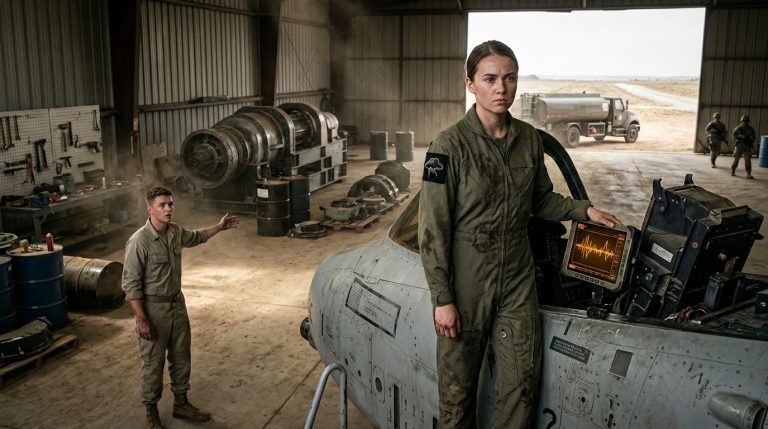
She found the team in the staging area. They were loading gear for an upcoming deployment, a flurry of activity that felt, for the first time, like a performance. Mercer was at the lead truck, checking a manifest. Wade was helping Kellerman secure a series of heavy crates. They were moving with the rhythm of a unit that had been forged in the crucible of the north wall, but beneath the surface, the tension was palpable.
Emily didn’t wait. She moved to the center of the bay, her voice low, cutting through the mechanical clatter of the loading process. “We need a tactical override.”
Mercer looked up, his eyes scanning the periphery of the bay for observers before settling on her. “We’re being watched, Emily. We don’t have the room.”
“We don’t need a room,” she said, nodding toward the heavy, lead-lined diagnostic trailer in the corner—a mobile unit used for testing field equipment integrity, shielded against almost every form of electronic eavesdropping. “We have the hardware.”
They moved as one unit, the transition seamless. It was a testament to the new reality they shared: no questions, no hesitations, just the immediate, instinctive alignment of a team that had stopped playing the game and started fighting the architect. Once inside the trailer, the silence was absolute, a sudden, heavy pressure on the ears that signaled they were finally off the grid.
“The tracker in my gear was just the beginning,” Emily began, her voice crisp, devoid of the emotional static that had plagued her since the debrief. “They’re not just testing response times. They’re testing us to see how we handle the failure of our own internal communication. The ambush wasn’t just an ambush. It was an exercise in systematic fragmentation.”
Wade stepped forward, his face hard, the easy confidence of the previous night replaced by a cold, calculating resolve. “I checked the manifests while we were packing. There’s a ghost element in the next AO. Not enemy combatants—support staff. They’re scheduled to shadow us, ‘monitoring’ the extraction parameters. They want to see if we can perform under the pressure of constant, close-range oversight.”
Mercer looked at them, his hand resting on the edge of the diagnostic console. “If they want to see how we perform, we’ll give them a performance. But it won’t be the one they engineered.”
“We go dark,” Emily said, the logic unfolding in her mind with the clarity of a firing solution. “We accept the parameters of the test, but we redefine the variables. If they want to track us, we give them a signal that mimics the mission, while we execute the real objective on our own terms.”
“That’s a direct violation of mission parameters,” Kellerman added, though he was already checking his kit, his hands moving with the quick, sure intent of someone who had already decided to cross the line. “We’ll be court-martialed before the dust settles.”
“Only if they know what happened,” Mercer said, his voice dropping to a dangerous, steady calm. “The data we feed them will show a standard engagement, a perfect performance. The reality will be something else entirely.”
Emily watched the team. This wasn’t the broken, dismissive unit that had sat in the briefing room two days ago. They were coalescing, their disparate strengths—Wade’s stability, Kellerman’s fire, Mercer’s iron-willed command—fused into a single, lethal intent. She was no longer a variable; she was the catalyst.
She thought of her grandfather, the field in Texas, the smell of motor oil, and the weapon he had taught her to carry—not the rifle, but the patience to wait for the exact moment when the system’s own rigid structure became its greatest weakness. The architecture of the “stress test” was brittle, built on the assumption that they would always act as subordinates to the objective. They were about to show them that the objective was whatever the team decided it was.
As they finalized the plan, the air in the trailer seemed to shift, the faded, worn texture of their mission gear becoming something akin to armor. They were no longer just moving toward a deployment; they were moving toward an intersection of truth and consequence. Emily felt the weight of her ribs, the ache in her arm, the small, invisible tracker she had left behind—all of it was irrelevant now. She was the one who had climbed the mountain, and she was the one who was going to help them descend from the architecture of their own deception.
“Ready?” Mercer asked, his gaze circling the room.
“Ready,” the team replied, the word a singular, heavy anchor in the cold, shielded air.
CHAPTER 6: THE SUMMIT OF SILENCE
The transition from the shielded trailer to the primary command center was a masterpiece of tactical deception. The team moved with the practiced, heavy-footed cadence of soldiers who believed their orders were absolute. Emily walked in the center of the phalanx, the weight of the Barrett system in its hard case a familiar, grounding burden against her spine.
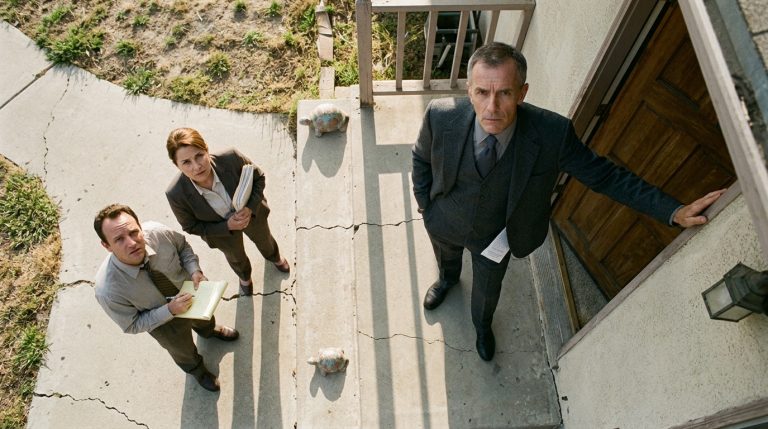
As they entered the briefing room, the air hummed with the high-frequency electronic whine of an active surveillance network. A group of observers—men in gray suits who carried themselves with the stifled arrogance of those who monitor life from behind glass—stood near the back. They watched the team with a hunger that was entirely divorced from the reality of the desert.
Mercer didn’t acknowledge them. He walked to the tactical board, his movements stiff from his injury, and began to outline the “official” mission plan—a standard, high-risk extraction route that mirrored the one which had nearly killed them. It was a lie, meticulously crafted to feed the machine the exact data it expected.
Emily stood by the maps, her gaze fixed on the topography of the north wall. She watched the observers’ faces; they were nodding, their pens moving in synchronized rhythm with Mercer’s voice. They were so intent on the illusion of the “test” that they didn’t see the silent, precise language of the team’s posture.
When the briefing concluded, the lead observer, a man with a face like polished granite, stepped forward. “Lieutenant, your team’s performance metrics during the previous sortie were… anomalous. This mission is designed to correct the variance.”
“We understand the parameters,” Mercer said, his tone perfectly flat. “We are ready to proceed.”
As the team moved toward the hangar, the final phase of their plan began to unspool. It happened in the quiet space between the hangar doors and the waiting transport. Wade moved to the communications array, his hand hovering over the main link to the tracking satellite. He didn’t disable it; he patched it into a loop of pre-recorded, mission-compliant tactical chatter—the ghost of a perfectly compliant unit.
Emily walked toward the truck. The tracker was still in her hand, the black plastic shell cold. She stopped by the exhaust vent of the lead transport, the heavy, metallic heat of the engine radiating against her legs. With a precise, final motion, she jammed the tracker into the heat-shielding of the vent, where the sensor would read a perfect, steady velocity—the simulation of a team that never deviated from the plan.
They drove out into the desert, the sun a pale, unforgiving white disk above the horizon. The mission took them toward the mountain, but as they hit the turning point—the kilometer-one mark where the previous ambush had erupted—Mercer signaled for a full stop.
The desert was silent, save for the wind. The observers were watching the screens in the command center, convinced they were tracking a unit in the heat of a tactical response. But out here, there was no objective, no enemy, and no “test.” There was only the team, standing on the edge of a vast, empty expanse.
Mercer turned to Emily. He didn’t speak. He reached out and took the mission folder from her—the one with the dated manifest and the hidden casualty lists—and let it fall into the dirt. The wind caught the pages, scattering the lies across the sand, the paper fraying as it was consumed by the grit.
“It’s done,” Mercer said.
The realization hit Emily not as a triumph, but as a profound, settling stillness. She looked at the mountain, Hill 350, its granite peak a silent monument to everything she had learned to carry. She had been a tool of their architecture, a variable in their equation, but that ended here. She had proven that she was enough—not to them, but to herself.
She took the Barrett system from her back, opening the case with the methodical, rhythmic care of a craftsman. She didn’t assemble it. Instead, she took the rifle, a precision instrument of cold steel and unforgiving geometry, and placed it on the hard, packed earth. She began to clean it, the scent of oil and iron rising to meet her—the same scent her grandfather had left on her hands all those years ago in the field in Texas.
The team gathered around her, not in a formation, but in a circle—a human barricade against the world that had tried to quantify them. They stood in the silence of the summit, the heat of the desert beginning to shimmer in the distance.
For the first time in seven years, Emily didn’t feel the need to prove, to explain, or to be seen. She simply was. She looked at the horizon, the jagged line where the earth met the sky, and she felt the tension of her rib-cage, the pull of the stitches, the ache of her arm—all of it was just her own, personal map of the journey.
She picked up the rifle, the metal warm from the sun, and stood up. She looked at Mercer, then at Wade, then at the men who were finally, truly, her own. They had been tested, and they had found the truth: they were not variables. They were the architects of their own survival.
As they began the long walk back to the truck, the wind picked up, erasing their footprints in the dust. The desert was indifferent, the mountain was patient, and the test was finally, irrevocably dead. Emily took a breath, the air clean and sharp in her lungs, and she didn’t look back. She didn’t need to. She was already exactly where she was meant to be.