Building An Empire From The Ashes Of Family Betrayal And Proving Worth Through Relentless Perseverance
CHAPTER 1: WALKING AWAY IN SILENCE
The crystal chandelier overhead hummed with the hollow weight of two hundred people laughing at a joke they didn’t understand. My hand on the crystal glass didn’t tremble once.
Across the ballroom floor, my father stood beneath the spotlight, his face flushed with the easy satisfaction of a man who believed his script was absolute. The silence in the room had a dense, heavy texture, like wet cement setting around my shoes.
I pushed my weight onto my left heel and felt the steady, unyielding pressure of the hardwood floor. Twelve years of closed doors and cold glances compressed into a single, quiet heartbeat.
I did not blink. I did not look down.
“Congratulations on your retirement, Dad,” I said. The words carried cleanly over the polished floor, sharp enough to cut through the hum of the air conditioning.
My father’s smile twitched, the well-practiced warmth fracturing around the edges. He had expected the usual quiet exit. He had expected me to fold back into the furniture.
Instead, I raised the glass an inch higher, set it down without a drop missing, and turned on my heel. The leather of my shoe struck the floor with a crisp, dry snap.
I walked toward the double doors without hurrying. Behind me, the collective breath of two hundred guests caught in unison, turning the ballroom into a tomb of suspended sound.
The heavy oak doors parted under my hand, letting in the sharp, clean bite of the September night air. I stepped out past the velvet ropes and let the door swing shut, locking the noise away behind a wall of heavy timber.
CHAPTER 2: THE SILENT OFFICE GRIND
The morning light cut across the glass desk in my Boston office with the cold, unyielding precision of a surgeon’s blade. My phone rested face-down on the mahogany surface, vibrating against the wood with rhythmic persistence.
Another text message from an extended family member, spinning a narrative of sudden instability. I ignored the screen and pulled up the carrier optimization spreadsheets on my monitor.
The numbers did not care about country club politics or family crests. They tracked efficiency, fuel waste, and routing bottlenecks with absolute neutrality.
Daniel paused by my open door, holding a stack of quarterly carrier performance reports. “The Boston accounts are stable, but the backend server load is climbing.”
“Route them through the secondary node,” I said without looking up, my fingers moving steadily across the keyboard. “We don’t need dead air in the logistics pipeline.”
He nodded once, registering the lack of distraction, and stepped away without offering hollow comfort. That was the value of building an enterprise on cold competence rather than emotional hand-holding.
My phone buzzed again, a sharp, buzzing friction against the wood. The caller ID flashed a Connecticut area code that belonged directly to my father’s executive assistant.
I let the call ring out to voicemail, watching the green light pulse in an empty rhythm until it finally died. The silence that followed felt heavy, dense with the realization that my silence was becoming their loudest enemy.
The door to the outer hallway remained closed, keeping the chatter of the fifteen employees locked away in a separate, functional ecosystem. I reached out and tapped the edge of the screen, pulling up the vendor audit logs from three years ago.
A single digital signature on an old asset transfer file caught my eye, completely out of sequence with standard protocol. It wasn’t my father’s signature, and it certainly wasn’t mine.
CHAPTER 3: CRACKS IN THE FOUNDATION
The cursor blinked twice before steadying against the margin of the digital asset sheet. My father’s enterprise was built on polished wood and tight handshakes, but the digital ledger revealed the raw cracks beneath the surface.
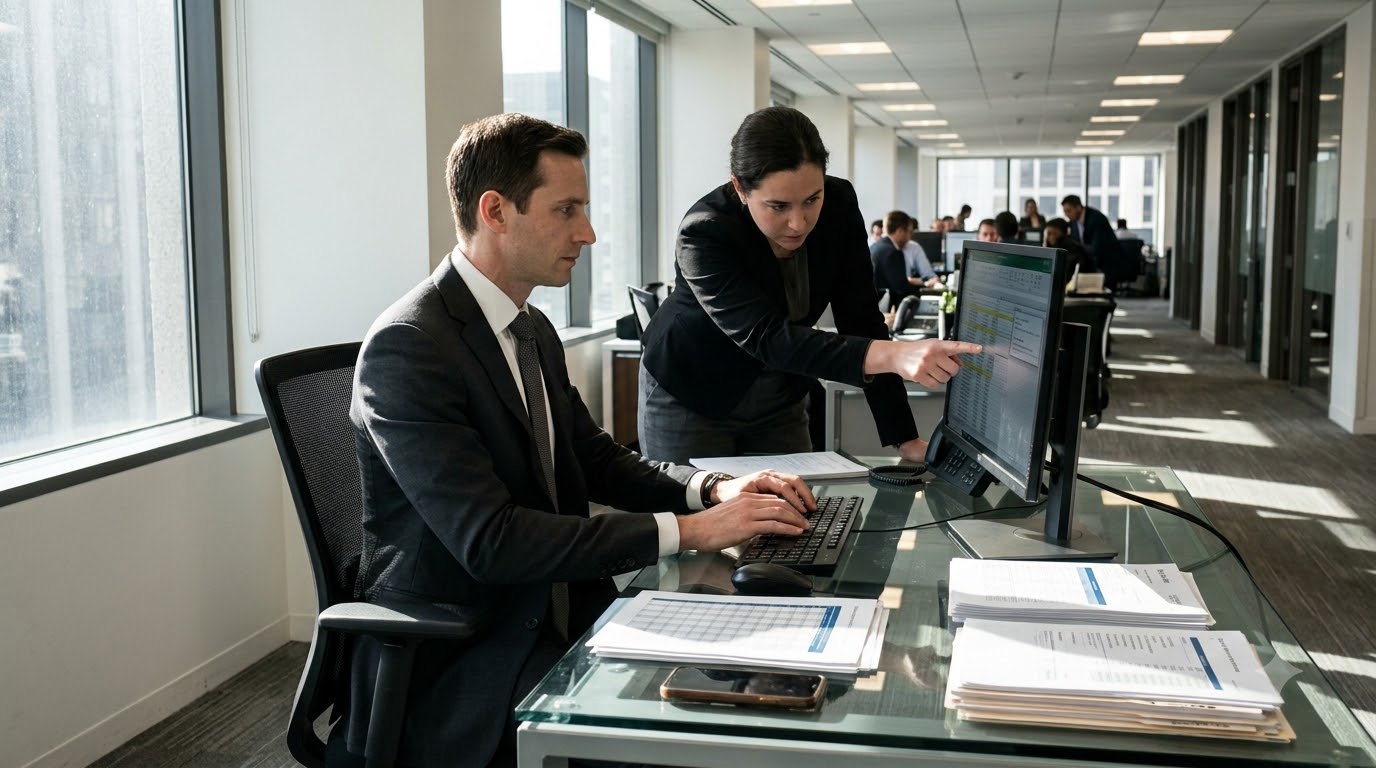
Daniel leaned over the corner of the desk, his eyes fixed on the highlighted routing exception. “They’re running a massive deficit on the southern distribution node, and their management team hasn’t noticed.”
“They’re too busy planning their next press release to look at the freight manifests,” I said, my finger tapping a steady rhythm against the edge of the glass top.
Across the state line in Fairfield, Richard Ivans was likely staring at an empty renewal inbox with mounting panic. A business cannot survive on high-end titles when the underlying supply chain is bleeding efficiency by the hour.
My phone remained silent on the wood, stripped of its personal notifications and locked strictly to operational data feeds. The corporate structure my father relied on was dependent on external optimization that only my firm could deliver.
The office door swung open just enough to let in the low murmur of the financial analysts reviewing the morning metrics. “The Connecticut routing requests are pinging our primary gateway again,” Daniel said, his voice dropping into a flat, professional register.
“Ignore them,” I replied without breaking my gaze from the monitor. “Let the system run its natural course.”
The corporate machine they had weaponized against me for over a decade was finally grinding against its own friction. Richard thought he could dismiss my worth with a microphone and a quick joke, but reality has a heavy way of collecting its debts.
A new email notification popped up in the corner of the display, carrying an urgent subject line from an unknown sender within the logistics group.
CHAPTER 4: THE STOLEN TUITION LEDGER
The screen flickered as Uncle Robert’s contact card appeared with a direct call request. I lifted the receiver on the third ring, keeping my posture square against the back of the chair.
“Heather,” his voice came through the speaker with a rough, weary edge. “I heard about the logistics firm’s collapse down south. They’re tearing themselves apart.”
“They built their house on sand, Robert,” I said, my gaze dropping to the wooden grain of the desk. “You didn’t call just to read me the headlines.”
A heavy sigh drifted across the line, rattling against the speaker hardware. “No. I called because of your mother’s old records. I found the bank ledger from the year you were supposed to start college.”
The office air suddenly felt thin, stripped of its steady temperature by the sheer weight of old calculations. “My father said the accounts were empty,” I said, my voice dropping into a flat, level register.
“He lied,” Robert replied bluntly. “He drained your mother’s educational allocation to fund Marcus’s initial business ventures, then framed it as a family sacrifice.”
My jaw tightened, the muscle ticking once against my cheek as the final piece of the architecture clicked into place. They hadn’t just pushed me out of the family; they had systematically robbed my future to build an empire on a false foundation.
“Thank you for telling me, Robert,” I said quietly.
“Just watch your back, Heather,” he warned before the line clicked dead into a hollow tone.
CHAPTER 5: THE GLASS WALL CONFRONTATION
The frosted glass door pushed open before Daniel could cross the carpet. My father strode into the room first, his posture rigid and his expression stripped of corporate polish.
Linda and Marcus followed close behind, their eyes darting across the open-plan workspace with visible disdain.
“You’ve gone far enough with this little stunt, Heather,” my father said, slamming a leather-bound folder onto the edge of my desk.
I did not stand up. I kept my hands folded flat against the mahogany surface, letting the silence stretch between us like a physical barrier.
“The office doors are open, Dad,” I said, my voice cutting cleanly through his momentum. “If you have something to say about your operational failures, keep your voice down.”
Marcus stepped forward, his knuckles whitening as he gripped the back of a visitor chair. “You’re cutting off our supply lines out of petty spite, and you know it.”
“I’m executing a standard contract termination clause,” I replied, my gaze locking onto his flushed skin. “Your company failed to maintain efficiency standards, and my firm walked away.”
Linda’s hands trembled slightly against her handbag strap—the only sign of biological cracking beneath her rehearsed composure. “We’re family, Heather—we can work out an agreement if you just come back home.”
“You made it very clear what kind of family I belong to twelve years ago,” I said, leaning back slowly into my chair. “You chose your path, and I built mine.”
My father’s jaw worked in absolute silence, the realization finally setting in that no amount of intimidation or unearned entitlement could bend the framework I had constructed.
CHAPTER 6: DUST SETTLES ON CONCRETE
The quarterly restructuring reports from Ivan’s Logistics hit the industry wire with the heavy thud of a falling anchor. Without operational optimization, the firm’s board forced a massive downsizing phase just as winter settled over New England.
My father’s retirement legacy dissolved into corporate restructuring memos and quiet board-room disputes. Marcus stepped down from his brief executive tenure amid mounting shareholder pressure.
I stood by the glass window of my office, watching a container ship cut a steady wake through the dark waters of Boston Harbor. The coffee in my mug had gone cold, its surface flat and undisturbed.
Daniel looked up from his desk, holding the final audit file for our active client portfolio. “The transition is complete, Heather. All accounts are balanced.”
“Leave the file on the corner,” I said, my voice carrying the steady, unweighted calm of someone standing on solid ground.
There was no grand victory speech, no triumphant headline in the morning paper, and no hollow apology from across the state line. There was only the quiet rhythm of work well done and boundaries that held firm against the tide.
I set my mug down on the wooden grain, feeling the cool, clean absence of tension in my shoulders. The noise of the past was gone, leaving behind a life built entirely with my own hands.