The Thanksgiving Slap: How a Crumpled Two-Dollar Ticket Shattered a Toxic Family Empire and Built True Freedom
CHAPTER 1: THE HOLIDAY MOCKERY
The clatter of heavy china on mahogany echoed through the dining room as Aunt Marlene set down the porcelain gravy boat.
I kept my eyes fixed on the stem of my water glass, watching the condensation bead and slowly roll down toward the linen placemat.
Across the table, Vivien smoothed the front of her designer dress, her laughter bright and practiced for an audience of thirty relatives who knew how to play their assigned parts.
My mother stepped behind Vivien’s chair, her fingers resting possessively on my sister’s shoulders as my father tapped his fork sharply against his crystal glass.
The sharp metallic ping cut through the room’s low hum of polite conversation, demanding absolute silence.
“This year, Patricia and I wanted to do something special,” my father announced, his voice carrying the practiced cadence of a man used to closing deals on four-wheeled lemons.
He slid a thick, creamy envelope across the polished wood toward Vivien, who gasped with theatrical delight before burying her face in her hands.
A fourteen-day first-class Caribbean cruise, complete with spa packages and excursions, materialized out of that envelope while the relatives erupted into approving applause.
Marcus leaned back in his leather chair, a smug grin pulling at the corner of his mouth as he accepted the stray pats on the back meant for his reflected glory.
Then the applause died, leaving a heavy, suffocating quiet that settled squarely over my shoulders.
“Audrey, honey, come here,” my mother called out, her voice dripping with an artificial sweetness that tasted like spoiled honey.
I stood up slowly, pushing my chair back against the hardwood floor with a soft scrape that felt entirely too loud in the sudden stillness.
My mother reached into her pocket and pulled out a single, thin slip of paper, creased and worn at the edges from sitting at the bottom of a cash register tray.
She pressed it into my palm, her fingers brushing mine with a dry, papery coldness that made my skin crawl.
“Who knows? Maybe luck will find someone in your situation, dear,” she said, her smile not reaching eyes that looked right through me as if I were made of glass.
A muffled snicker broke out near the end of the table, followed by a ripple of polite chuckles from uncles and cousins who had memorized the family hierarchy long ago.
I looked down at the crumpled green and white paper resting in my hand, feeling the cheap thermal ink beneath my thumb.
Instead of the burning humiliation they expected, a strange, absolute stillness settled deep behind my ribs, freezing the hot surge of anger into something cold and sharp.
“Thank you, Mom,” I said, my voice dropping an octave below its normal register, steady enough to cut glass. “I’m sure this is exactly what I deserve.”
CHAPTER 2: THE HIDDEN VAULT
The heavy leather of my father’s desk chair groaned as I pulled it back.
A scatter of red-stamped envelopes lay across the mahogany surface like fallen autumn leaves, bearing final notices from collection agencies that never learned how to compromise.
I flipped the corner of a utility bill, my fingers brushing against a thick sheaf of legal papers half-hidden beneath a dusty leather ledger.
The ink on the top page was sharp, modern, and aggressive—a predatory commercial loan agreement bearing my father’s jagged signature co-signed by Marcus Pierce for the sum of one hundred eighty thousand dollars.
I traced the predatory interest rate with the tip of my nail, feeling the cold weight of the numbers settle in my stomach.
Further down the page, a secondary attachment caught the dim light of the desk lamp.
It was a collateral assignment deed, binding Grandma Grace’s house—the fifty-year homestead where my mother grew up—directly to Marcus’s private lending firm.
The signature at the bottom of the deed was uneven, wobbling sharply across the dotted line like a dying pulse.
It was dated exactly six months prior, during the two-week window when my grandmother had been heavily medicated in a hospital wing following a bad fall.
I pulled out my phone, letting the camera lens click silently in the empty room as I captured every single page of the fraud.
A sharp rap against the front door downstairs made the whole desk frame rattle.
“Audrey? Are you still collecting those dishes?” my mother’s voice drifted down the hallway, carrying the thin edge of impatience that always signaled a demand for labor.
I slid the final document back into its exact position, dust motes dancing in the amber glow of the desk lamp as I walked out to face them.
CHAPTER 3: THE SECRET NUMBERS
I stared at the official lottery application page, refreshing the browser three times until the figures refused to change.
One hundred million dollars sat in plain digital text, completely detached from the reality of the red-stamped bills still sitting in my father’s study.
My thumb hovered over the screen, feeling the slight vibration of an incoming text notification from Aunt Marlene asking if I had reached home safely.
I locked the phone screen, plunging the room into a heavy, suffocating shadow while the weight of the numbers settled over my chest.
“You know something, don’t you?” I murmured into the empty kitchen space, remembering Marlene’s warning about Marcus on the phone line.
A sharp buzz broke the silence, flashing Marlene’s name across the glass with a request to meet at the corner diner on Elm Street before the weekend rush.
I didn’t answer with words; I simply grabbed my coat from the back of the chair and headed out into the biting November air.
The diner booths smelled of stale coffee and fried grease as Marlene slid across the cracked vinyl, her fingers trembling as she clutched a worn leather handbag.
“He’s not a real consultant, Audrey,” Marlene whispered, leaning forward over her chipped mug while her eyes darted toward the front door. “He lends money to desperate families with terms that swallow houses whole.”
CHAPTER 3: THE LAWYER AND THE WARNING
I slipped my phone back into my pocket, the cold weight of the captured evidence pressing against my thigh as I stepped away from the desk.
The doorknob rattled, turning with a loose click before the wood pushed inward, revealing my father peering into the gloom with a frown.
What are you doing in here, Audrey? he muttered, his eyes narrowing as he scanned the clean surface of the desk where I had just rearranged the files.
Just finishing up with the trash, Dad, I replied steadily, keeping my hands loose at my sides to hide the raw tension in my fingers.
Well, get out to the dining room, your mother wants everyone seated for dessert before the coffee gets cold—he grunted, turning his back without waiting for an answer.
I followed him out into the noise of the house, my mind fixed on the name my grandmother had whispered like a lifeline.
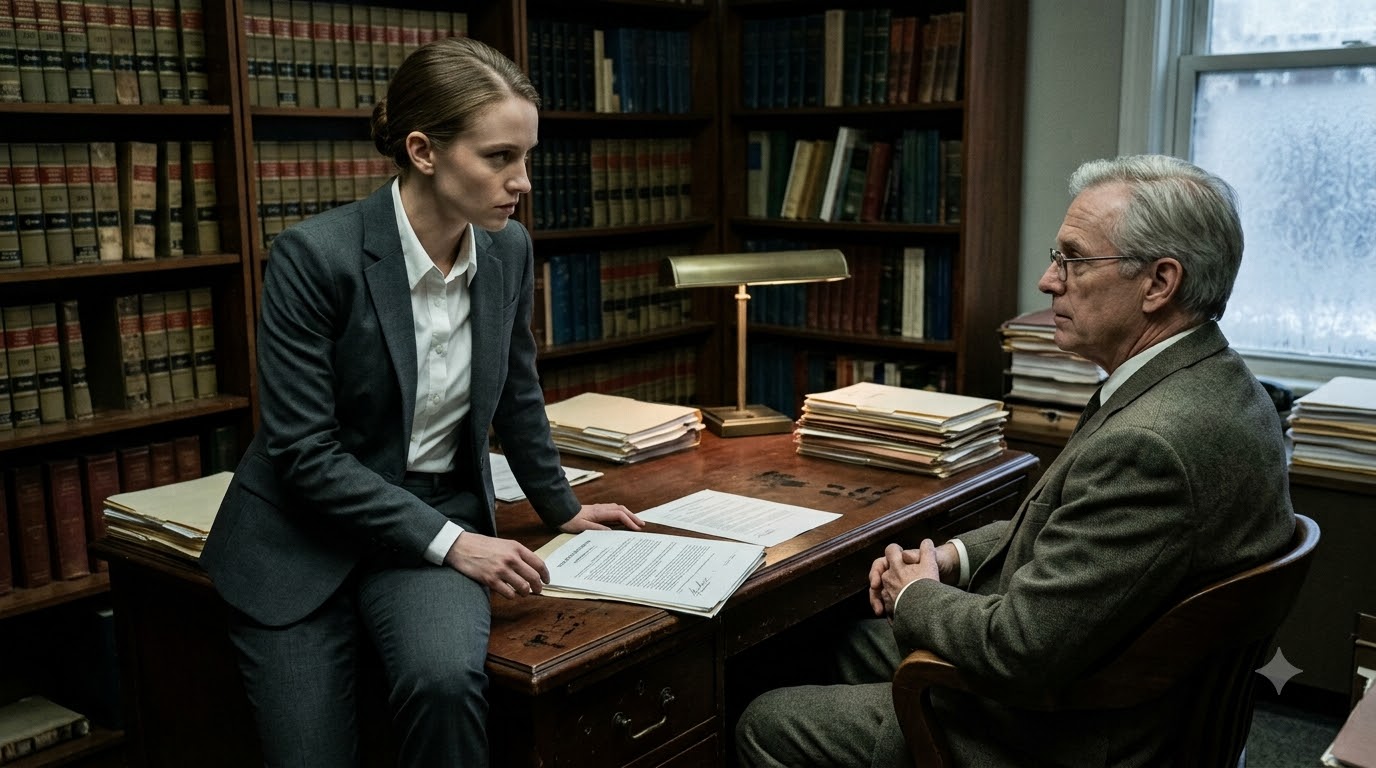
Thomas Smith’s office sat three blocks off Main Street, smelling of old leather, binding glue, and decades of quiet litigation.
The silver-haired attorney adjusted his wire-rimmed glasses across the mahogany desk, sliding a thick manila folder toward my hands.
Ten years ago, your grandmother established a trust fund in your name, Thomas said, his voice dropping into a register of professional caution.
A trust fund? Five hundred thousand dollars, he continued, watching my face carefully for any sign of surprise.
She was afraid your mother would find a legal loophole to siphon it away for your brother-in-law’s speculative ventures.
I flipped open the cover, my eyes tracking the neat rows of bank routing numbers and legal seals dated long before Thanksgiving.
There is more, Thomas added, leaning back against the grain of his chair while the winter wind rattled the frosted glass outside.
The deed to her home was transferred six months ago, right after her hospital discharge when she was heavily sedated on post-op pain management.
That is fraud, I said, the word tasting like dry metal on my tongue.
Hard to prove without a witness willing to break the family code, Thomas warned, tapping a pen against the edge of the blotter.
Your father owes Marcus one hundred and eighty thousand dollars, and that house is the collateral keeping the whole house of cards standing.
CHAPTER 4: THE COFFEE SHOP CONFESSION
She didn’t look up when I slid into the vinyl booth across from her, her fingers working nervously over the frayed leather strap of her handbag.
I should have spoken up years ago, Marlene whispered, her voice barely carrying over the hum of the espresso machine behind the counter.
You know how your mother is when she gets her mind set on a social image—she buries everything beneath a polished veneer.
Tell me about Marcus, I said, resting my forearms against the sticky table surface to keep my posture level and grounded.
She’s not a consultant, not in any legitimate sense of the word, Marlene muttered, pulling a cracked smartphone from her coat pocket with trembling speed.
He finds people backed into corners, offers them fast cash with terms designed to bleed them dry, and uses your father as a front for local credibility.
Her thumb swiped across the screen, bringing up a gallery of digital images before turning the display toward my side of the booth.
Text messages glowed in the dim light of the diner, filled with romantic promises and dates that predated the family anniversary party by months.
Once the house deal closes, I am out, the bold letters on the screen declared from an assistant named Diana.
And what about Vivien? the text history asked, prompting a sharp, cold reply from Marcus that made my chest tighten.
She served her purpose, divorce papers are already drafted—the words sat there on the glass, stark and undeniable.
She doesn’t know, does she? I asked, watching the older woman’s eyes well up with heavy, unshared guilt.
I wanted to tell her, but Marcus has a way of isolating people, making them feel like they are the crazy ones for asking questions—Marlene choked out, pulling the phone back.
I sat back against the vinyl, letting the heavy reality of the screen settle into the quiet space between us.
Vivien wasn’t the architect of our family’s cruelty; she was just another prisoner trapped in a gilded cage built by a con artist.
My phone vibrated sharply against my leg, breaking the silence with an incoming alert from a local number I didn’t recognize.
CHAPTER 5: THE CRUISE DEPARTURE
I pulled the device out as the heavy mahogany doors of the harbor terminal swung shut behind a crowd of vacationers.
The screen flashed with a frantic text message from Vivien, asking for emergency funds because their boarding pass had triggered a security hold.
Dad’s credit card got declined at the port, can you wire five hundred dollars immediately?—the message scrolled across the glass with desperate punctuation marks.
I stared at the glowing words, feeling the quiet absurdity of a family living on borrowed time finally hitting a brick wall.
They were boarding a first-class Caribbean liner funded by illusions, while back on dry land, the legal machinery was already tightening its grip.
I typed my reply with a single thumb, keeping the text flat and emotionless before sliding the phone back into my pocket.
I do not have five hundred to spare, ask Marcus—the words went out into the void, leaving no room for argument or rescue.
Three dots blinked on the screen for a long, agonizing moment before vanishing entirely into a heavy, unbroken silence.
They were out at sea now, unreachable by anything except the slow, inevitable realization that their safety net had rotted away.
I walked out of the terminal into the biting autumn wind, heading straight back to Thomas Smith’s office to lock down the final paperwork.
The deed challenge was moving faster than expected, fueled by the medical timeline and Aunt Marlene’s sworn affidavit regarding the hospital drugs.
No one else in the family knew what was coming, wrapped up in shore excursions and sunset dinners while their foundation cracked beneath them.
My phone buzzed again, this time with a news alert about local financial investigations targeting unauthorized high-interest lenders in the county.
I did not smile, and I did not feel a rush of cheap triumph against the people who had spent a lifetime treating me like an afterthought.
There was only the heavy, grounding friction of doing what should have been done years ago before the rot spread any further.
Thomas looked up as I pushed open his office door, sliding a fresh stack of legal binders across the mahogany wood.
CHAPTER 6: THE DIGITAL COLLAPSE
My laptop sat open on the small kitchen counter, the video call connecting with a series of sharp, digital chimes that cut through the silence.
Within seconds, the screen filled with the crowded faces of my parents and Vivien, framed against the warm sunset of the ship’s lounge.
There is our girl! my mother beamed, her voice dripping with the practiced sweetness of a host welcoming uninvited help.
We miss you so much, honey, Dad added from beside her, offering a grin that faltered when he saw the steady, neutral expression on my face.
Before we talk about your vacation, I said, my voice cutting cleanly through the ambient chatter of the cruise ship lounge, we need to look at some business.
Marcus shifted in the background, crossing his arms over his chest with a tight, defensive smirk that didn’t reach his eyes.
What kind of business, Audrey? my father chuckled nervously, leaning closer to the camera lens.
I shared my screen, bringing up the scanned loan agreement with its predatory interest rates and Marcus’s bold signature right beside my father’s.
This is a private loan between you and Marcus, secured against Grandma Grace’s house while she was heavily medicated after her surgery, I stated flatly.
My father’s face drained of color instantly, his mouth opening and closing without producing a sound as he stared at the digital text.
Those documents are fabricated—Marcus snapped, stepping forward into the frame with his jaw locked in cold fury.
You are just bitter because you got a lottery ticket while Vivien got a future—he snarled, his voice rising in an ugly wave of panic.
I didn’t blink, pulling up the next window to reveal the explosive message history between Marcus and his assistant Diana.
Once the house deal closes, I am out—I read aloud from the screen, letting the exact words hang in the heavy silence.
Vivien froze, her eyes widening as she stared at the man beside her, her voice dropping to a hollow, shaking whisper.
Marcus? she breathed, turning her head slowly to look at him as the final illusion shattered completely.
He didn’t answer, spinning away from the camera and shoving his way out of the lounge while my mother broke down in loud, ragged sobs.
I am clearing the lien on Grandma’s house and returning the deed to her name where it belongs, I said quietly, closing the laptop lid.
The screen went dark, cutting off the chaos, the denial, and the frantic shouting without a single backward glance.
One year later, the afternoon sunlight stretched warm and steady across the overgrown garden beds outside Grandma Grace’s restored back porch.
I set a mug of hot tea down on the weathered wooden table, listening to the soft rustle of goldfinches at the feeder nearby.
It needs a little more work, Grandma murmured from her rocking chair, a quiet smile touching the corners of her mouth.
We have time, I answered, sinking into the chair beside her with my hands resting easily in my lap.
The weight of other people’s expectations was gone, replaced by the quiet, unshakeable peace of a boundary held and a life truly my own.