The Echo of the Serpent: A Quiet Valor Transmitted Through Time, Grace, and Shared Human Fragility
CHAPTER 1: THE WEIGHT OF THE SERPENT
The ceramic mug felt warm against Glenn’s palm, a small, steady comfort in a world that had grown too loud. He didn’t look up. At eighty-one, he had learned that the quickest way to silence a storm was to simply refuse to acknowledge the wind. But the man looming over his booth was not wind; he was granite, polished and arrogant, his shadow swallowing the sliver of morning light that had managed to cut through the diner’s grime-streaked window.
“I’m talking to you, old-timer,” the man—Cutler—said. His voice was sharp, a jagged edge of ego that scraped against the quiet peace of the Scrambled Egg.
Glenn’s gaze remained fixed on his coffee. Two cubes of sugar, dissolved into a dark, swirling abyss. He stirred, the spoon clicking rhythmically against the porcelain—a steady, deliberate heartbeat. Around him, the diner had gone brittle. The frantic rhythm of the short-order cook had ceased, and even the familiar rattle of silverware had died, as if the entire room were holding its breath, waiting for the old man to finally snap.
“The tattoo,” Cutler pressed, his knuckles white as he leaned into the table. “You’re wearing a symbol you didn’t earn. You’re playing dress-up, aren’t you? Some back-alley regret you want to pretend was a war story.”
Glenn finally moved, but it wasn’t the defensive flinch Cutler had been fishing for. It was slow, a measured turn of his head. His pale blue eyes were clouded by time, but there was a stillness behind them—a profound, oceanic weariness that seemed to age the entire room.
“It’s just ink,” Glenn said. His voice was a low, raspy rumble, a ghost of a sound that seemed to pull the oxygen from the air.
Cutler let out a short, hollow laugh that didn’t reach his eyes. “Right. ‘Just ink.’ Everyone’s a hero in the dark, aren’t they?”
Then, the mistake happened. Cutler reached out. His thumb brushed the faded, blurred lines of the serpent swallowing its own tail.
The contact was light, but for Glenn, it felt like a hammer blow. The smell of frying bacon and bitter coffee evaporated. In its place, the heavy, humid scent of wet earth and copper blood surged into his senses. The clatter of the diner’s door transformed into the rhythmic, terrifying wump-wump-wump of Huey rotors cutting through a triple-canopy sky. He wasn’t in a booth anymore. He was in a humid, suffocating green hell, a young hand slick with mud clutching his shoulder.
Stay with me, Pat. Just stay with me.
The memory was so visceral, so sharp, that Glenn’s fingers tightened around the handle of his mug until his knuckles turned as white as the paint on the table. He didn’t blink. He couldn’t.
Cutler, still unaware of the tectonic shift occurring in the man before him, smirked, looking toward his partner. “See? Nothing. Just a relic living a lie.”
But as Cutler leaned in, he didn’t notice the way the waitress, Sarah, had stopped dead by the coffee station. She had seen the flicker in Glenn’s eyes—not fear, but a sudden, terrifying emptiness. She saw the way his hand trembled, just once, before steadying into a grip of pure, frozen resolve. She didn’t call the police. She did something else. She slipped toward the back office, her face a mask of sudden, cold purpose, and reached for the phone.
Glenn looked back at Cutler, his eyes unblinking, the silence in the diner now so heavy it felt like it might collapse the roof. He saw the arrogant tilt of the young man’s jaw, the ignorance of his posture, and for the first time in decades, a thought pierced his mental sanctuary: This boy has no idea what it costs to simply exist.
The air in the diner grew thin, static-charged. Glenn pulled his arm back, his movement fluid and deliberate, the silence stretching out like a wire pulled to the breaking point.
CHAPTER 2: THE ANCHOR IN THE STORM
Sarah’s retreat from the dining area was not a flight of cowardice; it was the calculated maneuver of someone who knew exactly where the weak points in the floorboards were. She slipped behind the grease-stained door of the office, the hinges groaning in a low, metallic protest that sounded, to her ears, like a warning bell. She didn’t turn on the light. The diner’s single fluorescent bulb, visible through the sliver of the doorway, cast a pale, sickly light over the stacks of invoices and the faded calendar on the wall.
Her heart hammered against her ribs—a frantic, uneven rhythm that betrayed her practiced calm. She reached for the flip phone on the desk, the plastic cool and smooth beneath her sweating palm. Her fingers moved with a mechanical precision, tapping out a number that lived in the back of her mind, a sequence she had rehearsed in the quiet moments of her life, fearing the day she might actually need it.
She didn’t look back at the diner. She couldn’t. If she saw Cutler’s face again, she knew her resolve would shatter like cheap glass. Instead, she leaned her forehead against the cool, vibration-dampened surface of the wall and listened. The diner remained unnervingly still. No shouts, no crashing of furniture, just a silence so absolute it suggested the very air had thickened.
The phone chirped, a sharp, dissonant sound in the confined space.
“General Thorne’s office, this is Senior Airman Miller.” The voice on the other end was a crisp, well-oiled machine of military efficiency, a sharp contrast to the frayed, greasy reality of the Scrambled Egg.
“Stacy,” Sarah whispered, her voice barely audible even to herself. She tightened her grip on the phone until the plastic creaked. “Listen to me. I don’t have time for a conversation. There are two of your men—active duty, I think—and they’re here, at the diner. They’re harassing Glenn.”
There was a pause, a breath of air sucked into the line. “Sarah? You’re calling the secure line on post? What are you talking about?” Stacy’s voice lost its polished edge, replaced by a sudden, jagged confusion. “If there’s an altercation, you need to call the MPs. I can’t—”
“You don’t understand,” Sarah interrupted, her voice rising in a sharp, desperate pitch. She could hear the muffled, distorted sound of the diner’s front door bell jingling—a customer leaving, or perhaps someone entering. The tension in her chest tightened. “The old man’s name is Glenn Patterson. They’re mocking him. They’re mocking the tattoo on his arm.”
Silence followed. Not the hesitant silence of someone trying to understand, but the void-like silence of someone who has just been struck by a physical force.
“Sarah,” Stacy said, her voice dropping into a register that made the hair on the back of Sarah’s neck stand up. It was a clinical, icy tone. “Describe that tattoo again. Slowly.”
Sarah squeezed her eyes shut. She could see it in her mind—the faded, blurring ink she had looked at every Tuesday and Thursday for ten years. “A serpent. It’s biting its own tail. And there’s a star inside the circle. Five points.”
The line went dead. No goodbye, no promise of assistance, just the flat, dead-air tone of a severed connection.
Sarah lowered the phone, her hand shaking so violently the device clattered against the desk. She stood there for a heartbeat, enveloped by the smell of stagnant coffee and the faint, dry scent of old paper. She had done her part. She had cast the stone, and now she had to wait to see if the ripples reached the shore.
She opened the door a crack.
The scene in the diner had shifted, though the players remained the same. Cutler was standing, his back to the office, his shoulders hunched in a display of aggressive, restless energy. Reyes was still at the table, his posture stiffer now, his eyes tracking Glenn with a mixture of confusion and growing unease. Glenn remained seated, his hands folded neatly on the table, his gaze fixed on the window—a statue carved from time and indifference.
The air was different now. The tension hadn’t dissipated; it had fermented. It had become something heavier, something expectant. Sarah watched, her breath shallow, as Glenn slowly turned his head. His pale blue eyes caught the light, and for a fleeting, terrifying moment, they didn’t look like the eyes of an old man anymore. They looked like a horizon—wide, deep, and utterly unconcerned with the petty violence of the present moment.
She felt a surge of protectiveness that was almost painful. He was just a man. A man who ate toast and tipped too much and asked about her grandkids. He wasn’t a legend; he was a friend. And he was being picked apart by children who thought they owned the world because they wore a uniform that hadn’t yet been stained by the things he had seen.
She gripped the doorframe, her knuckles turning white. She wouldn’t let them walk out of here thinking they had won. Not today.
As if sensing her gaze, Glenn’s eyes drifted toward the office door. He didn’t smile, but there was a subtle softening in the lines of his face—a brief, acknowledging nod that told her everything she needed to know. He knew. He had always known. And he was waiting, just as she was, for the storm to break.
CHAPTER 3: THE GENERALS ARRIVAL
Sarah pushed the office door wide, the metal frame scraping against the concrete floor. She didn’t march out; she simply stepped into the diner’s main space, her movements cautious, as if she were walking across thin ice. The atmosphere had shifted. It was no longer the tight, abrasive pressure of Cutler’s interrogation. It had morphed into a static-heavy suspense, the kind that precedes a major weather event.
Glenn remained in his booth, his hands still resting flat on the laminate. He looked older than he had ten minutes ago, the lines around his eyes etched deeper by the sheer effort of holding his ground. Cutler had turned, his boots scuffing against the linoleum as he faced the entrance. He wasn’t looking at Glenn anymore; he was looking at the street.
“What is that?” Cutler muttered, his voice losing its predatory bite. It was thinner, laced with a sudden, sharp edge of confusion.
Reyes stood up slowly, his movements deliberate. He walked to the window, the tall, granite-shouldered man looking out through the grime-streaked glass. “Suburbans,” he said, his tone flat. “Three of them. Black, government plates. They’re moving in a wedge formation.”
Sarah felt her breath hitch. She hadn’t expected them to arrive so quickly—or with such tactical precision. It wasn’t just a response; it was an extraction, a show of force that belonged in a different theater of operations entirely. The diner, usually so comfortable and familiar, felt suddenly small, exposed, and entirely fragile.
The rumble reached them then—a low-frequency vibration that rattled the coffee mugs on the counter. It was the sound of heavy engines, muffled by the distance but unmistakable in its power. The vehicles didn’t just pull into the parking lot; they occupied it, boxing the diner in with a calculated, suffocating efficiency.
Cutler took an involuntary step back. “That’s not the MPs,” he whispered, more to himself than to Reyes.
Sarah didn’t look at the men. She looked at Glenn. The old man hadn’t moved. He was staring at the front door, his expression one of calm, almost resigned familiarity. He wasn’t surprised. He wasn’t frightened. He looked like a man watching a train arrive at a station he had visited a thousand times before.
The diner’s door, which had been buzzing with the ambient noise of a Tuesday morning, now felt like the threshold of an airlock. Outside, the world had gone silent. The gravel crunched—a rhythmic, synchronized sound—as doors opened and shut with the precision of a clockwork mechanism.
Then came the footsteps. They weren’t the hurried, stumbling strides of civilians. They were measured, heavy, and resonant. They moved in perfect, ghostly unison, a percussion of authority that stopped right outside the diner’s entrance.
Cutler looked at the door, then back at Glenn, his face pale and drained of the smug satisfaction he had worn like armor just moments earlier. He seemed to realize, in that hollowed-out silence, that he had wandered into a story far larger and more dangerous than the one he was writing. He reached out to adjust his jacket, a nervous, jerky movement, but stopped as the brass handle of the front door began to turn.
The door swung open, the bell ringing with a sharp, piercing clarity that cut through the room.
General Marcus Thorne stepped over the threshold. He didn’t look like a man in a rush. He was a man in command of the air, the space, and the very gravity of the room. He wore his dress uniform, the fabric sharp, the stars on his collar glinting like cold, unforgiving flint. He was flanked by two sergeants major who moved like shadows, their eyes scanning the diner with the dispassionate focus of men who had seen every possible configuration of violence.
The General stopped. He didn’t look at the patrons, whose faces were a blur of shock and confusion. He didn’t look at Sarah. He didn’t even acknowledge the presence of Cutler and Reyes, who were standing there like statues, their mouths slightly parted.
He walked past them, his footsteps the only sound in the room, until he stood at the edge of Glenn’s booth. The space between the two men—the four-star general and the man in the threadbare cardigan—seemed to hum with an ancient, unspoken language.
General Thorne came to a halt. He clicked his heels together—a sound that rang out with the finality of a gavel—and brought his hand up in a salute so crisp, so deep, and so profoundly reverent that it felt like an act of prayer.
Sarah gripped the edge of the counter, her knuckles burning. The air in the diner felt thin, taxed by the weight of the moment. She watched the General’s eyes—arctic, hard, and currently brimming with a raw, unadorned emotion—as he held the salute, waiting.
Glenn looked up. He moved slowly, the simple act of standing requiring a focused, monumental effort. He brought his own hand up, a shaky, slightly crooked salute that mirrored the General’s. It was a bridge built across a gulf of fifty years, a silent communication that bypassed the soldiers, the diner, and the modern world entirely.
The General dropped his hand. “Glenn,” he said, his voice a low, gravelly vibration that seemed to pull at the very fabric of the room. “It’s been too long.”
Glenn smiled—a small, fractured movement of his lips that spoke of long-buried ghosts and the persistence of memory. “Marcus,” he rasped, the word soft, almost an exhale. “You got old.”
The General allowed himself a ghost of a grin, his eyes darting briefly to Cutler and Reyes, who looked as if the floor beneath them had just dissolved. The shift in the General’s gaze was instantaneous. The warmth for Glenn vanished, replaced by a temperature so low it seemed to frost the edges of the air.
Sarah watched, her breath trapped in her chest. The decoy was gone. The legend had arrived. But as she saw the way the General looked at the operators, she realized the true battle wasn’t about to be fought with words.
CHAPTER 4: THE SURGICAL REBUKE
The silence in the Scrambled Egg was no longer a state of being; it was a weapon. It pressed against the eardrums, amplified by the rhythmic, low-frequency hum of the General’s idling security detail outside. Cutler and Reyes stood frozen, their arrogance having curdled into a palpable, sour dread. They were not looking at Glenn anymore. They were looking at their own futures, and for the first time, those futures looked remarkably bleak.
General Thorne didn’t raise his voice. He didn’t have to. The lack of volume was, in itself, a form of violence. He held his position, his eyes fixed on Cutler with a cold, analytical intensity that seemed to be dissecting the man’s career in real-time.
“You questioned him,” the General said. The words were flat, devoid of cadence or comfort. He reached out, his movements precise and deliberate. He unbuttoned the cuff of his right sleeve. The fabric of his dress jacket was pristine, yet as he folded the cuff back, the gesture felt like the preparation for a surgery.
Sarah watched from behind the counter, her hands gripping the wood until her knuckles burned. She saw the General roll the fabric up, past his wrist, past the expensive, understated watch. And then, the ink appeared.
It was a mirror image. The serpent, the star, the circle—it was identical to the one on Glenn’s arm. The shock wasn’t just in the sight of it; it was in the realization of what it signified. This wasn’t a club. This wasn’t a hobby. It was a brand, a mark of something that existed outside the standard chain of command, something that held the power to shatter careers with a single word.
“Look at it,” Thorne commanded. His voice wasn’t an invitation; it was an order.
Cutler stumbled, his eyes flicking to the General’s forearm and then back to Glenn’s. The realization finally took root, visible in the way his jaw slackened and the color drained from his skin. The “relic” he had been mocking was the architect of the very world Cutler was currently trying to climb.
“Sir, I—I didn’t know,” Cutler stammered, his voice thin and cracking at the edges.
Thorne cut him off with a sharp, dismissive wave of his hand. “Ignorance is not a defense for failure, Operator. It is the definition of it.”
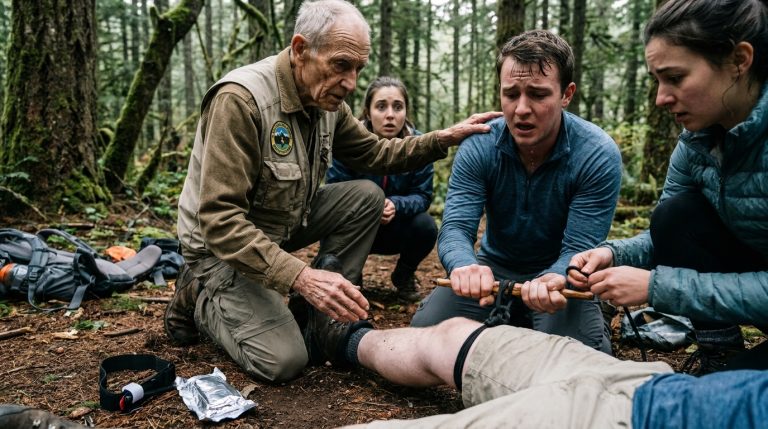
Glenn, sitting quietly in the booth, watched the interaction with a detached sadness. He felt a sudden, sharp intrusion of memory—a ghost of the past. He could feel the phantom pressure of a bamboo needle against his own skin, the stinging heat of the gunpowder-ink mixture, the smell of damp jungle air clinging to the lungs. He remembered the lieutenant—a young, terrified Marcus Thorne—clutching his hand while Glenn had sat in the mud and given him the mark.
It had been a promise to survive, a pact of humanity in a place that demanded only their extinction. Seeing it now, on a man who had become a monolith of power, felt like watching a tree grow out of a graveyard. It was beautiful, but it was anchored to a tragedy that the boys in front of him couldn’t possibly comprehend.
“Before you,” Thorne continued, his eyes locking onto Reyes this time, “there was a necessity. A darkness that had to be walked through so that others wouldn’t have to see it. We were called Project Omega. We were the ghosts that held the line.”
He stepped closer, his presence invading the personal space of both men. “You wear the uniform of the quiet professional. That is the creed. You have forgotten the ‘quiet.’ You have forgotten the ‘professional.’ And in doing so, you have forgotten the men whose blood paved the road you walk on today.”
Thorne stopped. The air in the diner felt thin, taxed by the weight of his words. He looked at them with a mixture of disappointment and profound, icy contempt. “My office. 0500 hours. Be prepared to turn in your credentials. You are relieved of your current status effective immediately.”
The silence that followed was absolute. Cutler looked like he had been hollowed out, the pride he had worn like armor gone, leaving only the terrified man beneath. Reyes just bowed his head, his shoulders slumping.
Glenn finally stood, his legs trembling slightly as they bore his weight. He didn’t look at the General, nor at the two men he had just dismantled. He looked past them, toward the door, toward a life that had always been defined by its ability to fade away.
“Marcus,” Glenn said, his voice raspy and soft. “Buy me a coffee. It’s been a while.”
The General’s expression shifted. The arctic void in his eyes thawed, replaced by a momentary, fragile flicker of the man he had been in the jungle. He nodded, once, and placed a hand on Glenn’s shoulder—a grip of solid, unwavering support.
As they walked toward the counter, Sarah moved to get the pot, but her hands were shaking so hard she had to set it down. She realized then that this wasn’t just a confrontation. It was an ending. And as she looked at the two men, she saw the reality of the secret they carried: it wasn’t the power they possessed that defined them, but the heavy, unspoken burden of having lived long enough to watch the world forget why they had sacrificed everything in the first place.
CHAPTER 5: THE WEIGHT OF THE PROMISE
The door clicked shut, the bell giving a final, lonely chime that felt like the closing of a tomb. Cutler and Reyes were gone, their presence scrubbed from the diner as thoroughly as if they had never existed. The silence that rushed in to fill the void was different—it was heavy, thick with the residue of the preceding storm.
General Thorne stood by the booth, his posture still rigid, his uniform impeccable, but the fire in his eyes had dimmed, leaving behind the dull, tired embers of a man who had carried too much for too long. He looked at the ceramic mug on the table, then slowly pulled out the chair opposite Glenn and sat. The furniture groaned under the shift in weight, a mundane sound that served as a reminder of how brittle their current world truly was.
“They won’t be the last, Glenn,” the General said. His voice was no longer the sharp command that had dismantled the operators; it was low, intimate, and stripped of all official pretense. “Every year, the gap grows wider. They look at us and they see history. They don’t see the cost.”
Glenn picked up his mug. His hands were steady now, the tremor that had plagued him since the touch of the young operator’s finger finally stilled by the presence of his old friend. He took a slow sip, the bitter warmth spreading through him. “That’s because it isn’t history to them, Marcus. It’s a brochure. They see the stars, the awards, the clean lines of the uniforms. They don’t see the swamp.”
He set the mug down, the sound distinct in the quiet diner. “They don’t see the needle. They don’t see the nights we spent trying to remember how to breathe without hearing the rain against the leaves.”
Thorne leaned forward, his elbows resting on the table. The General was gone, replaced by the man who had once been a terrified lieutenant in the dark, clutching Glenn’s arm in the mud. “I kept the promise, you know. I never quit. But sometimes, when I sit in that office, surrounded by the screens and the satellite feeds, I feel like I’m still back there. I feel like I’m still waiting for you to tell me it’s time to move.”
“And you are,” Glenn said softly. His pale blue eyes were fixed on the window, watching a stray leaf drift across the cracked sidewalk outside. “You’ve been moving for fifty years. Just because the terrain changed doesn’t mean the mission did.”
Sarah emerged from the kitchen, her movements tentative. She carried a fresh pot of coffee, the steam rising in lazy, erratic curls. She didn’t say a word as she approached, the silence of the diner demanding a respectful distance. She poured the coffee into the General’s cup, her hand steady, and then retreated, leaving them to the quiet architecture of their shared past.
Thorne watched the steam, his expression drifting into a landscape of distant, jagged memories. “Do you ever wonder if we should have told them? If we should have shown them the truth instead of the legend? Maybe if they understood the fracture, they wouldn’t be so eager to break it further.”
Glenn turned his gaze from the window, meeting Thorne’s eyes. There was no judgment in his look, only the profound, soul-deep exhaustion of a man who had seen the cycle repeat itself more times than he cared to count. “Truth is a heavy thing to carry, Marcus. We chose to carry it so they wouldn’t have to. You can’t regret giving someone the light, just because they’re too blind to see where it came from.”
The General let out a long, shuddering breath, the first sign of vulnerability he had shown since walking into the diner. It was the crack in the facade, the moment where the four-star commander finally allowed the human underneath to stop holding the line.
“I’m tired, Glenn,” Thorne whispered.
“I know,” Glenn replied. He reached out across the table, his hand finding the General’s. It was a gesture that ignored the decorum of their lives, the rank, and the weight of the titles they held. It was the simple, human connection of two men who had survived the impossible, and who were now, together, navigating the long, quiet walk toward the end of their story.
In that small, greasy-spoon diner, with the scent of bacon and coffee lingering in the air, the two titans of special operations sat in silence. The world outside continued to spin—the post, the command, the sprawling machine of modern conflict—but in this booth, there was only the fragile, persistent echo of a promise made in the mud, half a century ago, and the quiet, enduring grace of having kept it.
CHAPTER 6: THE QUIET INTEGRATION
The General didn’t leave with the same theatrical storm with which he had arrived. When he finally stood, the movement was slow, deliberate—a man shedding the uniform’s rigid expectations. He looked at Glenn, then at Sarah, who stood by the counter, clutching the empty coffee pot like an anchor. He gave her a brief, sharp nod—an acknowledgement of the bridge she had built—and then turned toward the door.
The bell chimed as he exited, but the sound was thin, lacking the violent authority it had possessed earlier. Outside, the black Suburbans were already idling, their presence now merely a footnote to the afternoon’s events. As the heavy doors of the lead vehicle clicked shut, the engines didn’t roar; they hummed to life and pulled away with a ghost-like, understated efficiency, leaving the Scrambled Egg to reclaim the quiet, dusty sunlight of a Tuesday afternoon.
Glenn stayed in the booth. He watched the exhaust fade into the distance, his hands resting on the table—the same hands that, decades ago, had trembled as he pressed a bamboo needle into the wet, shivering skin of a young lieutenant.
He looked down at his own forearm. The tattoo—the serpent, the star, the circle—was blurred by age, the ink spreading into the creases of his skin. It wasn’t a hero’s emblem. It was a map of everything he had lost and everything he had refused to abandon.
“Glenn?”
Sarah’s voice was soft, hesitant. She had walked over, her apron stained with a splatter of grease, her face drawn. She stood by the table, not as an employee, but as someone who had glimpsed the engine room of a war that had never officially ended.
Glenn looked up, his pale blue eyes clear and remarkably steady. “It’s all right, Sarah. The storm’s passed.”
“I didn’t know,” she whispered. “I just thought… you were just Glenn.”
“I am,” he said, and for the first time, he offered a smile that reached his eyes—a genuine, unburdened expression of profound simplicity. “That’s the secret, Sarah. The legend is just a story people tell to make the reality feel smaller, easier to digest. The truth is much heavier, and much more fragile.”
He pushed himself up from the booth. His legs were still unsteady, the ache of eighty-one years a constant companion, but he stood with a sense of internal alignment he hadn’t felt in weeks.
He didn’t head for the door. Instead, he walked toward the back of the diner, where a small, cluttered workbench sat in the shadows of the storage room. He had been meaning to fix the old hand-crank coffee grinder that had stopped working months ago—a simple, mechanical thing that required nothing more than patience and a bit of grease.
He picked up the grinder, feeling the weight of the cast iron in his palm. It was a solid, tangible object, devoid of history or political weight. He sat down at the workbench, pulled a sheet of sandpaper from the shelf, and began to work. The shhh-shhh of the paper against the rust was a grounding, rhythmic sound, a physical meditation that tethered him to the present moment.
He thought of the young man, Cutler, and the apology he had given in the hardware store weeks later. He thought of the new program Thorne was building—the Legacy classes where the veterans sat in rows, teaching the young ones not how to fight, but how to be.
The layer of rust on the grinder’s handle began to flake away, revealing the clean, gray metal beneath.
Glenn’s hands worked with a slow, meticulous focus. There was no more shadow, no more jungle, no more Huey rotors drumming in his ears. There was only the friction of the steel, the smell of dust and mechanical oil, and the quiet satisfaction of repairing something that had been allowed to decay.
He had spent a lifetime holding the pieces together, ensuring the promise didn’t break. Now, in the fading golden light of the late afternoon, he realized that the repair was complete. The scar on his arm remained, a permanent reminder of the jungle and the boy he had carried, but the war itself—the internal, unrelenting war—had finally stopped.
He set the grinder down, the surface now smooth and bright. He felt a sudden, profound lightness, a sense of deep, atmospheric peace. He stood up, stretched his stiffening back, and walked back out into the main area of the diner.
The Scrambled Egg was empty, save for the evening light spilling across the vinyl booths. Sarah was at the counter, humming a low, tuneless song as she wiped down the surface. She looked up as Glenn approached, her gaze lingering on him for a moment before she smiled.
“You leaving, Glenn?” she asked.
“I am,” he said, reaching for his coat. He paused at the door, the cool evening air brushing against his skin. It felt fresh, unburdened. “See you Thursday, Sarah.”
He stepped out into the twilight. He didn’t look back. The diner’s bell chimed a final, gentle farewell, and Glenn Patterson began the long, slow walk home, his footsteps light, his shadow stretching out across the pavement—a singular, steady mark in the fading, beautiful light of a day that was finally, completely his own.