The Ghost of the Hangar: A Legacy of Intuition and the Art of Repairing Broken Things
CHAPTER 1: THE WEIGHT OF SILENCE
The air on the flight line didn’t just vibrate; it pressed against the skin like a physical weight, thick with the scent of unburned kerosene and the metallic tang of sun-baked aluminum. Heat shivered off the tarmac, distorting the horizon where a row of H64 Apaches waited like dormant insects.
Chief Warrant Officer Evans stood beneath the port wing of the lead bird, his posture rigid, his jaw set so tightly his molars ached. For seventy-two hours, this machine had been a black hole, consuming every diagnostic cycle his team could throw at it. The digital logs were pristine. The sensors were screaming silence. Yet, the engine refused to cooperate, flatlining at fifty percent spool-up.
“Is this some kind of joke, Colonel?” Evans’s voice cracked, not from weakness, but from the sheer indignity of the situation.
He wasn’t looking at Colonel Davies. He was looking at the relic standing beside him.
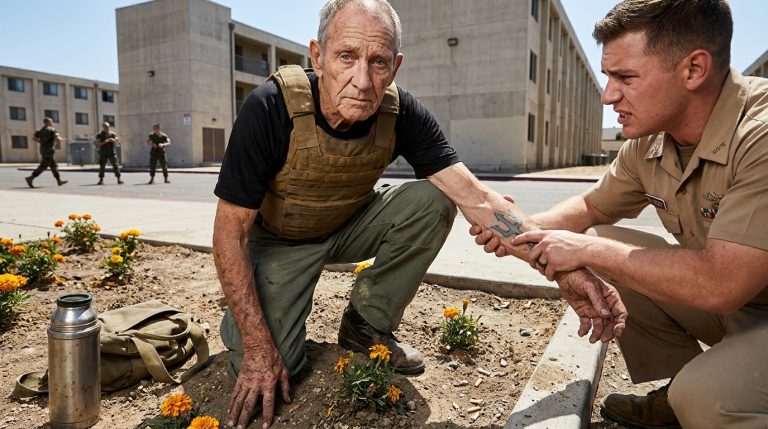
Theodore Brewer looked like he had been pulled from the pages of a history book that should have been closed decades ago. His coveralls were a chaotic tapestry of grease stains and frayed hems, his hands thick, calloused, and etched with the deep, permanent lines of a thousand repairs. He didn’t blink at the roar of a distant C-130 or the scorching desert wind. He just stared at the Apache.
“Chief, this is Mr. Brewer,” Colonel Davies said, his voice clipped. “He’s here to offer a second opinion.”
Evans let out a sharp, incredulous huff of air. “A second opinion? Sir, with all due respect, my team has been over this bird for three days. We’ve run every diagnostic known to man. We’ve scoped the turbine, swapped the FEDC, and replaced half the internal sensors. The machine says it’s healthy, but it refuses to fly. What we don’t need is… analog assistance.” He gestured vaguely at Theodore, his hand trembling slightly with frustrated energy.
Theodore didn’t react. He didn’t defend himself, nor did he shrink away. He simply shifted his weight, his gaze drifting from the nose of the helicopter toward the tail rotor, tracing the lines of the aircraft with a focused, unnerving intensity. It wasn’t the look of a man searching for a data point; it was the look of a man trying to hear a heartbeat.
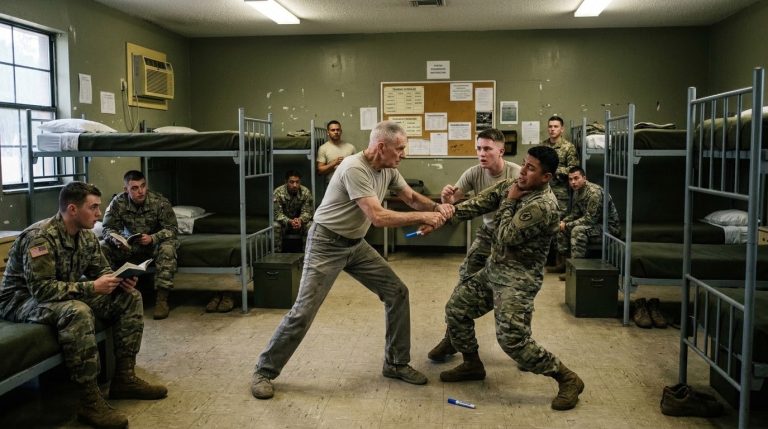
Around them, a circle of younger mechanics leaned in, their expressions hovering between mockery and genuine curiosity. These were digital natives, soldiers who lived within the cold, precise logic of code and screens. They were used to machines that talked back in binary, not machines that hid their secrets in silence.
Evans stepped closer to Theodore, his voice dropping to a dangerous, low pitch. “The flight line is a professional environment, Mr. Brewer. These systems are sensitive. I’m going to need you to stand back and let the experts handle this.”
Theodore finally turned, his eyes cloudy with age but possessing a startling, razor-sharp clarity. He didn’t look at Evans’s rank or his angry face. He looked at the machine’s underbelly, then at the small, worn leather roll hanging from his belt—a relic that seemed completely out of place in this world of billion-dollar defense contracts.
As Theodore took a slow, shuffling step toward the underbelly of the bird, Evans reached out, his hand hovering inches from the old man’s shoulder, ready to pull him away. But in that moment, the wind shifted, bringing with it the faint, phantom sound of a rotor-wash thumping in the distance, a sound that didn’t belong to the modern jets on the flight line. Evans blinked, an inexplicable chill prickling his neck, and for a split second, the polished, pristine hangar felt like it was dissolving into something much older, much darker, and far more dangerous.
CHAPTER 2: THE COMMUNION
Theodore did not acknowledge the Chief Warrant Officer’s hand, nor the trembling, barely suppressed rage radiating from the younger man. He simply leaned away, his movement fluid despite his age, and turned his back on the command hierarchy. He moved toward the tail of the Apache, his gait rhythmic, a slow, shuffling grace that felt less like walking and more like navigating a familiar, long-forgotten landscape.
Evans stood paralyzed for a heartbeat, his arm still extended, his fingers twitching. The humiliation of being ignored stung worse than any verbal retort. He was a man who lived by the precision of the diagnostic screen; he believed in the infallibility of the digital log. Seeing this old man—a relic of a bygone era—dismiss his entire professional identity with a casual turn of the back was an affront he couldn’t process.
“Chief,” a sergeant hissed from the periphery, “should I… should I call security?”
Evans didn’t answer. He watched Theodore, whose gnarled fingers were now tracing the skin of the stabilator. Theodore’s touch was impossibly light, like a blind man reading Braille. He wasn’t checking for corrosion or loose rivets; he was listening.
As Theodore’s palm slid across the composite material, a sudden, intrusive clarity washed over him—a V-2 variation of memory triggered by the familiar structural vibration of the aircraft. For a fleeting second, the pristine concrete floor of the hangar vanished. The smell of high-octane jet fuel and sterile hangar air curdled into the heavy, damp, metallic scent of a monsoon-drenched clearing in the A Shau Valley. He felt the phantom vibration of a Huey’s rotor blade through his own forearm, the rhythmic thrum-thrum-thrum that told him the machine was dying before the sensors ever would.
The memory was so vivid that Theodore gasped, his hand gripping the Apache’s tail for stability. He blinked, the vision of the mud and the frantic, wide-eyed faces of his younger comrades receding into the shadows of the hangar. He was back. The roar of the distant C-130 was just a dull hum, and the sun beating down on the flight line was dry, not humid.
He steadied his breathing. The Apache beneath his hand was not that Huey, but it possessed the same soul. It was a machine that had been pushed to its limit, and it was screaming in a language these young men hadn’t been taught to translate.
Evans took a hesitant step forward, his anger momentarily tempered by a flicker of genuine confusion. “What are you doing?” he demanded, his voice softer, though still sharp. “There’s nothing back there. The tail rotor assembly is balanced to within a fraction of a gram. My team verified it twice.”
Theodore didn’t look at him. He continued his slow migration around the fuselage, his head cocked at an angle, listening to the ambient whine of the base’s power grid. To the onlookers, he looked like a man wandering aimlessly, but his path was dictated by the subtle discordant notes vibrating through the airframe. He was mapping the machine’s posture. He noticed the way it sat on its landing gear—the front gear was slightly compressed on the port side, a detail the sensors had flagged as ‘within tolerance’ but which Theodore recognized as a symptom of a hidden, underlying strain.
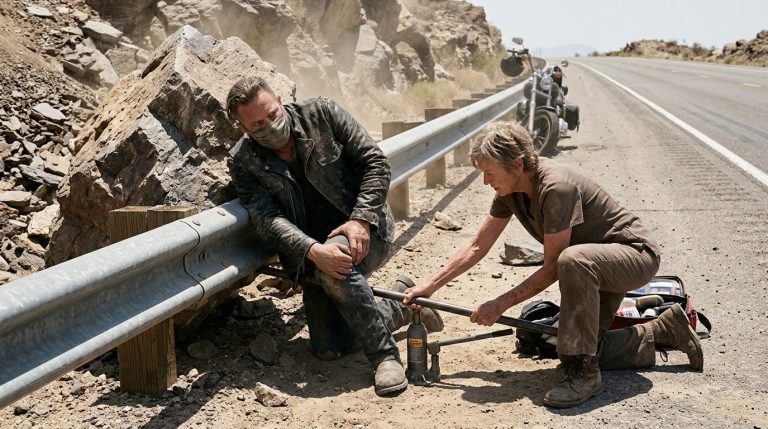
He finally arrived at the port side, stopping directly beneath the massive T700 engine. He didn’t look up at the complex array of tubes, wires, and blades that had been the focus of every test conducted by the squadron. Instead, he knelt down. His old knees popped, a dry, cracking sound that echoed in the brief silence of the flight line.
He didn’t look at the engine housing. He looked at the shadows beneath it. He laid one hand flat against the metal skin, his eyes drifting shut.
Around him, the gathered mechanics grew quiet. The derisive smirks had faded, replaced by an uncomfortable, prickling awareness that they were watching something they didn’t understand. They were masters of the interface, experts in the flow of data, but they were witnessing a man who treated the machine as a living, breathing entity.
“Flashlight,” Theodore said. His voice was gravelly, the sound of gears grinding against grit.
A young sergeant, whose previous mockery had been replaced by a tentative curiosity, hurried forward and handed him a high-powered LED torch. Theodore took it, but he didn’t shine it directly into the engine cowling. He played the beam across the underbelly, watching how the light reflected off the seams and the rivet lines. He was looking for the shadow of a fracture, the minute distortion that occurred only when the weight of the aircraft was distributed in a specific, stressed configuration.
Evans watched, his knuckles white as he gripped his clipboard. He wanted to scream at the old man to stop, to get up and leave, to let the professionals restore order. But he found he couldn’t speak. There was something in the way Theodore moved—an absolute, unshakeable confidence—that silenced his tongue. It was as if the old man was standing in a room that Evans couldn’t see, reading a manual that had never been printed.
Theodore’s breath hitched. The beam of the light caught the edge of a joint where the bleed air valve’s pneumatic line met the fuselage. There, in the microscopic shadow of a mounting bracket, was the truth—a hairline mark, barely visible, vibrating in sympathy with the distant, steady pulse of the hangar’s main power supply.
It was there.
CHAPTER 3: THE THREAT
The light didn’t just illuminate the fracture; it illuminated the gap between two worlds. For Theodore, that thin, jagged line in the pneumatic line was a scream. It was the physical manifestation of metal fatigue under stress, a classic point of failure he had seen in everything from heavy-lift transport choppers in the jungle to the delicate linkages of modern combat craft.
Evans stepped forward, his boots ringing sharp against the concrete. “I said, that’s it,” he barked, his voice straining to maintain the veneer of command. He reached down, his hand sharp and sudden, intended to knock the flashlight from Theodore’s grip or at least force the old man to stand. The intent was clear: shut this down before a civilian could prove the entire squadron’s diagnostic protocols were fundamentally flawed.
Theodore didn’t flinch. He didn’t drop the light. He simply straightened his spine, a surprisingly graceful movement that seemed to catch Evans off guard. He turned his head, his cloudy eyes locking onto Evans’s face with a calm that was, in its own way, more intimidating than any shout.
“If you move that hand an inch closer, son, you’re going to regret it,” Theodore said. It wasn’t a threat; it was a statement of fact, delivered with the flat, emotionless tone of a man who had seen men break and mend under far harsher conditions than a disagreement on a flight line.
Evans froze. The physical defiance of the old man was unexpected, but it was the quiet weight in the air that actually stopped him. The young mechanics who had been watching from the distance moved closer, their smirks completely gone. There was a shift in the air—the smell of ozone and the feeling of static pressure.
“You’re interfering,” Evans hissed, his voice dropping to a low, trembling register. “I have invested seventy-two hours of engineering time into this bird. I have data, real-time feedback, and satellite-linked diagnostics that tell me that line is intact. You are looking at a shadow and calling it a failure. I am ordering you to step away from the aircraft, or I will have the security force remove you for the obstruction of military maintenance.”
Theodore slowly stood, his knees popping in the quiet hangar. He didn’t look at Evans; he looked past him, toward the command tower where he knew the Colonel was watching. He knew the politics of the situation, even if he didn’t care for them. He knew that Evans wasn’t trying to be a villain; the man was terrified. He was a creature of the system, and when the system failed, he didn’t know how to exist.
“You have your data,” Theodore said, his voice quiet, carrying effortlessly over the ambient machinery noise. “And I have the metal. You want to see the crack? You need to stop looking at your screen and start looking at the machine under the stress of spool-up. It only exists when the pressure is there. It’s a dynamic fracture. It’s not static. It’s alive, in its own way.”
“That’s nonsense,” Evans retorted, though the confidence in his voice was fraying. “An engine is a machine. It operates according to the laws of physics, not magic. If there was a crack, the pressure drop would be logged in the system. The sensors would have tripped an alert.”
“The sensors are designed to see what they expect to see,” Theodore countered. He kept the flashlight steady, the beam still fixed on the point of failure. “They are looking for a break. A clean separation. They aren’t looking for a flexure. You’re measuring the machine’s state, but you aren’t measuring its behavior.”
A sergeant, Miller, stepped out from the group of mechanics. He looked at the crack, then at Evans, then back at Theodore. “Chief,” Miller said, his voice hesitant but insistent. “He’s pointing at the bleed air line, sir. If… if there’s a micro-fracture there, it wouldn’t necessarily trigger the digital log until it opened up completely under high-pressure flow. We… we haven’t checked it while the engine is actually cycling, only in the static diagnostic tests.”
Evans rounded on Miller, his face a mask of fury. “You’re taking his side? You’re going to trust some guy in stained coveralls over the internal diagnostic systems of a ten-million-dollar engine? Step back, Miller. That’s an order.”
The hangar fell into a heavy, suffocating silence. The tension was no longer just between Theodore and Evans; it had infected the entire room. The mechanics stood in a circle, their allegiance wavering as they looked from their superior officer to the old man who held a piece of metal—not a digital tool—that seemed to hold the truth.
Theodore turned his gaze back to Evans. The old man’s face was unreadable, his eyes reflecting the sharp, cold light of the hangar’s overheads. He saw the fear in Evans, the desperate, clawing need to be right, to be the expert, to be the one in control.
“You can call the security team, Chief,” Theodore said softly. “You can have me escorted off the line. You can file your reports, and you can bury this incident under a mountain of paperwork. But that engine is still broken. You can try to start it again, and it will fail again. And you will be exactly where you started, only with a little more shame to carry.”
Evans looked at the aircraft, then at the tool Theodore held—that strange, hand-forged piece of metal that seemed to absorb the light rather than reflect it. He looked like he was about to burst, his face mottled with blood, his chest heaving with the effort of holding back his rage.
“Get him off the line,” Evans whispered, the order barely audible.
The young sergeant, Miller, didn’t move. No one moved. The rebellion wasn’t loud; it was the heavy, stubborn silence of a group of people who had suddenly realized that the man they had been mocking was the only one in the room who truly understood the language of the machine.
Theodore sighed, a sound that seemed to pull all the energy out of the air. He turned back to the Apache, ignoring the order entirely, and reached out to the fuselage, his fingers light, ready to initiate the next step of a repair that no one else in the room believed was possible.
The security forces hadn’t arrived, but the clock was ticking. The standoff had become a vacuum, and Theodore was the only one who knew how to fill it.
CHAPTER 4: THE DIGITAL SPARK
Sergeant Miller’s hand was inside his pocket, his fingers dancing across the screen with a speed born of pure, adrenaline-fueled necessity. He didn’t look at the screen—he couldn’t afford to take his eyes off the Chief Warrant Officer—but he knew exactly what he was typing. His heartbeat hammered against his ribs, a frantic rhythm that matched the distant, rhythmic whine of the C-130 warming up on the main apron.
The hangar air felt stagnant, caught in the tension between the old man’s calm resolve and the Chief’s unraveling composure. Miller kept his posture neutral, his gaze fixed on the middle distance, attempting to appear like just another mechanic caught in the fallout of a bad day. But he was the conduit now. He was the one feeding the flicker of hope into the base’s nervous system.
He pressed send.
The digital signal left his device, a silent, invisible spark traversing the base’s internal network to reach the command tower. He prayed that the Colonel’s executive aide, a man known for his meticulous adherence to protocol, was actually watching the monitor he’d been assigned to oversee.
“Chief,” Miller said, his voice straining for a normalcy he didn’t feel. “If… if the pressure fracture is real, there’s no way for the standard diagnostic suite to catch it. They’re built for maintenance intervals, not dynamic load testing. Maybe… maybe he’s right. Maybe we’re looking at the machine as if it’s dead, instead of waiting for it to show us where it’s hurting.”
Evans turned, his face pale and tight, the skin drawn like wet leather over bone. He looked ready to snap. “Don’t you dare, Miller. Do not add to this. I have spent three days under this bird. If there was a crack, I would have seen it. If the sensors—”
“The sensors are blind to the ‘becoming,’ Chief,” Theodore interrupted. His voice was not loud, but it possessed a strange, resonant quality that seemed to cut through the Chief’s frantic energy. He was still knelt by the engine, his hand resting on the metal as if he were checking a pulse. “You’re looking for a scar. I’m looking for the moment the skin breaks.”
Evans took a step toward Theodore, his hand balled into a fist. “I am done with the riddles. This is a military installation, not a garage for lost causes.”
Before Evans could cross the remaining few feet, a sharp, authoritative voice echoed from the hangar’s entrance—not a shout, but the crisp, clipped tone of command that had been missing from the hangar for days.
“Chief Warrant Officer Evans.”
The sound caused every head in the room to snap toward the entrance. Colonel Davies stood there, his uniform pristine, his presence filling the space with an immediate, suffocating gravity. Beside him stood his aide, who held a tablet like a shield.
Evans went rigid, his salute immediate and trembling. “Colonel! Sir. I was just—”
“I see what you were doing,” Davies said, his stride measured as he walked toward the Apache. His eyes moved from the panicked Chief to the elderly man still kneeling on the concrete. “I see a lot of things, Chief. I see a piece of equipment that is critical to our mission readiness, and I see a crew that has been running in circles for seventy-two hours.”
Davies stopped a few feet from the engine, his gaze shifting to Theodore. He had seen the texts, heard the murmurs from the tower, and reviewed the history—the brief, startling archive lookup that had turned his world on its axis. He didn’t know the full scope of what Theodore was doing, but he knew enough to realize that the man on his knees was not merely a civilian visitor.
“Mr. Brewer,” the Colonel said, his voice dropping the formality for a hint of something closer to deference. “Is there a problem with the aircraft that my team has failed to identify?”
Theodore rose to his feet, his joints protesting with soft, sharp pops. He didn’t salute, he didn’t bow, he simply nodded, his eyes meeting the Colonel’s with an uncomfortable level of honesty. “The aircraft is fine, Colonel. It’s the procedure that’s broken. You’re trying to force the machine to tell you its secrets in a language it wasn’t built to speak. It’s a pressure-sensitive fracture in the bleed air valve line. It only reveals itself under load. Your sensors are looking for a static failure, and this bird is trying to tell you about a dynamic one.”
The hangar was so quiet that the faint, high-pitched whine of the base’s power system seemed deafening. Miller, standing in the shadows of the wings, felt a surge of cold triumph. The message had been received. The chain of command had been breached, not by insubordination, but by the weight of reality.
Evans looked at the Colonel, his mouth opening and closing. “Sir, with all due respect, I have the logs here. Everything is within—”
“Quiet, Evans,” the Colonel said, the order quiet and absolute. He didn’t look at the Chief. He looked at Miller. “Sergeant, get me a light. A real one. Not the automated maintenance grid, a handheld.”
Miller stepped forward, his hand steady as he reached for the kit on the workbench. He moved with a sense of purpose that made the other mechanics stand straighter. He knew, with a certainty that defied logic, that the game was changing.
Theodore stood back as the Colonel stepped into his workspace. The power dynamic of the room had inverted. The Chief, the man who had held absolute authority for three days, was now relegated to the role of a spectator, his face a portrait of crumbling professional identity.
The Colonel didn’t need to look at the logs anymore. He looked at the machine. He looked at the point Theodore had indicated, his eyes tracing the line of the metal, searching for the jagged, invisible truth. He was waiting for the spark—the moment of realization that he was no longer the commander of a set of data, but the commander of a legacy of men and machines that required more than just digital oversight to thrive.
The air was tight, laden with the metallic tang of unburned fuel and the heavy, electric scent of an impending change. Theodore stood perfectly still, his eyes fixed on the distant hangar doors, watching the play of light and shadow, waiting for the one person whose presence would turn this observation into a vindication.
CHAPTER 5: THE GENERALS ARRIVAL
Colonel Davies held the heavy-duty LED torch, its beam steady, cutting through the semi-darkness beneath the engine cowling. He was searching for something that defied his training—a hairline crack in a hardened pneumatic line that the system’s digital architecture claimed was pristine. He was not looking for a data error; he was looking for a physical reality that only an old man’s intuition had dared to name.
“There,” Theodore murmured from his position at the Colonel’s shoulder. His voice was a rasp, a sound that seemed to pull the Colonel’s focus tighter. “Follow the mounting bracket seam. Two inches north of the secondary valve.”
Davies shifted his weight, his knee pressing into the cold, oil-slicked concrete. He angled the light. He saw the gleam of metal, the intricate nesting of conduits and wire looms, and for a moment, he saw nothing but the standard geometry of an aircraft. Then, he shifted the angle of the light again, playing with the refraction of the harsh LED against the brushed steel. A shadow flickered—a tiny, jagged interruption in the light’s path.
He leaned closer, his breath hitching in his throat. It was there. A microscopic disturbance in the line, no wider than a spider’s silk, yet vibrating in perfect, agonizing sympathy with the ambient noise of the hangar.
“My God,” Davies whispered. The professional distance he had cultivated for years as a commander vanished, replaced by a sudden, jarring sense of vulnerability. If this was here, what else was missing? What else had the ‘perfect’ digital diagnostics missed because they were only looking for what they were programmed to find?
Before he could pull away, the massive, reverberating groan of the hangar’s blast doors split the air. The sound of tires on asphalt followed, a low, aggressive rumble that ceased abruptly just yards from the lead Apache.
Davies stood up, his face hardening as he turned. Chief Warrant Officer Evans, who had been hovering near the wing, looked as if he were ready to bolt. The air in the hangar seemed to drain of oxygen. Four-star general insignia caught the light as the passenger door of the black command vehicle opened. General Peterson stepped out, his posture rigid, his face an unreadable mask of granite.
The silence that followed was absolute. It was the silence of a hundred-ton door locking into place. The mechanics scattered away from the aircraft, their movements uncoordinated and panicked. Only Theodore remained still, his hands resting on the leather tool roll at his belt, his head tilted slightly as he observed the General’s approach.
Peterson did not glance at the Colonel. He did not glance at the aircraft. He walked straight toward Theodore, his pace heavy and deliberate. With every step, the distance between the two men shrunk, and the tension in the hangar grew, vibrating in the very rivets of the Apache.
“Teddy,” the General said. His voice was thick, a sudden, unexpected crack in the military veneer that had defined his appearance.
Theodore simply nodded. “Pete. You got old.”
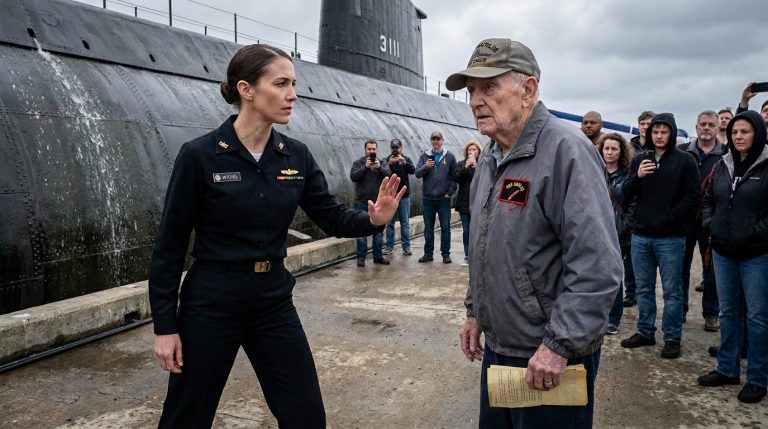
The General let out a laugh—a short, jagged sound that echoed off the high rafters. He reached out, his hand grasping Theodore’s shoulder. It was a gesture of profound, archaic connection, one that had no place on a modern, sterile flight line. The mechanics watched, bewildered, as the four-star commander and the grease-stained relic stood in the center of the hangar, ignoring the ranks, the uniforms, and the unspoken rules of the base.
“I heard you were here,” the General said, turning his gaze finally to Colonel Davies, his eyes cooling instantly into the hard, impenetrable grey of a seasoned combat veteran. “Colonel, I understand you’ve been having a bit of trouble with this bird. And I understand you were told that this man—a man who has saved more lives than any of you will ever know—was ‘interfering’ with military property.”
Davies straightened, his salute sharp, but the General waved it away with an impatient flick of his hand.
“I don’t need the formalities, Colonel. I need to know why the finest mechanic this branch has ever produced was being threatened with detention by a man who apparently can’t read a mechanical failure when it’s staring him in the face.”
Peterson walked past the Colonel, his gaze finding Evans, who looked as if he wished the concrete floor would simply swallow him whole. The General didn’t yell. He didn’t monologue. He simply looked at the Chief with a quiet, devastating intensity that made the man’s knees visibly buckle.
“Chief,” Peterson said, his voice dangerously low. “You have diagnostic tools that can measure the tolerance of a turbine blade to a millionth of an inch. But I see you haven’t yet figured out the value of a pair of hands that can feel a fracture before it becomes a disaster. You’re not a mechanic; you’re a data processor. And data doesn’t keep a bird in the air when the systems decide to fail.”
The General turned back to Theodore, his expression shifting once more. “Show him, Teddy. Show them all.”
Theodore reached for his worn leather roll, his movements slow and steady. He untied the strings, revealing the strange, hand-forged tools that looked like relics of a blacksmith’s shop. He pulled out the long, slender instrument he had prepared. The sunlight glinted off its polished surface, and for a heartbeat, the pristine hangar seemed to vanish.
The sound of the distant jets faded into the rhythmic, violent thumping of rotor wash. The smell of high-octane fuel swirled into a damp, metallic scent of rain and panic. Theodore wasn’t on a secure American flight line; he was back in a muddy clearing, his fingers working frantically on a damaged linkage while the jungle canopy shook under the weight of incoming fire.
He didn’t look at the General, or the Colonel, or the terrified Chief. He looked at the machine. He was holding the past in his hand, a tool forged in the crucible of absolute necessity, and he was ready to prove that the truth was something you had to reach out and touch.
CHAPTER 6: THE ANATOMY OF A FRACTURE
The tool in Theodore’s hand was a sliver of darkness in the harsh, sterile light of the hangar. It was not designed for the delicate, gloved handling of modern flight-line maintenance; it was forged to bite, to hold, and to manipulate metal that had been twisted by the violence of the world.
He didn’t move toward the engine housing with the practiced hesitation of the technicians who had spent three days staring at the digital readouts. He moved with the focused, economic motion of a surgeon—or perhaps an executioner. He knelt beneath the port engine, his old knees protesting with a sharp crack that sounded too loud in the sudden, expectant quiet.
“Chief,” the Colonel said, his voice dropping to a low, cold register that made Evans flinch. “You’re going to assist. You are going to observe every movement Mr. Brewer makes, and you are going to record the exact location of that fracture. Do you understand?”
Evans’s face was a study in profound, sickening shame. He looked at the General, whose granite gaze hadn’t wavered, and then at Theodore’s bowed back. “Yes, sir,” he choked out. He stepped forward, his movements jerky, the pride that had anchored his identity for the last seventy-two hours dissolving into a formless, gnawing dread.
Theodore began to strip the cowling, not with a power driver, but with a manual wrench that looked as ancient as the tool roll itself. His fingers moved with a rhythmic, hypnotic precision. He didn’t check a manual. He didn’t consult a digital terminal. He operated as if the Apache were an extension of his own body, reading the tension in the bolts and the slight, telltale resistance in the seals.
As he exposed the pneumatic line, the air around the engine seemed to shimmer. For a moment, Theodore’s vision flickered—a V-4 shift in perception. The sleek, modern hangar walls seemed to blur into the ragged edges of a monsoon tent; the smell of antiseptic hangar cleaner gave way to the sharp, pungent scent of mud and wet, overheated iron. The vibration of the engine bay under his hand wasn’t just the machine; it was the hum of the Huey’s rotor in the A Shau Valley, an erratic, discordant frequency that only he could feel.
He felt the weight of the General’s gaze, the pressure of the Colonel’s silent observation, and the suffocating, frantic pulse of Evans’s fear. But it all faded into the background. There was only the line.
“Here,” Theodore whispered. His voice was barely audible, but in the silence of the hangar, it sounded like a hammer striking an anvil.
He pressed the tip of his handmade tool against the pneumatic line. The metal groaned under the pressure of the tool—a sound so subtle that only someone listening with their entire body could have caught it. Then, with a slow, deliberate twist, he applied the force.
A hairline gap opened, a jagged, dark fissure that hadn’t been visible even under the high-resolution scoping equipment. It was a pressure fracture, a hidden wound that only exposed itself under the precise, physical stress of the manual tool’s alignment.
“Look,” Theodore said.
Evans leaned in, his face inches from the conduit. He looked through his own tactical flashlight, his breath held tight in his chest. When the light hit the angle, the fracture caught the beam, glowing like a razor-sharp, jagged vein of shadow.
“I… I don’t understand,” Evans whispered, his voice cracking. “The scope… the imaging software… it showed a continuous surface.”
“Software looks for what it expects,” Theodore said, his voice flat, devoid of triumph. “It looks for the absence of the line, for a separation. It doesn’t look for the fatigue in the metal itself. This wasn’t broken by a hit, Chief. It was broken by the rhythm of the engine. It was vibrating itself to pieces every time the spool-up hit fifty percent. The machine was screaming in a frequency your computers weren’t tuned to hear.”
The Colonel stepped forward, his eyes fixed on the fracture. He didn’t need to ask for verification. The sight of it—the physical, undeniable, jagged reality of the metal’s failure—was absolute.
“It’s a pressure leak,” the Colonel said, his tone shifting from professional curiosity to a cold, hard realization. “A leak that only triggers when the valve cycles. Which explains why every diagnostic test we ran while the engine was static came back clean.”
“Exactly,” Theodore said. He withdrew his tool, the metal sliding back into place, the fracture momentarily closing, leaving the line looking pristine once more. “You were trying to diagnose a patient while they were sleeping. You had to wake it up first.”
The General stepped forward, his expression unchanging, though the intensity of his focus had spiked. “Fix it, Teddy.”
Theodore began the repair, his movements deliberate, methodical. He wasn’t just sealing a line; he was dismantling the belief system that had paralyzed the entire squadron for three days. With every turn of his hand, he was dismantling the Chief’s pride, brick by invisible brick.
Evans watched, his hands trembling. He had been taught that the future of warfare was in the data, the network, the seamless integration of human and machine. But watching the old man, he realized with a visceral, stomach-churning horror that the data was only as good as the human connection to the machine itself.
As Theodore tightened the final seal, a heavy, exhausted silence reclaimed the hangar. The repair was done. But the damage—the realization of how far they had strayed from the fundamental truth of their work—would take much longer to heal.
CHAPTER 7: THE ENGINES ROAR
Theodore straightened his back, the rhythmic crackle-pop of his joints echoing against the hangar’s rafters. His hands, stained with the dark, viscous grease of the engine’s internal anatomy, trembled just slightly—not from weakness, but from the immense, focused release of adrenaline. He wiped his palms on a rag that had long ago lost its original color, his eyes fixed on the port engine’s housing, now sealed and locked as if nothing had ever been touched.
Chief Warrant Officer Evans stood three paces away, his shadow stretched thin and dark across the concrete. He hadn’t moved for twenty minutes. He hadn’t spoken. He stood like a man who had just watched his own reflection shatter, his face a mask of pale, stunned disbelief. He looked from the sealed engine to the leather roll in Theodore’s hand, then to the Colonel and the General, who stood watching with the detached, terrifying stillness of statues.
“Spool it up,” the Colonel said. His voice wasn’t an order; it was a quiet, almost hesitant request.
Evans didn’t move initially. He seemed caught in a loop, his mind frantically scrolling through the diagnostic data he had memorized, trying to force the world to fit back into the binary logic he had built his career upon. He finally turned toward the flight deck controls, his movements sluggish and mechanical.
The hangar’s internal auxiliary power unit hissed to life, a low-frequency hum that vibrated through the soles of everyone’s boots. The Apache’s lights flickered, a heartbeat of neon green and amber surging through its veins. Theodore stepped back, his posture loose and unburdened. He was no longer the active agent in this scene; he was an observer, waiting for the conversation between man and machine to resume.
“Initiating start sequence,” Evans muttered into his headset, his voice cracking.
The engine’s internal fans began to whine—a tentative, thin sound that had been the herald of their failure for three days. The whine ascended, rising in pitch until it hit the fifty-percent mark, the exact threshold where the machine had historically buckled, choking on its own internal friction.
The hangar went dead silent. The mechanics had stopped breathing. Even the General’s gaze seemed to intensify, his eyes locking onto the port engine cowling.
The whine continued to climb. Fifty-five percent. Sixty. The vibration that usually manifested as a violent, rattling shake didn’t appear. The engine’s note was smooth, deep, and authoritative—a steady, predatory purr that suggested not just functionality, but peak performance.
“She’s holding,” Miller whispered, his voice trembling with a mixture of disbelief and awe.
The whine leveled off into a powerful, rhythmic roar that filled the hangar, the sound waves pressing against the skin like a physical force. The Apache didn’t shudder. It didn’t stutter. It sat on its landing gear with a newfound, vibrant stability, as if it had finally been relieved of an agonizing, invisible burden.
Evans stared at his monitor. The data streams were shifting, the lines on his screen moving in ways they never had before. They were flowing with the grace of a system that was finally, truly alive. He pressed his hand against the side of the fuselage, feeling the vibration—not the discordant, shivering rattle of a fracture, but the powerful, cohesive hum of a system in perfect internal alignment.
He turned toward Theodore, his eyes wide and unfocused. “It’s… it’s perfect. The pressure is holding. The bleed air valve… it’s responding as if it’s brand new.”
Theodore didn’t smile. He didn’t offer a nod of vindication. He simply looked at the Chief and saw the shadow of the man Evans used to be—the one who had once cared about the feel of the metal more than the output of the display. “It was never the valve, Chief,” Theodore said, his voice quiet but carrying through the engine’s roar. “The valve was just where the machine chose to tell you it was hurting. It was the tension. You were trying to fly a machine, but you forgot you were also supposed to be listening to the life in it.”
The General walked forward, his boots clicking on the concrete as he approached the idling Apache. He reached out and placed a hand on the fuselage, letting the vibration travel through his arm. He turned to the Colonel, a slow, grim smile touching his lips.
“This is the training module we need,” the General said, his voice booming over the engine’s stable, thunderous idle. “Not software updates. Not more diagnostics. We need to teach these kids how to stand still and hear the machine. We need to teach them that the most advanced technology we have is the human nervous system.”
Evans slumped against the workbench, the adrenaline leaving him all at once. He looked at his hands—hands that had spent seventy-two hours failing to solve a problem that a man in grease-stained coveralls had resolved in minutes. The realization was heavy, sinking into his bones. He wasn’t obsolete, but he was painfully, fundamentally uneducated in the things that mattered.
Theodore turned toward the hangar doors, which were beginning to glow with the orange light of the fading sun. The repair was done. The machine was whole. But as he looked back at the hangar full of young technicians, he saw something in their eyes—a confusion, a dawning realization that the world was much larger, and much deeper, than the screens they carried in their pockets.
He didn’t wait for the congratulations. He didn’t wait for the formal recognition. He began to wind his leather roll, his movements slow, practiced, and deeply quiet. The ghost had finished his work. The machine was flying again, and for the first time in three days, the hangar felt like a place of purpose, rather than a graveyard of wasted effort.
CHAPTER 8: THE KINTSUGI WORKSHOP
The hangar doors were wide open, bleeding the deep, bruised orange of the desert sunset onto the concrete floor. The silence inside was not the hollow, nervous quiet of the past three days; it was the heavy, contented stillness of a space that had finally returned to its proper equilibrium. The Apache sat in the center of the bay, an inert, metal beast, its port engine cooling with a gentle, metallic ticking—a sound of contraction and rest.
Theodore stood near the workbench, the last of his tools nested in their soft, frayed cloth. He moved slowly, his hands resting on the cool surface of the metal table.
Evans stepped into the halo of light, his movements stripped of the rigid, performative authority he had carried since the mission began. He looked at the old man, his eyes searching for something—a rebuke, a sign of disdain, anything that would confirm his own internal sense of failure. But Theodore’s expression was open, soft in the dying light.
“I’ve spent fifteen years learning the language of the systems,” Evans said, his voice quiet, almost raw. He gestured to the empty air where his diagnostic tablets usually rested. “I thought that if I could make the language perfect, the machine would have no choice but to follow. I thought that was the job. To be the master of the code.”
Theodore picked up a heavy, steel file from the workbench, turning it over in his calloused fingers. “The machine isn’t a servant, Chief. It’s a partner. It has its own heartbeat, its own tolerances, and its own way of breaking under the weight of a life lived in service.”
He held the file out, handle-first. Evans hesitated, then took it. The weight of the tool was grounding.
“You were looking at the Apache as if it were a math problem to be solved,” Theodore said. “But the fracture… the fracture wasn’t just a failure of physics. It was a reflection. You were so disconnected from the machine, so locked into your own belief that you knew every variable, that you couldn’t hear the warning the machine was giving you. You weren’t listening to the machine. You were just listening to your own expectation of it.”
Evans looked down at the file, then back at the Apache. The realization was a dull ache in his chest—a recognition of the professional hubris that had nearly grounded the entire unit. He looked at his own hands, calloused from labor, yet somehow entirely unused to the craft he had dedicated his life to.
“What do I do now?” Evans asked. “Everything I know—all the training, the command structure—it feels… thin.”
“You start with the metal,” Theodore said, his voice steady. “You learn that before you can command the machine, you have to earn the right to touch it. You stop looking at the results on a screen and you start looking at the way the light catches the rivets. You learn the difference between a system that’s running and a system that’s living.”
Theodore reached out, placing a hand on Evans’s shoulder—a touch that was light, firm, and entirely devoid of judgment. It was the same touch he had used to guide the General decades ago, a connection forged in the survival of impossible conditions and the quiet maintenance of the broken.
“I’m staying for a few weeks,” Theodore said. “General Peterson asked me to run a course. It won’t be about code. It’ll be about the sound of metal when it’s under stress, and the feel of a bolt that’s been torqued just a fraction too far. If you want to learn, be there at six in the morning.”
Evans looked at the old man, and for the first time, he didn’t see a relic of a dying era. He saw the foundation of everything he had claimed to master. He let out a breath he felt he’d been holding for three days, a long, ragged exhale that seemed to empty him of the last of his defensive armor.
“I’ll be there,” Evans said.
Theodore nodded, a small, weary smile touching his lips. He tucked his tool roll under his arm, his movements economical and precise. He walked toward the hangar doors, his silhouette framed by the deepening twilight. The base was settling down; the distant roar of a final flight check echoed off the hills, a smooth, harmonious sound that filled the evening air.
He stepped out onto the tarmac, the cool desert breeze tugging at the frayed edges of his coveralls. He stopped for a moment, looking up at the sky. A formation of birds cut a silent, jagged line across the moon. He felt the weight of the past receding—the mud, the fire, the screaming pilots—and in its place, the quiet, solid reality of the present.
He hadn’t saved the world. He had just mended a bird and reminded a young man that the machines they commanded were extensions of the human heart, capable of suffering and prone to breaking. And that was enough.
The hangar behind him hummed with the quiet, industrious sounds of the evening. The transition had begun. He didn’t look back; he simply walked forward, his stride steady, his heart at rest, moving into the soft, velvet dark of a night that finally felt, for the first time in a long time, like a promise kept.