The Weight of the Tarmac: An Aviator’s Final Stand Against the Erosion of Hard-Won Truth
CHAPTER 1: The Audible Thump
The air in the hangar was a stagnant mix of jet fuel, ozone, and the dry, metallic scent of heated steel. Arthur dragged his broom across the concrete, the bristles making a rhythmic, scraping sound that barely rose above the hum of the ventilation fans. It was four in the morning, the hour when the Northbend Regional Airfield felt less like a hub of industry and more like a graveyard of ambition.
He stopped near the baggage tug, his left leg throbbing with a familiar, deep-seated ache. He kept his weight shifted to the right, a subconscious dance he’d performed for forty years. He wasn’t just sweeping; he was monitoring. His eyes, though filmed with the watery haze of age, missed nothing. He watched the two lieutenants, Costello and Callaway, as they circled the FA-18 Hornet.
“It’s a legacy check, Jester,” Viper said, his voice echoing off the corrugated metal ceiling. “The A-model flight computers are museums. We’re in the C-variant now. The diagnostic is redundant.”
Arthur gripped the broom handle, his knuckles turning the color of weathered bone. He saw Jester hesitate, his hand hovering over the checklist binder. The young man wanted to do it—the instinct for safety was there—but the peer pressure in the hangar was a physical force, heavier than the jet itself.
“The book says seven-B,” Jester murmured, though his defiance was fraying at the edges.
“The book was written by men who used slide rules,” Viper scoffed, waving a hand toward the cockpit. “We have a window to meet. Skip it.”
Arthur felt the familiar, cold tremor start in his fingers. He looked at the hornet. It was a beautiful machine, sharp-angled and lethal, but it was being handled with the carelessness of a teenager with a fast car. He looked down at his own workpants, at the small, leatherbound notebook tucked into his back pocket, and then at the concrete beneath his feet.
He had spent his life ensuring that the ground stayed beneath his feet and the sky stayed above his head. If they skipped that valve check, they weren’t just skipping a diagnostic; they were ignoring the vibration of a system that was crying out for attention. He saw a small, dark stain on the floor near the starboard intake—a micro-leak of hydraulic fluid that shouldn’t have been there. It was a symptom. A whisper.
Viper turned toward the cockpit ladder, his posture radiating a smug, absolute confidence. “We’re done here.”
Arthur’s heart slammed against his ribs. He knew what would happen if they took that bird up with a compromised bleed air valve. He closed his eyes and for a split second, he was back in the cockpit of a crashing prototype, the air thick with the smell of smoke and panic.
He didn’t want to be known. He didn’t want the paperwork. He didn’t want the questions. But he was the only one in the hangar who knew the sound of a silent, impending catastrophe.
He took a slow, rattling breath and stepped forward, the drag of his left foot marking the silence.
CHAPTER 2: The Sound of the Valve
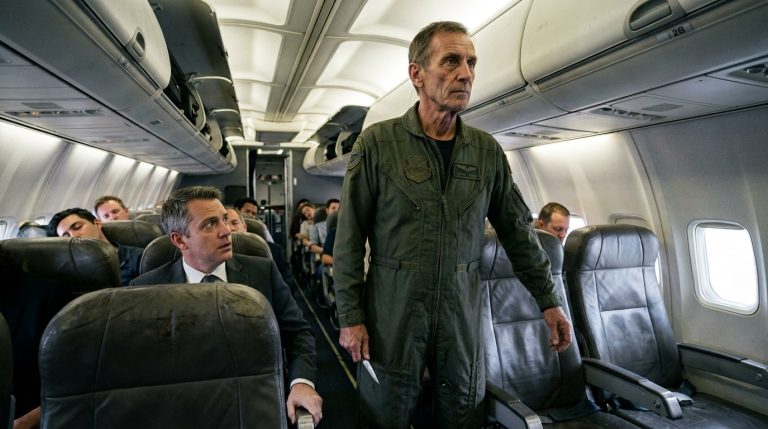
The hangar held its breath, the silence stretched thin and brittle as old glass. Arthur didn’t move. He kept his grip on the broom handle, the rough wood digging into his calloused palms. His posture was the same as it had been for the last twenty years—stooped, unassuming, a man invisible in plain sight. But his eyes, hidden behind the crinkles of age, were fixed on the two lieutenants with a clarity that felt like a physical weight.
Viper stared at him, his face a mask of calculated confusion that masked a deeper, rising irritation. Callaway, the one they called Jester, looked from the checklist binder to the old man, his grip on the laminated pages slackening.
“What did you just say?” Viper finally managed, his voice losing its sharp, professional edge. It sounded thin, stripped of its practiced bravado.
Arthur didn’t repeat himself. He didn’t need to. The silence was his language, and he knew how to let it work. He stood his ground, the toes of his heavy work boots anchored to the oil-stained concrete. He felt the cold draft of the morning air whistling through the high, dirty windows of the hangar, stirring the dust motes that danced in the slivers of pale dawn light. The smell of the hangar—a mixture of stagnant jet fuel, synthetic lubricants, and the sharp, dry ozone of a grounded fighter jet—clung to his uniform.
“You heard the valve, Lieutenant,” Arthur said, his voice raspy, as if he were pulling the words from the dry earth beneath his feet. It wasn’t a question. It was a statement of fact, delivered with the cadence of an engineer who had spent a lifetime verifying the integrity of pressurized systems.
Jester shifted his weight, his eyes darting toward the starboard intake of the Hornet. The jet looked massive in the dim light, its skin a dull, matte gray that seemed to absorb the ambient shadows. “That’s a specific sound,” Jester muttered, his voice barely audible. “The bleed air cycle. How would you…?”
“I sweep the floors,” Arthur interrupted, his tone dry, devoid of inflection. “And I listen to the machines. They have a rhythm. When they miss a beat, it’s not an error. It’s a warning.”
Viper scoffed, though the sound lacked its earlier bite. He stepped closer, his flight suit pristine, the olive-green fabric a stark contrast to the worn, gray wool of Arthur’s uniform. “You’re a custodian, not a flight engineer. You don’t know the diagnostic architecture of this bird.”
Arthur remained unmoved. The “Rusted Truth” of his existence—the decades of maintenance, the phantom ache in his left hip, and the notebook in his pocket—was a foundation he wouldn’t compromise. He saw the way Viper’s eyes scanned the hangar, looking for someone—anyone—to back him up, to justify his dismissal of the old man. The maintenance crew at the far end of the hangar had gone quiet. They were watching, their tools held mid-motion, caught in the friction of this collision.
“The architecture doesn’t change the physics, Lieutenant,” Arthur said, his gaze unwavering. “An ice crystal in the secondary intake doesn’t care about your flight window. And it doesn’t care about your rank.”
He saw a flicker of something in Viper’s eyes—not quite fear, but a sudden, jarring doubt. It was the moment the mask slipped. The younger man had built his identity on the assumption that the world was orderly, that the manuals were absolute, and that anyone outside the flight hierarchy was irrelevant. Arthur was currently dismantling that assumption with nothing more than a broom and a memory of a sound.
Jester took a step toward the intake, his hand reaching out instinctively toward the service panel. “Viper, maybe we should just check it. It’s five minutes. If he’s wrong, we’re five minutes behind schedule. If he’s right…”
“If he’s right, we’re wasting time on a ghost story,” Viper snapped, though he didn’t move to block Jester.
Arthur watched them, his heart hammering against his ribs in a slow, steady pulse. He knew the cost of being “right.” He knew that for these men, being wrong was a career-ending humiliation, but being right because of an old man with a broom was even worse. He wasn’t looking for their gratitude. He was looking for the safety of the line.
He turned slowly, the drag of his left foot a deliberate, careful movement that felt like shifting tectonic plates. He began to sweep again, the bristles whispering across the concrete in a rhythmic shush-shush that acted as the heartbeat of the cavernous space.
“The hangar is yours, gentlemen,” Arthur said, his back to them, his posture rigid. “The machine doesn’t care if you’re early or late. It only cares if you respect the physics.”
He walked away toward the tool bay, each step a calculated expenditure of pain. He didn’t look back, but he heard the sharp, sudden crack of the checklist binder being opened. He kept his eyes on the floor, on the dust and the metal filings he was tasked with cleaning. He had done his part. The rest was up to them, and the cold, unyielding reality of the engine they were about to wake up.
CHAPTER 3: The Ghosts Vigil
The sharp, sudden crack of the binder opening echoed through the hangar like a starter’s pistol. Arthur didn’t flinch, though the sound vibrated through the soles of his boots. He kept his back to the lieutenants, his grip on the wooden broom handle turning white-knuckled.
He didn’t need to look to know what they were doing. He could visualize it with the clinical, agonizing precision of a man who had built his life around the geometry of aircraft. Viper would be holding the manual, his jaw set in a line of forced compliance, while Jester read the line items aloud. The air around the fighter jet, which had been charged with arrogance only moments ago, now felt heavy with a different kind of tension—the forced, metallic friction of men performing a duty they didn’t believe in but couldn’t afford to ignore.
A faint, sharp scent reached Arthur—the acrid, chemically sweet odor of specific high-pressure hydraulic fluid.
The world tilted. The vast, cavernous space of the Northbend hangar seemed to blur at the edges, the steel trusses above dissolving into a hazy, desert sky. The smell wasn’t just in the room; it was in his lungs. It was 1978. The smell of the YF-17 prototype after the uncontained engine failure. He could feel the violent shudder of the airframe, the way the controls had turned into dead weight in his hands, and the high-pitched, screaming wind that had filled the cockpit. His knee, usually a dull, throbbing ache, felt as if it were being crushed by the phantom G-forces of that flat spin.
He closed his eyes for a heartbeat, his breath hitching. Control, he told himself, the mantra as familiar as his own name. Clear the bleed, reset the valve, stay with the machine.
“Verify bleed air selector set to manual,” Jester’s voice sounded, projected and clipped, bouncing off the concrete.
Arthur’s eyes snapped open. He was back. The hangar floor was dirty, streaked with oil and the shadows of the morning sun. He was seventy-eight years old, his body a collection of stiff joints and tired muscles, but his mind remained a razor-sharp repository of every screw, bolt, and contingency he had ever studied.
He took a slow, rattling breath, steadying his hands as he resumed his work. He moved with a practiced, shuffling gait, his left foot dragging slightly—a rhythmic, scraping sound that he used to map the floor. He wasn’t just sweeping dust; he was checking the ground for more than just debris. He was looking for the tiny, dark pockmarks that indicated a leaking seal or a degrading hose on the ground-support equipment.
If they performed the manual cycle properly, they would hear the thump. If they didn’t—if they rushed it, if they bypassed the pause—then they were going to get exactly what they deserved, and he would have to be the one to clean up the wreckage.
“Announce cycling valve,” Viper’s voice drifted over, sounding irritated and impatient.
“Cycling,” Jester replied.
There was a pause. Arthur stopped his sweeping. He held his breath, leaning slightly against the broom. He waited for the sound. It was a mechanical, hollow thump—the sound of the actuator forcing the valve open, a mechanical heartbeat in the belly of the beast. If it were stuck, or if the internal mechanism were compromised by the very thing he had spent his life warning against, there would be a silence where that thump should be, followed by the faint, high-pitched whine of a building pressure fault.
Thump.
The sound echoed, muted and dull, but unmistakable. Arthur exhaled, the tension in his shoulders dropping by a fraction. He didn’t turn around. He didn’t offer a nod. He simply resumed his sweeping, the bristles of the broom catching on a patch of dried grease.
He knew that the pilots wouldn’t understand the significance of that sound. To them, it was just another item on a list they deemed redundant. But to Arthur, it was proof. The internal path was clear—for now.
However, the lingering scent of that fluid, that faint chemical ghost of his own failure, still hung in the air. He turned his head slightly, his gaze lingering on the baggage tug parked near the hangar’s main entrance. He noticed something—a small, dark smudge on the floor near the rear tire of the tug. It wasn’t the usual engine grease. It was lighter, thinner. A fresh leak from a different system, something that hadn’t been there when he started his shift at four.
He leaned on his broom, watching the lieutenants as they moved back toward the cockpit ladder. He could tell them. He could walk over, point at the tug, and explain the nature of the leak. But he knew the reaction it would trigger. It would be the same irritation, the same condescension.
He was the janitor. He was supposed to push the broom and keep his mouth shut.
His hand drifted to the back pocket of his trousers, touching the smooth, river-stone texture of the notebook. He felt the tremor in his fingers—the one that only appeared when the pressure dropped or the memories of the sky grew too heavy.
He wasn’t finished. The jet was clear, but the airfield was full of ghosts. He would wait. He would clean, he would observe, and he would watch the hangar doors. He had an intuition, deep and bone-cold, that the phone call he had expected all those years ago was finally going to ring.
He began to sweep again, moving toward the shadows at the back of the hangar. He needed to be out of the way before the engines started. When these birds roared to life, the vibrations were enough to rattle the very bones of a man like him, and he preferred to be behind the thick, reinforced walls of the storage room when the real noise began.
As he reached the doorway, he glanced back one last time. The two lieutenants were climbing into the cockpit, their movements crisp and rehearsed. They were oblivious to the smudge on the floor, oblivious to the old man in the corner, and oblivious to the fact that they were currently standing on the threshold of a day that would strip away everything they thought they knew about their own brilliance.
Arthur ducked into the storage room and closed the heavy steel door behind him. The sudden quiet was a relief, but the smell of the hydraulic fluid followed him. He sat down on a plastic milk crate, pulled his notebook from his pocket, and for the first time in years, he clicked his pen.
CHAPTER 4: The Breach
Arthur sat on the plastic milk crate, his gaze fixed on the gray, industrial paint of the storage room door. The notebook lay open on his knees, a relic of a time when the world was measured in altitudes, pressures, and the margins of error that separated the living from the dead. Outside, the hangar was beginning to surge with the morning’s frantic energy. He could hear the low-frequency rumble of the ground power unit, the sharp, authoritative bark of mechanics shouting instructions, and the inevitable, high-pitched turbine whine that signaled the start of a pre-flight sequence.
His hand, steady now, traced the edge of the notebook’s cover. He wasn’t writing; he was waiting. He had spent his life waiting for the moment when the system would fail, and for forty years, he had been the one to catch it.
The door to the storage room didn’t just open; it was pulled back with a jarring, aggressive force that rattled the metal shelving units. Arthur didn’t jump. He simply closed his notebook with a soft, decisive thud and slid it into his back pocket.
Henderson stood in the doorway, his face a mottled, angry red. The civilian operations manager looked as if he hadn’t slept, his hair disheveled and his tie pulled loose. Behind him, standing in the shadows of the main hangar, were Viper and Jester. They didn’t look like the arrogant young pilots from the morning. They looked unsettled, their faces pale, their eyes darting around the hangar as if looking for an exit.
“Pendleton,” Henderson spat, his voice tight. “We need to talk. Now.”
Arthur stood up, his joints popping with the familiar protest of age. He moved past Henderson without a word, his walk the careful, measured glide he had mastered over six decades of managing pain. He stepped out into the hangar floor, the cool, stale air hitting him like a physical blow. He saw the way the pilots flinched when they saw him. It was a small, almost imperceptible movement—a tightening of the shoulders, a sudden shift in their center of gravity—but to Arthur, it was as loud as a shout.
“The aircraft is powered up,” Arthur said, his voice flat, neutral. “If there’s an issue with the bleed valve, you should have felt it during the start sequence.”
“It’s not the valve,” Viper said, his voice clipped. He was standing with his arms crossed, his posture defensive. He glanced at Henderson, then back at Arthur. “We ran the test. The thump was there. But the secondary indicator… it flickered. Just for a second.”
Arthur felt a chill run down his spine. The flickering of a secondary indicator in that specific flight model wasn’t a glitch. It was a sign that something had been bypassed, or that a system was being forced to operate outside of its designated parameters. He looked at Jester, who was staring at his boots.
“You skipped a step,” Arthur stated. It wasn’t an accusation; it was a diagnosis.
“We followed the manual,” Jester replied, his voice barely audible. “We did exactly what you said.”
“Then you missed something else,” Arthur said. He stepped toward the hangar door, looking out toward the main tarmac where the morning sun was burning through the coastal mist. “The tug. The one you used to move the bird into position. Did you check the chassis?”
Henderson stepped forward, his eyes narrowing. “What are you talking about, Arthur? Stop with the riddles. We have people looking into this. There’s a rumor—a serious rumor—that someone tampered with the maintenance log for this hangar.”
Arthur turned to look at Henderson, his expression unreadable. He saw the manager’s hands trembling. Henderson wasn’t just stressed; he was terrified. He was the one responsible for the hangar’s oversight, and the idea that something had been altered on his watch was a death sentence for his career.
“The tug,” Arthur repeated, his voice quiet. “Check the hydraulic seals on the rear chassis. If there’s a leak there, it’s not just a maintenance oversight. It’s a signature.”
“A signature of what?” Viper demanded, stepping closer. “Who would—”
Before the pilot could finish, the office phone began to ring—a sharp, shrill sound that pierced the hangar’s ambient roar. Everyone froze. The phone sat on a small desk near the hangar entrance, an isolated object that suddenly seemed to command the attention of everyone in the room.
Henderson moved toward it, his steps frantic. He snatched the receiver off the hook, his eyes never leaving Arthur. “Henderson here. … Yes. … Who is calling?”
The manager went silent. He stood perfectly still, his eyes widening as he listened to whoever was on the other end of the line. The color drained from his face, leaving him looking like a man who had just seen a ghost. He slowly lowered the phone, his hand shaking so violently that he nearly dropped the receiver.
“It’s… it’s the base commander,” Henderson whispered. “He’s on his way. And he says he’s not alone. He says there’s a representative from the regional air wing coming with him.”
Viper looked at Jester, their faces tightening with a new, sharper brand of panic. “Sir? What’s this about?”
Henderson didn’t answer. He turned to look at Arthur. “He asked for you, Arthur. By name. He asked for the custodian.”
Arthur felt the weight of the moment press down on him. The anonymity he had cultivated for decades, the quiet, safe existence he had built within the walls of Northbend, was being systematically dismantled. He took a slow breath, the air tasting of dust and imminent change. He knew what was coming. He knew the specific weight of that kind of inquiry, and he knew that once the door was opened, there was no closing it.
“I’ll be in the maintenance bay,” Arthur said, his voice as steady as granite. “When they arrive, tell them I’m done with the floors.”
He began to walk, his left foot dragging, the rhythmic scrape of his boot the only sound in the sudden, suffocating quiet of the hangar. He didn’t look back at the manager or the pilots. He walked toward the back of the building, toward the dark, narrow corridor that led to the engine shop. He knew he had to reach the small locker in the back, the one that held his own tools—the ones he hadn’t used in forty years.
He was the ghost, and the world was finally waking up to the fact that he had never really left.
CHAPTER 5: The Unmasking
The back corridor of the Northbend Regional Airfield was a narrow artery of shadows and silence. Dust motes hung suspended in the stagnant air, illuminated by the occasional flickery light of failing fluorescents. Arthur moved through this space with a ghost’s familiarity. His left foot dragged with a rhythmic, soft scrape against the concrete, a sound he had learned to modulate, keeping it just below the threshold of attention.
His heart was a steady, dull thud in his chest—not the frantic pulse of fear, but the cold, clinical alertness of a pilot preparing for an emergency landing. He kept his eyes focused on the floor, mapping the geometry of the cracks and stains, a mental checklist of every loose bolt or misaligned panel he had noted over the last three years.
He reached the end of the hall, where a heavy, rusted locker stood partially obscured by a stack of discarded shipping crates. He didn’t reach for the lock immediately. He paused, his head tilting to the side.
Clang.
The sound of metal hitting concrete, sharp and deliberate, echoed from the main hangar. It wasn’t the sound of the mechanics. It was the sound of professional, heavy-duty tactical boots. The airfield manager’s men wore soft-soled shoes; these were the heavy, reinforced boots of someone who didn’t care about the noise they made because they knew they owned the space.
Arthur’s fingers tightened on the edge of the locker door. He felt the cold iron bite into his skin, a sensation that grounded him. He wasn’t the custodian anymore. He was the man who had authored the very procedures currently being scrutinized by the high-ranking officers arriving at the front gate.
He moved silently behind a stack of crates, his silhouette blending into the gloom of the back corridor. A moment later, the main hangar door groaned on its tracks, sliding open with a low-frequency vibration that rattled the loose steel shelves near his head.
Three figures entered. They were dressed in charcoal-gray civilian suits that screamed of high-level bureaucratic authority—the kind of men who carried encrypted radios and signed away the fates of regional bases with a stroke of a pen. They walked with the absolute, unearned confidence of those who occupied the upper echelons of command.
“The hangar is restricted,” one of them said. His voice was cold, clipped, and devoid of the local manager’s desperate anxiety. “Clear the floor. We are here to conduct a formal review of the maintenance logs. If anyone gets in our way, detain them.”
Arthur watched from the shadows. The manager, Henderson, appeared, looking small and frantic next to the newcomers. He was gesturing wildly toward the engine shop, his voice a pathetic, high-pitched whine. “The person you’re looking for… the old man… he’s just a janitor. He doesn’t know anything. He’s confused, senile—”
“Quiet,” the lead official snapped. He didn’t even look at Henderson. “We know exactly who he is.”
Arthur felt a sudden, sharp ache in his hip—a reminder of the 1978 crash that had cost him his wings but saved a school. He realized, with a grim, pragmatic clarity, that this wasn’t a rescue. This was a sweep. They weren’t here to honor the “Ghost”; they were here to bury the evidence of his existence and, by extension, the inconvenient truths he had been tracking for years.
He didn’t wait for them to reach his position. He knew the layout of the back corridor better than anyone on the base. He moved with a quiet, efficient intensity, his limp suppressed by the sheer, adrenaline-fueled focus of his survival instinct. He reached the end of the locker row and found the vent panel—a loose, rusted piece of grating he had loosened months ago as a contingency.
He pulled the grating back, the metal screeching a faint, agonizing note against the concrete. He didn’t hesitate. He slipped into the space behind the wall—a cramped, cobweb-filled maintenance crawlspace that ran the length of the hangar. It was cold, dark, and smelled of decades of accumulated dust and metallic decay.
As he pulled the grating shut, he heard the heavy boots pass by the spot where he had been standing.
“He was here,” the lead official’s voice boomed, close enough that Arthur could hear the slight rustle of his suit jacket. “The log confirms it. The janitor is the key. Find him, and ensure he doesn’t leave the base until we’ve had our conversation.”
Arthur crawled deeper into the dark, his movements methodical and quiet. He knew the secret they were trying to hide. It wasn’t just about the bleed air valve. It was about the entire avionics platform—the ‘C’ variants they were pushing into service, the ones that were failing, the ones that were killing young pilots while the brass signed off on the failures as ‘mechanical anomalies.’ He hadn’t just been observing; he had been documenting.
He reached the small, reinforced box he had hidden in the crawlspace wall. He opened it, his fingers brushing the cool, smooth surface of the flash drive tucked inside—a digital record of every fault he had logged over the last three years.
He heard the men beginning to tear apart the storage room, the sound of metal shelving being kicked over and boxes being shredded. They were looking for the old, senile janitor. They weren’t ready for the man who had written the manual on how to keep a plane in the air when the world wanted it to fall.
He adjusted his position, his eyes narrowing in the dark. He had a path, but it would require a risk he hadn’t taken in decades. He had to reach the communication shack near the main runway. It was the only place with a direct, encrypted uplink to the regional wing headquarters, the only place where he could broadcast the truth before they effectively silenced the source of it.
He began to crawl, the rough concrete surface biting into his knees. The cost was high, the pain was visceral, but for the first time in forty years, the Ghost was not running away. He was moving toward the center of the storm.
CHAPTER 6: The Cost of Recognition
The crawlspace was a tomb of forgotten engineering, a narrow, suffocating vein of copper wiring and insulation. Arthur moved through it with a desperate, grinding efficiency, his body protesting every inch of the progress. His left hip, damaged decades ago in the Mojave, felt like it was being pried apart by rusted iron levers. Each time he shifted his weight, the scrape of his trousers against the concrete floor sounded like a shout in the absolute, lightless dark.
Behind him, the noise of the hangar was changing. The systematic, rhythmic thuds of shelves being cleared were giving way to the sharp, metallic snick of flashlights clicking on, their beams cutting through the maintenance gaps. They were hunting him, but they were doing it with the cold, detached precision of men who expected a senile old man to be hiding in a corner, waiting to be found.
They had no idea who he was. They were looking for a ghost of a janitor; they were not prepared for the Ghost of the YF-17.
Arthur reached the junction where the crawlspace branched toward the ventilation intake for the communication shack. He paused, pressing his forehead against the cold, damp concrete. His vision swam. The lack of air, the physical agony in his joints, and the sheer weight of the memory he was carrying—it was all beginning to coalesce into a blurred, shifting tapestry of sensation. He looked at the shadows, and for a terrifying second, he saw the cockpit of the prototype, the instruments flickering with a dying, orange light that wasn’t there.
He squeezed his eyes shut, forcing the hallucination to retreat. He was not in the sky. He was in a hole under a regional airfield, and he had a job to do.
He pulled himself forward, the rough texture of a pipe grazing his knuckles and leaving a streak of red on his skin. He didn’t feel it. He pushed past the pain, his hands finding the edge of the vent cover that led directly into the communication shack’s sub-floor. He unscrewed the rusted bolts, the metal fighting him, resisting with a stiff, stubborn friction that seemed to mirror the resistance of the entire base.
With a soft, metallic scrape, the cover gave way. He pulled himself out into the cramped, dark space beneath the floorboards of the shack. Above him, he could hear the muffled, precise click-clack of a keyboard.
Someone was in the shack.
Arthur lay perfectly still, his breath coming in shallow, jagged gasps. He couldn’t afford to be heard. He felt the cold iron of the floorboards pressing into his chest. His hands, shaking with the same tremor that had plagued him for years, reached into his back pocket and retrieved the flash drive. It felt heavy—a tiny, synthetic anchor of truth that contained everything the regional wing wanted to incinerate.
Through a crack in the floorboards, he caught a glimpse of a pair of black, high-gloss shoes. A man was sitting at the terminal. He could hear the faint, rhythmic beep of an encrypted uplink being established—a high-level, privileged connection to the regional command center.
“The scan is complete, sir,” a voice said, clear and professional. It was the same man who had ordered the detention of the ‘janitor.’ “The maintenance logs have been scrubbed. All references to the section seven-B modifications have been re-indexed as obsolete. There’s no record of the manual valve cycle being a requirement for the C-variant. We’ve locked the narrative.”
Arthur felt a surge of cold, jagged rage. They weren’t just scrubbing his legacy; they were actively rewriting history to cover up the very failures he had been trying to prevent. They were setting the stage for a new, systemic failure—and they were doing it on the back of his own life’s work.
He needed to move. He had to bridge the connection. He had to force the data through that uplink, even if it meant revealing his position.
He moved his hands toward the floorboards, carefully lifting the edge of a board he knew to be loose. The wood groaned—a sharp, high-pitched protest in the quiet room. The man at the terminal stopped typing.
“Who’s there?”
Arthur didn’t wait. He surged upward, the sudden movement a flash of kinetic, explosive intent that ignored the forty years of rust in his body. He kicked the board aside and lunged for the terminal, his hand slamming onto the keyboard. The flash drive was already in the port, his fingers working with a muscle memory that defied the tremor in his hands. He punched in the manual command override—a sequence of codes that hadn’t been used in the active directory for years, a “Ghost” command that bypassed the current security protocols.
The official shouted, lunging for him, but Arthur was already moving, his shoulder colliding with the man’s chest and sending them both crashing into the desk. The terminal screen flared, the upload progress bar stuttering before surging forward.
Uploading: 40%… 60%…
The official scrambled to regain his footing, his hand reaching for his radio, but Arthur was relentless. He used his remaining strength to wedge his weight against the console, his body a barrier, a shield, a final, unyielding piece of aviation history standing between the truth and the dark. He wasn’t the custodian anymore. He was the man who had stayed with a falling plane for seven minutes to save a school, and he was not going to let them destroy this.
“You don’t know what you’re doing!” the official roared, his hand grabbing Arthur’s collar. “You’re an old man! You have nothing left!”
Arthur looked at him, his blue eyes clear and cold as the high-altitude ice that had brought down his first plane. “I have the truth,” Arthur rasped, his voice cutting through the panic of the shack like a blade. “And that is more than you ever had.”
The upload hit 90%.
CHAPTER 7: The Unbroken Signal
Arthur’s boots skidded on the floorboards as the official slammed his weight into him. The man was younger, stronger, and driven by the frantic, ego-fueled desperation of someone whose entire career was evaporating in real-time. He gripped Arthur’s shoulders, attempting to force him away from the terminal, but he made a critical miscalculation: he underestimated the leverage of a man who had survived a flat-spin descent from 50,000 feet.
Arthur didn’t pull back. He leaned into the momentum, his knuckles whitening as he maintained his position against the keyboard. The terminal was hot, the processor screaming under the strain of the forced uplink. A warning light began to pulse in the corner of the screen—a rhythmic, amber blink that echoed the dying heartbeat of the YF-17’s engines forty years ago.
For a terrifying, fractional second, the shack dissolved. The office walls blurred into the thin, frozen air of the Mojave. He could hear the scream of metal fatigue—the same sound he’d heard as the starboard wing detached. The cooling fan of the terminal became the high-pitched whine of a failing hydraulic pump.
No. Arthur focused on the smell of the room: stale coffee, overheated plastic, and the dry, metallic dust of the airfield. He locked his jaw. He didn’t have the luxury of the past. He had the present, and the present was a 90% upload.
“You’re killing yourself for nothing!” the official roared, his face purpling with exertion. “This is a closed system! The signal will be flagged and purged before it hits the regional hub!”
“Then you shouldn’t have let me reach the terminal,” Arthur grunted, his voice a low, raspy growl. He hooked his leg behind the official’s heel and shoved with all the concentrated weight of his frame. The man stumbled, his grip loosening, and Arthur used the fleeting opening to slam the enter key, forcing the final packet through the gate.
95%… 98%…
Outside, the hangar was waking up to the sound of his defiance. He heard the heavy, rhythmic thud of feet hitting the tarmac—the base security detail, summoned by the alarm that had surely tripped the moment he’d forced the override. They were coming, and they would be coming with orders to treat him not as a veteran, but as a threat.
“The logs are already gone,” the official spat, gasping for breath as he stood back up. “You’re a ghost, Pendleton. You have no rank, no clearance, and no record. They’ll scrub your story before you’re even out of the building.”
Arthur watched the screen. The progress bar hit 100%. Upload Complete.
The silence that followed was absolute. It was the silence of a void, the moment after a jump when the canopy is clear and the world is still. He pulled the flash drive from the port and shoved it deep into the pocket of his gray work pants. He felt the weight of it, a physical manifestation of every life he had protected, every lesson he had fought to preserve.
“The record isn’t on the server,” Arthur said, his voice quiet, almost conversational. “It’s on the regional wing’s primary audit log. I didn’t send it to the public database. I sent it to the Chief of Staff’s private oversight file.”
The official’s face went hollow. He knew, as clearly as Arthur did, that once that data landed in the Chief’s secure file, there was no purging it. It was the kind of truth that survived the most aggressive bureaucratic cleanup.
“You’ve ruined everything,” the man whispered, staring at the screen.
“No,” Arthur corrected, standing up and straightening his uniform. He felt the ache in his hip, the rattle in his lungs, and the overwhelming, beautiful exhaustion of a mission accomplished. “I just stopped you from ruining the future.”
The shack door was kicked open. Two security officers, their faces obscured by tactical visors, leveled their weapons at the doorway.
Arthur didn’t reach for a weapon. He didn’t put his hands up. He simply stood there, his posture straight, his eyes fixed on the horizon through the window. He was a janitor, a ghost, a legend, and for the first time in forty years, he was tired.
He looked at the official, then at the men in the doorway, and offered a faint, tired smile. It wasn’t a smile of victory; it was the quiet, profound relief of a man who had finally set down a load he had been carrying for longer than most of the people in this.
CHAPTER 7: The Final Transmission
The official’s hand tightened around Arthur’s collar, his knuckles white, his breath a hot, frantic rush of air against Arthur’s neck. Arthur didn’t struggle against the grip. Instead, he channeled every ounce of his remaining strength into his right hand, his fingers dancing across the terminal’s keys with the fluidity of a pilot navigating a complex emergency sequence.
Uploading: 95%…
The screen flickered, the blue light washing out the room. Outside the shack, he heard the heavy, synchronized thud of more boots arriving on the tarmac—a tactical team, responding to the official’s silent call. They were coming, and they would not be as easily distracted as the bureaucrats who had first entered the hangar.
“You’re done, old man!” the official snarled, slamming Arthur’s head against the edge of the metal console.
Pain exploded behind Arthur’s eyes—a brilliant, blinding flash of white that nearly brought him to his knees. His vision blurred, the room swaying like a ship in a storm. He felt the cold, hard bite of the terminal’s edge against his cheek, the smell of ozone and burnt plastic filling his senses. But he didn’t let go of the keyboard. His left hand gripped the frame of the console, his knuckles locked, holding him upright even as his legs buckled.
Uploading: 98%…
He saw the official’s hand reaching for his sidearm, the holster unfastening with a familiar, terrifying click. Arthur’s mind, usually a fortress of calm, felt the encroaching darkness of the blow, but through the haze, he saw the final, crucial command. Commit.
He slammed his palm down on the enter key just as the official’s grip on his collar loosened, his attacker distracted by the sudden, triumphant ping of the data packet handshake—the confirmation of a successful transmission to the regional command’s secure, redundant server.
“It’s gone,” Arthur rasped, his voice a broken, metallic sound. He turned his head, his eyes meeting the official’s—a gaze that held no malice, only the absolute, chilling certainty of a man who had won the only battle that mattered. “It’s already at the wing. There’s no burying it now.”
The official’s face twisted in a mask of impotent rage. He drew his weapon, but he froze as the shack’s door was kicked open.
It wasn’t the tactical team.
A figure stood in the doorway, silhouetted by the harsh, morning light. He wore the uniform of a general, his posture as rigid as the granite of the Mojave. Marcus Thorne stepped into the shack, his presence instantly expanding to fill the cramped, electronic-choked space. He didn’t look at the official; his eyes were fixed on the crumpled, shivering frame of the man on the floor.
“Lower the weapon, Colonel,” Thorne said, his voice a low, terrifying rumble that carried the weight of three decades of command.
The official hesitated, his hand trembling. “Sir, this man—he’s an unauthorized intruder, he’s—”
“He is Captain Arthur Pendleton,” Thorne said, walking toward him with a slow, deliberate cadence that made the room feel as though it were shrinking. “And you are currently in direct violation of a federal security directive regarding the protection of a protected asset. Drop the weapon.”
The silence that followed was absolute. The official, his face a mask of shock and confusion, slowly lowered his sidearm, his eyes darting from Thorne to the terminal screen, where the message ‘TRANSMISSION SUCCESSFUL’ glowed with mocking clarity.
Thorne turned to Arthur, the icy resolve in his eyes melting into a brief, human flick of sorrow. He moved to Arthur’s side, crouching down to support his weight. “Ghost,” he said softly, a name that carried the weight of a thousand lost nights and broken promises. “You stayed with it to the end.”
Arthur let out a long, ragged breath, his body finally surrendering to the exhaustion he had been holding at bay for forty-eight hours. He felt the firm, grounding pressure of Thorne’s hand on his shoulder—the same hand that had pinned his medal to his uniform in a dusty desert shed forty years ago.
“The valve,” Arthur whispered, his voice barely audible over the hum of the cooling fans. “Section seven-B. It has to stay in the manual, Marcus. They can’t just rewrite the physics.”
“They won’t,” Thorne promised, his voice hard as iron. “I’ve seen the transmission, Arthur. Every file, every log, every warning. The regional wing is already scrambling. We’re going to tear that fleet down to the bolts if we have to. It’s over.”
Arthur looked up at the ceiling of the shack, the dim light shifting and dancing in his peripheral vision. He felt the cold iron of the floorboards beneath him, the rhythmic, steadying presence of his old friend, and the fading hum of the terminal. The mission was done. The truth was out, no longer confined to the quiet, lonely margins of his notebook.
He felt a profound, aching peace settle over him, the kind that only comes when the weight of a secret is finally set down. He was Arthur Pendleton, and for the first time in forty years, he was no longer a ghost. He was a witness.
CHAPTER 8: The Final Salute
The shack was unnaturally quiet. Outside, the distant, frantic clamor of the airfield—the shouting of guards, the slamming of vehicle doors, the harsh commands of the incoming regional wing—seemed like echoes from a world that no longer had a claim on Arthur.
Thorne stood by the window, his gaze sweeping over the tarmac. “They’re gathering the logs, Arthur,” he said, his voice stripped of the command-bark he’d used in the office. “The Colonel is under arrest. The regional wing is already grounding the entire C-variant fleet for a full bleed-air integrity audit. You were right. You were right about all of it.”
Arthur sat on the floor, his back against the cool, steel console of the terminal. The exhaustion was absolute—a heavy, leaden feeling that permeated his bones. He looked down at his hands. The tremor was still there, a soft, fluttering movement in his fingers, but for the first time in forty years, it didn’t feel like a flaw. It felt like the residue of a life spent holding on to things that mattered.
“It’s not just about the valve,” Arthur whispered, his voice raspy. He reached into his pocket and pulled out the small, leather-bound notebook. It was worn at the edges, the leather smooth as sea-glass. He opened it to the very last page—a list of dates, flight numbers, and pressure readings he had tracked in the dark for three years. “It was never just the valve. It was the culture, Marcus. They stopped listening to the machines. They started thinking they were the masters of them.”
Thorne turned away from the window and knelt beside him. He took the notebook from Arthur’s hands, leafing through the pages with a reverence usually reserved for liturgical texts. “You kept this,” Thorne said. “You were the only one who kept this.”
“Someone had to,” Arthur said.
They sat in silence for a long time. The frantic energy outside began to ebb, replaced by the methodical, grounded pace of a serious, top-down investigation. The era of the “fast and careless” was ending at Northbend. Arthur could feel it in the shifting weight of the air, the way the base wasn’t just reacting, but recalibrating.
“What now, Arthur?” Thorne asked. “You can’t go back to the broom.”
Arthur let out a soft, dry chuckle. It was a painful, rattling sound, but it held a genuine mirth. “I’ve been a janitor for twenty years, Marcus. I think I’ve earned a retirement.”
“I have a place for you,” Thorne started, but Arthur held up a hand.
“No more offices. No more generals. No more secrets.” Arthur looked toward the window, where the sun was now fully risen, bathing the tarmac in a golden, uncompromising light. “I want to go home. I want to sit on my porch and watch the birds. The real ones.”
Thorne looked at him, searching his face, and then he slowly nodded. He didn’t offer him a job. He didn’t offer him a medal. He simply stood up, pulled his heels together, and executed a crisp, perfect salute.
It wasn’t the salute of a subordinate to a superior. It was the salute of a soldier to a survivor.
Arthur looked at the general, and then, with a strength he hadn’t known he possessed, he pushed himself to his feet. He stood straight—not the stooped, invisible man of the hangar, but the pilot who had once guided a failing prototype away from a school in the desert. He returned the salute. His hand was steady, his fingers straight, his gaze leveled at Thorne’s eyes.
It was a final, silent exchange of history.
When he left the communication shack, the airfield looked different. The hangars weren’t just cathedrals of noise; they were the spaces where he had spent twenty years guarding the line. Sarah Jenkins was waiting near the exit, her face pale but her eyes bright with a new, fierce intelligence.
“Captain,” she said, her voice catching.
“Chief,” Arthur replied, a small, genuine smile touching his lips. He walked past her, toward the main gate.
He didn’t look back at the F-18 sitting on the tarmac. He didn’t look back at the hangar where he had pushed a broom in the silence of the dawn. He walked out of the gate, his gait still favoring his left side, but his step light, as if a great, crushing weight had been removed from his shoulders.
He reached his rusting pickup truck in the parking lot. He climbed into the driver’s seat, the familiar smell of old vinyl and dry earth greeting him. He turned the key, and the engine rattled to life—a rough, uneven sound that he knew by heart.
He drove away from the airfield, moving toward the highway that wound through the coastal pines. He was Arthur Pendleton. He was the Ghost. And for the first time in his life, the road ahead was his own. He didn’t look in the rearview mirror. He just kept his eyes on the horizon, watching as the shadows of the airfield faded into the brilliant, unending light of the morning.